
In the dynamic world of business, success isn’t left to chance. It’s meticulously planned, strategized, and financially projected. At its heart lies business planning, an indispensable process that transforms nascent ideas into tangible financial realities. More than just a document, business planning is the strategic compass that guides an enterprise through market fluctuations, operational challenges, and growth opportunities, ensuring its financial health and long-term viability. For entrepreneurs, startups, and established corporations alike, a robust business plan serves as the bedrock upon which financial decisions are made, investments are secured, and sustainable profits are achieved. Without this comprehensive financial blueprint, even the most innovative ventures risk aimless navigation, potential capital mismanagement, and ultimately, failure to thrive in a competitive landscape. This article will delve into the essence of business planning, dissecting its core financial imperatives, key components, and its role as a dynamic tool for securing funding and driving sustainable financial growth.

The Core Purpose of Business Planning: A Financial Imperative
At its fundamental level, business planning is an exercise in financial foresight and control. It’s about envisioning the financial future of your enterprise and laying out the strategic steps required to get there. For any venture, from a small online side hustle to a large-scale corporation, understanding and managing money is paramount. A business plan articulates how a business will generate revenue, manage expenses, and ultimately create wealth for its stakeholders.
Defining Financial Objectives and Projections
One of the primary purposes of a business plan is to set clear, measurable financial objectives. This involves forecasting revenue streams, estimating sales volumes, and predicting the costs associated with delivering products or services. It’s not enough to simply say a business will be profitable; the plan must quantify what that profitability looks like. This includes setting targets for gross profit margins, net profit margins, and specific revenue milestones. These projections serve as critical benchmarks against which actual financial performance can be measured, allowing for timely adjustments and strategic pivots. For instance, if initial sales forecasts are not met, the business plan should guide the re-evaluation of pricing strategies, marketing spend, or even operational efficiencies to realign with financial goals.
Resource Allocation and Budgeting
Effective financial management hinges on prudent resource allocation and meticulous budgeting, both of which are central to business planning. A well-crafted plan details how capital will be acquired and deployed. It identifies necessary investments in assets, such as equipment or technology, and outlines operational expenditures like salaries, rent, and marketing costs. Through detailed budgeting, the plan ensures that financial resources are allocated efficiently, preventing overspending in one area at the expense of another critical function. For a startup, this might involve prioritizing initial seed capital between product development and market entry. For an established business, it could mean optimizing budgets for expansion into new markets or investing in R&D to maintain a competitive edge. The business plan thus acts as a financial guardian, ensuring every dollar spent contributes to the overall strategic and financial objectives.
Risk Mitigation and Contingency Planning
The financial landscape is fraught with uncertainties, from economic downturns to unexpected market shifts or operational disruptions. A robust business plan doesn’t ignore these risks; it anticipates them and outlines strategies for mitigation and contingency. This involves conducting a thorough financial risk assessment, identifying potential threats to cash flow, profitability, or solvency. For example, a plan might project the financial impact of a supply chain disruption and propose alternative sourcing strategies or increased inventory reserves. It could also include stress-testing financial models against various scenarios – best-case, worst-case, and most-likely – to understand the potential range of outcomes and prepare financially. This proactive approach to risk management protects the business’s financial health and ensures its resilience in the face of adversity, making it a more attractive prospect for investors seeking stability.
Key Components of a Financially-Driven Business Plan
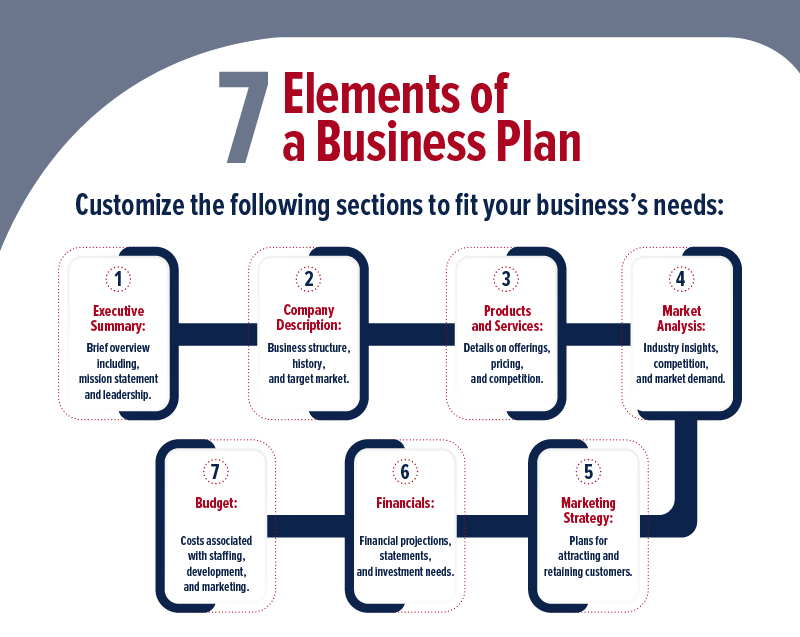
While a business plan encompasses various sections, its heart, particularly from the “Money” perspective, lies in its financial data and strategic financial narratives. Each component, though seemingly distinct, plays a crucial role in painting a comprehensive picture of the venture’s financial prospects and needs.
Executive Summary
The executive summary is often the first, and sometimes only, part of the plan an investor reads. Therefore, it must be compelling and financially concise. It needs to articulate the business opportunity, highlight the unique value proposition, and, crucially, present the most attractive financial projections and funding request. It should briefly touch upon expected revenue, profitability, and return on investment (ROI), signaling the financial viability and potential for growth. For a lending institution or venture capitalist, this section is a rapid assessment tool to determine if the full plan warrants further investigation.
Financial Plan: The Cornerstone of Money Management
This is arguably the most critical section within the context of the “Money” category. It provides a detailed, data-driven forecast of the business’s financial performance. This section typically includes:
- Income Statement (Profit & Loss Statement): Projecting revenues, cost of goods sold (COGS), operating expenses, and ultimately, net profit over a 3-5 year period. This shows the business’s ability to generate profit.
- Balance Sheet: A snapshot of the company’s assets, liabilities, and owner’s equity at a specific point in time, indicating its financial health and solvency.
- Cash Flow Statement: Perhaps the most vital for day-to-day operations, this projects the movement of cash in and out of the business, highlighting liquidity and ensuring the company can meet its short-term obligations. Positive cash flow is essential for survival, even for profitable businesses.
- Break-Even Analysis: Determining the sales volume required to cover all costs, providing a crucial benchmark for financial sustainability.
- Startup Costs Table: A detailed list of initial expenses needed to launch the business, including equipment, legal fees, inventory, and initial marketing, crucial for calculating initial funding requirements.
- Funding Request and Use of Funds: For businesses seeking external capital, this section explicitly states how much money is needed and precisely how it will be used (e.g., for working capital, equipment purchase, marketing campaigns, or debt repayment), along with the proposed return for investors. This transparent approach builds trust and helps investors understand their potential ROI.
Market Analysis (Financial Perspective)
While market analysis typically covers demographics and psychographics, from a financial perspective, it focuses on the economic viability and revenue potential of the target market. This includes:
- Total Addressable Market (TAM): Quantifying the maximum potential revenue from a specific market segment.
- Market Share Projections: Estimating the percentage of the TAM the business expects to capture, directly impacting revenue forecasts.
- Pricing Strategy: Justifying the chosen price points based on market research, competitor analysis, cost structure, and perceived value to ensure profitability.
- Competitive Financial Positioning: Analyzing competitors’ pricing models, cost structures (where possible), and financial performance to identify opportunities for differentiation and competitive advantage that translate into better profit margins or market capture.
Operations Plan (Financial Impact)

The operations plan details how the business will create and deliver its products or services. Crucially, it outlines the processes that directly impact costs and efficiency. For example, selecting manufacturing methods (in-house vs. outsourcing) has significant capital expenditure implications. Supply chain management decisions directly affect COGS and inventory carrying costs. Technology choices can either be an investment that improves long-term efficiency and reduces operational costs or a significant financial drain if poorly managed. Every operational decision has a financial consequence, and the business plan must articulate these connections to demonstrate financial prudence and operational scalability.
Business Planning as a Dynamic Financial Management Tool
A business plan is not a static document to be filed away after its creation. It is a living, breathing financial tool that evolves with the business, constantly guiding strategic decisions and financial performance monitoring. Its dynamic nature is what makes it indispensable for sustained financial success.
Attracting Investors and Securing Funding
For any business, securing adequate funding is often the make-or-break factor. A professionally prepared business plan, especially one with a robust and transparent financial section, is the primary instrument for attracting investors and securing loans. Banks require detailed financial projections, cash flow analyses, and repayment strategies to assess lending risk. Venture capitalists and angel investors scrutinize growth projections, potential ROI, and exit strategies. The business plan acts as a comprehensive pitch deck, demonstrating not just the innovative idea but, more importantly, the financial viability, scalability, and potential for substantial returns on investment. It answers critical questions: How much money do you need? How will you use it? When will you become profitable? What is the projected ROI for investors? A strong financial plan provides compelling answers, building confidence and trust.
Performance Monitoring and Financial Adjustments
Once a business is operational, the plan serves as a critical benchmark. Regular financial reviews compare actual performance against the projected income statements, balance sheets, and cash flow forecasts. Are revenues meeting expectations? Are expenses under control? Is cash flow healthy? Deviations from the plan trigger a need for analysis and adjustments. For example, if actual sales are lower than projected, the business might need to re-evaluate its marketing budget or pricing strategy. If costs are higher, operational efficiencies might need to be implemented. This continuous monitoring allows management to identify financial issues early, implement corrective actions, and pivot strategies before minor discrepancies escalate into significant financial problems. It’s a feedback loop essential for agile financial management.
Strategic Decision-Making for Financial Growth
Beyond immediate performance, the business plan guides long-term strategic decisions that impact financial growth. Should the company expand into a new geographic market? The financial section of the plan helps model the potential costs, revenues, and profitability of such an expansion. Is diversifying the product line a wise move? The plan provides a framework to assess the financial implications, including R&D costs, manufacturing expenses, and new revenue streams. Should capital be invested in new technology or automation? The plan’s financial analysis can calculate the ROI and long-term cost savings. By providing a structured approach to evaluating financial impacts, the business plan ensures that strategic choices are data-driven and align with the overarching financial objectives of the company, fostering sustainable growth rather than impulsive ventures.
Getting Started: Practical Steps for Developing Your Financial Blueprint
Developing a comprehensive business plan, especially one focused on financial robustness, can seem daunting. However, breaking it down into manageable steps makes the process approachable and highly rewarding.
Research and Data Gathering
The foundation of any credible financial plan is accurate and relevant data. Begin by thoroughly researching your industry, market trends, and economic indicators. Look for industry benchmarks regarding profit margins, operational costs, and customer acquisition costs. Gather data on your target market’s spending habits and economic capacity. Analyze competitor pricing, revenue models, and, if publicly available, their financial statements. Utilize government statistics, market research reports, and reputable financial publications. For internal data, meticulously review your own past financial performance (if applicable) to identify patterns and realistic assumptions for future projections. The more robust and reliable your data, the more credible and accurate your financial forecasts will be.
Building Your Financial Model
With data in hand, the next crucial step is to build your financial model. This typically involves creating detailed spreadsheets for your income statement, balance sheet, and cash flow projections for at least the next three to five years. Start with realistic revenue assumptions, breaking them down by product, service, or customer segment. Carefully list and estimate all costs, distinguishing between fixed and variable expenses. Use conservative estimates where uncertainty exists, especially for initial revenues and expenses. Consider various scenarios (optimistic, pessimistic, realistic) to understand the range of potential financial outcomes. Tools like Microsoft Excel, Google Sheets, or specialized financial modeling software can greatly assist in this process, allowing you to link variables and easily adjust assumptions to see their impact on the bottom line.
Seeking Expert Financial Guidance
While it’s essential for entrepreneurs to understand their own financial plan, seeking professional guidance can be invaluable. Accountants can help ensure the accuracy of your financial statements, understand tax implications, and navigate complex financial regulations. Financial consultants or business advisors can offer insights into industry-specific financial benchmarks, help refine your projections, and provide strategic advice on funding structures or investment strategies. Their expertise can uncover potential blind spots, validate your assumptions, and enhance the overall credibility of your financial plan, making it more appealing to potential investors or lenders. This investment in expertise can significantly reduce financial risk and increase the likelihood of securing necessary capital.
Iteration and Review
A business plan is not a “set it and forget it” document. It’s a dynamic tool that requires ongoing iteration and review. Once you have a draft, review it critically. Are the financial assumptions realistic? Are there any inconsistencies? Share it with trusted mentors, advisors, or peers to get fresh perspectives and constructive feedback. Be prepared to revise your plan multiple times as you gather more information, validate assumptions, and refine your strategies. As your business evolves and market conditions change, revisit and update your financial projections regularly – at least quarterly or annually. This continuous process ensures your business plan remains relevant, accurate, and an effective guide for your financial journey.
Conclusion
Business planning is far more than a bureaucratic exercise; it is the fundamental framework for financial success in any enterprise. By meticulously defining financial objectives, allocating resources strategically, mitigating risks, and projecting future performance, a business plan equips leaders with the foresight and control necessary to navigate the complex economic landscape. It serves as the primary instrument for attracting crucial investment, acts as a vital benchmark for performance monitoring, and underpins all strategic decisions that drive growth and profitability. Embracing business planning as a dynamic, financially-focused process is not just a best practice; it is an absolute necessity for establishing financial stability, achieving sustainable growth, and ultimately realizing the full economic potential of any venture. For anyone embarking on or leading a business, mastering the art of business planning is synonymous with mastering the art of financial success.
aViewFromTheCave is a participant in the Amazon Services LLC Associates Program, an affiliate advertising program designed to provide a means for sites to earn advertising fees by advertising and linking to Amazon.com. Amazon, the Amazon logo, AmazonSupply, and the AmazonSupply logo are trademarks of Amazon.com, Inc. or its affiliates. As an Amazon Associate we earn affiliate commissions from qualifying purchases.