
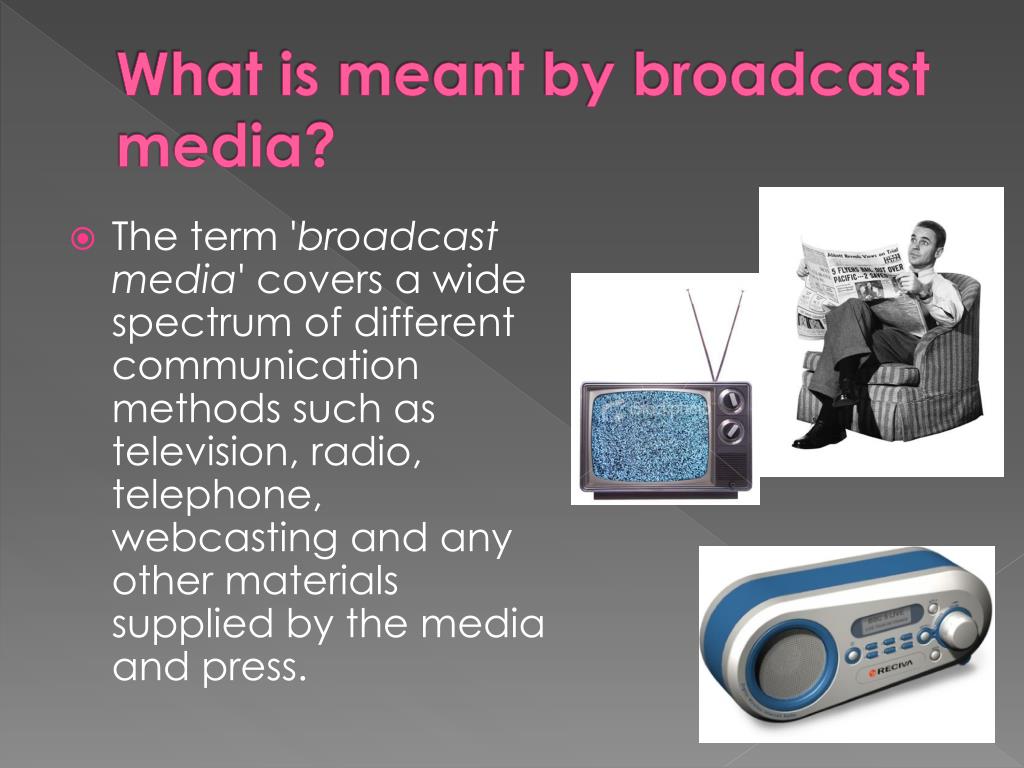
Broadcast media stands as a cornerstone of mass communication, a technological marvel that has fundamentally reshaped how information, entertainment, and culture are disseminated across vast populations. At its heart, broadcast media refers to the distribution of audio or video content to a dispersed audience via various electronic mass communication mediums. Unlike point-to-point communication, which targets a specific recipient, broadcasting is inherently a one-to-many model, designed for widespread reception by an unlimited or large audience using standard receivers. Understanding broadcast media in the modern era requires a deep dive into the underlying technologies that enable this ubiquitous form of content delivery, from traditional radio waves to cutting-edge internet protocols.
The Foundation of Mass Communication Technology
The concept of broadcasting emerged from the technological advancements in wireless communication at the turn of the 20th century. Initially an experimental curiosity, it rapidly evolved into a sophisticated infrastructure capable of reaching millions simultaneously.
Defining the Core Concept through Technology
Fundamentally, broadcast media leverages various technologies to transmit signals over distance. This involves a sender (the broadcaster) converting content (audio, video, data) into electromagnetic waves or digital packets, which are then distributed through a network, and finally received and decoded by an audience using compatible devices. The key technological components include transmitters, antennas, transmission lines, signal modulators/demodulators, and receiving devices (radios, televisions, computers, smartphones). The essence lies in the efficiency and reach of this “one-to-many” distribution model, which scales economically as the audience grows, making it ideal for mass communication.
From Analog Waves to Digital Streams
The journey of broadcast media has been a progressive march from purely analog systems to increasingly digital and IP-based infrastructures. Early broadcasting relied on analog radio frequency (RF) signals, modulated to carry audio or video information. These signals were susceptible to interference and limited in bandwidth, impacting quality and the volume of information that could be transmitted. The digital revolution, however, transformed broadcasting. Digital signals, comprising binary data, offer superior signal integrity, improved spectral efficiency, and the capacity to transmit more data within the same bandwidth. This transition paved the way for high-definition television (HDTV), digital radio, and ultimately, the seamless integration of broadcast content with internet-based distribution channels. This evolution isn’t merely an upgrade; it’s a paradigm shift in the underlying technology, influencing everything from content creation workflows to end-user reception devices.
Key Technologies Driving Broadcast Media
The vast landscape of broadcast media is underpinned by a diverse array of technologies, each catering to different geographic scales, audience sizes, and content types.
Terrestrial Broadcasting: Radio and Television
Terrestrial broadcasting is the oldest and perhaps most iconic form of broadcast media. It involves transmitting radio and television signals from land-based transmitters directly to receivers within a line of sight or ground wave propagation range.
- Radio Broadcasting: Utilizes amplitude modulation (AM) and frequency modulation (FM) to transmit audio. AM waves travel further but are more susceptible to static, while FM offers higher fidelity over shorter distances. Digital radio technologies like DAB (Digital Audio Broadcasting) and HD Radio have enhanced sound quality, introduced more channels, and added data services by converting audio into digital streams.
- Television Broadcasting: Historically relied on analog standards like NTSC, PAL, and SECAM. The global transition to digital terrestrial television (DTT), exemplified by standards like DVB-T/T2, ATSC, and ISDB-T, has dramatically improved picture and sound quality (enabling HDTV), allowed for multiplexing multiple channels on a single frequency, and freed up valuable spectrum for other uses. The technology involves sophisticated encoders at the broadcast end and decoders (set-top boxes or integrated tuners) at the receiver end.
Satellite Technology: Reaching Global Audiences
Satellite broadcasting extends the reach of broadcast media to vast geographical areas, overcoming terrestrial limitations like terrain and distance. Geostationary satellites orbit Earth at an altitude where their orbital period matches Earth’s rotation, making them appear stationary from the ground.
- Direct Broadcast Satellite (DBS): Services like DirecTV or Sky utilize high-powered satellites to transmit numerous digital television channels directly to small dish antennas at consumer homes. This technology involves powerful uplink transmitters on Earth, transponders on the satellite that receive, amplify, and re-transmit signals, and specialized decoders for reception.
- Satellite Radio: Similar in concept to DBS TV, satellite radio services (e.g., SiriusXM) use geostationary satellites to broadcast digital audio over wide areas, often complementing or replacing traditional terrestrial radio for specific content. The technology involves proprietary codecs and receivers designed for mobile environments.
Cable Networks: Dedicated Information Highways
Cable television originated as a way to improve reception in rural areas by running coaxial cables from a central antenna to homes. It evolved into a robust, dedicated wired network for delivering a wide array of television channels, and later, broadband internet services.
- Coaxial Cable and Fiber Optics: Modern cable networks are hybrid fiber-coaxial (HFC) systems, where fiber optic cables carry signals from the headend (the central reception and distribution facility) to neighborhood nodes, and then coaxial cables distribute them to individual homes. This architecture offers high bandwidth, enabling the delivery of hundreds of digital channels, on-demand video, and high-speed internet.
- Digital Video Delivery: Cable relies on standards like DVB-C (Digital Video Broadcasting – Cable) for digital television, using modulation techniques to pack multiple digital streams onto each channel. Switched Digital Video (SDV) technology optimizes bandwidth by delivering channels only when requested by viewers.
Internet Protocol (IP) Broadcasting: The Rise of Streaming
The internet has emerged as a profoundly disruptive and transformative platform for broadcast media, enabling a new paradigm known as IP broadcasting or streaming.
- Over-the-Top (OTT) Services: Services like Netflix, Hulu, YouTube, and Twitch deliver video and audio content directly to viewers over the open internet, bypassing traditional broadcast or cable infrastructure. This relies on robust content delivery networks (CDNs), which distribute content servers geographically closer to users to minimize latency and ensure smooth playback.
- Adaptive Bitrate Streaming: Technologies such as HLS (HTTP Live Streaming) and MPEG-DASH are crucial for streaming. They allow content to be encoded at multiple bitrates and resolutions. The player then dynamically switches between these versions based on the user’s internet connection speed and device capabilities, ensuring the best possible viewing experience without buffering.
- Live Streaming: IP broadcasting facilitates real-time event coverage, from news and sports to gaming and user-generated content, leveraging low-latency encoding, server infrastructure, and peer-to-peer technologies for massive concurrent viewership.
The Evolution of Transmission and Reception
The technological journey of broadcast media is characterized by continuous innovation in how signals are sent, processed, and received.
Analog vs. Digital Broadcasting
The shift from analog to digital broadcasting represents the most significant technological leap. Analog signals are continuous waves, representing information by varying properties like amplitude or frequency. Digital signals, conversely, are discrete numerical representations of information (binary code).
- Advantages of Digital: Digital broadcasting offers superior signal quality (less noise and interference), more efficient use of spectrum (allowing more channels or higher data rates within the same bandwidth), and the ability to incorporate error correction codes, leading to clearer reception even in challenging environments. It also facilitates data services like electronic program guides (EPGs) and interactive features. This transition mandated new transmission equipment and digital tuners or set-top boxes for reception.
Compression Standards and Codecs
To efficiently transmit high-quality audio and video, especially over limited bandwidths, compression technologies are indispensable.
- Codecs (Coder-Decoder): These algorithms compress digital data for transmission and decompress it for playback. For video, common codecs include H.264 (AVC) and its successor H.265 (HEVC), which offer significantly improved compression efficiency without perceptible loss in quality. For audio, AAC (Advanced Audio Coding) and AC-3 are widely used. These technologies are crucial for delivering HDTV, 4K, and beyond, enabling high-resolution content to be streamed or broadcast within practical bandwidth constraints.
Infrastructure: Antennas, Transmitters, and Servers
The physical and virtual infrastructure supporting broadcast media is complex and capital-intensive.
- Traditional Infrastructure: For terrestrial and satellite broadcasting, this includes high-power transmitters, sophisticated antenna arrays designed for specific frequency bands and coverage patterns, and robust power and cooling systems. Studios require specialized equipment for content creation, mixing, and encoding.
- IP-based Infrastructure: For streaming, the infrastructure shifts to high-capacity data centers, powerful media servers, global CDNs, and high-speed internet backbones. This requires significant investment in network architecture, server hardware, and software platforms capable of handling massive concurrent user requests and transcoding diverse content formats.
Modern Broadcast Ecosystems and Future Trends
The technological landscape of broadcast media is in constant flux, driven by innovation and changing consumer behaviors.
The Convergence of Traditional and New Media
The lines between traditional broadcasting (TV, radio) and IP-based streaming are increasingly blurring. Smart TVs now seamlessly integrate over-the-air tuners with streaming apps. Broadcasters are adopting hybrid approaches, using traditional spectrum for primary distribution while leveraging the internet for on-demand content, catch-up services, and supplementary experiences. This convergence is driven by common digital encoding standards and the omnipresence of internet connectivity.
Personalization and Interactivity
Modern broadcast technologies are moving beyond passive consumption. IP-based delivery allows for unprecedented personalization through algorithmic recommendations, targeted advertising, and user profiles. Interactive features, such as polls, social media integration, and real-time commentary, are becoming standard in live streams and enhanced broadcasts, transforming viewers from recipients into participants. This relies on real-time data processing, advanced UI/UX development, and robust backend systems.
AI, 5G, and Immersive Technologies in Broadcasting
The future of broadcast media is deeply intertwined with emerging technologies:
- Artificial Intelligence (AI): AI is revolutionizing content production (e.g., automated editing, subtitling, content recommendation), distribution (e.g., optimizing bitrate based on network conditions), and even consumption (e.g., AI-powered search, personalized news feeds).
- 5G Connectivity: The next generation of cellular technology, 5G, with its high bandwidth and ultra-low latency, promises to unlock new possibilities for mobile broadcasting, enabling high-quality live streaming from remote locations, enhanced augmented reality (AR) experiences, and robust delivery of 4K/8K content on the go.
- Immersive Technologies: Virtual Reality (VR) and Augmented Reality (AR) are beginning to offer new ways to experience broadcast content, from virtual sports stadiums to interactive news environments. These technologies demand extremely high bandwidth, low latency, and sophisticated rendering capabilities.

Challenges: Spectrum Management and Digital Security
As broadcast media evolves, so do its challenges. Managing the finite radio frequency spectrum efficiently remains a critical technical and regulatory hurdle, especially with the proliferation of wireless devices. Digital security is another paramount concern, encompassing the protection of broadcast signals from piracy, content delivery networks from cyber-attacks, and user data within interactive platforms. Robust encryption, secure streaming protocols, and vigilant network monitoring are essential to maintaining the integrity and trust in modern broadcast media.
aViewFromTheCave is a participant in the Amazon Services LLC Associates Program, an affiliate advertising program designed to provide a means for sites to earn advertising fees by advertising and linking to Amazon.com. Amazon, the Amazon logo, AmazonSupply, and the AmazonSupply logo are trademarks of Amazon.com, Inc. or its affiliates. As an Amazon Associate we earn affiliate commissions from qualifying purchases.