
Third grade represents a pivotal inflection point in a child’s educational journey. It is often described by educators as the year when the fundamental philosophy of schooling shifts from “learning to read” to “reading to learn.” As students transition out of the primary grades, the curriculum accelerates, placing a greater emphasis on critical thinking, independent problem-solving, and the integration of complex concepts. For parents and stakeholders interested in the intellectual development of the next generation, understanding the 3rd-grade landscape is essential for grasping the foundational building blocks of future academic success.
The Cognitive Shift: Reading and Literacy Development
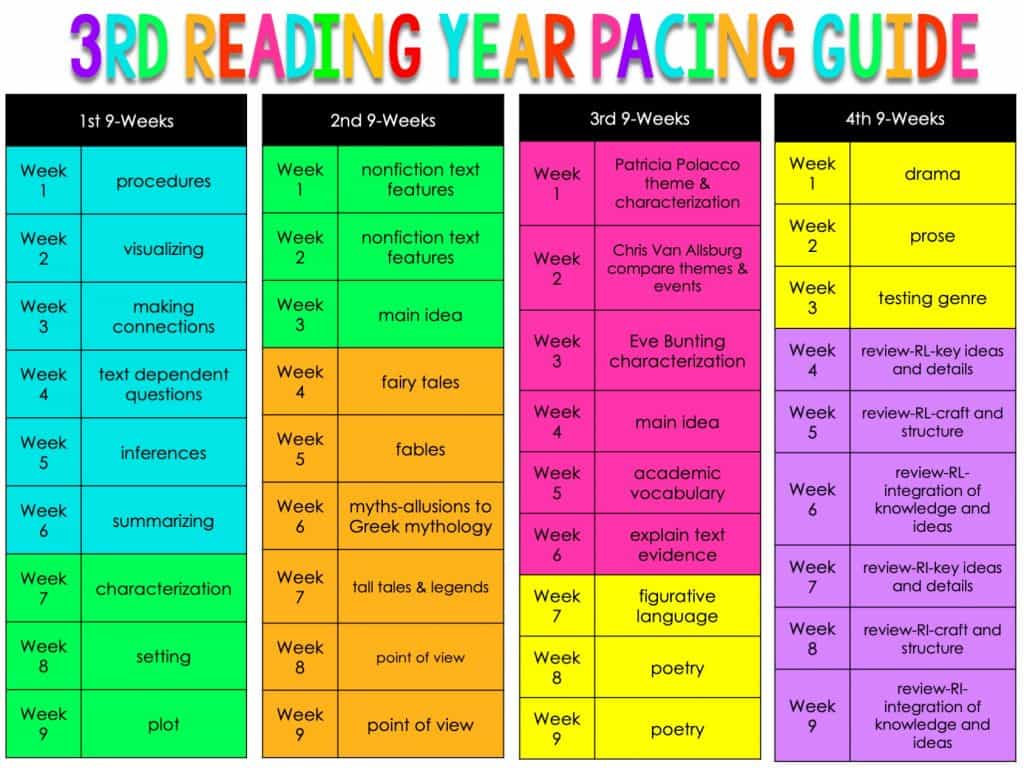
The cornerstone of the 3rd-grade experience is the transition toward informational literacy. While 1st and 2nd grade focused heavily on phonics and decoding—the mechanics of how to turn symbols into sound—3rd grade demands that students synthesize those sounds into meaning to extract knowledge from various texts.
Complex Narrative Structures and Non-Fiction
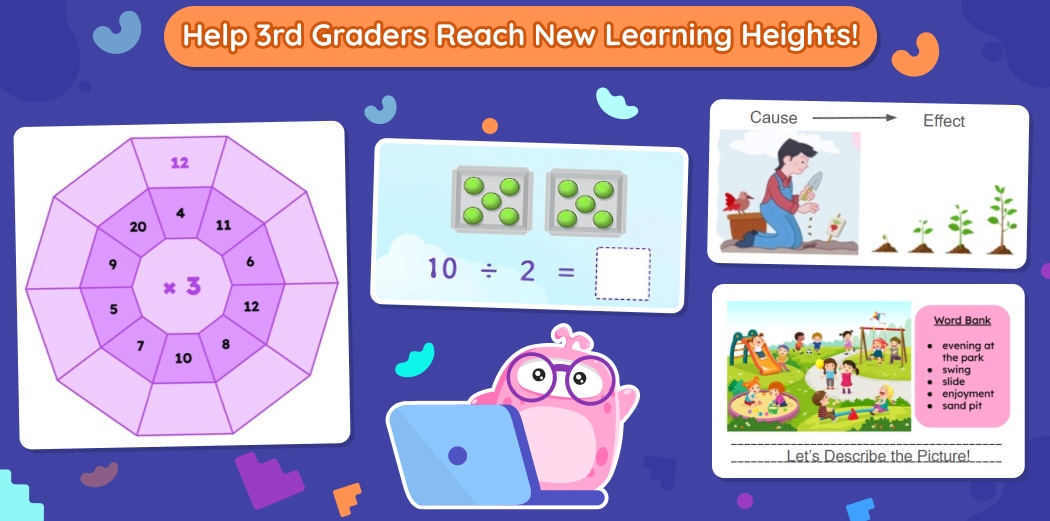
In 3rd grade, students move beyond simple sentence structures. They begin to explore longer chapter books, dissecting plot development, character motivation, and thematic elements. Simultaneously, there is a significant uptick in non-fiction exposure. Students are expected to navigate textbooks, news articles, and informational pamphlets, learning how to identify key details, summarize central arguments, and understand the difference between primary and secondary sources. This is the stage where vocabulary expansion becomes critical; students are introduced to “tier-two” words—academic vocabulary that appears frequently across different content areas but is rarely used in casual conversation.
The Foundation of Written Communication
Writing instruction in 3rd grade shifts toward organization and purpose. Students are taught the structure of the five-paragraph essay, focusing on clear topic sentences, supporting evidence, and concluding statements. They move past simple “story writing” and begin to engage in opinion-based persuasive writing and research-based report writing. This requires them to organize their thoughts logically, use transition words to connect ideas, and edit their work for grammar and syntax, laying the groundwork for more advanced expository writing in middle school.
Mathematical Fluency and Conceptual Reasoning
If literacy is the tool for gathering information, mathematics is the tool for processing it. In 3rd grade, the curriculum moves away from basic addition and subtraction toward the abstract concepts of multiplication, division, and fractions. This is a year where rote memorization meets logical application.
Mastering Multiplication and Division
The 3rd-grade math curriculum is dominated by the introduction of multiplication and division as inverse operations. Students are expected to understand multiplication not just as a set of flashcards to be memorized, but as repeated addition and as an array (a visual representation of rows and columns). This conceptual understanding is vital because it prepares students for the study of area, perimeter, and eventually, algebraic thinking. By the end of the year, fluency with basic multiplication facts (up to 10×10) is typically considered a non-negotiable benchmark for success in future years.
The Introduction of Fractions as Numbers
Perhaps the most conceptually challenging leap for 3rd graders is the introduction of fractions. Rather than viewing a fraction as just a “slice of a pizza,” students must learn to treat fractions as points on a number line. This marks the transition from seeing numbers as simple counts of whole objects to seeing numbers as parts of a whole, which is a major cognitive milestone in mathematical development. Understanding fractions is the precursor to understanding decimals and ratios, making it perhaps the most critical mathematical concept introduced during this year.
Science, Social Studies, and the Integration of Inquiry
While reading and math occupy the bulk of the school day, the integration of science and social studies provides the context in which these skills are applied. 3rd grade is often when children move from general observations to formal scientific inquiry and social analysis.
The Scientific Method and Environmental Systems
Science in 3rd grade introduces the basic framework of the scientific method: observation, hypothesis, experimentation, and conclusion. Students often begin to study life cycles, environmental adaptations, and the properties of matter. Instead of simply learning facts about animals or weather, they are prompted to ask “why” and “how.” They might explore how organisms survive in their environments or how forces and motion affect the speed of an object. This inquiry-based approach fosters a sense of curiosity and encourages students to view the world through an analytical lens.
Civic Engagement and Historical Perspectives
In the realm of social studies, the 3rd-grade curriculum often focuses on the local community and its role within the broader structure of state and national government. Students learn about the geography of their region, the history of their local area, and the responsibilities of citizenship. They begin to understand the concept of time and change, looking at how communities have evolved over the decades. By examining the roles of leaders and the concept of laws, students start to build a framework for understanding how society functions, which is the first step toward studying more complex political and historical themes in later grades.
Developing Soft Skills: Executive Function and Self-Regulation
Beyond the academic standards, 3rd grade is a crucial developmental stage for executive function. This is the period where the “scaffolding” provided by teachers in the early years begins to be dismantled, requiring students to take greater ownership of their own learning.
Organization and Time Management
For the first time, students are expected to manage longer-term assignments, such as multi-day research projects or complex homework folders. This requires them to prioritize tasks, keep track of materials, and adhere to deadlines. The 3rd-grade classroom environment is specifically designed to test and refine these organizational skills. Children who learn to manage their folders, track their assignments, and organize their desk space are developing the self-regulation necessary for the heavy workload of middle and high school.
Social Dynamics and Collaborative Learning
The third grade is also a period of significant social maturation. Collaborative group work becomes a staple of the classroom, forcing students to navigate peer dynamics, compromise, and communication. In group projects, students learn that their contributions affect the outcome of a collective goal. They are tasked with listening to different perspectives, articulating their own ideas clearly, and handling the frustrations that come with group cooperation. These interpersonal skills—often categorized under “social-emotional learning”—are just as vital as the ability to multiply or write an essay.
The Cumulative Impact of 3rd Grade
The curriculum of 3rd grade is essentially a bridge. On one side lies the concrete, tactile learning of early childhood, and on the other lies the abstract, complex reasoning of the middle school years. The mastery of these 3rd-grade subjects provides the intellectual infrastructure required for all subsequent learning.
When a student successfully navigates the transition to “reading to learn,” understands the logic behind multiplication and fractions, and begins to apply the scientific method to the world around them, they are no longer just a passive consumer of information. They become an active participant in their own education. This year is not merely a collection of subjects to be passed; it is a fundamental shift in the child’s capability to understand, interpret, and manipulate the world around them. As stakeholders in education, recognizing the weight of these achievements is essential to supporting students as they cross this threshold into more advanced stages of intellectual development. The skills acquired in 3rd grade are, in the truest sense, the markers of a maturing mind ready for the complexities of the modern world.
aViewFromTheCave is a participant in the Amazon Services LLC Associates Program, an affiliate advertising program designed to provide a means for sites to earn advertising fees by advertising and linking to Amazon.com. Amazon, the Amazon logo, AmazonSupply, and the AmazonSupply logo are trademarks of Amazon.com, Inc. or its affiliates. As an Amazon Associate we earn affiliate commissions from qualifying purchases.