
In the landscape of automotive engineering, the brake rotor stands as a pinnacle of materials science and mechanical precision. Often overlooked by the average consumer as a mere circular slab of metal, the brake rotor is, in fact, a sophisticated heat exchanger and a critical component in the vehicle’s active safety ecosystem. As we move deeper into an era of high-performance electric vehicles (EVs) and autonomous driving systems, the technology behind brake rotors has transitioned from simple cast-iron manufacturing to advanced computational fluid dynamics and carbon-composite chemistry. This article explores the technological intricacies of brake rotors, their design evolution, and how they integrate into the digitized future of transportation.

The Mechanics of Motion Control: How Brake Rotors Function
At its core, a brake rotor—also known as a brake disc—is the component of a disc brake system that rotates with the wheel. When a driver or an automated system applies the brakes, the brake calipers squeeze the brake pads against the surface of the rotor. This interaction is a study in the laws of thermodynamics, specifically the first law: energy cannot be destroyed, only transformed.
Kinetic Energy Transformation
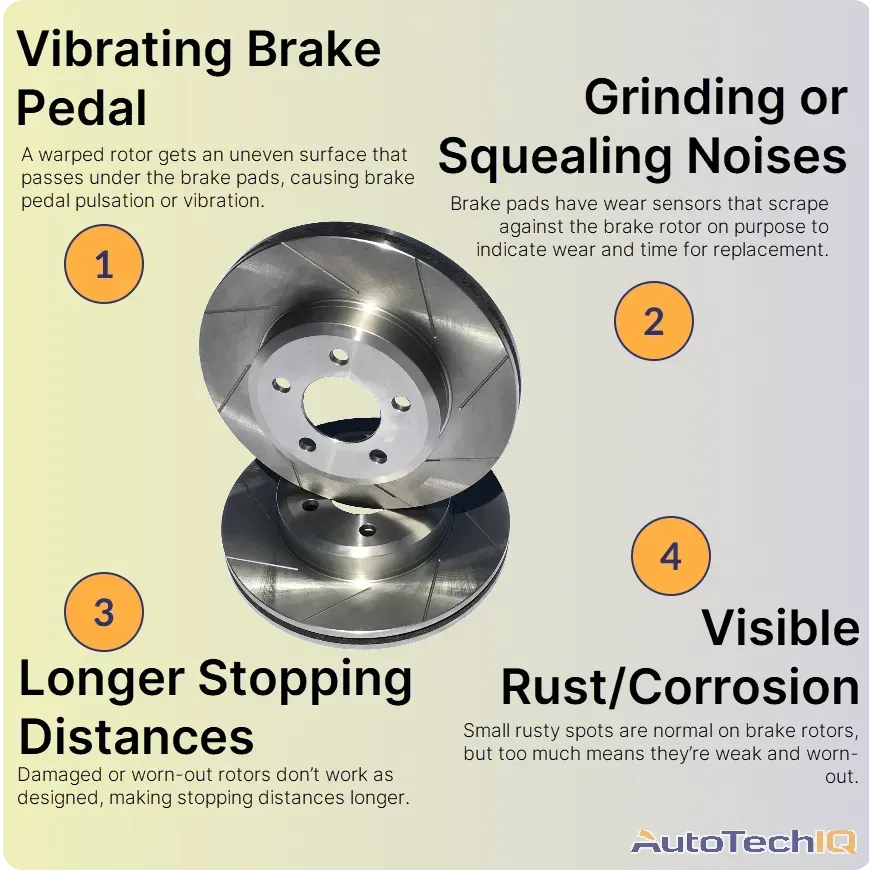
The primary technological role of a rotor is to convert the kinetic energy of a moving vehicle into thermal energy (heat) via friction. For a vehicle weighing two tons traveling at highway speeds, the amount of energy that must be dissipated to reach a full stop is immense. The rotor acts as a temporary reservoir for this heat. High-quality engineering ensures that the rotor can withstand thousands of heating and cooling cycles without losing structural integrity or “warping,” a term used to describe lateral runout caused by uneven thermal expansion.
Thermal Management and Heat Dissipation
Advanced tech in rotor design focuses heavily on thermal management. If a rotor cannot dissipate heat efficiently, the brake fluid may boil, and the brake pads may glaze, leading to “brake fade”—a dangerous reduction in stopping power. Modern rotors utilize internal cooling vanes, which act as a centrifugal pump. As the rotor spins, these vanes draw air from the center and push it outward, significantly increasing the surface area available for cooling. In high-performance tech applications, these vanes are often directionally curved or pillar-vane mapped using computer simulations to optimize airflow.
Materials Science: From Cast Iron to Carbon Ceramic
The “tech” of a brake rotor is most visible in its metallurgy. The choice of material determines the rotor’s weight, friction coefficient, and longevity. As automotive manufacturers push for greater efficiency and lower “unsprung weight,” materials science has become the frontier of braking innovation.
Traditional Grey Cast Iron and High-Carbon Alloys
For decades, the industry standard has been grey cast iron. While it may seem low-tech, the specific crystalline structure of grey iron allows for excellent thermal conductivity and damping of vibrations (NVH – Noise, Vibration, and Harshness). However, modern “High-Carbon” rotors represent a significant technological step up. By increasing the carbon content, engineers improve the thermal shock resistance, allowing the rotors to endure higher temperatures without cracking. This is crucial for modern turbocharged vehicles that reach higher speeds more rapidly.
High-Performance Carbon Ceramic Composites
The absolute zenith of braking technology is the Carbon Ceramic Matrix (CCM) rotor. Originally developed for aerospace applications and Formula 1, these rotors are composed of a silicon carbide compound reinforced with carbon fibers. The technological advantages are transformative: they are approximately 50% lighter than iron rotors, can withstand temperatures exceeding 1,000 degrees Celsius without fading, and theoretically last the lifetime of the vehicle. From a tech perspective, the manufacturing process of a CCM rotor is a weeks-long journey of pyrolysis and silicon infiltration, representing the intersection of chemistry and mechanical engineering.
Surface Coating Technologies
To combat environmental degradation and “brake dust”—the particulate matter shed during friction—new coating technologies have emerged. Tungsten carbide coating, for example, is applied using high-velocity oxygen fuel (HVOF) spraying. This tech creates a mirror-like finish that is nearly as hard as diamond, reducing brake dust by up to 90% and preventing corrosion. This is particularly important for the aesthetics of modern electric vehicles with large, open-spoke wheels and for meeting increasingly stringent environmental regulations regarding particulate emissions.
Design Innovations in Rotor Architecture
Beyond the material, the physical geometry of a rotor is a product of intense CAD (Computer-Aided Design) and FEA (Finite Element Analysis). The architecture of the rotor determines how it interacts with the brake pads and how it manages the stresses of high-speed deceleration.
Drilled vs. Slotted Configurations
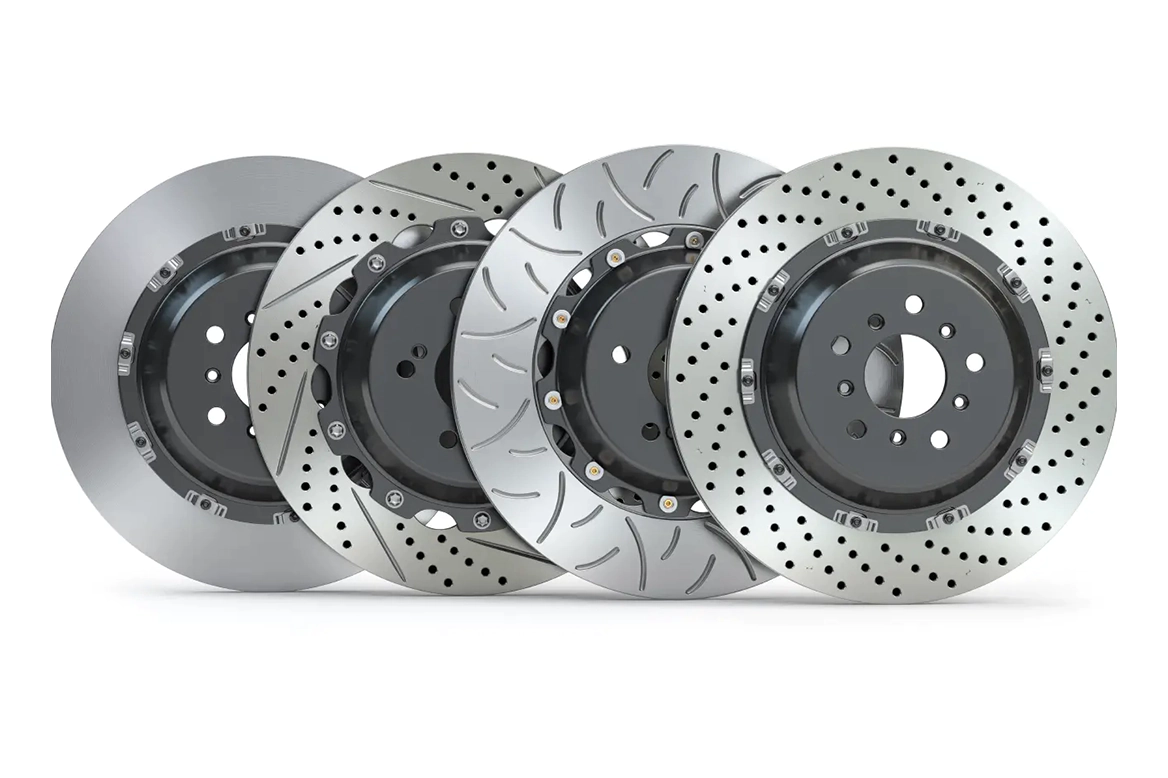
For enthusiasts and performance tech geeks, the debate between drilled and slotted rotors is a staple. Cross-drilled rotors feature holes drilled through the friction surface, originally designed to allow “outgassing” (the release of gasses from old-style brake pad resins). While modern pads don’t outgas as much, drilling remains a popular tech for weight reduction and water dissipation during wet-weather driving.
Slotted rotors, conversely, feature shallow grooves machined into the surface. These slots act as a “scraper” to clean the pad surface and provide an exit path for debris. In the tech world of track-focused vehicles, slotted rotors are often preferred because they maintain the structural integrity of the disc better than drilled versions under extreme thermal stress.
Two-Piece Floating Rotors
Standard rotors are “monoblock” (one solid piece of iron). However, high-end tech utilizes “floating” two-piece designs. These consist of an aluminum center “hat” (or bell) bolted to a cast-iron or ceramic friction ring. The “floating” hardware allows the friction ring to expand and contract independently of the hat when heated. This prevents the “coning” effect where the rotor deforms under heat, ensuring the friction surface remains perfectly parallel to the pads at all times.
The Future of Braking: Smart Sensors and Electric Integration
As we transition to the “Software-Defined Vehicle,” the brake rotor is no longer an isolated mechanical part. It is becoming an integrated node in the vehicle’s data network, influenced by electrification and sensor fusion.
Regenerative Braking and the EV Revolution
In electric vehicles, the brake rotor spends much of its life as a backup system. Regenerative braking uses the electric motor as a generator to slow the car down, capturing energy to recharge the battery. This creates a unique technological challenge: rotors on EVs can suffer from “disuse corrosion” because they aren’t used enough to scrub off surface rust. This has led to the development of specialized stainless steel rotors and new coating technologies designed specifically for the duty cycles of EVs, ensuring that when the mechanical brakes are needed in an emergency, they perform flawlessly.
Sensor Integration and Predictive Maintenance
The next wave of rotor technology involves “Smart Rotors.” By embedding temperature and wear sensors directly into the braking system, vehicles can transmit real-time data to the cloud. AI algorithms can then analyze this data to predict when a rotor is nearing the end of its service life or if it has developed a “hot spot” that could lead to failure. This shift from reactive to predictive maintenance is a core pillar of modern fleet management tech and autonomous vehicle safety.
Brake-by-Wire Systems
The physical link between the brake pedal and the rotor is being severed by “Brake-by-Wire” technology. In these systems, a computer interprets the pressure on the brake pedal and sends an electronic signal to an actuator that clamps the pads onto the rotor. This allows for millisecond-perfect brake modulation, far faster than any human. It also allows the tech to “blend” regenerative and mechanical braking seamlessly. Within this system, the rotor must be engineered to tighter tolerances than ever before, as the electronic actuators are sensitive to even the slightest variations in rotor thickness.
Conclusion
The brake rotor is a testament to the fact that even the most fundamental mechanical components are subject to the relentless pace of technological evolution. From the metallurgical breakthroughs of carbon-ceramic composites to the integration of smart sensors and “By-Wire” electronics, the rotor has evolved into a high-tech instrument of safety and performance. As vehicles become more autonomous and electrified, the engineering of the rotor will continue to adapt, proving that in the world of technology, even the simplest disc can be a masterpiece of modern science. Understanding the “what” of a brake rotor is simple, but appreciating the “how”—the physics, the chemistry, and the digital integration—reveals the true complexity of modern automotive tech.
aViewFromTheCave is a participant in the Amazon Services LLC Associates Program, an affiliate advertising program designed to provide a means for sites to earn advertising fees by advertising and linking to Amazon.com. Amazon, the Amazon logo, AmazonSupply, and the AmazonSupply logo are trademarks of Amazon.com, Inc. or its affiliates. As an Amazon Associate we earn affiliate commissions from qualifying purchases.