
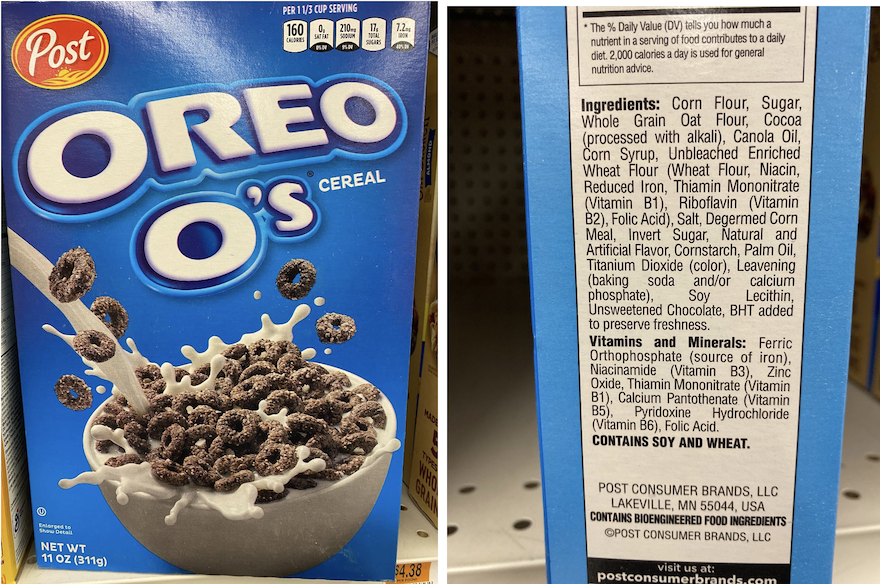
In the rapidly evolving landscape of food technology, few terms have sparked as much technical curiosity and regulatory discussion as “bioengineered ingredients.” For decades, the public understood these concepts under the umbrella of Genetically Modified Organisms (GMOs). However, as of January 2022, the United States Department of Agriculture (USDA) implemented the National Bioengineered Food Disclosure Standard, replacing the colloquial “GMO” with the more precise technical term: “Bioengineered” (BE).
To the technologist, a bioengineered ingredient is more than just a food component; it is a product of sophisticated biological programming. It represents the intersection of data science, genetic engineering, and high-tech manufacturing. Understanding what a bioengineered ingredient is requires a deep dive into the software of life—DNA—and the advanced tools we use to edit it.

The Core Technology: Genetic Engineering and Synthetic Biology
At its most fundamental level, a bioengineered ingredient is a food substance that contains detectable genetic material that has been modified through specific laboratory techniques. These modifications cannot be created through conventional breeding or found in nature. To understand this, we must look at the “tech stack” of modern biology.
Recombinant DNA (rDNA) Technology
Recombinant DNA is the foundational “operating system” of bioengineering. This process involves taking a specific gene sequence from one organism—perhaps a bacterium that produces a natural pesticide—and “pasting” it into the genome of a crop like corn or soy. This is analogous to inserting a specific line of code into a software program to give it a new function. The resulting crop then expresses a trait it never previously possessed, such as resistance to certain pests or tolerance to specific environmental stressors.
CRISPR-Cas9 and Precision Editing
While rDNA was the first generation of this technology, the current frontier is defined by CRISPR-Cas9. CRISPR is often described as “genetic scissors.” In the context of bioengineered ingredients, CRISPR allows scientists to make highly precise edits to an organism’s DNA without necessarily introducing foreign genes. By targeting specific sequences, technologists can “silence” genes that cause browning in apples or “enhance” genes that boost nutritional density. This level of precision reflects the shift from “blunt-force” genetic modification to “surgical” bio-coding.
Synthetic Biology (SynBio)
Beyond simple editing, synthetic biology involves designing and constructing new biological parts, devices, and systems. In the food tech world, this often manifests as “precision fermentation.” Here, microbes like yeast or bacteria are “programmed” with the genetic instructions to produce specific proteins or fats (such as heme for plant-based meats or non-animal dairy proteins). The microbe acts as a biological factory, and the resulting ingredient is a direct output of high-level bio-digital design.
The Infrastructure of Food Tech: Manufacturing and Processing
Bioengineering does not end at the cellular level. The production of bioengineered ingredients requires a massive technological infrastructure designed to scale biological processes into industrial outputs.
Bioreactors and Fermentation Hardware
To produce bioengineered ingredients at scale, tech firms utilize advanced bioreactors. These are highly controlled environments where temperature, pH, oxygen levels, and nutrient flow are monitored by automated systems. In these vats, bioengineered microbes execute their programmed tasks. The hardware is integrated with sensors and AI-driven feedback loops that optimize the “yield” of the ingredient, ensuring that the biological software is running at peak efficiency.
High-Throughput Screening
The development of a new bioengineered ingredient involves testing thousands of genetic variations to find the most effective one. This is made possible by high-throughput screening (HTS) technology. HTS uses robotics, data processing software, and sensitive detectors to conduct millions of chemical, genetic, or pharmacological tests quickly. This “fail-fast” tech methodology allows bioengineers to iterate on biological designs at a speed that was previously impossible, mirroring the rapid development cycles seen in the software industry.
Downstream Processing and Purification
Once a bioengineered ingredient is produced—for example, a specific enzyme or protein—it must be harvested and purified. This involves advanced separation technologies, such as membrane filtration and chromatography. These processes ensure that the final ingredient meets the exact technical specifications required for food safety and functionality, maintaining the integrity of the bioengineered “product.”
Data-Driven Agriculture: The Digital Blueprint of Bioengineering

The creation of bioengineered ingredients is a data-heavy enterprise. Modern biotechnology is as much about bioinformatics and cloud computing as it is about test tubes and greenhouses.
Genomic Sequencing and Bioinformatics
Before an ingredient can be bioengineered, the organism’s genome must be mapped. Genomic sequencing produces massive datasets that require significant computational power to analyze. Bioinformatics—the use of software tools to understand biological data—allows researchers to identify which specific gene sequences correlate with desired traits. This is essentially the “reverse engineering” of nature to find the modules of code that are most useful for human consumption and industrial production.
AI and Machine Learning in Gene Discovery
Artificial Intelligence (AI) is now being used to predict how genetic changes will affect an organism’s phenotype (its physical characteristics). Instead of years of trial-and-error in the field, machine learning models can simulate millions of genetic combinations to predict which ones will result in a hardier tomato or a more protein-rich grain. This predictive modeling is a hallmark of the modern tech approach to biology, transforming bioengineering into a predictable engineering discipline rather than a speculative science.
Digital Twins of Biological Systems
In the most advanced sectors of food tech, companies are creating “digital twins” of crops and microbes. These are digital replicas used to simulate how a bioengineered organism will behave in different environments or under different stress factors. By testing the “bio-code” in a virtual environment first, technologists can refine bioengineered ingredients with a level of foresight that traditional agriculture never allowed.
Security, Verification, and the Digital Ledger
A critical component of the “bioengineered” designation is the ability to track and verify these ingredients through the global supply chain. This is where digital security and transparency tech come into play.
Detection Technologies
To comply with regulations, food processors must be able to detect bioengineered material. This involves sophisticated laboratory techniques like Polymerase Chain Reaction (PCR) testing, which can amplify and identify specific DNA sequences. The technology used to detect BE ingredients is the same high-level diagnostic tech used in medical fields, ensuring that the presence of bioengineered material is verified with high technical accuracy.
Blockchain and Supply Chain Traceability
The “Bioengineered” label requires a rigorous audit trail. Many tech-forward food companies are now integrating blockchain technology to create an immutable ledger of an ingredient’s journey from the lab to the grocery shelf. By scanning a QR code on a package, a consumer (or a regulator) can access a decentralized record that verifies the origin of the bioengineered ingredient, the specific technology used to create it, and its compliance with safety standards. This integration of FinTech/LogTech into food production is essential for maintaining the integrity of the BE label.
Regulatory Tech (RegTech) Integration
The transition from GMO to BE was a significant regulatory shift that required new software solutions for food manufacturers. RegTech tools now help companies automatically scan their ingredient lists against USDA databases to determine if a “Bioengineered” disclosure is necessary. This automation reduces human error and ensures that the technical definition of “bioengineered”—having “detectable genetic material”—is applied consistently across thousands of SKUs.
The Future of the Bio-Digital Convergence
As we look toward the future, the line between “technology” and “biology” will continue to blur. Bioengineered ingredients are just the beginning of a larger trend toward a programmable food system.
Molecular Farming
The next wave of bioengineering tech is “molecular farming,” where plants are engineered to act as bioreactors themselves. Instead of using a steel vat, scientists program a plant like tobacco or lettuce to grow complex animal proteins or vaccines within its leaves. This turns the field into a hardware-less factory, utilizing the natural “solar power” of the plant to execute biological programs.
Computational Protein Design
We are entering an era where we can design proteins from scratch that do not exist in nature. Using software like AlphaFold, which predicts protein structures with incredible accuracy, bioengineers can design “designer ingredients” optimized for specific textures, flavors, or nutritional profiles. This is the ultimate expression of food as technology: a world where our ingredients are designed on a screen before they are ever manifested in a cell.
Ethical Tech and Biosecurity
As the tools of bioengineering become more powerful and accessible, the focus on biosecurity and ethical “guardrails” becomes paramount. The tech community is currently developing “kill switches” for bioengineered microbes—genetic codes that ensure an organism cannot survive outside a controlled laboratory environment. This level of biological security is a technical necessity as we move toward a more bio-integrated economy.
In conclusion, a bioengineered ingredient is far more than a simple food additive. It is a sophisticated technological achievement, born from the convergence of genetic programming, automated manufacturing, and data-driven insights. By understanding the tech behind the label, we gain a clearer picture of how our food system is being redesigned for a high-tech future.
aViewFromTheCave is a participant in the Amazon Services LLC Associates Program, an affiliate advertising program designed to provide a means for sites to earn advertising fees by advertising and linking to Amazon.com. Amazon, the Amazon logo, AmazonSupply, and the AmazonSupply logo are trademarks of Amazon.com, Inc. or its affiliates. As an Amazon Associate we earn affiliate commissions from qualifying purchases.