
Snapchat has revolutionized digital communication by prioritizing ephemeral, visual interactions over static, text-heavy archives. Central to this user experience is the platform’s unique social ranking system, which identifies and highlights your most frequent interlocutors. At the core of this system is the designation of “Best Friends.” Understanding how this feature functions is essential for navigating the platform’s social ecosystem, as it provides a gamified insight into your digital relationships.
The Mechanics of Snapchat’s Algorithm
Snapchat does not randomly assign the “Best Friend” status to your contacts. Instead, it relies on a sophisticated, proprietary algorithm that tracks and quantifies your interaction frequency. Unlike other social media platforms that rely on “likes” or public comments, Snapchat’s metric is purely behavioral, based on the volume of direct engagement between users.
How Interaction Frequency Dictates Status
The algorithm measures the total number of snaps sent and received, as well as the frequency of chats exchanged with specific individuals. When you send a snap to a user, it counts as one interaction; when they reply, that counts as another. The system essentially maintains a hidden leaderboard of the people you contact most often.
It is important to note that this calculation is dynamic. Snapchat updates your “Best Friends” list periodically to reflect shifting communication patterns. If you stop interacting with a frequent contact for a few days, your proximity score will naturally drop, potentially displacing them from your top list. The algorithm is designed to capture the “pulse” of your current social circle rather than a long-term historical average.
The Role of Two-Way Engagement
Crucially, being a Best Friend on Snapchat is rarely a one-sided affair. While the app tracks how many snaps you send to a specific person, the status is most robust when the communication is reciprocal. Because the system evaluates your “best” friends based on the weight of exchanges, a conversation that involves regular back-and-forth snaps is prioritized over one where you are simply sending content to a recipient who rarely responds.
Decoding the Emoji System
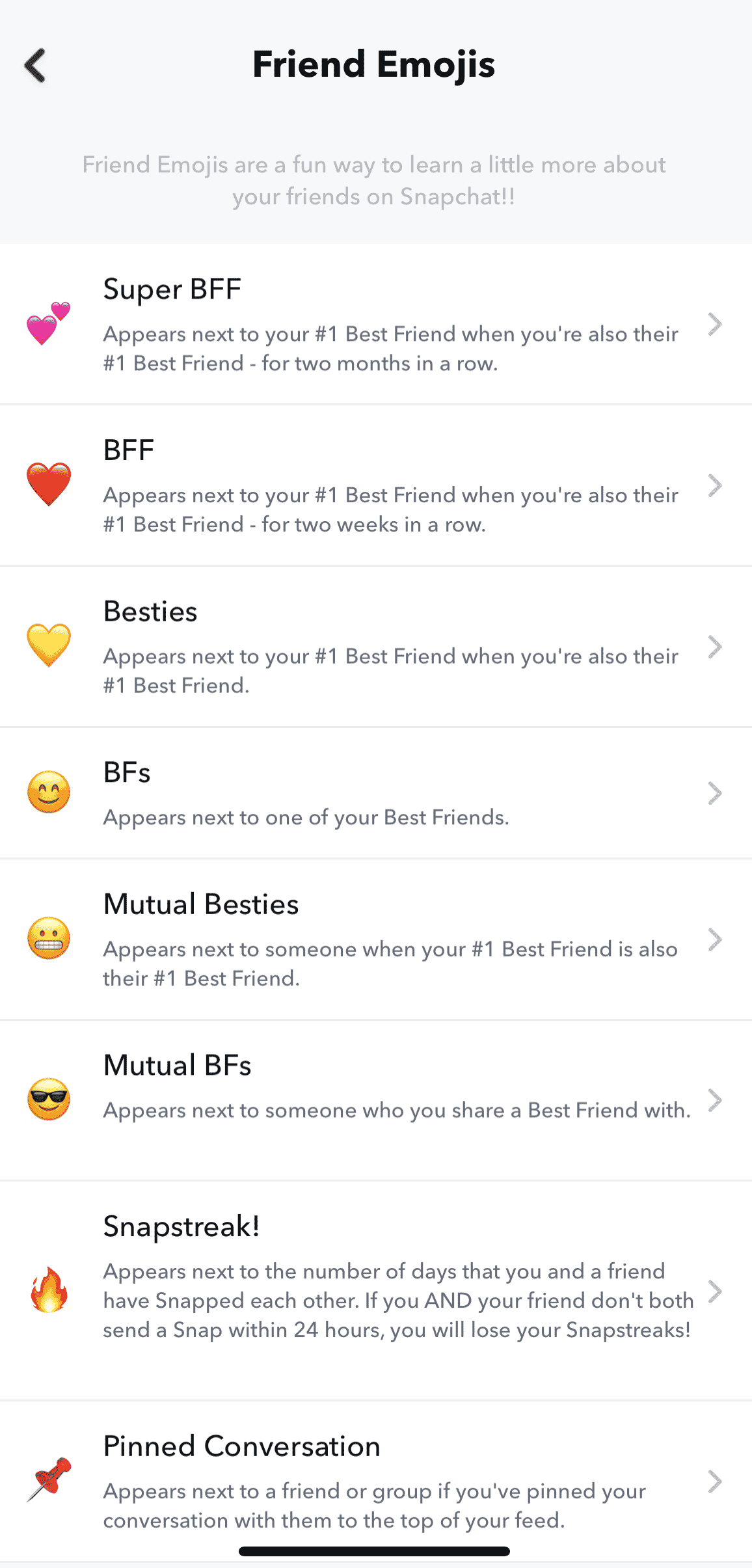
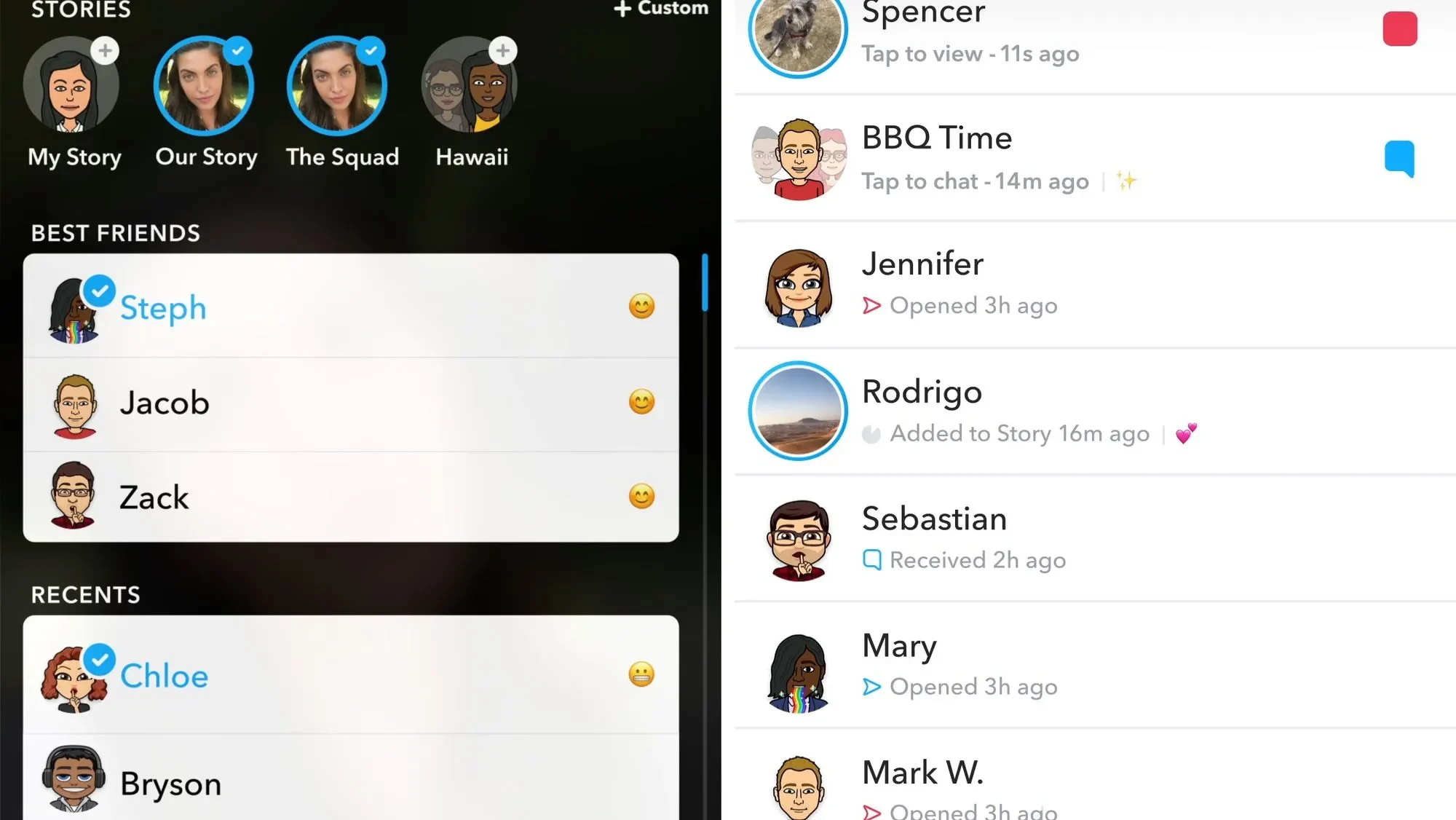
To make the algorithm’s findings transparent, Snapchat uses a specific set of “Friend Emojis” that appear next to the names of your contacts in the Send To screen and your conversation list. These icons are the primary user interface elements for determining who your closest digital confidants are.
The Best Friend Tiers
- The Yellow Heart (Besties): This emoji signifies that you and this person are each other’s “Number One” Best Friend. You send the most snaps to them, and they send the most snaps to you. It is the highest level of reciprocal interaction recognized by the app.
- The Red Heart (BFFs): This status indicates that you have been each other’s number one Best Friend for two consecutive weeks. It signifies a consistent, high-volume, and exclusive communication loop.
- The Pink Hearts (Super BFFs): This is the pinnacle of the Snapchat relationship hierarchy, appearing when you have remained each other’s number one Best Friend for two consecutive months.
- The Grinning Face with Smiling Eyes: This emoji appears next to someone who is one of your Best Friends, but not your number one. You send them a significant number of snaps, but perhaps not as many as you send to your “Number One” contact.
- The Face with Sunglasses: This icon indicates that one of your Best Friends is also one of their Best Friends. Essentially, you share a “mutual” close friend.

Managing Privacy and Customization
One common misconception is that this data is public. Your “Best Friends” list is strictly private; only you can see who your Snapchat Best Friends are. While you can see the emojis next to your contacts, other users cannot see who is on your list, nor can they see your specific rankings with others. Furthermore, Snapchat allows users to customize these emojis in the settings menu, meaning you can tailor the visual representation of your digital relationships to suit your aesthetic preferences without altering the underlying data.
The Social Psychology of Snapchat’s Gamification
Snapchat’s implementation of Best Friends is a masterclass in behavioral design. By attaching visual rewards—the hearts and faces—to human interaction, the app encourages users to maintain streaks and prioritize communication through the platform.
The “Streak” Phenomenon and Best Friend Status
While “Snapstreaks” (the fire emoji) are a separate metric from Best Friend status, they are inextricably linked in practice. Maintaining a streak requires daily interaction, which inherently keeps the recipient high on your “Best Friends” list. Users often feel a sense of obligation to keep these conversations alive, transforming casual contact into a daily digital ritual. This gamification creates a “fear of missing out” (FOMO) that drives daily active user (DAU) metrics, keeping the platform’s engagement rates significantly higher than traditional messaging apps.
Digital Proximity vs. Real-Life Relationships
It is vital to distinguish between a “Snapchat Best Friend” and a real-world friend. The algorithm only sees digital data points; it does not comprehend the nature of the conversation or the intimacy of the relationship. A colleague with whom you exchange work-related snaps daily may appear higher on your list than a close family member you only speak to on weekends. Understanding this distinction helps users maintain a healthy perspective, ensuring that the app serves as a tool for communication rather than a definitive metric of one’s personal social value.
Troubleshooting Common Issues and Hidden Features
Users often find themselves confused when their Best Friends list appears inconsistent. Sometimes, the algorithm seems to “forget” a frequent contact, or the emoji status disappears without warning.
Why Your List Changes Suddenly
The most frequent cause for a shifting Best Friends list is a change in your own behavior. Because the algorithm prioritizes recent activity over historical volume, taking a break from the app—or simply shifting your focus to a different group of contacts—will cause the list to reconfigure rapidly. If you engage in a high-volume group chat, the individuals within that group may also influence your individual Best Friend rankings, as the app accounts for all facets of your messaging behavior.
Removing or Resetting Best Friends
Snapchat offers limited control over the manual management of Best Friends. You cannot force a person to be your Best Friend, but you can effectively “reset” the relationship status by reducing your interaction frequency with them. By simply stopping the daily exchange of snaps, their name will eventually drop from your list as the algorithm prioritizes newer, more active connections.
For those looking to manage their social footprint, utilizing the “Clear Conversation” feature is the most effective way to reset the data associated with a specific user. Removing a conversation will reset the interaction data for that connection, effectively wiping the slate clean and removing them from any Best Friend ranking.
Final Thoughts on Snapchat Engagement
The Best Friend feature is a defining characteristic of the Snapchat experience, turning mundane daily messaging into a structured social map. By understanding the algorithm, the meaning behind the emojis, and the psychological mechanisms at play, users can better manage their presence on the platform. Whether you are using Snapchat to maintain close ties with friends or simply keeping up with a daily streak, these features provide a unique lens through which to view your digital interactions. Always remember that while the hearts and faces are engaging, they are merely a reflection of your own input—a digital mirror of your communication habits rather than an external judgment of your social standing.
aViewFromTheCave is a participant in the Amazon Services LLC Associates Program, an affiliate advertising program designed to provide a means for sites to earn advertising fees by advertising and linking to Amazon.com. Amazon, the Amazon logo, AmazonSupply, and the AmazonSupply logo are trademarks of Amazon.com, Inc. or its affiliates. As an Amazon Associate we earn affiliate commissions from qualifying purchases.