
The Fundamental Concept of Pressure in Technology
Pressure is an indispensable physical quantity, a cornerstone in countless technological applications ranging from the simplest pneumatic systems to the most complex aerospace designs. At its core, pressure represents the force exerted perpendicular to a surface, distributed over that surface’s area. This seemingly straightforward definition underpins virtually every interaction between fluids (liquids and gases) and solid surfaces, making its accurate measurement and interpretation critical for engineers, developers, and researchers across the tech spectrum.
Defining Pressure: Force Over Area
Mathematically, pressure (P) is expressed as force (F) divided by area (A): P = F/A. This simple equation reveals why pressure is so fundamental. A large force concentrated on a small area can create immense pressure, while the same force distributed over a vast area results in minimal pressure. Understanding this relationship is vital for designing robust components, ensuring operational safety, and optimizing performance in everything from consumer electronics to heavy industrial machinery. For example, the design of a smartphone’s water-resistance rating relies on understanding the pressure it can withstand, or the structural integrity of an airplane fuselage is directly related to the differential pressures it experiences during flight.
Why Pressure Matters in Tech
The relevance of pressure extends to almost every corner of modern technology. In industrial processes, precise pressure control is essential for chemical reactions, fluid transfer, and manufacturing automation. In the realm of the Internet of Things (IoT), miniature pressure sensors monitor everything from tire pressure in smart vehicles to atmospheric conditions in environmental monitoring systems. Automotive technology relies heavily on pressure readings for engine performance (manifold pressure), safety systems (brake pressure), and comfort (HVAC systems). Aerospace engineering is unthinkable without accurate pressure data for altitude, airspeed, and cabin pressurization. Even medical devices, such as blood pressure monitors and ventilators, are sophisticated applications of pressure measurement. The ability to accurately measure, regulate, and interpret pressure data is a hallmark of advanced technological development and operational efficiency.
Units of Pressure: A Diverse Landscape
While the concept of pressure is universal, its units of measurement are remarkably diverse, often reflecting historical contexts, specific industry preferences, or the magnitude of pressure being measured. The International System of Units (SI) designates the Pascal (Pa) as the standard unit for pressure, defined as one Newton per square meter (N/m²). However, engineers and scientists frequently encounter a variety of other units, each with its own advantages in particular contexts. These include pounds per square inch (PSI), atmospheres (atm), millimeters of mercury (mmHg), and, significantly, the bar. This multiplicity necessitates a clear understanding of conversion factors and the specific applications where each unit is most prevalent, particularly in globalized engineering and manufacturing environments where interoperability is key.
Unpacking the Bar: Origin, Definition, and Relation to SI Units
Among the array of pressure units, the bar holds a unique and frequently encountered position, especially in European and industrial contexts. Its prevalence stems from a blend of historical legacy and practical convenience, providing a unit that is both easily graspable and closely related to common atmospheric pressures.
Historical Context and Metric System Ties
The term “bar” originates from the Greek word “βάρος” (baros), meaning weight. It was formally introduced in the early 20th century as a unit within the CGS (centimeter-gram-second) system of units, predating the widespread adoption of the SI system. Its design was intended to offer a unit of pressure that was more intuitively scaled for everyday and meteorological measurements than the relatively small Pascal. Historically, atmospheric pressure was often measured in terms of the height of a mercury column (mmHg or torr) or in atmospheres. The bar offered a decimal-based, metric-friendly alternative that approximated one standard atmosphere, simplifying calculations and communication in many fields.
The Definition of One Bar: 100,000 Pascals
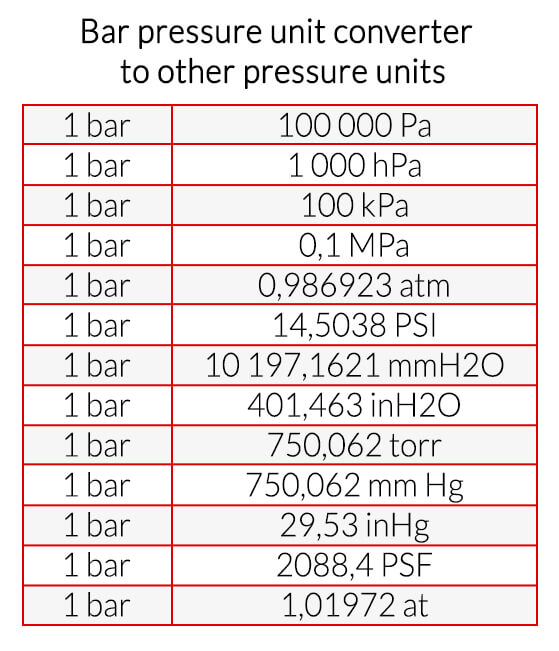
The defining characteristic of the bar is its precise relationship to the SI unit, the Pascal. One bar is exactly equal to 100,000 Pascals (100,000 Pa). Given that one Pascal is a Newton per square meter, this means:
1 bar = 100,000 N/m² = 100 kilopascals (kPa).
This direct conversion makes it relatively easy to switch between bar and SI units, a critical advantage in engineering applications that require high precision and consistency across different measurement systems. The kilopascal (kPa) is also a frequently used unit, and its direct relation (1 bar = 100 kPa) further cements the bar’s utility in metric-based technical environments.
Conversion Factors and Practical Equivalence
While its definition in Pascals is precise, the bar’s practical utility often lies in its conversion to other commonly used pressure units:
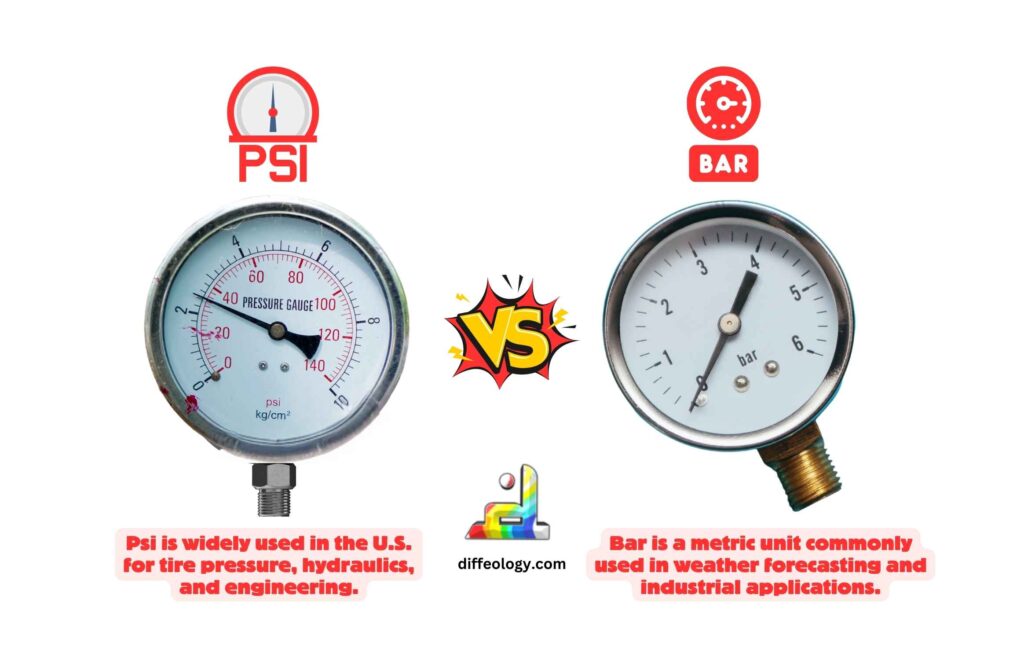
- Bar to PSI (Pounds per Square Inch): 1 bar ≈ 14.50377 PSI. This conversion is crucial when dealing with equipment or specifications originating from regions that primarily use the imperial system, such as the United States. For instance, tire pressure gauges in Europe might read in bar, while in the US they read in PSI, necessitating quick conversion for accurate interpretation.
- Bar to Atmosphere (atm): 1 bar ≈ 0.986923 atm. This close approximation (1 bar is slightly less than a standard atmosphere) is one of the reasons for the bar’s popularity, as it provides a convenient reference point for atmospheric pressures. Standard atmospheric pressure at sea level is often quoted as 1 atm, or 101325 Pa, or 1.01325 bar.
- Bar to mmHg (Millimeters of Mercury): 1 bar ≈ 750.062 mmHg. While less common in general engineering, this conversion is still relevant in specific fields like medical technology or older scientific instruments.
These conversion factors are not just academic exercises; they are vital tools for technicians, engineers, and product designers working with globalized supply chains and diverse technical standards. Misinterpreting pressure units can lead to catastrophic failures, making accurate conversion tables and a strong understanding of each unit’s context essential.
Why Not Pure SI? The Convenience Factor
Despite the global push for SI standardization, the bar persists due to its sheer convenience. A pressure of “one bar” is easily conceptualized, approximating the pressure one experiences at sea level. For many industrial and meteorological applications, working with values around 1, 10, or 100 bar is far more practical than dealing with hundreds of thousands or millions of Pascals. This pragmatic approach to unit selection often trumps pure theoretical consistency, especially when the unit simplifies communication and reduces the likelihood of calculation errors in practical, high-stakes environments.
Practical Applications of Bar Pressure Across Tech Industries
The bar unit is not merely a theoretical construct; it is a fundamental metric that drives design, operation, and safety across an array of technology sectors. Its presence in technical specifications, sensor outputs, and control system parameters highlights its enduring relevance.
Industrial Automation and Control Systems
In manufacturing and process industries, precision control of fluid pressure is paramount. Pneumatic systems (using compressed air) and hydraulic systems (using incompressible liquids) are ubiquitous, powering everything from robotic arms to heavy machinery. Pressure sensors and transducers output readings often in bar, which are then fed into Programmable Logic Controllers (PLCs) or Distributed Control Systems (DCS). These systems use bar values to monitor process variables, activate safety cut-offs, regulate flow rates, and ensure the consistent quality of products. For instance, in a bottling plant, the pressure for filling liquids needs to be precisely controlled, often specified in bar, to prevent spillage or incomplete fills. In chemical reactors, maintaining specific pressures, again often in bar, is critical for reaction kinetics and safety.
Automotive and Aerospace Engineering
The automotive industry relies heavily on bar pressure measurements for both performance and safety. Tire pressure monitoring systems (TPMS) display pressures, frequently in bar or PSI, directly to the driver, ensuring optimal fuel efficiency and safety. Engine management systems monitor manifold pressure (boost pressure in turbocharged engines) in bar to optimize combustion and power output. Brake systems, fuel injection systems, and even air conditioning units all operate within specific pressure ranges, often calibrated and monitored in bar.
In aerospace, cabin pressurization systems maintain internal pressure at safe levels, typically equivalent to an altitude of 6,000-8,000 feet, which translates to a specific pressure in bar. Hydraulic systems for landing gear, control surfaces, and braking all operate at very high pressures, often specified in hundreds of bar, requiring robust sensors and materials. The understanding and management of these pressures are critical for flight safety and performance.

Meteorology and Environmental Tech
While atmospheres (atm) or hectopascals (hPa) are common in meteorology, bar is still widely used in certain contexts, particularly in older systems or specific scientific instruments. Weather stations, both professional and consumer-grade, often provide atmospheric pressure readings that can be converted to bar. Changes in atmospheric pressure, even small fractions of a bar, can indicate significant weather shifts. Environmental sensors deployed in oceans or at various altitudes also measure pressure, often providing data that is readily convertible to bar for analysis of depth or atmospheric conditions.
Diving and Subsea Technology
For divers and subsea vehicles, pressure is directly proportional to depth. Dive computers and depth gauges display depth, often correlating directly to pressure readings. While some might use meters of seawater (MSW), the underlying pressure is frequently expressed in bar. For example, recreational diving typically operates up to 40 meters (around 4-5 bar absolute pressure). For remotely operated vehicles (ROVs) and submarines exploring the deep sea, surviving pressures of hundreds of bar is a fundamental design challenge. Pressure sensors rated in bar are therefore crucial for navigation, safety, and operational monitoring in these extreme environments.
Everyday Gadgets and Smart Devices
The miniaturization of pressure sensors has brought bar pressure measurement into everyday tech. Smartwatches can incorporate barometric sensors to estimate altitude changes or provide local weather forecasts. Smart home devices might include pressure sensors to monitor indoor air quality or detect changes in HVAC system performance. Advanced sports equipment, such as smart bike pumps or fitness trackers, can also leverage pressure data, often displayed or processed using bar as a reference unit.
Measuring and Interpreting Bar Pressure Data
The effective use of bar pressure data in technology hinges on accurate measurement and insightful interpretation, requiring a solid understanding of sensor technology, calibration, and critical distinctions like absolute versus gauge pressure.
Types of Pressure Sensors
Modern technology employs a diverse range of pressure sensors, each suited for particular applications based on accuracy requirements, environmental conditions, and pressure ranges.
- Piezoresistive Sensors: These are common in MEMS (Micro-Electro-Mechanical Systems) devices, where pressure causes a diaphragm to deform, changing the electrical resistance of integrated resistors. They are widely used in automotive, medical, and consumer electronics due to their small size and cost-effectiveness.
- Capacitive Sensors: These sensors measure pressure based on changes in capacitance between a fixed electrode and a flexible diaphragm. They offer high accuracy and stability, often found in industrial and meteorological applications.
- Strain Gauge Sensors: Traditional and robust, these use a metallic foil or wire whose electrical resistance changes when stretched or compressed by pressure. They are durable and suitable for high-pressure industrial environments.
- Optical Sensors: Emerging technologies use fiber optics or other light-based methods to detect pressure-induced changes, offering immunity to electromagnetic interference and suitability for hazardous environments.
The output of these sensors is typically an electrical signal (voltage or current) which is then converted into a pressure reading, often displayed or processed in bar.
Calibration and Accuracy in Tech Applications
For any pressure measurement to be reliable, the sensor system must be accurately calibrated. Calibration involves comparing the sensor’s output to known pressure standards across its operational range. In technological applications, miscalibrated sensors can lead to incorrect process control, safety hazards, or faulty product performance. Regular recalibration, guided by industry standards and best practices, is crucial, especially for critical systems in aerospace, medical devices, and industrial automation where even small inaccuracies in bar readings can have significant consequences. High-precision applications might require sensors with an accuracy of fractions of a millibar.
Absolute vs. Gauge Pressure: Critical Distinctions
A fundamental concept in pressure measurement is the distinction between absolute and gauge pressure, which profoundly impacts the interpretation of bar readings:
- Absolute Pressure (bara): This refers to pressure measured relative to a perfect vacuum (zero pressure). An absolute pressure sensor would read the actual force per unit area, including atmospheric pressure. For instance, an absolute pressure sensor at sea level would read approximately 1 bara. Absolute pressure is critical in applications involving vacuum systems, altitude measurements (where atmospheric pressure varies), and gas law calculations.
- Gauge Pressure (barg): This refers to pressure measured relative to the ambient (surrounding) atmospheric pressure. Most everyday pressure gauges, like those for tires or industrial pipelines, measure gauge pressure. If a tire pressure gauge reads 2.5 barg, it means the pressure inside the tire is 2.5 bar above the current atmospheric pressure. Gauge pressure is useful for controlling systems where the relevant force is the differential pressure relative to the environment.
Confusing these two types of pressure is a common source of error in engineering. For example, a pressure vessel rated for 10 barg must be distinguished from one rated for 10 bara, as the former implies it can withstand 10 bar above ambient, while the latter means its internal pressure should not exceed 10 bar total, regardless of ambient conditions.
Software and Data Interpretation
Raw pressure data from sensors, whether in bar or other units, is often integrated into sophisticated software platforms. SCADA (Supervisory Control and Data Acquisition) systems, IoT dashboards, and specialized data logging software process these readings. They provide real-time visualization, historical trending, alarm generation, and facilitate complex analysis. Modern platforms use algorithms to compensate for temperature drift, filter noise, and even predict potential failures based on pressure trends. The ability to effectively interpret and act upon this data, often presented and analyzed in bar, is a key component of smart manufacturing, predictive maintenance, and data-driven decision-making in tech.
The Future of Pressure Measurement in Evolving Technologies
As technology continues its rapid evolution, the role of pressure measurement, including the use of units like the bar, is also advancing. Innovations are pushing the boundaries of what is possible, enabling more precise, integrated, and intelligent applications.
Miniaturization and Integration in IoT Devices
The trend towards smaller, more powerful, and more connected devices is driving the miniaturization of pressure sensors. Micro-electro-mechanical systems (MEMS) technology allows for incredibly small, highly sensitive pressure sensors that can be integrated directly into chips, smart textiles, and a vast array of IoT endpoints. This enables new applications, from smart contact lenses that monitor intraocular pressure to distributed networks of environmental sensors reporting local barometric conditions in real-time. The ability to embed accurate bar pressure measurement into almost any object will unlock unprecedented levels of data collection and environmental awareness.
Advanced Materials and Sensor Durability
Future advancements in material science are leading to the development of pressure sensors that are more durable, resistant to harsh environments, and capable of operating across wider temperature and pressure ranges. New materials, such as graphene and advanced polymers, offer enhanced sensitivity, reduced drift, and improved longevity. This will be critical for applications in extreme environments, such as deep-sea exploration, high-temperature industrial processes, or aerospace vehicles operating at hypersonic speeds, where reliable bar pressure readings are essential for both performance and safety.
AI and Predictive Maintenance Based on Pressure Data
The integration of artificial intelligence (AI) and machine learning (ML) with pressure sensor data is revolutionizing predictive maintenance and operational optimization. By continuously monitoring bar pressure trends in complex systems like hydraulic circuits, industrial pipelines, or engine components, AI algorithms can detect subtle anomalies that might indicate impending failure. This allows for proactive maintenance, reducing downtime, extending equipment lifespan, and preventing costly catastrophic events. For example, a slight, consistent deviation from an expected pressure range in bar could trigger an alert for early inspection, saving significant resources.
The Role of Standardized Units in Global Tech Collaboration
While the bar remains a prevalent unit, the broader movement towards global standardization, primarily driven by the SI system, will continue to influence how pressure is communicated and interpreted. However, the practical convenience of the bar ensures its continued relevance in many sectors. Future advancements will likely involve more sophisticated software tools that can seamlessly convert and display pressure data in various units, minimizing confusion and facilitating international collaboration in research, development, and manufacturing. The goal is to ensure that regardless of the unit preferred, the underlying scientific and engineering principles of pressure are understood universally, fostering innovation and safety across borders.
aViewFromTheCave is a participant in the Amazon Services LLC Associates Program, an affiliate advertising program designed to provide a means for sites to earn advertising fees by advertising and linking to Amazon.com. Amazon, the Amazon logo, AmazonSupply, and the AmazonSupply logo are trademarks of Amazon.com, Inc. or its affiliates. As an Amazon Associate we earn affiliate commissions from qualifying purchases.