
In the intricate world of lighting technology, certain components work behind the scenes to ensure our lamps illuminate effectively and efficiently. Among these critical elements, the ballast stands out as an indispensable device for specific types of lighting. Far from being a mere switch, a ballast is a current-limiting device that plays a pivotal role in regulating the electrical flow to a lamp, enabling it to start and operate safely and consistently. Without it, many common light sources, particularly older fluorescent and high-intensity discharge (HID) lamps, would either fail to ignite, burn out instantly, or suffer from highly unstable light output. Understanding the function and evolution of ballasts is key to appreciating the engineering behind various illumination systems, from the humblest office fixture to sophisticated industrial lighting setups.

The Core Function of a Ballast
The fundamental purpose of a ballast revolves around two primary tasks: providing a high initial voltage to strike an arc within the lamp and then limiting the current to sustain that arc at a stable level. Unlike incandescent bulbs, which operate by simply heating a filament to incandescence, gas-discharge lamps require a more complex electrical interaction to produce light.
Regulating Current for Stable Operation
Once a gas-discharge lamp ignites, its electrical resistance drops significantly. Without a ballast, this drop in resistance would lead to an uncontrolled surge of current. This surge, known as a “runaway current,” would quickly overwhelm the lamp’s delicate internal components, causing it to overheat and fail almost instantaneously. The ballast acts as a current regulator, presenting an impedance to the circuit that limits the flow of electricity to the optimal level required for the lamp’s continuous, stable operation. This current limiting prevents premature lamp failure, ensures consistent light output, and prolongs the lamp’s useful life. Think of it like a governor on an engine, preventing it from revving too high and causing damage.
Providing the Initial Voltage Spike
To initiate light production in a gas-discharge lamp, a high voltage is necessary to ionize the gas within the lamp’s tube or arc chamber. This ionization creates a conductive path, or an arc, through which current can flow, causing the gas to emit light. Many ballasts incorporate a starter mechanism or a transformer-like winding that generates this brief, high-voltage pulse. This “kick” is essential to overcome the initial resistance of the un-ionized gas, allowing the lamp to “strike.” Once the arc is established, the ballast then seamlessly transitions to its current-limiting role, maintaining the arc with a much lower, but still precise, operating voltage.
Types of Ballasts and Their Evolution
The technology behind ballasts has undergone significant transformation over the decades, driven by demands for greater energy efficiency, reduced size, and improved performance. From rudimentary magnetic coils to sophisticated electronic circuits, ballasts have evolved to meet the needs of various lighting technologies.
Magnetic Ballasts: The Traditional Workhorse
Magnetic ballasts, also known as electromagnetic ballasts, represent the oldest and most traditional form of ballast technology. They consist primarily of a coiled wire around a magnetic core, often combined with a starter or capacitor. Their operation relies on the principles of electromagnetic induction to regulate current. While robust and relatively inexpensive, magnetic ballasts are known for several drawbacks. They generate audible hum (due to magnetic vibrations), consume more energy (due to heat loss in the coil), and can cause noticeable light flicker (operating at the AC line frequency of 50 or 60 Hz). Despite these limitations, their simplicity and reliability meant they were ubiquitous for decades, powering millions of fluorescent and HID fixtures.
Electronic Ballasts: Efficiency and Advanced Features
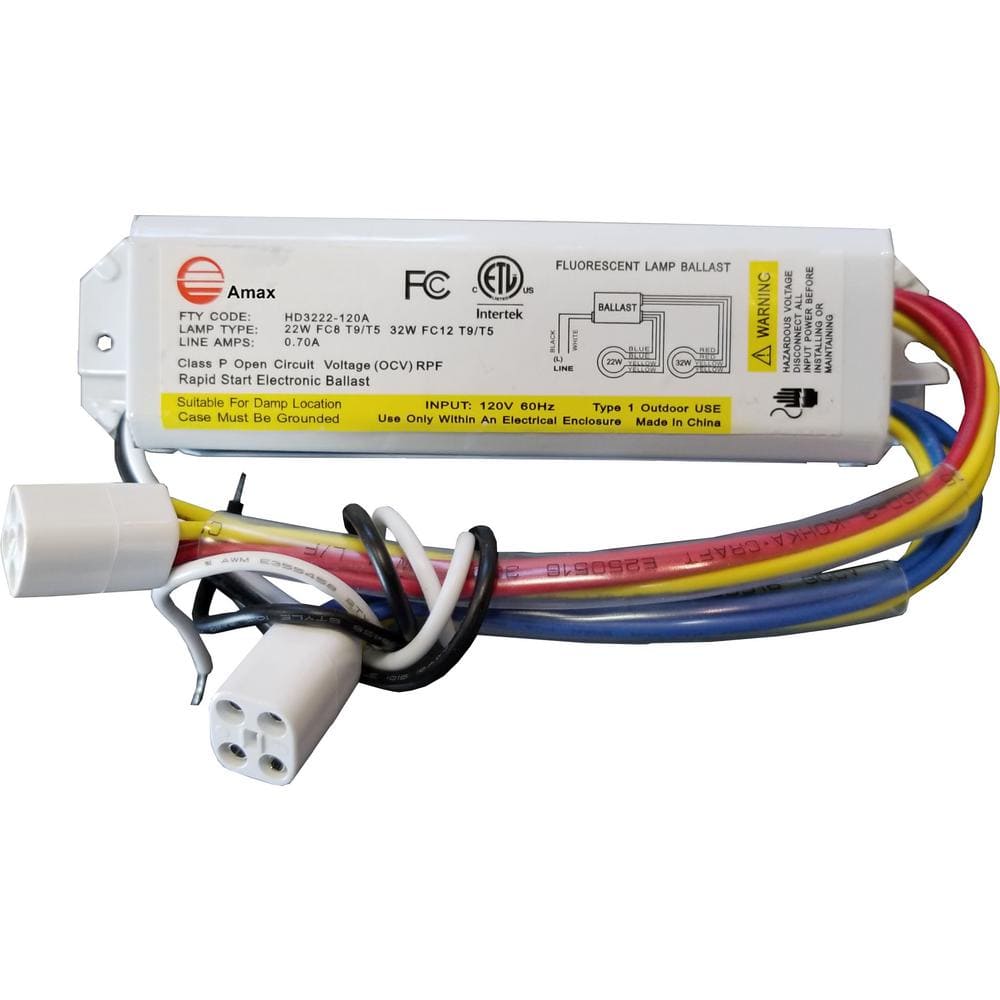
Electronic ballasts represent a significant technological leap forward. Instead of relying on heavy magnetic components, they use semiconductor technology and high-frequency switching circuits. These ballasts convert the incoming AC power to a much higher frequency (typically 20 kHz or more) before sending it to the lamp. Operating at higher frequencies offers several distinct advantages: it virtually eliminates the noticeable flicker associated with magnetic ballasts, reduces audible hum to an imperceptible level, and significantly improves energy efficiency by minimizing power losses. Electronic ballasts are also smaller, lighter, and can offer advanced features like dimming capabilities, rapid start functionality (reducing lamp blackening at the ends), and diagnostic indicators. Their widespread adoption has been a key factor in improving the overall quality and efficiency of fluorescent lighting.
Hybrid Ballasts: Bridging the Gap
Hybrid ballasts attempt to combine aspects of both magnetic and electronic technologies. They typically use a magnetic transformer for current regulation but incorporate electronic components to manage the starting sequence or provide some degree of current waveform shaping. While offering some improvements over purely magnetic systems, such as better starting or slightly reduced flicker, they generally do not achieve the full efficiency or advanced features of pure electronic ballasts. Their niche was often in retrofitting or as an intermediary step in the transition from older magnetic systems to fully electronic ones.
Compatibility with Different Light Sources (Fluorescent, HID, LED)
It’s crucial to understand that ballasts are designed for specific lamp types. A ballast intended for a T8 fluorescent lamp cannot be used with a metal halide HID lamp, and vice-versa. The electrical characteristics (voltage, current, waveform) required by different gas-discharge lamps vary greatly.
For fluorescent lamps, ballasts range from those designed for older T12 lamps to more modern T8 and T5 lamps, each optimized for the specific lamp geometry and gas mixture.
High-Intensity Discharge (HID) lamps, such as metal halide, high-pressure sodium, and mercury vapor lamps, also require specialized ballasts due to their extremely high starting voltages and precise operating current requirements.
While LEDs (Light Emitting Diodes) do not use traditional “ballasts” in the same sense, they require a similar regulating device known as an LED driver. An LED driver limits the current to an LED, protects it from voltage fluctuations, and ensures stable light output, effectively performing a analogous function to a ballast for older lighting technologies.
Why Ballasts Are Essential for Certain Lighting Technologies
The very nature of how gas-discharge lamps produce light necessitates the use of a ballast. Their unique electrical properties make them fundamentally different from simple resistive loads.
The Unique Needs of Fluorescent Lamps
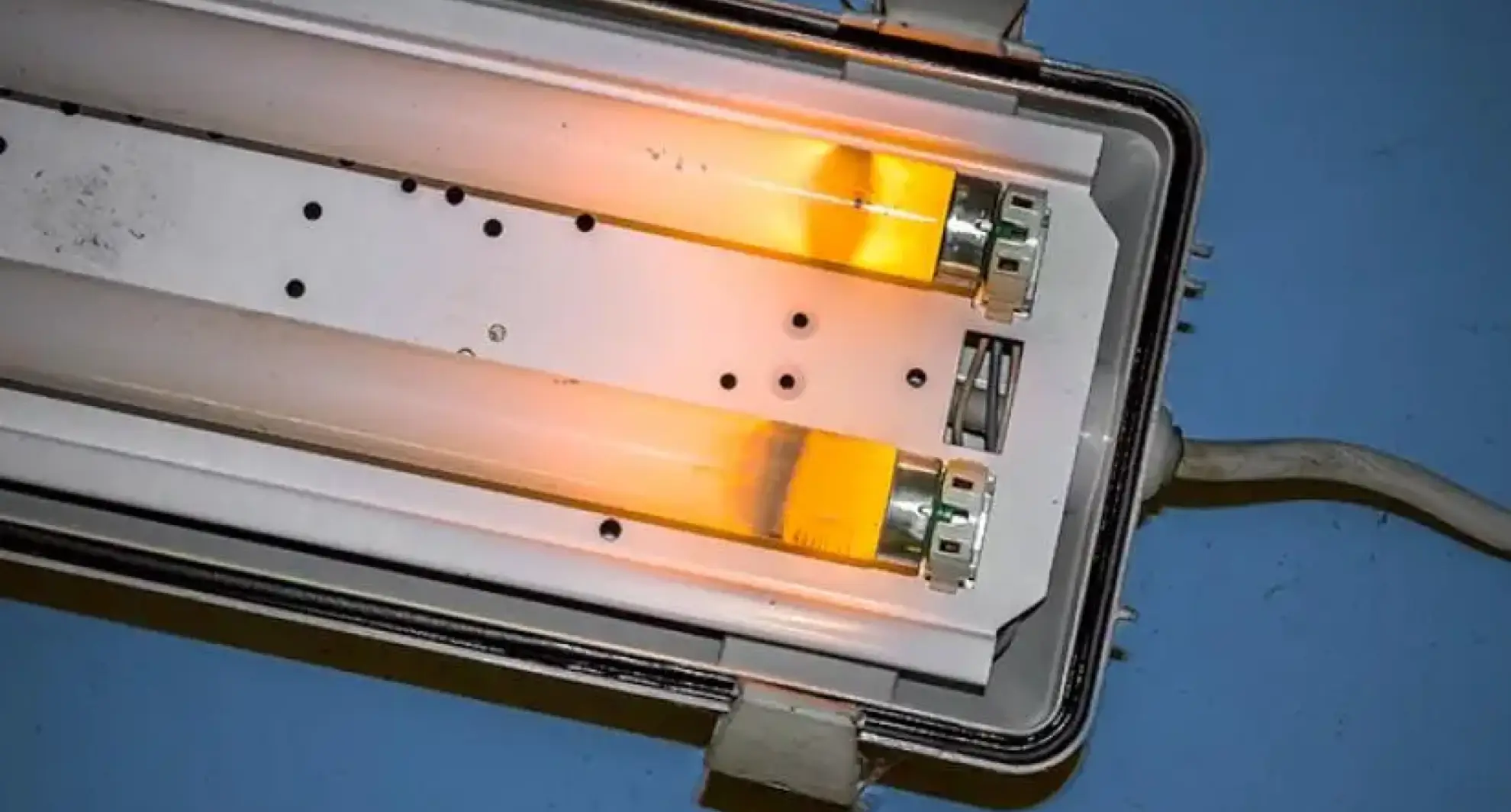
Fluorescent lamps rely on an electrical arc passing through mercury vapor and inert gases within a glass tube. This arc excites the mercury atoms, causing them to emit ultraviolet (UV) light, which then strikes a phosphor coating on the inside of the tube, producing visible light. The process of establishing and maintaining this arc has specific electrical requirements:
- Negative Resistance Characteristic: Once ionized, the gas in a fluorescent lamp exhibits a negative resistance characteristic. This means that as current increases, the voltage drop across the lamp decreases, leading to an uncontrolled surge if not limited. The ballast provides the necessary positive resistance to stabilize the circuit.
- Preheating (for some types): Many fluorescent lamps, particularly older ones, require their electrodes to be preheated to make starting easier. The ballast, or a separate starter component, facilitates this preheating before applying the high voltage to strike the arc.
- Precise Operating Current: Each fluorescent lamp has an optimal operating current that maximizes its light output and lifespan. The ballast ensures this current is consistently delivered.
High-Intensity Discharge (HID) Lighting Requirements
HID lamps, which include metal halide, high-pressure sodium, and mercury vapor lamps, operate by passing an arc through a highly pressurized mixture of gases and metal halides. These lamps are known for their very high light output from a compact source, making them ideal for large area lighting, sports stadiums, and streetlights. Their operation demands even more robust and precise ballast control than fluorescent lamps:
- Extremely High Starting Voltage: To ionize the dense gas and vapor mixture in an HID lamp, significantly higher starting voltages (often several thousand volts) are required compared to fluorescent lamps. HID ballasts incorporate special igniters to generate these powerful pulses.
- High Operating Pressure: The high internal pressure during operation makes HID lamps particularly sensitive to current fluctuations, requiring very stable regulation to prevent flickering or premature failure.
- Warm-Up Period: HID lamps require a warm-up period as the internal gases heat up and vaporize. The ballast manages the current during this phase, ensuring a smooth transition to full brightness.
- Restrike Time: If an HID lamp is turned off, it needs to cool down significantly before it can be reignited, as the high pressure makes it impossible to restrike the arc immediately. The ballast system manages this restrike process, often with a delay.
Advantages and Disadvantages of Different Ballast Types
The choice between different ballast types historically involved trade-offs between cost, performance, and application suitability. While modern installations overwhelmingly favor electronic ballasts or LED drivers, understanding the distinctions highlights technological progress.
Performance Metrics: Energy Efficiency, Flicker, Noise
- Magnetic Ballasts:
- Energy Efficiency: Lower. Significant power is lost as heat in the windings.
- Flicker: Noticeable (120 Hz in North America, 100 Hz in Europe), which can cause eye strain and visual discomfort.
- Noise: Audible hum (60 Hz or 50 Hz), especially in older or poorly installed fixtures.
- Electronic Ballasts:
- Energy Efficiency: High. Minimal power loss due to high-frequency operation.
- Flicker: Virtually eliminated due to operation at frequencies above 20 kHz, which is imperceptible to the human eye.
- Noise: Inaudible, making them suitable for quiet environments.
Longevity and Maintenance Considerations
- Magnetic Ballasts: Generally very durable due to their simple construction, but components like capacitors and starters could fail. Heat generation can also degrade surrounding fixture components over time.
- Electronic Ballasts: Typically have a longer average lifespan than magnetic ballasts, primarily due to cooler operation and more precise power delivery. However, like any sophisticated electronic device, they can be susceptible to power surges or component failures in their complex circuitry. Maintenance primarily involves direct replacement upon failure.
Cost Implications and Return on Investment
- Magnetic Ballasts: Lower initial purchase cost. However, their higher energy consumption leads to higher operating costs over time, diminishing their long-term value.
- Electronic Ballasts: Higher initial purchase cost compared to magnetic counterparts. This upfront investment is often quickly recouped through significant energy savings, reduced maintenance (due to longer lamp life and fewer ballast failures), and improved occupant comfort and productivity due to flicker-free lighting. This often results in a favorable return on investment (ROI).
The Future of Lighting and Ballast Technology
The lighting industry is in a perpetual state of innovation, with a strong emphasis on energy efficiency, connectivity, and intelligent control. This evolution significantly impacts the role and form of ballasts.
The Rise of LED Drivers (The “Ballast” for LEDs)
While traditional ballasts are becoming obsolete for new installations, their spirit lives on in LED drivers. Light Emitting Diodes (LEDs) are inherently low-voltage, direct current (DC) devices. The alternating current (AC) from the mains supply needs to be converted and regulated to provide the precise DC current required by LEDs. An LED driver performs this function:
- AC-to-DC Conversion: Rectifies the AC input to DC.
- Current Regulation: Crucially, it limits the current to the LEDs, preventing thermal runaway and ensuring optimal brightness and lifespan.
- Voltage Step-Down: Often steps down the voltage to the required level for the LED array.
- Dimming Capabilities: Modern LED drivers frequently integrate sophisticated dimming functionalities (e.g., pulse-width modulation, constant current reduction).
LED drivers are, in essence, the modern-day equivalent of ballasts, ensuring LEDs operate efficiently and reliably. The ongoing advancements in driver technology are critical for maximizing the potential of LED lighting.
Smart Lighting Integration and Control
The future of lighting is increasingly intertwined with smart technology. Ballasts and LED drivers are now being designed with integrated communication capabilities, allowing them to be part of networked lighting control systems. These systems can enable:
- Occupancy Sensing: Lights turn on/off or dim based on room occupancy.
- Daylight Harvesting: Lights dim automatically in response to ambient natural light, saving energy.
- Scheduling and Scene Setting: Pre-programmed lighting configurations for different times or activities.
- Color Tuning: For advanced LED systems, drivers can control the color temperature and intensity of light to support human circadian rhythms or specific aesthetic needs.
- Remote Monitoring and Diagnostics: Allowing facility managers to monitor lighting performance, detect failures, and manage energy consumption from a central dashboard.
This integration transforms lighting from a static utility into a dynamic, adaptable, and intelligent system, with the ballast/driver as a key enabling component.
Sustainability and Energy Conservation
The continuous evolution of ballast and driver technology plays a crucial role in global sustainability efforts. By improving energy efficiency, reducing material usage (e.g., from bulky magnetic ballasts to compact electronic ones), and enabling smart control features, these devices contribute significantly to lowering carbon footprints and conserving energy resources. The drive towards more efficient and intelligent lighting solutions, with ballasts and drivers at their core, remains a critical area of innovation in the broader tech landscape.
aViewFromTheCave is a participant in the Amazon Services LLC Associates Program, an affiliate advertising program designed to provide a means for sites to earn advertising fees by advertising and linking to Amazon.com. Amazon, the Amazon logo, AmazonSupply, and the AmazonSupply logo are trademarks of Amazon.com, Inc. or its affiliates. As an Amazon Associate we earn affiliate commissions from qualifying purchases.