
In the world of paleontology, few specimens capture the imagination quite like the baculite. Often mistaken for simple rocks or unremarkable mineral shards by the untrained eye, these fossils represent a fascinating evolutionary experiment in the ancient oceans. As a straight-shelled cephalopod, the baculite defies the common perception of ammonites—those iconic, spiral-coiled shells that serve as the hallmark of Mesozoic marine life. To understand what a baculite fossil is, one must look past its unassuming appearance and delve into the complex geological and biological story of the Late Cretaceous period.
The Evolutionary Anomaly: Defining the Baculite
At its core, a baculite is a member of the extinct subclass Ammonoidea. While its cousins, such as the Ammonites and Ceratites, are famous for their intricate, coiled shells, the baculite evolved into a completely different form factor. The name itself, derived from the Latin baculum (meaning “rod” or “stick”), perfectly describes its morphology. These creatures possessed a long, slender, and—most importantly—straight or slightly tapering calcareous shell.

Biological Architecture
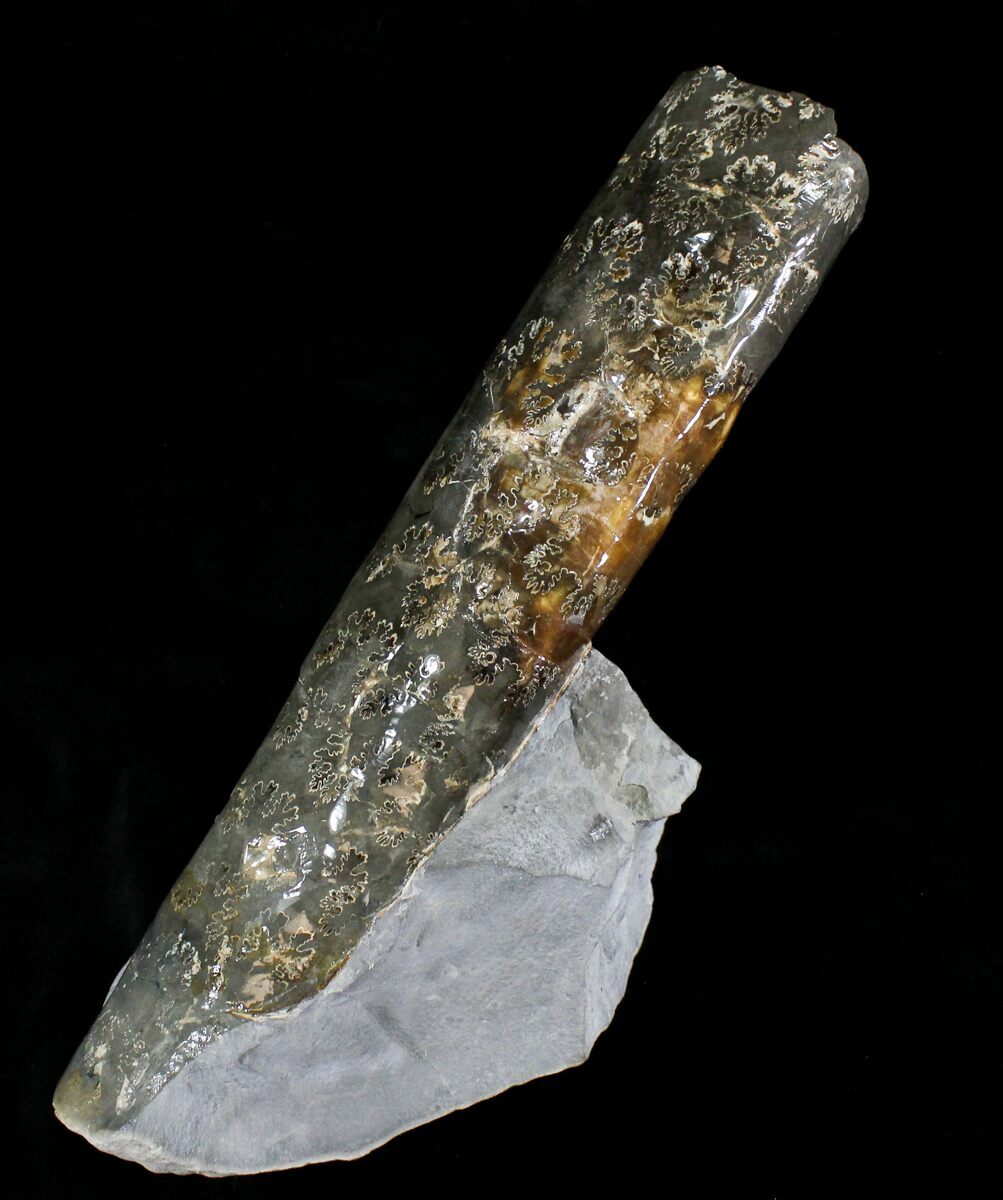
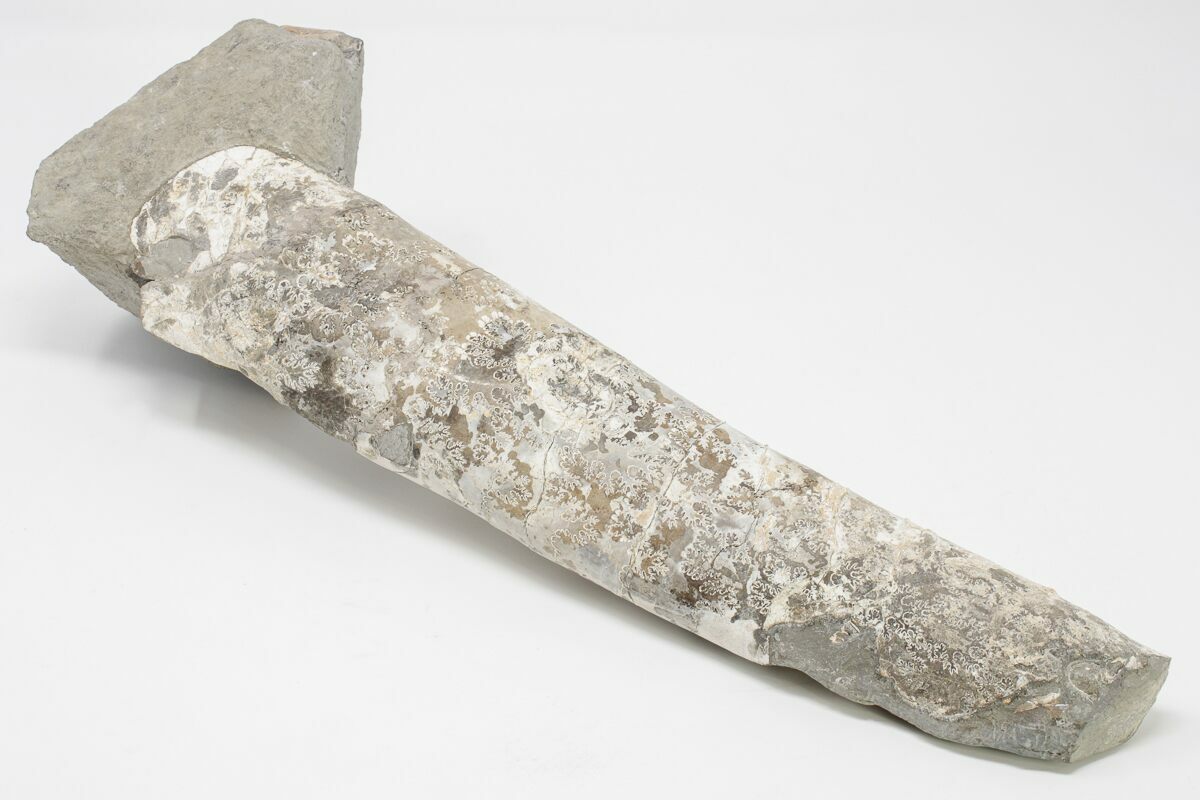
The shell of a baculite was not merely a simple tube. It was divided into chambers known as camerae, separated by walls called septa. These chambers were connected by a siphuncle, a tubular structure that allowed the organism to regulate its buoyancy, much like a modern chambered nautilus. While the exterior of the shell appears smooth or mildly ribbed, the interior complexity is where the baculite truly distinguishes itself. The suture lines—the complex, fractal-like patterns where the septa meet the inner wall of the shell—are among the most intricate found in the ammonoid record.
Why the Straight Shape?
The transition from a coiled shell to a straight one is an evolutionary puzzle that has captivated geologists for decades. It is widely theorized that the baculite’s shape was an adaptation for vertical movement in the water column. By maintaining a rod-like profile, these creatures were likely masters of neutral buoyancy, drifting through the ancient Western Interior Seaway with minimal energy expenditure. This adaptation allowed them to occupy niche environments that their coiled ancestors could not efficiently exploit.
Geological Significance and Occurrence
Baculites are quintessential index fossils, particularly for the Late Cretaceous epoch. Because they evolved rapidly and were geographically widespread across the globe, they serve as biological “time stamps” for researchers. When a geologist finds a specific species of Baculites in a stratum, they can date that layer of sediment with remarkable precision.
The Western Interior Seaway
Perhaps the most famous occurrences of baculite fossils are found within the Pierre Shale of the North American Great Plains. Millions of years ago, a vast inland sea bisected the continent, stretching from the Gulf of Mexico to the Arctic Ocean. The seafloor of this seaway was soft, muddy, and nutrient-rich, providing the perfect environment for the preservation of delicate cephalopod shells.
Preservation and Fossilization
The process of turning a living baculite into a fossil is a testament to the conditions of the Cretaceous seafloor. Because baculites were brittle, their shells frequently broke after death. Finding a complete, pristine specimen is a rare event that is highly prized by both museum curators and private collectors. Often, fossils are found as “concretionary nodules”—hard, stony masses that formed around the decomposing shell as minerals like calcite and pyrite precipitated from the surrounding sediment. This process protected the fossils from the crushing pressure of overburden, allowing the internal details to remain intact for over 65 million years.
The Aesthetic and Commercial Value of Baculites
Beyond their scientific utility, baculite fossils have become significant assets in the fields of interior design, high-end decor, and the collectible fossil market. Their unique geometric shape—often resembling a polished, prehistoric staff—makes them a preferred choice for individuals looking to integrate natural history into luxury workspaces and private collections.
Investment Potential and Rarity
From a financial perspective, not all baculites are created equal. The market value is driven by size, completeness, and the degree of mineralization. Specimens that display “opalescence”—an iridescent sheen caused by the preservation of the original aragonite nacre (mother-of-pearl) within the shell—are considered the “blue-chip” stocks of the fossil world. These specimens are highly sought after by high-net-worth collectors. Because the supply is inherently finite—limited by geological discovery and the rarity of high-quality preservation—a pristine, large-format baculite is viewed by many as a tangible asset that appreciates in value over time.
Ethical Sourcing and Provenance
For those engaging with the fossil market as a form of alternative investment, understanding provenance is paramount. A baculite with documented origins, preferably from a well-known geological formation like the Pierre Shale, carries significantly higher market weight than an undocumented specimen. Ethical sourcing has also become a critical pillar of the fossil trade. Professional collectors and institutional buyers prioritize dealers who work within legal frameworks, ensuring that fossils are salvaged with scientific care rather than looted from protected lands. This shift toward institutional-grade standards has stabilized the market, turning what was once a hobbyist pursuit into a legitimate, professional sector of natural history asset management.
Interpreting the “Suture Line” as Data
In the professional realm of fossil analysis, the suture line is not merely a decorative pattern—it is data. For the serious collector or the aspiring paleontologist, examining the complexity of these lines is akin to analyzing a technical blueprint.
Complexity and Classification
The “ammonitic” suture patterns seen on many baculites represent the pinnacle of structural engineering in nature. These complex, leaf-like folds provided structural integrity to the shell, allowing it to withstand the immense hydrostatic pressures of the deep sea while remaining lightweight. By analyzing the density and geometry of these sutures, experts can categorize the species and even determine the environmental conditions in which the animal lived. High-resolution imaging and 3D modeling are now being used to study these fossils, providing new insights into the fluid dynamics of ancient cephalopods.
The Role of Technology in Fossil Preservation
In modern practice, the preservation of baculite fossils has moved into the digital age. Advanced stabilization techniques, such as the application of professional-grade consolidants, ensure that specimens do not degrade when exposed to the humidity and temperature fluctuations of a modern building. Furthermore, documentation via digital catalogs ensures that the history of each piece—from the date of extraction to its taxonomic classification—is preserved alongside the physical object. This emphasis on record-keeping enhances the long-term viability of the fossil as an asset, ensuring that its scientific story remains as clear as its physical form.
Conclusion: The Enduring Legacy of the Baculite
The baculite fossil stands as a bridge between the deep, alien history of our planet and the modern appreciation for natural design. Whether utilized as a tool for dating geological strata, an aesthetic center-piece in a modern collection, or a specialized asset in an alternative investment portfolio, the baculite demands respect. It reminds us that even in the vast, chaotic history of the Mesozoic era, there was order, geometry, and a relentless pursuit of evolutionary efficiency. To own or study a baculite is to hold a fragment of a lost world—a straight-lined echo from an ocean that vanished long before humans walked the earth. In the interplay of science and market value, the baculite remains a permanent, unchanging constant: a testament to the resilience of nature and the enduring allure of the ancient deep.
aViewFromTheCave is a participant in the Amazon Services LLC Associates Program, an affiliate advertising program designed to provide a means for sites to earn advertising fees by advertising and linking to Amazon.com. Amazon, the Amazon logo, AmazonSupply, and the AmazonSupply logo are trademarks of Amazon.com, Inc. or its affiliates. As an Amazon Associate we earn affiliate commissions from qualifying purchases.