
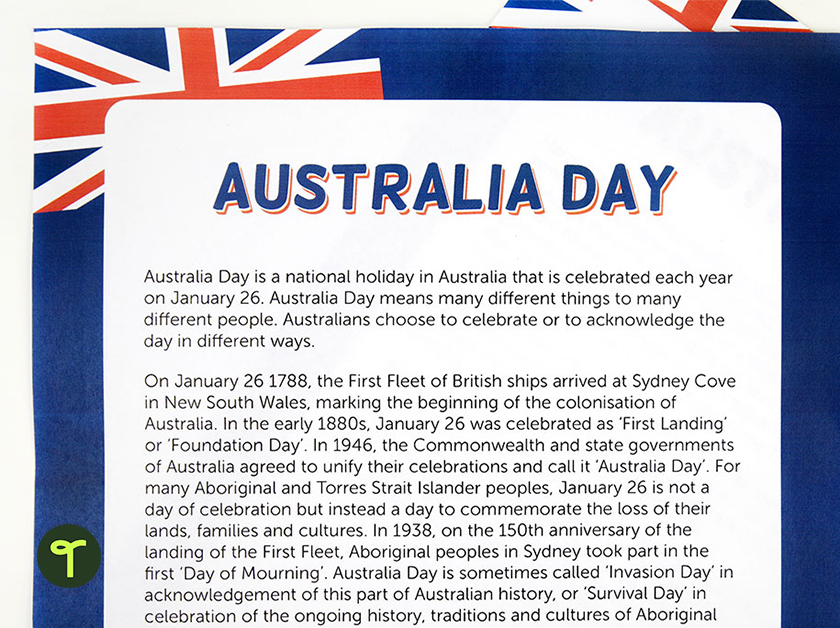
Australia Day, celebrated annually on January 26th, is a national public holiday marked by a diverse range of events, from barbecues and beach parties to official ceremonies and fireworks displays. It commemorates the arrival of the First Fleet of British ships at Sydney Cove in 1788, marking the beginning of European settlement in Australia. However, the meaning and observance of Australia Day are complex and multifaceted, reflecting the nation’s evolving identity and historical understanding. This article delves into the various dimensions of Australia Day, exploring its historical roots, contemporary interpretations, and its place in modern Australian society.
Historical Context and the Genesis of Australia Day
The establishment of Australia Day as a national holiday is relatively recent, evolving from earlier celebrations that commemorated specific historical milestones. The journey from commemorating European arrival to a broader national day has been a gradual process, influenced by shifting societal perspectives and a growing awareness of Australia’s Indigenous history.
The Arrival of the First Fleet: A Turning Point
On January 26, 1788, Captain Arthur Phillip raised the British flag at Sydney Cove, establishing the first permanent European colony in Australia. This event, the arrival of the First Fleet, is the foundational moment that Australia Day seeks to acknowledge. For many years, this date was primarily celebrated by descendants of British settlers and was often referred to as “Foundation Day” or “Anniversary Day.” The narrative surrounding this event historically focused on the beginnings of modern Australia as a nation, shaped by British influence and the subsequent waves of immigration.
Evolving Perceptions of Colonisation
While January 26th marks the commencement of European settlement, it also signifies the beginning of dispossession and profound disruption for Australia’s Indigenous peoples, the Aboriginal and Torres Strait Islander communities. For these communities, January 26th is often observed as “Invasion Day” or “Survival Day,” a day of mourning and a powerful reminder of the injustices, violence, and cultural devastation that followed colonisation. This starkly contrasting perspective has led to growing calls for re-evaluating the date and meaning of Australia Day.
The Path to National Recognition
The push for a unified national day gained momentum throughout the 20th century. By 1935, all Australian states and territories were celebrating “Australia Day” on January 26th, though it was not officially proclaimed a federal public holiday until 1994. This official recognition aimed to foster a sense of national unity and shared identity. However, the continued tension between the celebratory aspect for some and the memorial aspect for others has kept the debate surrounding Australia Day a prominent feature of the national conversation.
Contemporary Celebrations and Diverse Interpretations
Today, Australia Day is observed through a wide array of activities, reflecting the diverse cultural tapestry of the nation. While many embrace it as a day of national pride and celebration, others use the occasion to advocate for reconciliation and a more inclusive national narrative.
Traditional Festivities and Community Spirit

For many Australians, January 26th is synonymous with outdoor gatherings, barbecues, and enjoying the summer weather. Community events, sporting competitions, and local festivals are common across the country. These celebrations often emphasize the positive aspects of Australian life: a relaxed lifestyle, a love for the outdoors, and a multicultural society. Citizenship ceremonies are frequently held on Australia Day, welcoming new citizens into the Australian community and highlighting the nation’s commitment to immigration and diversity.
Calls for Change and Reconciliation
A significant and growing segment of the Australian population, particularly Indigenous Australians and their allies, views January 26th with deep pain and resentment. They advocate for a date that can be truly inclusive and celebrated by all Australians, one that acknowledges the entire history of the continent, including the tens of thousands of years of Indigenous presence. This perspective champions reconciliation, urging the nation to confront its past and work towards a more just and equitable future for Indigenous Australians.
The “Change the Date” Movement
The “Change the Date” movement has gained considerable traction in recent years. It advocates for shifting Australia Day to a date that does not commemorate the commencement of colonisation. Proponents argue that a different date would allow for a truly inclusive national celebration, one that can be embraced by all Australians without alienating or causing distress to Indigenous communities. This movement has sparked widespread public debate, raising awareness about the historical injustices faced by Indigenous peoples and fostering discussions about national identity and what it means to be Australian.
The Ongoing Debate: Towards a More Inclusive Future
The debate surrounding Australia Day is not merely about a single date; it is a crucial conversation about national identity, historical truth, and the future of reconciliation in Australia. Understanding the complexities of this day requires acknowledging the diverse perspectives and experiences of all Australians.
Reimagining National Identity
Australia’s national identity is not static; it is a continually evolving construct shaped by its history, its multicultural population, and its relationship with its Indigenous peoples. The ongoing discussion about Australia Day provides an opportunity to critically examine what we celebrate as a nation and to build an identity that is genuinely representative of all who call Australia home. This involves not only acknowledging the contributions of various immigrant groups but also deeply respecting and valuing the ancient cultures and enduring connection to country of Aboriginal and Torres Strait Islander peoples.
The Role of Education and Dialogue
Addressing the controversies surrounding Australia Day necessitates robust education and open dialogue. Understanding the full sweep of Australian history, including the often-uncomfortable truths about colonisation and its lasting impacts, is vital for fostering empathy and promoting meaningful reconciliation. Public discourse, while sometimes challenging, is essential for navigating these sensitive issues and for collectively working towards a shared future.

Towards a Shared National Day
The aspirations of the “Change the Date” movement and the broader calls for reconciliation highlight a desire for a national day that can unite, rather than divide. The eventual resolution of this debate may lead to a new public holiday that commemorates a different significant moment in Australian history, one that is more universally embraced and that truly reflects the complex, vibrant, and multifaceted nation Australia is today and aspires to be in the future. This could involve celebrating a moment of nation-building that is less contentious, or perhaps a day dedicated to the spirit of Australia itself, its natural beauty, its achievements, and its people in all their diversity. The journey towards a truly inclusive Australia Day is ongoing, marked by introspection, dialogue, and a commitment to building a nation where all Australians feel seen, heard, and valued.
aViewFromTheCave is a participant in the Amazon Services LLC Associates Program, an affiliate advertising program designed to provide a means for sites to earn advertising fees by advertising and linking to Amazon.com. Amazon, the Amazon logo, AmazonSupply, and the AmazonSupply logo are trademarks of Amazon.com, Inc. or its affiliates. As an Amazon Associate we earn affiliate commissions from qualifying purchases.