
In the dynamic world of enterprise technology, few platforms boast the longevity, reliability, and sheer historical significance of the IBM AS/400. While the name itself might evoke images of past computing eras for some, the underlying technology, now known as IBM i on Power Systems, continues to be a formidable and relevant force in critical business operations worldwide. Far from being a relic, understanding the AS/400, its evolution, and its capabilities is essential for comprehending a cornerstone of modern enterprise IT.
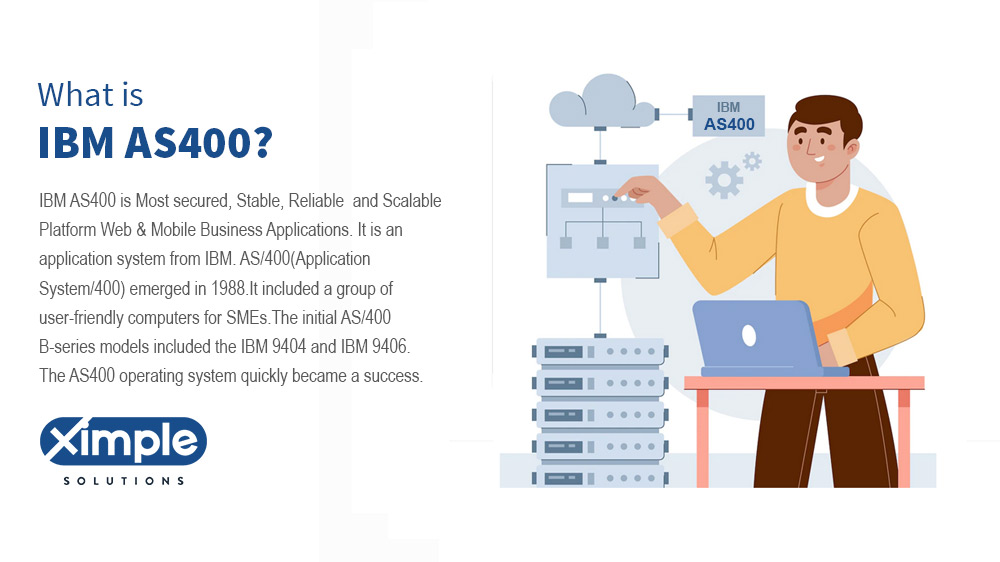
At its core, the AS/400 (Application System/400) was introduced by IBM in 1988 as a mid-range server system designed to be an integrated, easy-to-manage platform for business applications. It built upon a lineage of successful IBM systems, combining hardware, an operating system, and a database into a single, cohesive unit. This unique integration, coupled with its legendary stability and robust security, forged a system that would defy obsolescence for decades, consistently evolving to meet new technological demands while maintaining unparalleled backward compatibility. Today, when people refer to an “AS/400,” they are typically referring to this legacy, or more commonly, to its modern successor, the IBM i operating system running on IBM Power Systems servers.
The Genesis and Evolution of a Computing Workhorse
The AS/400 did not appear out of thin air; it was the culmination of IBM’s extensive experience in developing successful business computing platforms. Its roots trace back through several influential systems, each contributing to the robust architecture that would define the AS/400.
From System/38 to AS/400: A Legacy Unfolds
Before the AS/400, IBM had a family of popular mid-range computers, including the System/36 and the System/38. The System/36 was known for its user-friendliness and broad appeal to small and medium businesses. However, it was the System/38, introduced in 1978, that truly laid the architectural groundwork for the AS/400. The System/38 pioneered revolutionary concepts such as single-level storage (where all memory, disk storage, and I/O are treated as a single pool of addressable space) and an object-oriented operating system, which abstracted hardware details from application programmers. This design philosophy meant applications written for the System/38 could run on vastly different hardware generations without recompilation, a concept that would become a hallmark of the AS/400.
The AS/400, launched on June 21, 1988, was designed to merge the best attributes of both the System/36 (ease of use, extensive application base) and the System/38 (advanced architecture, database integration). Its goal was to provide a powerful, yet simple-to-administer platform for businesses of all sizes, ensuring that applications developed for previous systems could migrate with minimal effort, thus protecting customer investments.
Key Innovations and Design Philosophy
The AS/400’s initial success and enduring legacy stem from several key design principles and innovations:
-
Integrated Design: Unlike other systems where hardware, operating system, database, and security layers were separate components often from different vendors, the AS/400 was conceived as a completely integrated system. Everything was designed to work seamlessly together, optimized for performance and stability. This integration also extended to networking and management tools.
-
Object-Based Operating System: The OS/400 (the AS/400’s operating system) was inherently object-based. Every item on the system – a program, a file, a user profile, a device – was an object with defined attributes and methods, enhancing security, manageability, and consistency.
-
Single-Level Storage: Inherited from the System/38, this concept dramatically simplified memory management. The operating system managed all storage (RAM, disk) as one continuous virtual address space, eliminating the need for application developers to explicitly manage disk I/O or memory paging. This contributed significantly to the system’s legendary reliability and simplified programming.
-
Hardware Abstraction: The “Technology Independent Machine Interface” (TIMI) layer was a crucial innovation. It allowed applications compiled into an intermediate machine-independent code. When new hardware generations arrived, IBM only needed to recompile the TIMI layer, allowing existing applications to run without modification or recompilation, providing unparalleled backward compatibility.
The Era of IBM i: Modern Incarnations
While the name AS/400 remains iconic, the platform has undergone several rebranding efforts and significant architectural advancements. It evolved into the IBM eServer iSeries, then System i, and today, it is officially known as IBM i running on IBM Power Systems servers. Despite the name changes, the core architectural principles, the OS/400 lineage, and the commitment to backward compatibility have remained constant.
Modern IBM i systems utilize IBM’s powerful POWER processors, incorporate advanced virtualization technologies (like PowerVM), support a wide array of modern programming languages and open-source tools, and integrate seamlessly with cloud environments. The continuous evolution ensures that applications written decades ago can still run on the latest hardware, often with improved performance, while providing a robust platform for developing new, cutting-edge solutions.
Understanding the AS/400 Architecture and Core Components
The enduring strength of the AS/400, and its modern IBM i incarnation, lies in its unique, integrated architecture. It’s not merely a collection of parts but a finely tuned ecosystem where every component works in concert.
The Integrated Design: Hardware, OS, and Database
The fundamental premise of the AS/400’s design is deep integration. Unlike many server platforms where you choose separate hardware, then install an operating system (like Linux or Windows), and then layer on a database (like Oracle or SQL Server), the AS/400 combined these into a single, cohesive unit. This approach minimizes compatibility issues, simplifies administration, and optimizes performance because the various layers are designed to understand and leverage each other’s strengths. This “single box” philosophy significantly reduces the total cost of ownership by streamlining setup, maintenance, and troubleshooting.
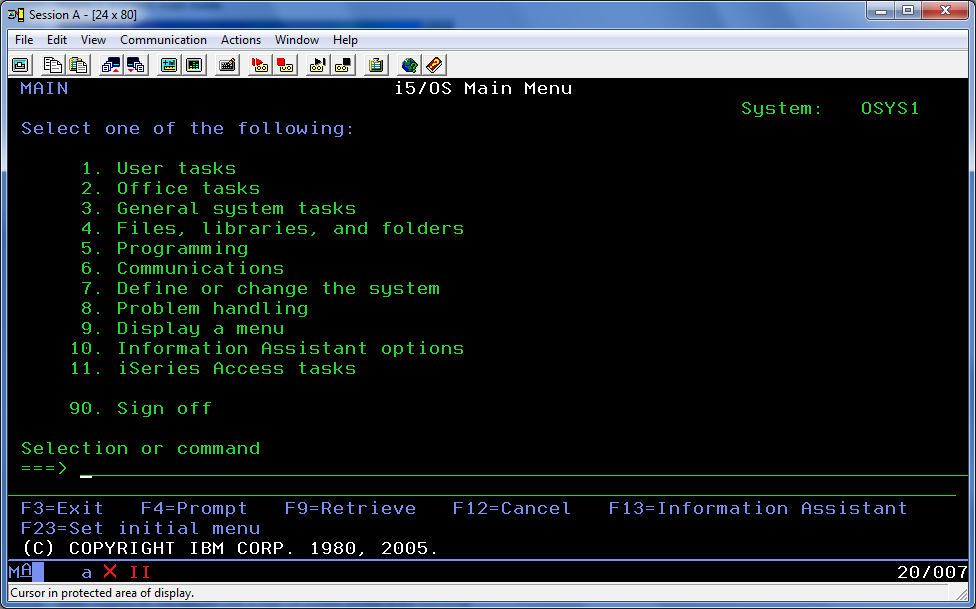
The OS/400 (now IBM i) Operating System
The operating system is the brain of the AS/400. Originally named OS/400, it evolved into i5/OS and is now known as IBM i. It is a sophisticated, object-based operating system that offers multi-user, multiprocessing, and multithreading capabilities. Its standout features include:
-
Self-Managing Capabilities: IBM i excels at self-management, automatically handling many tasks that would require manual intervention on other platforms, such as disk management, performance tuning, and error recovery.
-
Advanced Security: Security is built into the fabric of the OS/400/IBM i from the ground up, not added as an afterthought. Its object-based security model means every resource on the system is an object with defined permissions, making it exceptionally secure against unauthorized access and malware.
-
Single-Level Storage (Revisited): This foundational concept means there’s no distinction between RAM and disk storage from an application’s perspective. All data resides in a single, large virtual address space, managed entirely by the OS. This simplifies application development and greatly enhances system resilience, as the OS automatically handles data persistence and recovery.
The PowerPC/POWER Processor Foundation
Early AS/400 systems used proprietary CISC (Complex Instruction Set Computing) processors. Over time, IBM transitioned the platform to its high-performance RISC (Reduced Instruction Set Computing) processors, starting with the PowerPC architecture and evolving to the current POWER family of processors. These processors are known for their exceptional performance, reliability, and advanced virtualization capabilities (PowerVM), which allow multiple operating environments (IBM i, AIX, Linux, Windows) to run concurrently on a single physical server, maximizing resource utilization.
Db2 for i: A Powerful Integrated Database
One of the most powerful and unique aspects of the AS/400 architecture is its deeply integrated database. While it’s commonly referred to as Db2 for i today, it’s not a separate database product installed on top of the OS; it is an intrinsic part of the IBM i operating system itself. This integration offers numerous advantages:
-
Optimized Performance: The database is highly optimized to work directly with the operating system and hardware, resulting in superior performance for transactional workloads.
-
Simplified Administration: There’s no separate database server to manage or license. Database administration tasks are integrated into the overall system management.
-
Inherent Security and Integrity: Data integrity, transaction processing (ACID compliance), and security are handled at the operating system level, providing a robust and secure data environment.
-
Journaling and Recovery: The integrated database benefits from IBM i’s robust journaling capabilities, ensuring exceptional data recoverability and transactional integrity, even in the event of system failures.
Why the AS/400 (IBM i) Continues to Thrive in Enterprise
Despite being often overlooked in mainstream tech discussions, the AS/400/IBM i platform remains a critical backbone for countless businesses globally, a testament to its exceptional design and continuous evolution. Its enduring relevance is rooted in several compelling advantages.
Unparalleled Reliability and Stability
The AS/400 has earned a legendary reputation for “never going down.” Its mean time between failures (MTBF) is exceptionally high compared to other server platforms. This reliability stems from its integrated design, self-managing capabilities, robust error detection and correction mechanisms, and mature operating system. For businesses where even minutes of downtime can translate into significant financial losses or operational disruption, the AS/400’s steadfast stability is an invaluable asset.
Robust Security Features
In an era of escalating cyber threats, the AS/400’s inherent security architecture makes it one of the most secure platforms available. Its object-based security model ensures that every resource—files, programs, user profiles—has granular permissions, making it extremely difficult for unauthorized access or malware to propagate. The security is built into the operating system and database layers, providing a comprehensive defense that has stood the test of time, meeting stringent compliance requirements in industries like finance and healthcare.

Scalability and Performance
The IBM i platform is incredibly scalable, capable of supporting workloads ranging from small departmental applications to massive enterprise-wide systems. It can scale vertically by adding more processing power, memory, and storage to a single server, and horizontally through clustering. Modern POWER processors and advanced virtualization technologies allow it to efficiently handle high volumes of transactions and complex analytical workloads simultaneously, making it suitable for growing business needs without requiring frequent, disruptive migrations.
Total Cost of Ownership (TCO) Advantages
While initial hardware costs for an IBM Power System might seem higher than commodity servers, the AS/400 consistently demonstrates a lower total cost of ownership over its lifecycle. This is due to:
-
Reduced Administration: The integrated and self-managing nature requires fewer IT staff to manage compared to distributed, multi-vendor environments.
-
High Uptime: Fewer outages mean less lost productivity and revenue.
-
Longer Lifespan: Hardware and software have longer useful lifespans, reducing the frequency of costly upgrades.
-
Backward Compatibility: Protecting legacy application investments through seamless upgrades across generations.
-
Simplified Licensing: Often, the database and core system software are bundled, simplifying licensing overhead.
A Niche for Business-Critical Applications
Collectively, these strengths—reliability, security, scalability, and lower TCO—make the AS/400/IBM i an ideal platform for business-critical applications where data integrity, continuous availability, and security are paramount. It’s the workhorse behind the scenes for many organizations that cannot afford compromises on these fronts.
Common Applications and Industry Adoption
The AS/400’s unique combination of features has made it the platform of choice for a wide array of mission-critical applications across diverse industries. Its ability to reliably handle high transaction volumes and ensure data integrity is especially valued.
ERP and Core Business Systems
Many of the world’s leading Enterprise Resource Planning (ERP) systems, such as JD Edwards EnterpriseOne, SAP (via R/3 or more recent versions), Oracle, and various industry-specific ERP solutions, have either originated on the AS/400 or maintain strong support for the IBM i platform. Its robust database and processing capabilities are perfectly suited for managing the complex, integrated data that underpins ERP, including financials, human resources, supply chain, and manufacturing.
Financial Services and Banking
The financial sector, including banks, insurance companies, credit unions, and investment firms, heavily relies on IBM i. The platform’s stringent security, exceptional data integrity, and capacity for high-volume, real-time transaction processing are non-negotiable requirements in this industry. From core banking systems to claims processing and trading platforms, the AS/400 ensures compliance and operational continuity.
Manufacturing and Logistics
Manufacturers use IBM i for critical functions like production planning, inventory management, warehouse management systems (WMS), and supply chain optimization. The platform’s reliability is crucial for 24/7 operations, ensuring that production lines don’t halt due to IT failures and that complex logistics operations run smoothly.
Retail and Supply Chain Management
Retailers leverage the AS/400 for point-of-sale (POS) systems, inventory control, order fulfillment, and managing extensive supply chains. Its ability to process vast amounts of transactional data quickly and securely makes it indispensable for maintaining real-time inventory accuracy and efficient customer service.
Modern Integration Strategies
While often perceived as a monolithic “legacy” system, the modern IBM i is highly capable of integrating with contemporary technologies. Organizations use various strategies, including WebSphere MQ, REST APIs, web services, and enterprise service buses (ESBs), to connect their IBM i applications with mobile apps, web portals, cloud services, and other distributed systems, demonstrating its adaptability in hybrid IT environments.
Modernizing the IBM i Ecosystem
The “AS/400” of today is a vastly different machine from its 1988 debut. IBM and its vibrant ecosystem have continuously invested in modernization, ensuring the platform remains competitive and relevant for the demands of the digital age.
Open Source Integration and Modern Development
One of the most significant modernization efforts has been the embrace of open source technologies and modern programming languages. Alongside traditional languages like RPG, COBOL, and CL, IBM i now boasts robust support for Java, PHP, Python, Node.js, Ruby on Rails, and even .NET via Linux partitions. This allows modern developers to build new applications or extend existing ones using familiar toolsets, integrating with frameworks like Git, Jenkins, and other DevOps practices.
Cloud Adoption and Hybrid Environments
IBM i is no longer confined to the on-premise data center. It can be deployed in various cloud models, including private clouds, public clouds (such as IBM Cloud, Skytap, or other specialized providers), and hybrid configurations. Cloud adoption offers benefits like increased agility, disaster recovery capabilities, reduced physical infrastructure footprint, and operational flexibility, allowing businesses to leverage the platform’s strengths in a modern cloud context.
API-fication and Digital Transformation
A key strategy for modernizing AS/400 applications is “API-fication”—exposing core business logic and data via Application Programming Interfaces (APIs). This allows legacy applications to become services providers, powering new digital initiatives such as mobile applications, customer-facing web portals, and integrations with SaaS solutions. This approach unlocks the value embedded in decades of investment, enabling digital transformation without a costly and risky “rip and replace” of core systems.
Addressing the Skills Gap
A recognized challenge for the IBM i community is the aging workforce and the need for new talent. However, ongoing initiatives by IBM, user groups, and educational institutions are working to address this. Modern development tools that are GUI-driven, support popular IDEs (like VS Code or Eclipse), and the integration of open-source languages are making the platform more approachable and attractive to a new generation of IT professionals.
Conclusion
The IBM AS/400, in its modern incarnation as IBM i on Power Systems, represents a unique success story in enterprise technology. What began as an integrated mid-range server in 1988 has evolved into a robust, secure, and incredibly reliable platform that continues to be the backbone for mission-critical operations across industries worldwide. Its foundational principles—deep integration, object-based security, unparalleled backward compatibility, and single-level storage—have stood the test of time, delivering exceptional stability, performance, and a low total cost of ownership.
Far from being a legacy system destined for replacement, IBM i continues to innovate, embracing open-source technologies, cloud integration, and modern development paradigms. It serves as a powerful testament to the value of thoughtful engineering and continuous evolution. For organizations seeking a rock-solid foundation for their most critical business applications, the AS/400, or more accurately, IBM i, remains a surprisingly agile and incredibly resilient choice, proving that some technologies, built right from the start, truly can endure and thrive across generations.
aViewFromTheCave is a participant in the Amazon Services LLC Associates Program, an affiliate advertising program designed to provide a means for sites to earn advertising fees by advertising and linking to Amazon.com. Amazon, the Amazon logo, AmazonSupply, and the AmazonSupply logo are trademarks of Amazon.com, Inc. or its affiliates. As an Amazon Associate we earn affiliate commissions from qualifying purchases.