
In the world of personal finance and corporate travel management, every detail of a journey represents a line item on a balance sheet. While many travelers view airline baggage policies through the lens of convenience, the savvy individual views them through the lens of cost-optimization and asset management. Understanding exactly how many carry-ons American Airlines (AA) allows—and the financial nuances surrounding those allowances—is essential for anyone looking to maximize their travel ROI.
For American Airlines, the standard allowance is straightforward: one carry-on bag and one personal item. However, the true value lies not in the numbers themselves, but in how a traveler navigates the tiers of service, credit card perks, and time-value-of-money equations to ensure they are never paying more than necessary for their mobility.

Decoding the ROI of Carry-On Travel
The primary financial benefit of mastering the carry-on rules is the immediate avoidance of checked bag fees. As of recent updates, American Airlines typically charges $30 to $40 for the first checked bag on domestic flights, depending on whether the fee is paid online or at the airport. For a frequent business traveler making 20 trips a year, failing to utilize the carry-on allowance results in an annual leak of $1,200 to $1,600 in post-tax income.
Avoiding Hidden Costs in Basic Economy
Historically, Basic Economy fares were the “trap” of the aviation industry, often stripping away carry-on rights to force upsells. However, American Airlines currently allows one personal item and one carry-on bag even for Basic Economy passengers. The financial distinction here isn’t the quantity of bags, but the sequence of boarding.
Basic Economy passengers board in the final group. In the economy of overhead bin space, this is a high-risk position. When bins fill up, the airline requires passengers to gate-check their bags. While gate-checking is currently free on AA if the bins are full, the “cost” manifests in lost time at the luggage carousel upon arrival. From a productivity standpoint, if your billable rate is $100 per hour and you spend 30 minutes waiting for a bag, that flight just cost you an additional $50 in unrealized earnings.
Time as Currency: The Efficiency Factor
In the context of business finance, time is the most volatile asset. Using a carry-on instead of checking a bag eliminates several high-friction points in the travel process:
-
The Check-in Queue: Bypassing the kiosk or counter saves an average of 15–20 minutes.
-
The Arrival Wait: Eliminating the baggage claim saves 20–40 minutes.
-
The Risk of Loss: The financial impact of lost luggage extends beyond the value of the clothes. It includes the cost of emergency replacements and the potential loss of business if professional attire or specialized equipment is missing for a key presentation.
By strictly adhering to the 1+1 carry-on rule (one bag that fits in the overhead and one that fits under the seat), a traveler insures themselves against these systemic inefficiencies.
Maximizing Your Personal Finance: The American Airlines Credit Card Advantage
For those who find the 1+1 rule restrictive, the solution isn’t necessarily paying for more bags; it is leveraging financial tools to alter the rules of engagement. Co-branded credit cards, such as those offered by Citi or Barclays, act as a bridge between personal finance and travel efficiency.
Strategic Spend and Loyalty Tiers
The American Airlines AAdvantage program has shifted toward a “Loyalty Point” system. Every dollar spent on a co-branded credit card contributes to a traveler’s status. Higher status levels, such as Executive Platinum or Platinum Pro, do more than just provide upgrades; they fundamentally change the financial structure of your baggage.
Status holders receive priority boarding. In the “economy of space,” priority boarding is a guarantee that your carry-on will actually travel with you in the cabin. This eliminates the risk of forced gate-checking, protecting the traveler’s “time currency.” Furthermore, status often grants additional checked bag allowances for free, providing a financial safety net for those rare occasions when a carry-on is insufficient.
Leveraging Co-Branded Cards for Fee Waivers
From a personal finance perspective, the annual fee of an American Airlines credit card (often ranging from $99 to $595) must be weighed against the benefits. If a card provides a “first checked bag free” benefit for the cardholder and up to eight companions on the same reservation, the “break-even” point is reached incredibly quickly.

For a family of four traveling twice a year, the savings on baggage fees alone would total $480 to $640. This turns the credit card from a liability into a high-yield financial tool. Even if you prefer to carry on, having this benefit allows you to check a bag for free if you happen to bring back more than you took (such as business samples or client gifts), preserving your liquidity.
Corporate Travel and Business Finance Management
For small business owners and corporate travel managers, baggage policies are a significant component of “T&E” (Travel and Entertainment) budgets. When a company has dozens of employees traveling, the cumulative cost of baggage can reach thousands of dollars per month.
Optimizing Travel Budgets for Small Businesses
A disciplined corporate travel policy should encourage carry-on-only travel for trips under three days. To facilitate this, businesses should consider investing in high-quality, lightweight luggage for their frequent fliers. This is a capital expenditure that pays for itself through reduced operational expenses (baggage fees) and increased employee throughput.
When employees understand the “1+1” rule—and are equipped with the right gear to utilize it—the company sees a reduction in expense report complexity. Fewer receipts for $35 baggage fees mean less administrative overhead for the accounting department, further streamlining business finance.
Expense Reporting and Baggage Deductions
From a tax perspective, baggage fees are generally deductible as a necessary business expense. However, for the self-employed or those operating on thin margins, the goal is always to minimize the expense in the first place. By maximizing the carry-on allowance, a business traveler keeps more cash in the business for growth-oriented investments rather than handing it over to an airline for the simple act of transporting a suitcase.
Smart Packing as an Investment Strategy
To truly master the American Airlines carry-on policy, one must treat their luggage as a curated portfolio of assets. Every item included must earn its place, and the gear itself must be chosen for its long-term value.
The Gear Investment: High-Quality Carry-Ons vs. Checked Fees
In the world of finance, we often discuss the “cost per use.” A cheap carry-on bag that breaks after three trips is a poor investment. Conversely, a high-end, durable carry-on that costs $400 but lasts for a decade of frequent travel is a stellar investment.
American Airlines specifies carry-on dimensions of 22 x 14 x 9 inches. Investing in a bag that maximizes these exact dimensions allows a traveler to carry the maximum volume of “cargo” without ever triggering a fee. This is the equivalent of maximizing your contributions to a tax-advantaged account; you are using the existing rules to your absolute advantage.
Strategic Minimalism to Protect Your Bottom Line
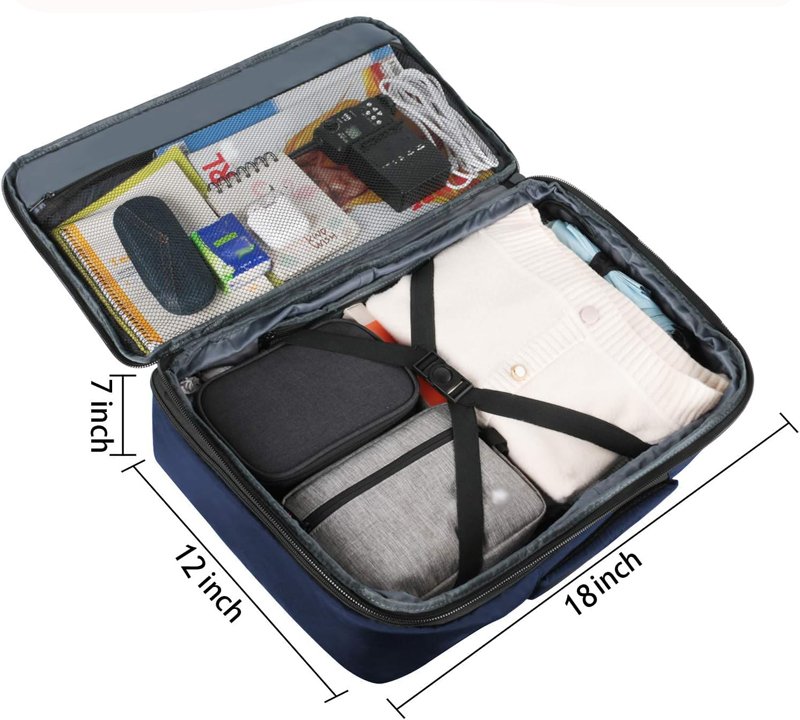
The “Personal Item” is the most underutilized asset in the American Airlines ecosystem. This item must fit under the seat in front of you (dimensions: 18 x 14 x 8 inches). By choosing a high-capacity personal item—such as a specialized “under-seat” pro-packer or a high-volume laptop bag—a traveler can effectively increase their total carrying capacity by 40% without paying a dime in extra fees.
This strategic minimalism also reduces the risk of physical strain and injury, which is a hidden cost of travel. Maneuvering two manageable bags is more ergonomically sound than struggling with one massive, heavy checked suitcase, protecting the traveler’s most valuable asset: their health and ability to work.
Conclusion
How many carry-ons can you take on American Airlines? The literal answer is two—one carry-on and one personal item. But the financial answer is much broader. It is a game of leverage, where credit card strategy, boarding priority, and “time-as-money” calculations determine the true cost of your journey. By viewing the overhead bin and the space under the seat as valuable real estate, and by using co-branded financial products to hedge against fees, the modern traveler can turn a simple airline policy into a sophisticated component of their broader financial strategy. In the end, the goal is simple: ensure that the only things you are carrying onto the plane are your essentials and your hard-earned savings.
aViewFromTheCave is a participant in the Amazon Services LLC Associates Program, an affiliate advertising program designed to provide a means for sites to earn advertising fees by advertising and linking to Amazon.com. Amazon, the Amazon logo, AmazonSupply, and the AmazonSupply logo are trademarks of Amazon.com, Inc. or its affiliates. As an Amazon Associate we earn affiliate commissions from qualifying purchases.