
In an era dominated by artificial intelligence, quantum computing, and augmented reality, the humble 4-function calculator might seem like an anachronism. Yet, this ubiquitous device remains a testament to enduring technological simplicity and utility. Far from being relegated to history, the 4-function calculator continues to serve a crucial role in education, commerce, and daily life, representing a fundamental building block in the digital computation landscape. To truly appreciate its significance, we must delve into its core mechanics, historical trajectory, enduring relevance, and its place in a world increasingly reliant on complex digital tools.
The Core Mechanics: Defining Simplicity
At its heart, a 4-function calculator is a digital device engineered for the most fundamental arithmetic operations. It embodies efficiency and user-friendliness, stripping away complexity to deliver precise results for basic mathematical tasks.
The Fundamental Four Operations
The “4-function” in its name directly refers to the four primary mathematical operations it can perform:
- Addition (+): Combining two or more numbers to find their sum.
- Subtraction (-): Finding the difference between two numbers.
- Multiplication (x or *): Repeated addition of a number by itself a specified number of times.
- Division (÷ or /): Splitting a number into equal parts or finding how many times one number is contained in another.
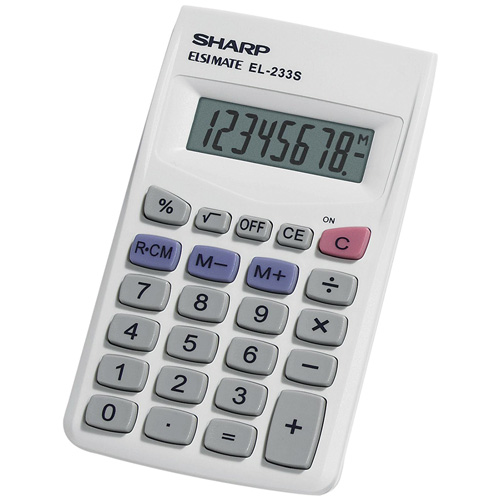
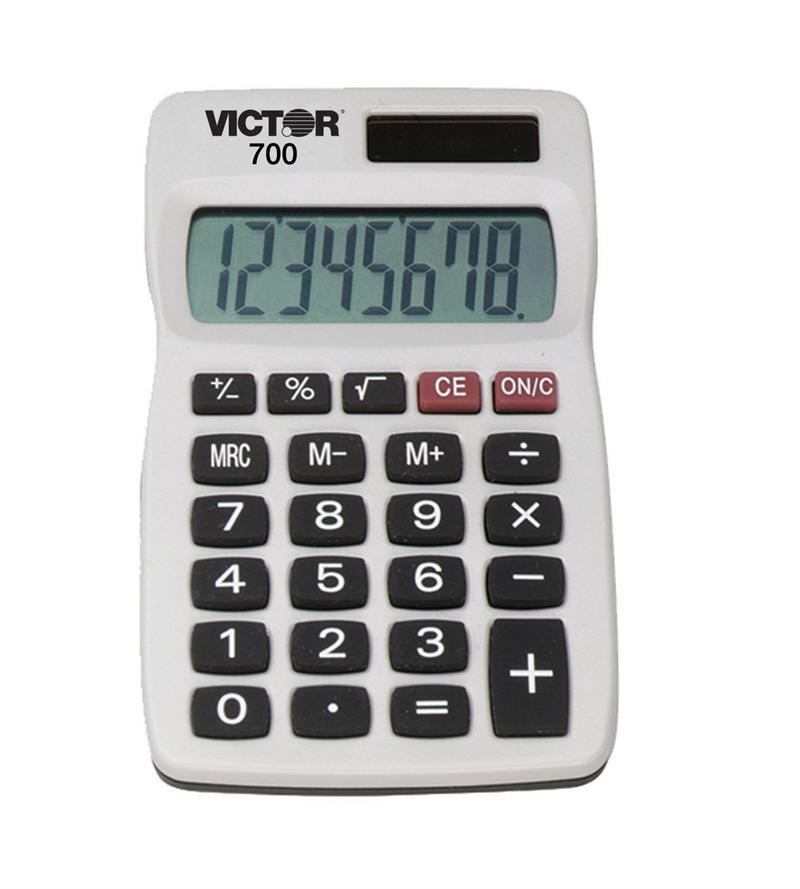
These four operations form the bedrock of almost all quantitative analysis and daily calculations. The calculator typically features a numerical keypad (0-9), decimal point, an “equals” (=) button to execute calculations, and dedicated buttons for each of these four functions, alongside basic controls like “clear” (C) or “all clear” (AC). Its intuitive layout ensures that users, regardless of their technological proficiency, can quickly and accurately perform calculations.
Beyond the Basics: What a 4-Function Doesn’t Do
Crucially, understanding a 4-function calculator also involves understanding its limitations, which by design, streamline its purpose. Unlike scientific or graphing calculators, it typically lacks:
- Advanced mathematical functions: No trigonometry (sine, cosine, tangent), logarithms, exponents (beyond simple squaring), square roots (though some advanced 4-functions might include this as a single-key function), or statistical analysis.
- Memory storage for multiple variables: While many include a simple memory function (M+, M-, MR, MC) for storing and recalling a single value, they cannot handle complex data sets or multiple variables.
- Programmability: There’s no capability to write or execute sequences of operations.
- Equation display: Most 4-function calculators only display the current input or the result, not the full equation as it’s being typed.
These omissions are not flaws but intentional design choices that keep the device focused, affordable, and easy to operate for its intended audience and tasks.
Internal Workings: A Glimpse at the Microchip
From a technological standpoint, the internal architecture of a 4-function calculator is a marvel of miniaturization and low-power consumption. At its core is a specialized microchip, an Application-Specific Integrated Circuit (ASIC), designed specifically for calculator operations. This chip contains:
- A Central Processing Unit (CPU): A very basic processor optimized for arithmetic logic.
- Read-Only Memory (ROM): Stores the calculator’s operating system, which includes the algorithms for the four basic operations.
- Random Access Memory (RAM): Temporary storage for numbers currently being input or intermediate results of calculations, including the memory register.
- Input/Output (I/O) controller: Manages communication between the keypad, the display, and the CPU.
The display itself is typically a Liquid Crystal Display (LCD), chosen for its low power consumption, allowing many calculators to run for years on a single button cell battery or even solely on solar power. The user’s key presses are translated into electrical signals, processed by the CPU according to the ROM’s instructions, and the result is then sent to the LCD for visual output. This elegant, energy-efficient design is why 4-function calculators are remarkably durable and long-lasting.
A Legacy of Practicality: Historical Context and Evolution
The concept of mechanical aids for calculation predates modern electronics by millennia, with the 4-function calculator representing a refined culmination of this enduring human endeavor. Its evolution mirrors the broader history of computing, from cumbersome mechanical devices to sleek, portable digital tools.
From Abacus to Analog: Early Calculation Devices
The quest for faster, more accurate calculation tools began with devices like the abacus, used since ancient Mesopotamia. Over centuries, various mechanical calculators emerged, such as Pascal’s calculator (17th century), Leibniz’s stepped reckoner, and later, more robust devices like the arithmometer. These machines used gears, levers, and intricate mechanisms to perform addition, subtraction, multiplication, and division, demonstrating the foundational need for these four operations. They were often large, expensive, and primarily used in professional settings.
The Dawn of Digital: Transistors and Integrated Circuits
The real revolution for the 4-function calculator began with the advent of electronics. Early electronic calculators in the 1960s were bulky desktop units, utilizing vacuum tubes or discrete transistors. However, the invention of the integrated circuit (IC) in the late 1950s and its subsequent miniaturization changed everything. By the early 1970s, companies like Sharp, Busicom, and Texas Instruments began producing truly portable electronic calculators. These early models, like the Busicom LE-120A “Handy” (1971) or the HP-35 (1972, though more advanced than a pure 4-function), were technological marvels, bringing electronic computation to the masses for the first time. The cost rapidly decreased, transforming calculators from luxury items into everyday tools.
The Modern 4-Function Calculator: Enduring Design and Accessibility
Today’s 4-function calculator is a direct descendant of these early electronic pioneers. While the core functionality has remained constant, advancements in manufacturing have led to:
- Increased reliability and durability: Modern plastic casings and robust keypads withstand significant wear and tear.
- Enhanced power efficiency: Solar panels have become standard, extending battery life almost indefinitely for indoor use.
- Further miniaturization: Many are credit-card sized, making them exceptionally portable.
- Affordability: They are among the least expensive electronic devices available, making them accessible globally.
This continuous refinement, driven by technological progress in microelectronics and material science, has cemented the 4-function calculator’s place as a perpetual entry-level device, easily manufactured and distributed worldwide.
Enduring Relevance in a Complex World

Despite the omnipresence of computing power in smartphones, tablets, and computers, the 4-function calculator retains significant practical and pedagogical value. Its existence isn’t merely a nostalgic throwback; it addresses specific needs where simplicity is paramount.
Everyday Applications: Home, School, and Basic Business Needs
The immediate utility of a 4-function calculator is evident in countless scenarios:
- Household Budgeting: Quick calculations for grocery bills, utility expenses, or splitting costs among housemates.
- Education: Especially in primary and middle school, it helps students verify manual calculations, understand basic arithmetic concepts without the distraction of complex functions, and focus on the process of problem-solving.
- Retail and Hospitality: Shop assistants, waiters, and cashiers often use them for quick mental checks, calculating tips, or simple discounts, especially when electronic point-of-sale systems are unavailable or less convenient for a specific task.
- Crafts and Hobbies: Measuring and cutting materials, calculating quantities for recipes, or tracking scores in games.
- Travel: Converting currencies (though simple exchange rates) or calculating travel expenses.
In these contexts, the dedicated, single-purpose nature of the device often makes it faster and less distracting than pulling out a smartphone or opening an app.
The Digital Divide: Why Physical Calculators Persist
While many smart devices offer built-in calculator apps, several factors contribute to the persistence of physical 4-function calculators:
- Exam Regulations: Many standardized tests and school examinations prohibit the use of smartphones or advanced calculators, making basic 4-function models the only approved electronic aid. This ensures a level playing field and focuses on foundational math skills.
- Distraction-Free Environment: For students or professionals needing to concentrate on a calculation, a dedicated device eliminates the temptation of notifications, social media, or other apps present on a smartphone.
- Durability and Battery Life: Physical calculators are often more robust and boast significantly longer battery lives than multi-function devices, making them reliable tools in diverse environments.
- Tactile Feedback: The physical buttons provide satisfying tactile feedback, which can be preferred by many users over touchscreens, especially for rapid data entry.
- Cost-Effectiveness: Their low price point makes them accessible to everyone, regardless of economic status, ensuring that basic computational tools are universally available.
Pedagogical Value: Building Foundational Math Skills
From an educational perspective, the 4-function calculator plays a vital role. It allows students to focus on understanding the principles of arithmetic and problem-solving without getting bogged down in complex numerical manipulations. When students are learning the concept of division, for instance, a calculator can quickly verify their manual long division, allowing them to identify errors in their process rather than just the final number. It serves as a tool for checking work and exploring numerical relationships, rather than a crutch to avoid learning. This distinction is crucial in foundational math education, where understanding the ‘how’ and ‘why’ is more important than simply arriving at an answer.
When to Choose a 4 Function Calculator (and When Not To)
Deciding which calculation tool to use is a matter of matching the tool to the task. The 4-function calculator excels in specific niches but falls short in others.
Advantages: Simplicity, Cost-Effectiveness, Battery Life
The primary benefits of a 4-function calculator are:
- Unparalleled Simplicity: Its straightforward design means virtually no learning curve. Pick it up, and you know how to use it.
- Extreme Affordability: Often costing just a few dollars, it’s an economic choice for individuals, schools, and businesses.
- Exceptional Battery Life: Thanks to low power consumption and solar integration, a 4-function calculator can last for years without battery replacement, making it a reliable tool, especially in areas with limited access to power.
- Durability: Built to withstand knocks and drops, they are often more robust than smartphones or more complex calculators.
- Dedicated Purpose: No distractions, no updates, no complex menus – just calculation.
Limitations: Scientific, Graphing, and Programmable Needs
Conversely, the limitations become apparent when tasks demand more:
- Complex Equations: Solving quadratic equations, integrals, derivatives, or working with complex numbers is beyond its scope.
- Advanced Mathematics and Sciences: For high school math, college-level science (physics, chemistry), engineering, or advanced statistics, a scientific or graphing calculator is indispensable. These calculators handle functions like trigonometry, logarithms, matrices, and often allow for statistical analysis and graphical representation of data.
- Data Analysis and Programming: Professionals in fields like finance, engineering, or computer science require programmable calculators or software tools that can store complex formulas, perform iterative calculations, and handle large datasets.
- Interactivity and Connectivity: Unlike modern apps or even some advanced calculators, 4-function models offer no connectivity, data export, or integration with other software platforms.
The Role of Smartphones and Software Calculators
The rise of smartphones and dedicated calculator apps has undoubtedly impacted the market for physical calculators. Smartphone calculators offer convenience, often providing both basic and scientific functions, currency converters, and unit converters in a single device. For many casual users, their phone’s calculator is sufficient. However, for the reasons outlined earlier (exam regulations, distraction-free work, tactile preference, and sheer reliability), the physical 4-function calculator maintains its niche. It’s a testament to good, focused design that a simple, dedicated gadget can still outperform or be preferred over a multi-function powerhouse in specific contexts.
The Future of Basic Calculation Tools
While the core functionality of a 4-function calculator is unlikely to change, its form, integration, and environmental footprint continue to evolve.
Integration into Smarter Devices
The trend towards ubiquitous computing means that basic calculation functionality will continue to be integrated into an ever-wider array of devices. From smartwatches and smart home hubs to specialized industrial equipment, the ability to perform quick arithmetic will become a standard feature, often voice-activated or gesture-controlled. This doesn’t necessarily mean the end of the dedicated device but rather a broadening of where this fundamental utility resides.
Sustainability and Durability in Design
As environmental concerns grow, the future of basic calculators will likely see increased emphasis on sustainable manufacturing practices. This includes using recycled materials, designing for longevity and repairability, and developing even more efficient power sources (e.g., advanced solar cells, kinetic energy harvesting). The inherent durability and long lifespan of current 4-function calculators already make them relatively sustainable compared to rapidly obsolescing gadgets, and this trend is set to continue.
The Unchanging Need for Quick, Simple Arithmetic
Ultimately, the most compelling argument for the enduring relevance of the 4-function calculator is the unchanging human need for quick, simple arithmetic. No matter how advanced our technology becomes, there will always be scenarios where summing a few numbers, subtracting a discount, or dividing a bill is necessary. The 4-function calculator, in its various forms—whether a standalone device or an embedded function—will continue to be the most direct, efficient, and accessible tool for these fundamental tasks. It serves as a constant reminder that sometimes, the simplest technological solutions are the most profound and enduring.
aViewFromTheCave is a participant in the Amazon Services LLC Associates Program, an affiliate advertising program designed to provide a means for sites to earn advertising fees by advertising and linking to Amazon.com. Amazon, the Amazon logo, AmazonSupply, and the AmazonSupply logo are trademarks of Amazon.com, Inc. or its affiliates. As an Amazon Associate we earn affiliate commissions from qualifying purchases.