
Navigating the landscape of home financing can often feel like deciphering a complex financial puzzle. Among the myriad of mortgage options available, the 30-year fixed-rate mortgage stands out as one of the most popular and widely understood choices for homebuyers. At its core, a 30-year fixed mortgage is a home loan repaid over three decades, during which the interest rate remains constant for the entire duration of the loan. This stability is its defining characteristic and primary appeal, offering homeowners unparalleled predictability in their monthly housing expenses.
This type of mortgage is an agreement between a borrower and a lender, where the lender provides a lump sum to purchase a home, and the borrower agrees to repay this amount, plus interest, over 360 equal monthly payments. The “fixed-rate” component means that the interest rate charged on the loan will not change, regardless of market fluctuations, economic shifts, or changes in benchmark interest rates. From the first payment to the last, the principal and interest portion of your monthly payment remains the same, providing a solid foundation for long-term financial planning. This foundational understanding is crucial for anyone considering homeownership, as the choice of mortgage significantly impacts one’s financial well-being for decades to come.
The Core Mechanics of a 30-Year Fixed Mortgage
Understanding how a 30-year fixed mortgage operates goes beyond merely knowing that the rate stays the same. It involves grasping the intricacies of its structure, which ultimately dictates your financial commitment and long-term costs.
Understanding the Fixed Interest Rate
The “fixed-rate” is perhaps the most critical element of this mortgage product. When you secure a 30-year fixed mortgage, the interest rate quoted at the time of closing is locked in for the entire 360-month term. This means that if market interest rates rise significantly in the future, your mortgage payment for principal and interest will not increase. Conversely, if rates drop, you won’t automatically benefit unless you choose to refinance your mortgage. This stability is a double-edged sword: it protects you from rising costs but prevents you from automatically enjoying lower rates without taking further action. The fixed rate allows for precise budgeting, as the core housing cost remains immutable, making it easier to plan other aspects of your personal finance, from savings to investments.
How Amortization Works Over Three Decades
Amortization is the process of paying off a debt over time through regular payments. For a 30-year fixed mortgage, this process is structured so that in the early years of the loan, a significantly larger portion of your monthly payment goes towards interest, and a smaller portion reduces your principal balance. As the loan matures, this dynamic gradually shifts, with an increasing share of your payment allocated to principal and a decreasing share to interest. This front-loading of interest means that it takes a considerable amount of time to build substantial equity in your home through payments alone. For example, after five or ten years, you might find that while you’ve made a significant number of payments, your principal balance hasn’t decreased as much as you might have initially anticipated. Understanding the amortization schedule is vital for homeowners, especially those who plan to sell their home within the first decade of ownership, as it impacts the equity they’ve accrued.
Deconstructing Your Monthly Payment (PITI)
While the principal and interest (PI) portion of your payment remains fixed, your total monthly mortgage payment is often referred to as PITI: Principal, Interest, Taxes, and Insurance.
- Principal: The amount of money you borrowed.
- Interest: The cost of borrowing that money.
- Taxes: Property taxes assessed by local government, typically collected by your lender and held in an escrow account.
- Insurance: Homeowner’s insurance, which protects your property from damage, also usually collected and held in escrow. Lenders often require private mortgage insurance (PMI) if your down payment is less than 20% of the home’s value, adding another component to your monthly outlay.
While the PI part is fixed, the T and I components can fluctuate annually based on changes in property tax assessments and insurance premiums. This means your total monthly payment can change, even with a fixed-rate mortgage. It’s crucial to factor in these variable components when budgeting for homeownership, as they are a non-negotiable part of the financial commitment.
Advantages and Disadvantages: Weighing Your Options
The popularity of the 30-year fixed mortgage is rooted in its distinct advantages, but it also comes with certain trade-offs that prospective homeowners must carefully consider.
The Stability and Predictability Benefits
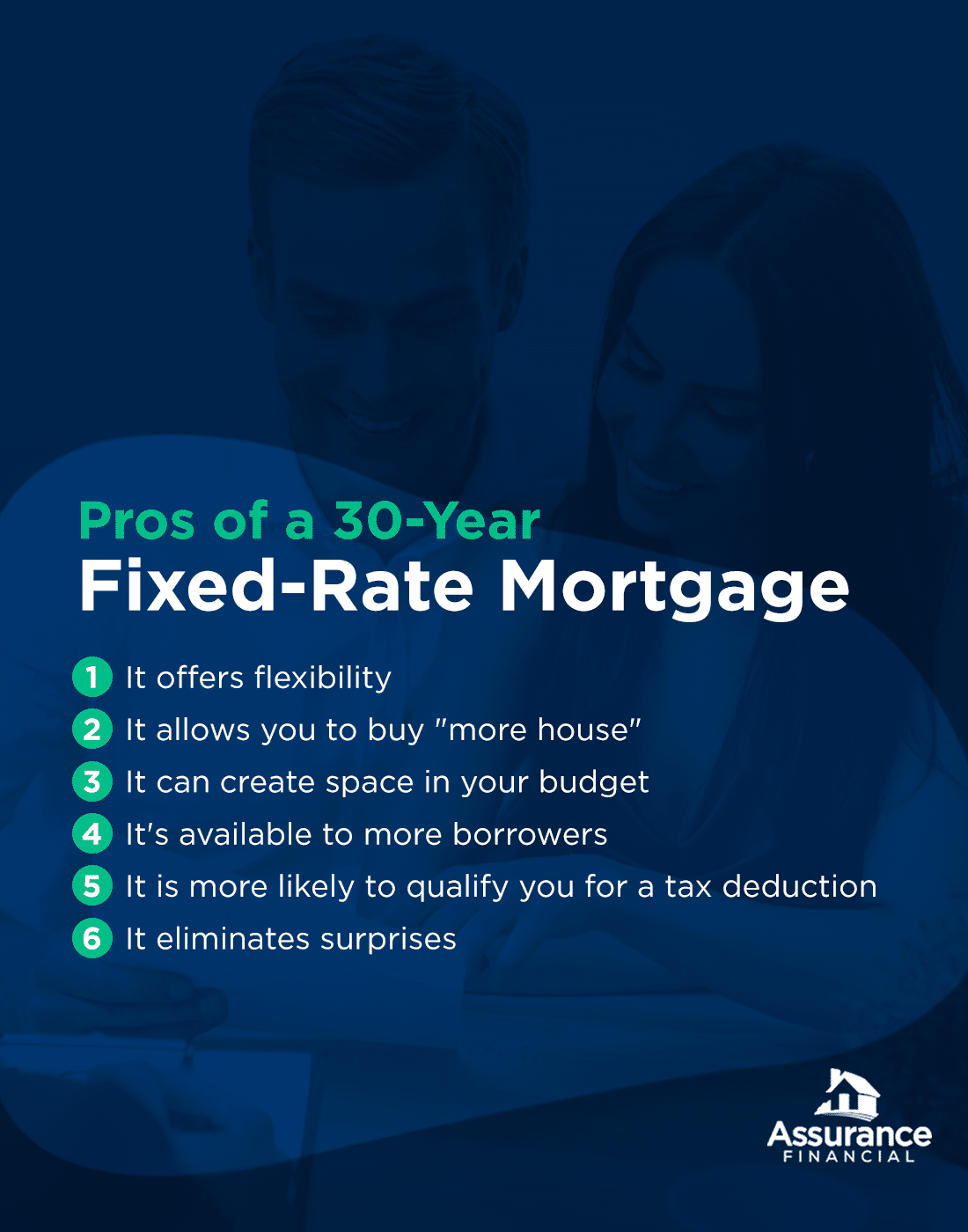
The foremost advantage of a 30-year fixed mortgage is the unparalleled stability and predictability it offers. With a constant interest rate and a fixed principal and interest payment, budgeting becomes significantly easier and more reliable. Homeowners are shielded from the volatility of interest rate markets, which can be particularly reassuring during periods of economic uncertainty or rising rates. This predictability extends for the full three decades, allowing families to plan long-term financial goals – such as retirement savings, college funds, or other investments – without the constant worry of fluctuating housing costs. This financial peace of mind is invaluable for many, providing a stable foundation amidst life’s other financial demands.
Lower Monthly Payments and Enhanced Affordability
Spreading the repayment of a loan over 30 years naturally results in lower monthly payments compared to shorter-term options like a 15-year fixed mortgage. This increased affordability can be a game-changer for many individuals and families, especially first-time homebuyers or those with tight budgets. Lower payments can make homeownership accessible to a wider demographic, allowing them to qualify for a larger loan amount or simply free up more cash flow for other essential expenses, savings, or investments. This doesn’t necessarily mean buying a more expensive home, but rather making the home you can afford more manageable on a month-to-month basis. It can also provide a crucial buffer in personal finance for unexpected expenses or economic downturns.
The Trade-offs: Higher Total Interest and Slower Equity Growth
While lower monthly payments are attractive, they come at a cost: significantly more interest paid over the life of the loan. Stretching the repayment period to 30 years means that the lender earns interest on the principal for a much longer time. The total amount of interest paid on a 30-year fixed mortgage can be substantially higher than on a 15-year fixed mortgage for the same loan amount, even if the interest rate is identical or only slightly higher. This also translates to slower equity growth, as more of your early payments go towards interest. If building equity quickly is a primary financial goal, a 30-year fixed might not be the most efficient path without making additional principal payments.
The Long-Term Commitment Perspective
A 30-year commitment is a significant financial undertaking. While many people don’t stay in the same home for three decades, entering into such a long-term contract requires careful consideration of future plans. Job changes, family growth, or unforeseen circumstances can make staying in one location for 30 years unrealistic. While you can always sell or refinance, these actions come with their own costs and complexities. The long duration also means that the loan will be a constant presence in your financial life, potentially impacting your ability to take on other large debts or make different long-term investments without careful planning.
Comparing the 30-Year Fixed to Other Mortgage Types
Understanding the 30-year fixed mortgage is best done in comparison to its counterparts, particularly the 15-year fixed mortgage and adjustable-rate mortgages (ARMs).
30-Year Fixed vs. 15-Year Fixed: A Payment and Interest Showdown
The 15-year fixed mortgage offers a significantly shorter repayment period and, consequently, lower total interest paid over the life of the loan. Because the loan is paid off twice as fast, each monthly payment is substantially higher. Lenders often offer slightly lower interest rates on 15-year mortgages due to the reduced risk. For example, a $300,000 loan at 4% interest over 30 years might have a principal and interest payment of around $1,432, resulting in approximately $215,500 in total interest. The same loan at 3.5% over 15 years might have a payment of about $2,145, but only accrue roughly $86,000 in total interest. The choice largely depends on your financial capacity: can you comfortably afford the higher monthly payments of a 15-year loan to save significantly on interest and build equity faster, or do you prioritize lower monthly payments and greater cash flow with a 30-year loan?
Fixed vs. Adjustable-Rate Mortgages (ARMs): Risk and Reward
Adjustable-Rate Mortgages (ARMs) start with an initial fixed interest rate for a period (e.g., 3, 5, 7, or 10 years), after which the rate adjusts periodically based on a predetermined index. The initial rate on an ARM is often lower than a comparable 30-year fixed rate, making initial payments more attractive. However, after the fixed period, the interest rate can rise or fall, potentially leading to unpredictable monthly payments. While ARMs can be beneficial for borrowers who plan to sell or refinance before the fixed period ends, or who anticipate their income to rise significantly, they introduce an element of risk due to potential payment increases. The 30-year fixed, by contrast, eliminates this interest rate risk entirely.
When Each Mortgage Type Shines
- 30-Year Fixed: Best for those seeking predictability, lower monthly payments, and long-term stability. Ideal for first-time homebuyers, individuals planning to stay in their home for a significant period, or those who value consistent budgeting.
- 15-Year Fixed: Excellent for borrowers who can afford higher monthly payments and prioritize paying off their mortgage faster, saving substantial interest, and building equity quickly.
- ARMs: Suitable for financially savvy borrowers who anticipate moving or refinancing before the fixed-rate period expires, or who are comfortable with potential payment fluctuations and believe interest rates will decline or remain stable.
Who Should Consider a 30-Year Fixed Mortgage?
The suitability of a 30-year fixed mortgage varies greatly depending on an individual’s financial situation, future plans, and risk tolerance.
Ideal Candidates: Stability Seekers and First-Time Buyers
The 30-year fixed mortgage is often the ideal choice for first-time homebuyers. It offers the lowest monthly payments among traditional mortgage options, making homeownership more accessible and manageable. For those new to the responsibilities of property ownership, the predictability of a fixed payment eliminates one major variable, allowing them to focus on other aspects of budgeting and home maintenance. Furthermore, individuals and families who prioritize financial stability and peace of mind over rapid equity growth will find this mortgage highly appealing. Those nearing retirement might also consider it to lock in a predictable housing expense for their fixed-income years, provided they are comfortable with the longer term.
Financial Planning and Long-Term Residence
If you plan to live in your home for an extended period – say, 7-10 years or more – a 30-year fixed mortgage provides significant advantages. The longer you stay, the more valuable the fixed rate becomes, especially if market rates rise. This allows for stable long-term financial planning, as your housing cost for principal and interest won’t unexpectedly increase. It also provides flexibility; while payments are lower, you always have the option to make extra principal payments to accelerate your repayment and build equity faster, effectively turning it into a shorter-term loan without the commitment of higher mandatory payments. This strategic flexibility makes it a powerful tool for dynamic financial planning.
The Role of Current Interest Rates and Economic Outlook
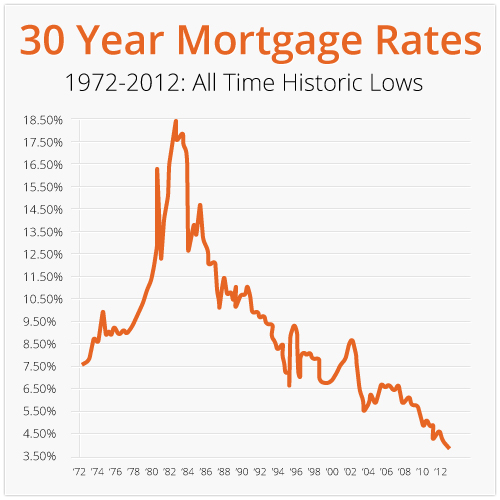
The attractiveness of a 30-year fixed mortgage also hinges on the prevailing interest rate environment. When rates are historically low, locking in a 30-year fixed rate can be an incredibly smart financial move, as it protects you from potential future increases. Conversely, if rates are high, you might consider an ARM or wait for rates to drop, though timing the market is notoriously difficult. Economic outlook also plays a role; in periods of expected inflation or economic growth, interest rates tend to rise, making a fixed-rate mortgage a prudent choice. During recessions or periods of slow growth, rates might fall, which could make refinancing an existing fixed loan appealing, or waiting to purchase with a new fixed loan.
Important Considerations and Strategic Insights
Choosing a 30-year fixed mortgage is a significant decision that warrants a comprehensive understanding of its implications and associated financial strategies.
The Impact of Interest Rate Fluctuations on Decision-Making
While the 30-year fixed rate shields you from rising interest rates, it also means you won’t automatically benefit if rates fall. This is where the concept of refinancing becomes crucial. If market rates drop significantly below your current fixed rate, you might consider refinancing your mortgage to secure a lower rate, thereby reducing your monthly payments and/or the total interest paid. However, refinancing incurs closing costs, so a careful cost-benefit analysis is necessary to determine if the savings outweigh the expenses. Keeping an eye on interest rate trends and understanding your break-even point for refinancing is an important part of managing a fixed-rate mortgage over its long term.
Refinancing Opportunities and When to Consider Them
Refinancing involves taking out a new mortgage to pay off your old one. It’s typically done to secure a lower interest rate, change the loan term (e.g., from 30-year to 15-year), or tap into home equity for cash-out refinancing. A good rule of thumb for refinancing is to consider it if you can reduce your interest rate by at least 0.75% to 1% and plan to stay in the home long enough to recoup the closing costs. Life events, such as a significant increase in income, might also prompt a refinance from a 30-year to a 15-year loan to accelerate debt payoff. Evaluating your financial goals and the prevailing market rates regularly is key to identifying optimal refinancing windows.
Beyond the Basics: Prepayment Penalties and Escrow Accounts
Most conventional 30-year fixed mortgages do not have prepayment penalties, meaning you can pay extra towards your principal without incurring a fee. This flexibility allows homeowners to pay off their loan faster and save on interest, effectively creating a 15-year or 20-year payment schedule if they choose to make additional principal payments consistently. It’s always wise to confirm this with your lender. Additionally, understanding your escrow account (where your lender holds funds for property taxes and homeowner’s insurance) is important. While convenient, annual adjustments to these payments can still lead to changes in your total monthly outlay, despite your principal and interest remaining fixed. Regular review of your escrow analysis statements is prudent for financial oversight.

Seeking Professional Financial Guidance
Given the complexity and long-term implications of a mortgage, seeking advice from a qualified financial advisor or an experienced mortgage loan officer is highly recommended. These professionals can provide personalized guidance based on your specific financial situation, risk tolerance, and long-term goals. They can help you compare different loan products, understand the fine print, and make an informed decision that aligns with your overall financial strategy. A mortgage is likely the largest debt most people will ever incur, and careful, professional planning can lead to significant savings and financial peace of mind over its 30-year lifespan.
aViewFromTheCave is a participant in the Amazon Services LLC Associates Program, an affiliate advertising program designed to provide a means for sites to earn advertising fees by advertising and linking to Amazon.com. Amazon, the Amazon logo, AmazonSupply, and the AmazonSupply logo are trademarks of Amazon.com, Inc. or its affiliates. As an Amazon Associate we earn affiliate commissions from qualifying purchases.