
The allure of uncovering hidden value in everyday objects is a potent one, and for many, a forgotten coin can spark curiosity about its potential worth. Among the multitude of coins circulating or tucked away in forgotten jars, the 1972 dollar coin, commonly known as the Eisenhower Dollar or “Ike” dollar, frequently surfaces. While many Eisenhower dollars carry little premium above their face value, certain conditions, mint marks, and varieties can significantly elevate their worth, transforming a common find into a valuable numismatic treasure. Understanding the nuances of these factors is key to accurately assessing the financial potential of your 1972 dollar coin.
The Eisenhower Dollar: A Brief History and Context
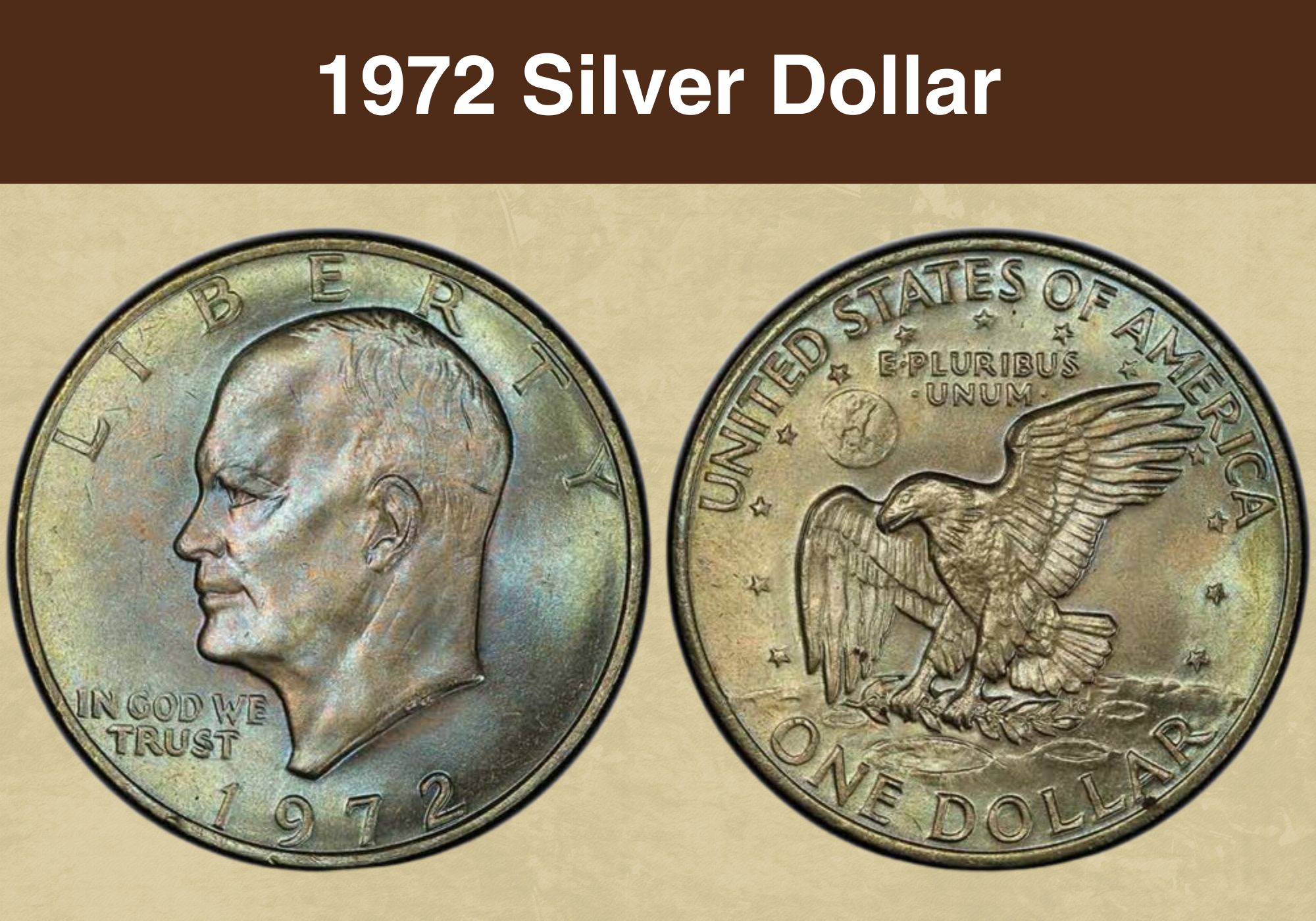
The Eisenhower dollar holds a unique place in American coinage history, representing a transitional period and a tribute to a revered national figure. Authorized by Congress in 1970 and first minted in 1971, the coin honored President Dwight D. Eisenhower on its obverse and commemorated the Apollo 11 moon landing with an eagle descending on the lunar surface on its reverse. This marked the first dollar coin issued by the U.S. Mint since the Peace dollar series concluded in 1935, and it was also the first large-sized dollar coin to be issued in a clad composition rather than silver for general circulation.
The Birth of a Modern Dollar Coin
The introduction of the Eisenhower dollar was a response to several factors: the public’s desire for a new dollar coin, the need to honor President Eisenhower following his death in 1969, and the cultural impact of the successful Apollo 11 mission. Initially, there was debate over the metal composition, with some advocating for silver and others for a more economical copper-nickel clad. A compromise was reached, leading to two distinct compositions: copper-nickel clad for general circulation and a 40% silver clad version primarily for collectors. The sheer size of the coin (38.1 mm diameter, 24.5 grams) made it somewhat unwieldy for everyday transactions, contributing to its eventual replacement by the smaller Susan B. Anthony dollar in 1979.
Design Elements and Specifications
Frank Gasparro, the Chief Engraver of the U.S. Mint, designed both the obverse and reverse of the Eisenhower dollar. The obverse features a strong profile of Dwight D. Eisenhower. The reverse, inspired by the Apollo 11 mission insignia, depicts an eagle landing on the moon, holding an olive branch in its talons, symbolizing peace. Surrounding the eagle are the words “UNITED STATES OF AMERICA” and “ONE DOLLAR,” along with thirteen stars representing the original colonies. The “S” mint mark for San Francisco issues, or “D” for Denver, appears below Eisenhower’s neck, while Philadelphia issues (P) did not carry a mint mark during this period. The clad coins comprised an outer layer of 75% copper and 25% nickel bonded to a pure copper core, giving them a distinctive “sandwich” appearance when viewed from the edge. The 40% silver clad versions had an outer layer of 80% silver and 20% copper bonded to a core of 21% silver and 79% copper.
Mint Marks and Production Locations
In 1972, Eisenhower dollars were produced at three different U.S. Mint facilities:
- Philadelphia (No Mint Mark): These were copper-nickel clad coins intended for general circulation.
- Denver (D): Also copper-nickel clad coins for circulation. The “D” mint mark is located just above the date on the obverse.
- San Francisco (S): This is where the distinction becomes critical. San Francisco produced both copper-nickel clad coins and the special 40% silver clad coins. The “S” mint mark is located above the date. The 40% silver “S” mint coins were typically sold in special uncirculated (Blue IKE) and proof (Brown IKE) sets, not released into general circulation. Identifying an “S” mint mark is the first step in determining if your coin might have a silver content premium.
Factors Influencing a 1972 Eisenhower Dollar’s Value
While most 1972 Eisenhower dollars are worth face value or slightly more, several key factors can dramatically increase their numismatic appeal and financial worth. These include the coin’s physical condition, its mint mark, specific varieties, and its metal composition.
Condition (Grading and Wear)
The condition, or grade, of a coin is paramount in determining its value. Coins are graded on a 70-point scale, where 70 is a “perfect” coin (Mint State 70 or MS-70) and 1 is practically unrecognizable.
- Uncirculated (MS-60 to MS-70): These coins show no signs of wear, retaining their original mint luster. Higher grades within this range command significant premiums. For 1972 Ike dollars, especially the Philadelphia and Denver issues, finding them in high uncirculated grades (MS-65 or higher) is challenging due to their large size and propensity for bag marks.
- About Uncirculated (AU-50 to AU-58): Very slight traces of wear on the highest points of the design.
- Extremely Fine (EF-40 to EF-49): Light wear visible on high points; all major details are clear.
- Very Fine (VF-20 to VF-39): Moderate wear on high points; some loss of detail but overall design is sharp.
- Fine (F-12 to F-19) and lower grades: Significant wear, details are muted or lost.
Coins in circulated condition, especially the common copper-nickel clad issues, typically hold little value beyond face value. However, even a common date coin in exceptionally high-grade uncirculated condition can fetch a premium.
Mint Mark Variations and Rarity
As mentioned, the mint mark is crucial.
- Philadelphia (No Mint Mark) and Denver (D): These are the most common 1972 Eisenhower dollars. Their value is primarily driven by condition. High-grade uncirculated examples might sell for a few dollars, but generally, they are abundant.
- San Francisco (S): The “S” mint mark immediately flags a coin as potentially more valuable. San Francisco produced both business strike clad coins for circulation (though fewer than P and D) and collector-specific issues. Crucially, the 40% silver clad “S” mint coins were packaged in special sets and possess intrinsic silver value in addition to numismatic value.
Key Varieties and Errors
The 1972 Eisenhower dollar is particularly famous for a notable die variety found on the reverse, referred to as the Type II Reverse.
- 1972 Type I Reverse: This is the most common reverse die for 1972 P and D issues. It features a depiction of the earth where Florida’s coastline is clearly visible, and the islands of the Caribbean are somewhat flat and blob-like. The eagle’s feathers are also slightly less detailed.
- 1972 Type II Reverse: This rare and highly sought-after variety is characterized by a significantly sharper rendering of the earth on the reverse. Florida is less defined, almost pointing at the center, and the islands of the Caribbean are much more prominent and distinct. The eagle’s feathers also appear sharper. This variety was mistakenly used on some Philadelphia and Denver mint circulation strikes before the dies were corrected. It is primarily found on 1972-P coins, with far fewer 1972-D examples known. A high-grade 1972-P Type II Eisenhower dollar can be worth hundreds, if not thousands, of dollars.
- 1972 Type III Reverse: This is the standard reverse for all 1973 and later clad issues and was also used on some late 1972-P and 1972-D coins. Florida is again distinct, but the islands are not as pronounced as Type II.
- Errors: While less common, broadstrikes, off-center strikes, or double-die errors can occur and significantly increase a coin’s value, though specific major errors are not widely documented for the 1972 Ike dollar compared to other series.
Metal Composition (Copper-Nickel Clad vs. Silver Clad)

This is a defining factor for 1972 “S” mint coins.
- Copper-Nickel Clad: The vast majority of 1972 Eisenhower dollars (P, D, and some S mints) are copper-nickel clad. Their value is purely numismatic, based on condition and rarity.
- 40% Silver Clad: Only 1972 “S” mint coins were produced in 40% silver clad. These coins were issued as uncirculated (in blue envelopes) and proof (in brown boxes) collector’s editions. The presence of silver gives them an intrinsic melt value that fluctuates with the market price of silver. Even in lower grades, a 40% silver Ike dollar will always be worth at least its silver content, which can be several times its face value. These silver coins have a distinctive duller luster compared to their bright clad counterparts and a slightly different ringing sound when gently tapped.
Market Demand and Numismatic Trends
The overall demand from collectors also plays a role. While Eisenhower dollars are not generally considered “key date” rarities, specific varieties or exceptionally high-grade examples can attract strong collector interest. The numismatic market is influenced by trends, and prices can fluctuate based on new discoveries, collector preferences, and broader economic conditions. Strong demand for specific niche varieties, like the 1972 Type II reverse, ensures a robust market for these particular coins.
Assessing the Value of Your 1972 Eisenhower Dollar
Determining the precise value of your 1972 dollar coin involves a systematic approach, combining identification, self-assessment, and market research.
Identifying Mint Mark and Type
- Locate the Mint Mark: On the obverse, below Eisenhower’s neck, look for a “D” (Denver) or an “S” (San Francisco). If there’s no mark, it’s from Philadelphia.
- Determine Composition (for “S” mint only): If your coin has an “S” mint mark, check its edge. If you see a solid copper stripe between two silver-colored layers, it’s clad. If the edge appears more uniformly silver-colored and lacks a distinct copper core, it’s likely 40% silver. Weighing it can confirm (silver-clad are 24.5g, copper-nickel are 22.68g). Remember, 40% silver coins were typically sold in special government packaging, so finding one in circulation is less common.
- Inspect the Reverse for Type II Variety (1972 P and D): Carefully examine the earth and islands on the eagle’s reverse. Compare it to known images of the 1972 Type I, Type II, and Type III reverses (readily available online). Pay close attention to the definition of Florida and the Caribbean islands. This step is critical for identifying a potentially valuable variety.
Understanding Coin Grading Scales
While professional grading is best for high-value coins, you can perform a preliminary assessment. Look for signs of wear on the highest points of Eisenhower’s hair, cheekbone, and the eagle’s head and wings. The more original luster and fewer scratches or dings, the higher the grade. Even light handling can reduce a coin’s grade and value. Avoid cleaning coins, as this almost always damages their surface and reduces their numismatic value.
Researching Current Market Prices
Once you have a good idea of your coin’s mint mark, composition, type, and approximate grade, consult reliable numismatic resources:
- The Red Book (A Guide Book of United States Coins): An annual publication, this is a standard reference for coin collectors, providing estimated values for various grades and varieties.
- Online Auction Records: Websites like eBay (filter by “Sold Items”) or major numismatic auction houses (e.g., Heritage Auctions) can show you what similar coins have recently sold for. This provides a real-time market perspective.
- Coin Dealer Websites: Many reputable dealers list their inventory and prices online, offering another point of comparison.
Seeking Professional Appraisal
For any coin you believe might be valuable (especially high-grade uncirculated coins, “S” mint 40% silver dollars, or confirmed Type II reverses), professional appraisal is highly recommended. Numismatic experts and grading services (like PCGS or NGC) can accurately grade your coin, authenticate its variety, and provide an unbiased assessment of its market value. While there is a fee for these services, it is a worthwhile investment to confirm significant value and ensure optimal realization if you choose to sell.
Beyond Face Value: Investing in Numismatics
The exploration of a 1972 dollar coin’s worth often extends beyond a simple transaction; it can open the door to the fascinating world of numismatics as an investment.
The Appeal of Coin Collecting as an Investment
Investing in rare coins, while niche, offers unique advantages. Unlike stocks or bonds, coins are tangible assets, offering a physical hedge against inflation and market volatility. Rare and desirable coins have historically appreciated in value, driven by finite supply and increasing collector demand. For many, the joy of collecting is intertwined with the potential for financial gain, making it a “passion investment.” It requires knowledge, patience, and a long-term perspective, similar to other forms of alternative investing.
Diversifying Your Portfolio with Collectibles
Adding numismatic items to a diversified investment portfolio can provide unique exposure to a market that often operates independently of traditional financial markets. While Eisenhower dollars, in general, are not among the rarest U.S. coins, the specific varieties and high-grade examples discussed (e.g., 1972-P Type II) demonstrate how selectivity is key. The principle here is to acquire high-quality, rare, or historically significant items that are likely to maintain or increase their appeal over time.

Long-Term Outlook for Eisenhower Dollars
For the vast majority of 1972 Eisenhower dollars in circulated condition, their value will remain close to their face value. However, for the select few—the well-preserved 40% silver “S” mint proofs and uncirculated coins, and especially the rare 1972-P Type II variety in high grades—the long-term outlook can be quite positive. As the supply of these specific desirable coins is fixed, and interest in collecting continues, their value is likely to appreciate, albeit gradually. Strategic acquisition of these particular examples, coupled with professional authentication and preservation, can position them as valuable assets within a discerning collector’s portfolio. The journey of determining “what is a 1972 dollar coin worth” can thus become a gateway to understanding a broader financial avenue.
aViewFromTheCave is a participant in the Amazon Services LLC Associates Program, an affiliate advertising program designed to provide a means for sites to earn advertising fees by advertising and linking to Amazon.com. Amazon, the Amazon logo, AmazonSupply, and the AmazonSupply logo are trademarks of Amazon.com, Inc. or its affiliates. As an Amazon Associate we earn affiliate commissions from qualifying purchases.