
The intrinsic and numismatic value of a 1946 Jefferson Nickel, like many older coins, is far from a static figure. Its worth is a dynamic assessment shaped by a confluence of factors, including its condition, mint of origin, and even subtle manufacturing anomalies. For individuals exploring personal finance, considering alternative asset classes, or simply curious about the monetary potential of old finds, understanding these valuation metrics is crucial to accurately determining a coin’s market price. Most circulated coins from this era will hold modest value, but exceptional specimens can command notable premiums among collectors.
The Jefferson Nickel Series: A Post-War Snapshot
The Jefferson Nickel series, inaugurated in 1938, was a significant redesign that replaced the popular Buffalo Nickel. The 1946 edition falls within a fascinating period for United States coinage, specifically the immediate post-World War II era, which saw a return to standard metallic compositions after the wartime emergency.
Historical Context and Composition
During World War II, from late 1942 through 1945, the U.S. Mint produced “war nickels” with a distinct composition: 35% silver, 56% copper, and 9% manganese. This measure was implemented to conserve nickel, a strategic metal vital for the war effort. These silver-bearing coins are easily identified by a large mint mark (P, D, or S) positioned prominently above Monticello on the reverse.
However, 1946 marked the cessation of this emergency coinage. The 1946 Jefferson Nickel returned to the traditional composition of 75% copper and 25% nickel. This distinction is paramount for valuation, as the absence of silver means the 1946 nickel’s worth is almost entirely derived from its numismatic appeal rather than its intrinsic metal content. Unlike its immediate predecessors, a 1946 nickel’s value is not tied to fluctuating silver commodity prices, making its condition and rarity the primary drivers of its market price.
Key Features of the 1946 Nickel
The design of the 1946 Jefferson Nickel remained consistent with Felix Schlag’s original artwork. The obverse features a profile of Thomas Jefferson facing left, accompanied by the inscription “IN GOD WE TRUST” and the year “1946.” The reverse displays Monticello, Jefferson’s iconic Virginia estate, flanked by “E PLURIBUS UNUM” above and “MONTICELLO” and “FIVE CENTS” below, with “UNITED STATES OF AMERICA” arching across the top.
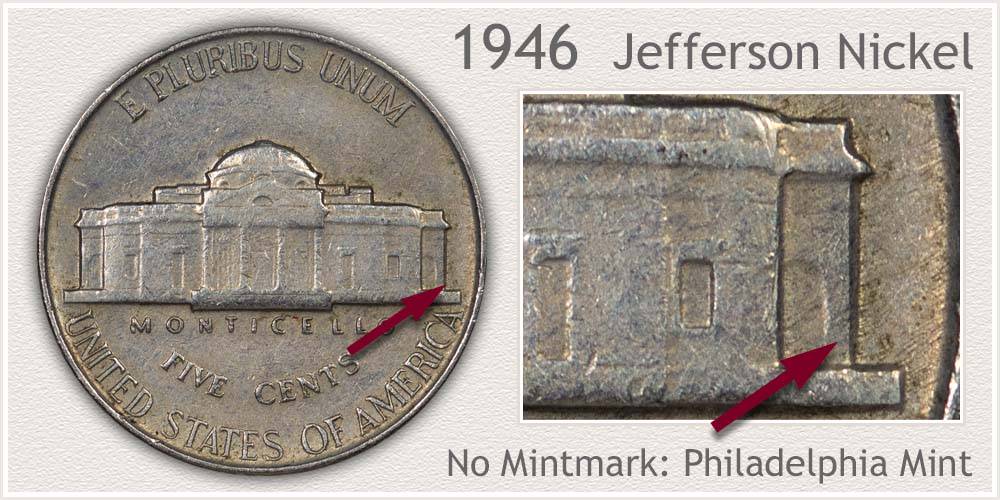
Mint marks, indicating the branch mint where the coin was struck, are critical for identification and valuation. For 1946 nickels, the mint mark (if present) is located to the right of Monticello on the reverse.
- Philadelphia (No Mint Mark): Coins struck at the Philadelphia Mint traditionally did not carry a mint mark, a practice that continued for nickels until 1980.
- Denver (D): The Denver Mint produced coins marked with a “D.”
- San Francisco (S): The San Francisco Mint produced coins marked with an “S.”
The absence or presence of these mint marks, combined with their respective mintage figures, significantly impacts their rarity and, consequently, their market value in various conditions.
Factors Dictating a 1946 Nickel’s Value
The price a collector is willing to pay for a 1946 nickel is a synthesis of several key elements, with some having a far greater impact than others.
Condition and Grading: The Foremost Influence
The physical state of a coin is the single most important factor in its valuation. Numismatists employ a standardized grading scale, most commonly the Sheldon scale (ranging from P-1 to MS-70), to objectively assess a coin’s preservation.
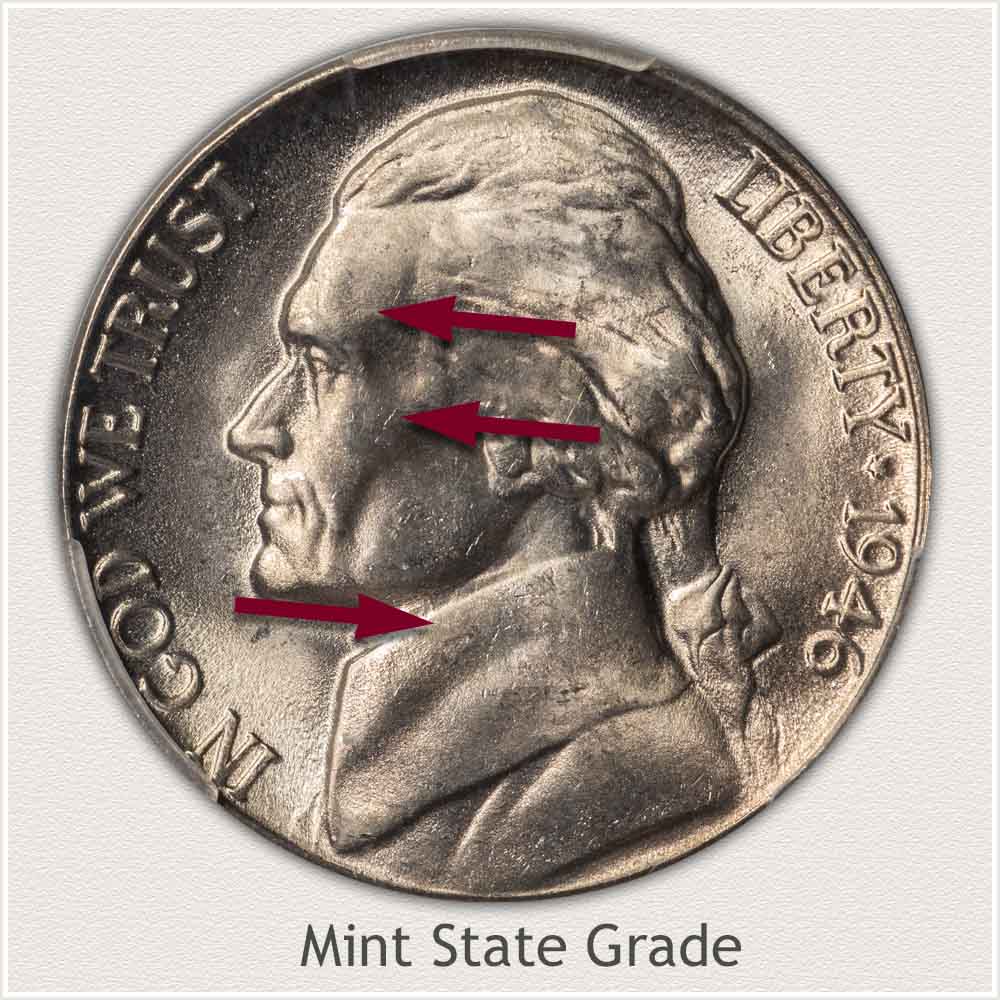
- Circulated Grades (Good to Extremely Fine): The vast majority of 1946 nickels encountered today are circulated, meaning they spent time in commerce and exhibit varying degrees of wear. Common circulated grades such as Good (G-4), Very Good (VG-8), Fine (F-12), and Very Fine (VF-20) will typically fetch values ranging from a few cents above face value to a dollar or two. Key wear points for Jefferson Nickels include Jefferson’s hair and the steps of Monticello.
- Uncirculated Grades (Mint State): Coins graded as Uncirculated (MS-60 to MS-70) have never entered circulation and retain their original mint luster. These coins are significantly more valuable. Key attributes for high-grade uncirculated Jefferson Nickels include sharp details on Jefferson’s portrait, full and distinct steps on Monticello, and minimal to no distracting marks or abrasions.
- Full Steps (FS) Premium: A highly sought-after attribute for Jefferson Nickels is the “Full Steps” (FS) designation. This signifies that all five steps leading to the entrance of Monticello are fully visible, distinct, and without interruption or weakness. Coins graded MS-65 or higher with the Full Steps designation often command a substantial premium, sometimes many times the value of an equally graded coin without this feature, due to the difficulty of finding such well-struck examples.
Mint Mark and Rarity
The mintage figures for each mint branch play a crucial role in determining the relative scarcity of a 1946 nickel.
- 1946 (P, No Mint Mark): Mintage: 81,190,000. This is the most common variety.
- 1946-D (Denver): Mintage: 45,390,000. Less common than the Philadelphia issue, leading to slightly higher values in comparable grades.
- 1946-S (San Francisco): Mintage: 13,000,000. This is the lowest mintage for the year, making 1946-S nickels generally the most desirable, particularly in higher grades and with the Full Steps attribute.
While millions of each were produced, making none truly “rare” in absolute terms, the lower mintage of the ‘S’ mint mark means that high-grade examples are comparatively scarcer and thus more valuable.
Errors and Varieties: The Numismatic Goldmine
Occasionally, coins are produced with manufacturing flaws or intentional die variations that can significantly increase their desirability and value.
- Doubled Die (DD): Occurs when the coin die strikes the planchet more than once, creating a noticeable doubling of design elements. While not as prominent as in some other series, minor doubled die obverse (DDO) or reverse (DDR) varieties are known for 1946 nickels and are of interest to specialized collectors.
- Repunched Mint Mark (RPM): This occurs when the mint mark is punched into the die multiple times or incorrectly, resulting in a visible misalignment or overlap. Several RPMs are documented for 1946-D and 1946-S nickels and can add a modest premium.
- Other Errors: Broader categories of errors like off-center strikes, planchet errors, or significant die breaks can also occur. While none are widely recognized as “major” errors for the 1946 nickel that would inflate values into the thousands, any discernible error can attract collector interest and command a higher price. Thorough inspection is always advisable.
Current Market Value Ranges for a 1946 Nickel
To provide a practical guide, the following value ranges represent typical market prices based on professional assessment, though actual prices can fluctuate with market demand, dealer premiums, and auction results.
Circulated vs. Uncirculated Values
- Common Circulated (G-4 to EF-40): Most 1946 nickels will fall into this category. Their value is relatively low, typically ranging from $0.10 to $3.00. The 1946-S might be at the higher end of this range for well-preserved circulated examples.
- Uncirculated (MS-60 to MS-64):
- 1946 (P, No Mint Mark): $5 – $20
- 1946-D: $5 – $25
- 1946-S: $10 – $40
These coins display original luster but may have minor imperfections from handling at the mint.
- High-Grade Uncirculated (MS-65 and above): This is where significant value appreciation occurs, especially for coins with Full Steps.
- 1946 (P, No Mint Mark):
- MS-65: $30 – $70
- MS-65 Full Steps: $100 – $300+
- MS-66 Full Steps: $500 – $1,500+
- 1946-D:
- MS-65: $30 – $75
- MS-65 Full Steps: $150 – $400+
- MS-66 Full Steps: $700 – $2,000+
- 1946-S: (Often the most valuable in top grades due to lower mintage)
- MS-65: $50 – $150
- MS-65 Full Steps: $250 – $800+
- MS-66 Full Steps: $1,000 – $3,000+
Exceptional coins, particularly those graded MS-67 or higher with Full Steps, can achieve prices well above these figures, occasionally reaching into the low thousands for truly gem-quality specimens.
- 1946 (P, No Mint Mark):
Premium for High Grades and Errors
The stark difference in value between an MS-64 and an MS-65, or between a coin with and without the Full Steps designation, underscores the intense demand for pristine examples. Any confirmed, significant error on a 1946 nickel would command a premium, adding to these baseline values, though highly valuable errors for this specific year are uncommon.
Where to Find and Sell 1946 Nickels
For those looking to appraise or divest their 1946 nickels, several avenues are available:
- Professional Coin Dealers: Reputable local or online dealers can provide expert appraisals and purchase coins. They offer convenience and expertise but will buy at a price that allows for their profit margin.
- Numismatic Auctions: For coins expected to fetch substantial value, submitting them to a specialized coin auction house can provide access to a broader market of serious collectors, potentially yielding higher prices.
- Online Marketplaces: Platforms such as eBay can be suitable for selling lower to mid-range coins. However, sellers must accurately grade their coins and understand market pricing to ensure fair transactions and manage buyer expectations.
- Coin Shows: Attending coin shows allows for direct interaction with multiple dealers and collectors, enabling price comparisons and market insights.
- Third-Party Grading Services (TPGS): For coins believed to be of significant value, professional grading by services like PCGS (Professional Coin Grading Service) or NGC (Numismatic Guaranty Corporation) is highly recommended. This provides an objective, authenticated grade, encapsulates the coin for protection, and significantly enhances its marketability and liquidity.
The Investment Perspective: Is a 1946 Nickel a Smart Financial Move?
For the vast majority of well-circulated 1946 nickels, their financial potential as an investment is minimal, often barely exceeding face value. However, the landscape shifts dramatically for high-grade specimens, particularly those with the coveted Full Steps designation.
Numismatics as an Alternative Asset
Investing in rare coins, a field known as numismatics, can serve as a compelling alternative asset class within a diversified financial portfolio. Rare coins offer distinct advantages, including their tangible nature, historical significance, and potential for appreciation independent of traditional markets like stocks and bonds. A high-grade 1946 Jefferson Nickel, especially a Full Steps example from the scarcer San Francisco mint, can represent a stable store of value and an appreciating asset over the long term. This niche investment, however, necessitates a keen understanding of grading, market trends, and a patient, long-term outlook.

Practical Advice for Collectors and Sellers
- Continuous Education: Before making significant purchases or sales, invest time in researching the specific series, grading standards, and current market values. Knowledge is your most valuable asset in numismatics.
- Optimal Preservation: Store coins in archival-safe holders and environments to prevent further degradation. Proper storage protects their condition and, by extension, their value.
- Seek Expert Opinions: When dealing with coins suspected of being highly valuable, obtain appraisals from multiple reputable sources or consider professional third-party grading to ensure an accurate and unbiased valuation.
- Understand Liquidity: While potentially appreciating, rare coins can be less liquid than other financial assets. Selling a high-value coin for its full market potential may require patience and access to specialized markets.
In conclusion, while a casual discovery of a 1946 nickel might initially seem insignificant, delving into the intricacies of its production, condition, and market dynamics reveals that certain specimens can indeed hold substantial value for the informed collector or investor. Its worth transcends mere face value, representing a tangible piece of American history and a potential financial asset.
aViewFromTheCave is a participant in the Amazon Services LLC Associates Program, an affiliate advertising program designed to provide a means for sites to earn advertising fees by advertising and linking to Amazon.com. Amazon, the Amazon logo, AmazonSupply, and the AmazonSupply logo are trademarks of Amazon.com, Inc. or its affiliates. As an Amazon Associate we earn affiliate commissions from qualifying purchases.