
For numismatists and casual coin collectors alike, the 1942 Washington quarter holds a distinct place in American history. Minted during the height of World War II, this coin is a testament to an era of austerity and national mobilization. Beyond its historical weight, however, lies the practical question for any owner: what is its actual financial value in today’s market? To understand the worth of a 1942 quarter, one must look past the face value and delve into the intricacies of precious metal content, minting marks, and the elusive condition of the coin.
The Foundation of Value: 90% Silver Content
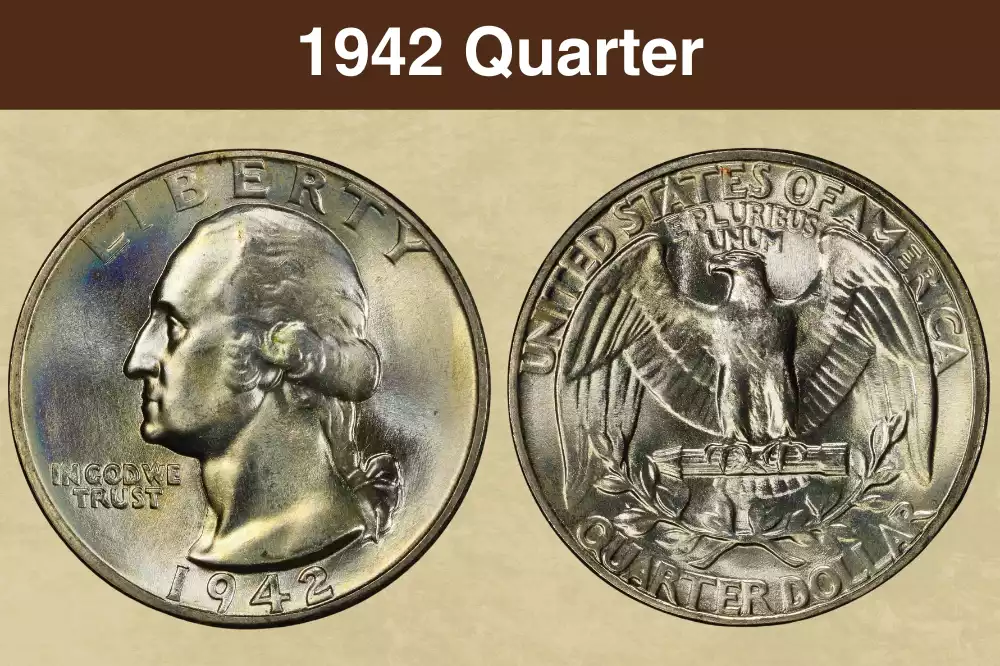
The most reliable baseline for determining the value of any 1942 Washington quarter is its intrinsic “melt value.” Unlike modern quarters, which are composed of a cupro-nickel cladding over a copper core, the 1942 issue was struck in 90% silver and 10% copper.
Understanding Melt Value
Because silver prices fluctuate on the global commodities market, the base value of a 1942 quarter is inherently tied to the spot price of silver. A standard 1942 quarter has a total silver weight of approximately 0.1808 troy ounces. Even in poor condition—often referred to as “junk silver” or “bullion condition”—the coin will always be worth at least its silver content.
Investors often prioritize these coins not for their rarity, but for their status as a tangible asset. In times of economic uncertainty, 90% silver coins serve as a portable, fractional store of wealth. To calculate the baseline value on any given day, one simply multiplies the current spot price of silver by 0.1808. This ensures that even the most worn, circulated 1942 quarter carries a significant premium over its face value of twenty-five cents.
Key Factors Influencing Collector Value
While melt value provides a floor, many 1942 quarters command significantly higher prices based on numismatic criteria. If a coin retains its original luster, shows minimal wear, or bears specific mint marks, its market value can escalate from a few dollars to hundreds, or even thousands, for rare specimens.
The Role of Mint Marks
When examining your 1942 quarter, the first step is to locate the mint mark. This small letter indicates where the coin was produced.
- Philadelphia (No Mint Mark): In 1942, the Philadelphia Mint produced the vast majority of these coins. Because of the high mintage numbers, these are the most common and generally hold the least “numismatic” premium unless they are in exceptional condition.
- Denver (D): The Denver Mint also produced quarters in 1942. These are slightly more desirable than the Philadelphia issues in mid-to-high grades.
- San Francisco (S): The San Francisco Mint produced the lowest number of quarters that year. Consequently, a 1942-S quarter, particularly in higher grades, often commands a higher price point than its counterparts from the other two facilities.

The Importance of Coin Grading
The difference between a “good” coin and an “uncirculated” coin is massive in the world of professional collecting. Grading is measured on the Sheldon Scale, which ranges from 1 (Poor) to 70 (Perfect).
- Circulated Grades (G-4 to AU-58): Most coins found in circulation show signs of wear, such as the flattening of George Washington’s hair or the smoothing of the eagle’s feathers on the reverse side. These coins are valued primarily for their silver content.
- Mint State (MS-60 to MS-70): Coins that show no signs of circulation—retaining the original “frost” from the minting process—are the holy grail for collectors. An MS-65 or higher specimen is highly sought after. At this level, the value shifts from being tied to silver content to being determined by rarity, demand, and professional aesthetic appeal.
Evaluating Condition and Rarity
To properly assess a 1942 quarter, you must become familiar with the visual markers of quality. Collectors look for specific details that signal a high-grade coin, which can drastically shift the market value.
Recognizing “Full Head” Details
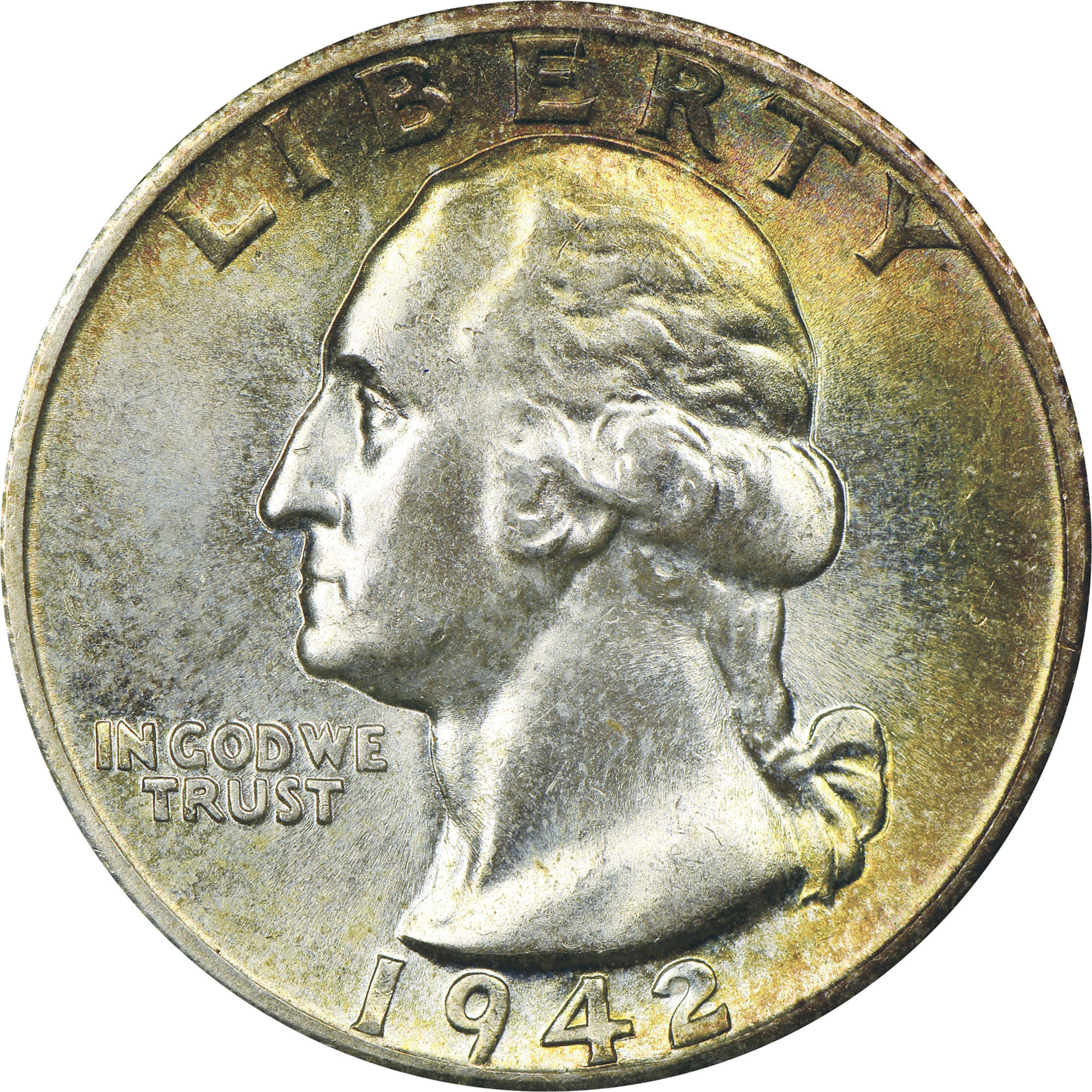
A specific detail that drives the price of Washington quarters is the clarity of the eagle’s breast feathers and, more importantly, the details in the hair of Washington’s portrait. On a highly circulated coin, the hair lines are smooth. On a premium, high-grade coin, the fine lines of the hair remain sharp and distinct. Coins with exceptionally strong strikes, showing clear, crisp details, are referred to as having a “Full Strike.” These command significant premiums at auction houses and specialized coin shops.
The Impact of Environmental Damage
It is vital to distinguish between a rare, high-value coin and one that has been damaged. Cleaning a coin is the most common mistake made by novices. If you find a 1942 quarter and attempt to “brighten” it with chemical dips or abrasive cloths, you effectively destroy its numismatic value. Collectors look for original, natural toning. Patina—a thin, colorful layer of oxidation—can sometimes enhance the appeal and value of a silver coin, whereas artificial cleaning marks will cause the coin’s value to plummet back down to its base melt value.
Investment Strategy: Buying and Selling
Understanding the value of a 1942 quarter is only half the battle; knowing how to trade it effectively is the other. Whether you are looking to liquidate a family collection or diversify your portfolio, the approach matters.
Where to Sell
If you have a collection of 1942 quarters, avoid local pawn shops or “we-buy-gold” storefronts, which typically offer only the lowest melt value. Instead, consider:
- Professional Numismatic Dealers: These experts can identify rare varieties and grade the coins accurately, offering a fair market price based on current trends.
- Auction Platforms: For high-grade, certified coins (those graded by companies like PCGS or NGC), auction sites allow you to reach a global audience of dedicated collectors willing to pay a premium.
- Coin Shows: These events are excellent for networking. They allow you to compare offers from multiple dealers in one location, ensuring you get the best competitive price.
Long-Term Outlook
As an investment, silver-based coins like the 1942 quarter serve as a hedge against inflation. While they may not provide the explosive growth of speculative stocks, they offer a stability that appeals to conservative investors. When silver prices rise, the baseline value of your 1942 quarter rises with it. When silver prices are stagnant, the numismatic rarity of specific high-grade specimens keeps the value elevated.
Ultimately, the worth of a 1942 quarter is subjective. To a casual observer, it is a piece of pocket change worth about four or five dollars in silver. To a collector, it is a piece of history that, when preserved in mint condition, can represent a significant financial asset. By taking the time to inspect your coins for mint marks, assessing their grade, and avoiding the urge to clean them, you ensure that you are getting the maximum possible value for these enduring silver artifacts. Whether you view them as bullion or as collectibles, the 1942 quarter remains a cornerstone of the American coin market.
aViewFromTheCave is a participant in the Amazon Services LLC Associates Program, an affiliate advertising program designed to provide a means for sites to earn advertising fees by advertising and linking to Amazon.com. Amazon, the Amazon logo, AmazonSupply, and the AmazonSupply logo are trademarks of Amazon.com, Inc. or its affiliates. As an Amazon Associate we earn affiliate commissions from qualifying purchases.