
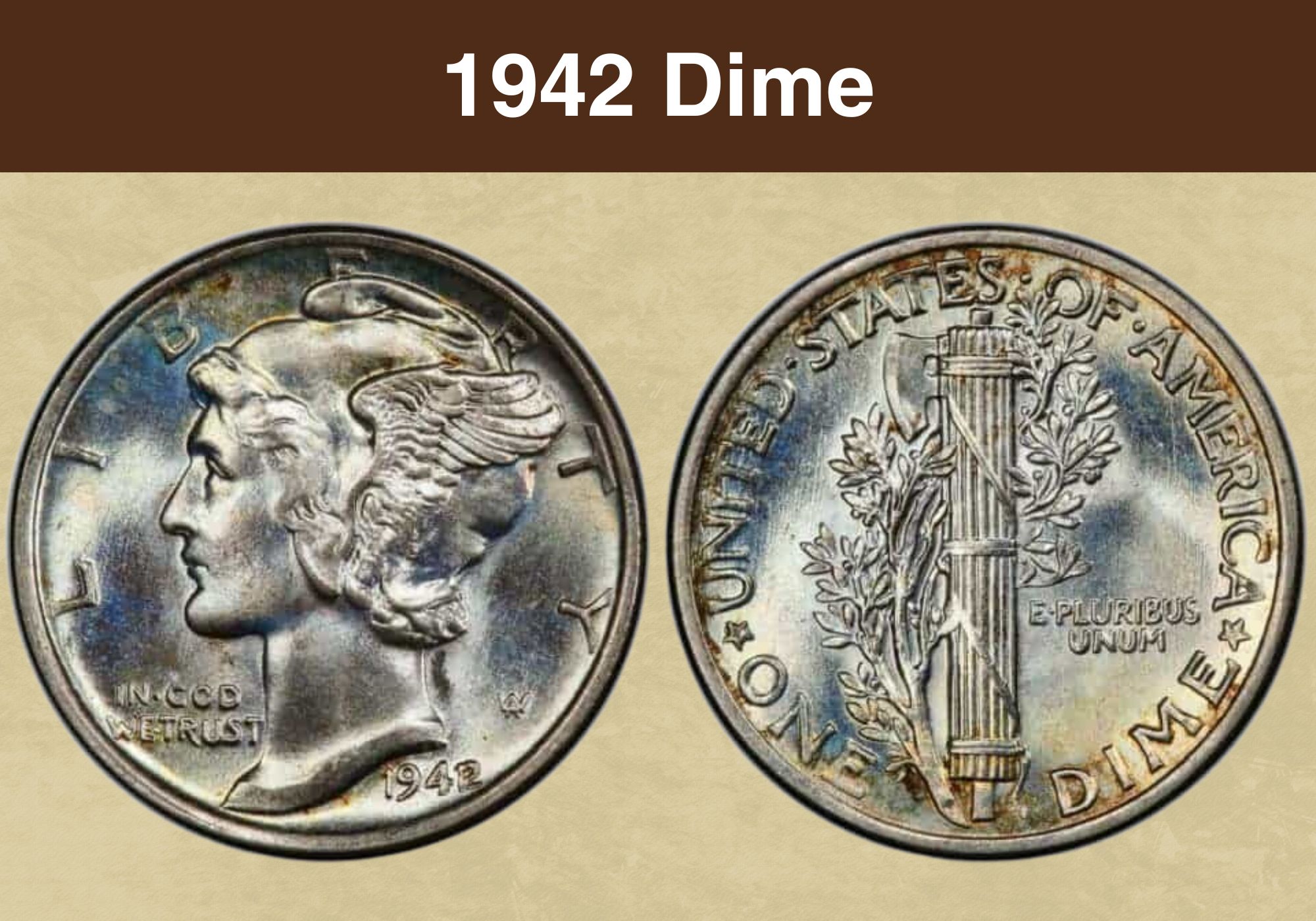
For novice collectors and casual coin enthusiasts, the 1942 Mercury dime occupies a unique place in the landscape of numismatics. It sits at the intersection of historical significance—being a product of the early years of American involvement in World War II—and practical monetary value. While many people come across these silver coins in old collections or piggy banks, understanding their true worth requires moving beyond the surface value of ten cents to analyze metal content, numismatic rarity, and the complexities of coin grading.
The Intrinsic Value: The Silver Premium
When determining the worth of a 1942 dime, the most immediate and objective starting point is its bullion value. Unlike modern dimes, which are composed primarily of copper and nickel, the 1942 Mercury dime was minted during an era when the United States standard for circulating coinage relied heavily on precious metals.

Understanding the 90% Silver Composition
All Mercury dimes produced between 1916 and 1945 were struck in 90% fine silver. This metallic composition is the primary “floor” for the value of any 1942 dime. Regardless of the coin’s physical condition—whether it is pristine, scratched, or heavily circulated—it will always possess value based on the current global spot price of silver.
A standard Mercury dime contains approximately 0.0723 troy ounces of pure silver. To calculate the base value of any such coin, you must monitor the live commodities market. If the price of silver is $25 per ounce, the “melt value” of the dime remains relatively stable around the $1.80 to $2.00 range. Consequently, a common 1942 dime in average condition will never be worth less than its silver content. This makes these coins an excellent entry point for investors interested in “junk silver”—a term used by stackers to describe fractional silver coinage that serves as a hedge against inflation.
The Impact of Market Volatility
Investors who focus on the silver content of 1942 dimes often view them as liquid assets. Because they are easily recognized and contain a standard amount of precious metal, they are frequently traded in bulk. If you own a collection of these dimes, tracking the spot price of silver is the most accurate way to understand their baseline worth. However, it is essential to remember that bullion dealers will typically pay slightly below the spot price to ensure their own profit margin, while individual buyers may pay a premium for the convenience of owning smaller, fractional denominations.
Numismatic Value: Beyond the Metal
While the silver content provides a solid foundation, the true potential of a 1942 dime is unlocked when we transition from bullion value to numismatic, or collector, value. The 1942 dime is not inherently rare, as the Philadelphia Mint produced millions of them to meet the demands of a wartime economy. However, certain factors can exponentially increase the value of a specific specimen.
The Significance of Mint Marks
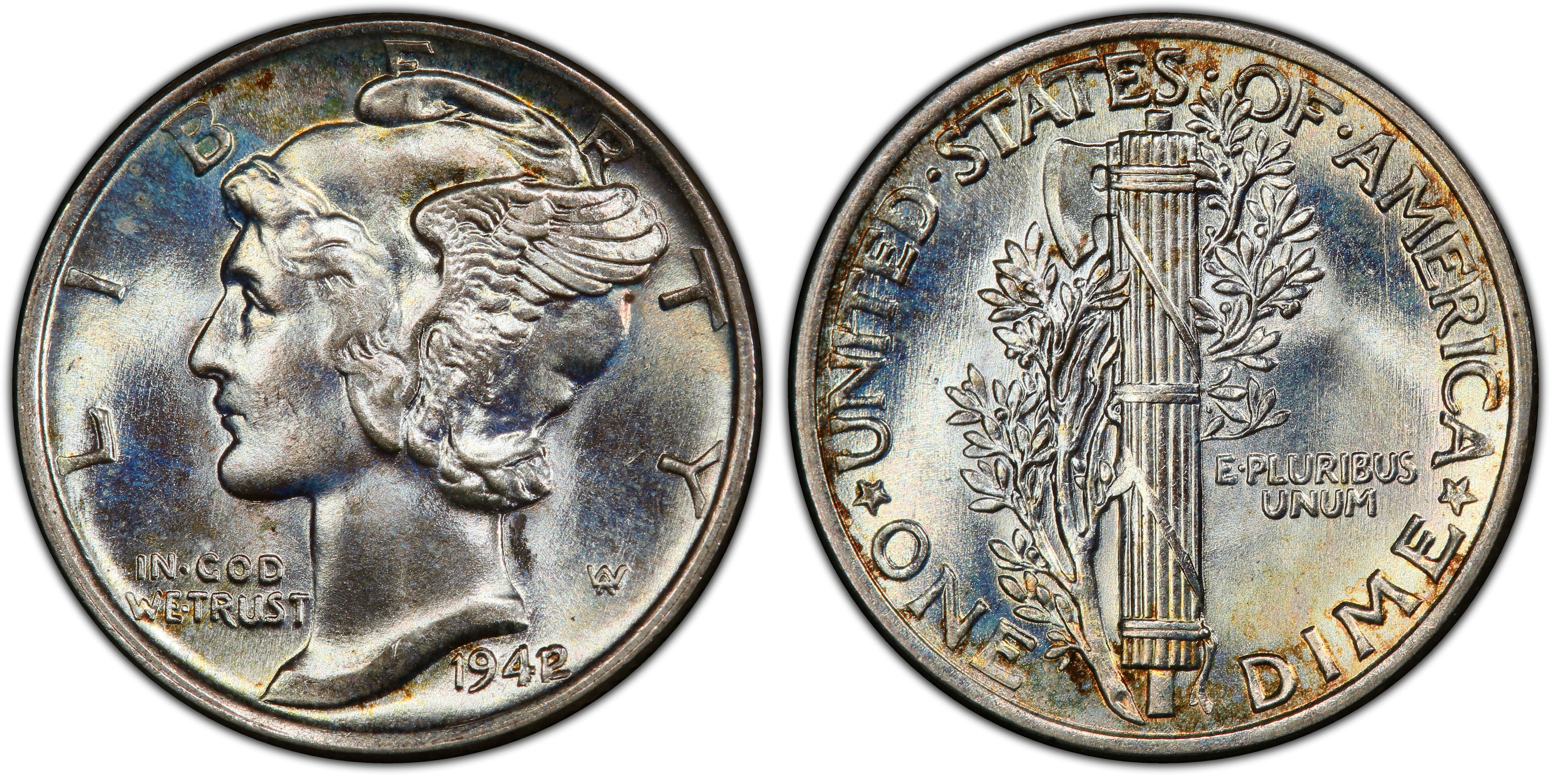
The location where a coin was struck is a critical determinant of value. For the 1942 Mercury dime, collectors look for the small letter located on the reverse of the coin, to the right of the fasces.
- No Mint Mark: Indicates the coin was produced at the Philadelphia Mint. These are the most common and generally carry lower numismatic premiums unless they are in exceptionally high grade.
- “D” Mint Mark: Indicates production at the Denver Mint.
- “S” Mint Mark: Indicates production at the San Francisco Mint.
The “D” and “S” variations can sometimes command higher prices than the Philadelphia issues, provided the condition is high. Scarcity in the numismatic world is often defined by the survival rate of coins from specific mints in specific years. Collectors should always use a magnifying glass to check for these marks, as a simple “D” or “S” can be the difference between a coin worth a couple of dollars and one worth significantly more to a specialist.
Grading and the “Condition” Factor
In the world of coin collecting, the Sheldon Scale—ranging from 1 to 70—is the gold standard for grading. A 1942 dime in “Good” (G-4) condition will look heavily worn, with the designs flattened and the date potentially nearing smoothness. Such a coin is only worth its silver weight.
Conversely, a coin graded as “Mint State” (MS-65 or higher) is a different beast entirely. These coins have never circulated, retaining the original “luster” or “frost” from the minting press. For a 1942 dime to achieve an MS-65 grade, it must be free of significant contact marks or surface scratches. In these elite grades, the value can jump from a few dollars to hundreds of dollars at auction. Professional grading services like PCGS or NGC provide “slabs”—protective, tamper-evident plastic cases—that certify the grade, thereby guaranteeing the coin’s value to future buyers.
The Rarity Exception: The 1942/41 Overdate
No discussion of the 1942 dime is complete without mentioning one of the most famous errors in American numismatics: the 1942/41 overdate. During the production process, a die intended for 1942 was accidentally struck over a 1941 die. This resulted in a coin where the “2” in the date is clearly visible over the “1.”
Identifying the Overdate
Because this error occurred at the Philadelphia and Denver mints, it remains one of the most sought-after varieties for Mercury dime collectors. To the untrained eye, the overdate can be subtle. It is most easily identified by observing the bottom of the “2” and the base of the “1.” If you possess a 1942 dime that shows evidence of a “1” beneath the “2,” you are potentially looking at a coin worth thousands of dollars, even in circulated condition.
The Value of Varieties
Varieties like the overdate are the primary reason why even “common” years are worth inspecting with a keen eye. While the chance of finding a 1942/41 overdate in a random jar of change is statistically low, it is not zero. Collectors should always check their 1942 dimes against high-resolution photos of the known overdate varieties. This illustrates the importance of numismatic education; by learning the specific “red flags” and error markers, a collector transforms a simple piece of silver into a significant financial asset.
Strategies for Assessing Your Collection
If you find yourself in possession of a collection of 1942 Mercury dimes, your approach to determining their value should be methodical. Do not rush to sell at the first offer, as different avenues of liquidation yield different financial results.
Identifying Your Goals
Are you looking to liquidate for quick cash, or are you building a long-term investment portfolio? If the former, selling in bulk to a local coin shop is the most efficient route, though you will likely receive a price based on the silver melt value. If your goal is to maximize profit, you must be prepared to invest time. This involves researching the grade of your coins, obtaining professional certification for high-quality specimens, and potentially utilizing online auction platforms that connect you directly with specialized collectors.
The Importance of Provenance and Presentation
Never clean your coins. This is a rule that cannot be overstated. A common mistake among beginners is attempting to make a dull 1942 dime “shine” by using household chemicals or abrasive cloths. This process permanently damages the microscopic surface of the coin, stripping it of its “original skin” and drastically reducing its numismatic value. A dirty, original-surface coin is worth significantly more to a collector than a cleaned, bright, but damaged one.
In summary, a 1942 dime is worth the sum of its parts: the intrinsic value of its silver content combined with the scarcity of its mint mark, the excellence of its condition, and the presence of rare errors. By understanding these variables, you can accurately gauge whether your dime is merely a piece of silver bullion or a hidden treasure of historical and financial significance. Keep them protected, keep them original, and keep them studied; in the world of numismatics, knowledge is the primary currency.
aViewFromTheCave is a participant in the Amazon Services LLC Associates Program, an affiliate advertising program designed to provide a means for sites to earn advertising fees by advertising and linking to Amazon.com. Amazon, the Amazon logo, AmazonSupply, and the AmazonSupply logo are trademarks of Amazon.com, Inc. or its affiliates. As an Amazon Associate we earn affiliate commissions from qualifying purchases.