
The intrinsic value of a 1918 penny extends far beyond its face value of one cent. For collectors, investors, and numismatists, understanding the true worth of such an item involves a meticulous examination of several critical factors that dictate its market price. This exploration delves into the financial intricacies of coin valuation, specifically focusing on the 1918 Lincoln Cent, to provide a comprehensive insight into its potential as a collectible asset.
The Foundations of Coin Valuation
Determining the financial worth of any collectible coin, including the 1918 penny, is not a simple transaction but rather a nuanced appraisal process. Unlike standard currency whose value is fixed by government decree, a collectible coin’s worth is a dynamic interplay of rarity, condition, demand, and historical significance.
Understanding Numismatic Value
Numismatics is the study and collection of currency, including coins, tokens, paper money, and medals. The numismatic value of a coin refers to its market price as a collectible, which is often significantly higher than its metallic content or face value. For the 1918 penny, a copper alloy coin, its metallic value is negligible. Its real value is derived from its desirability to collectors. This desirability is influenced by the coin’s historical context, its design, and crucially, its scarcity and state of preservation. A coin’s story – its journey through circulation, its survival rate, and any unique characteristics – all contribute to its narrative and, consequently, its financial appeal.
Key Factors Influencing Coin Worth
Several specific criteria collectively determine a coin’s market value. Understanding these is paramount for anyone evaluating a 1918 penny for its financial potential.
Rarity and Mintage Figures
The fewer coins of a specific type, year, and mint mark that were originally produced, and the fewer that survive today, the more valuable they tend to be. Mintage figures provide the initial data point for rarity. For 1918, Lincoln Cents were produced at three U.S. Mint facilities:
- 1918 (Philadelphia): No mint mark, mintage of 288,104,000.
- 1918-D (Denver): “D” mint mark below the date, mintage of 47,830,000.
- 1918-S (San Francisco): “S” mint mark below the date, mintage of 34,740,000.
From these figures, it’s clear that the Philadelphia mint produced the vast majority, making the 1918-D and especially the 1918-S pennies inherently scarcer. However, raw mintage figures only tell part of the story; the survival rate in various conditions is equally critical.
Condition and Grade
The physical condition of a coin is perhaps the single most important determinant of its value. Coins that have experienced less wear and tear, retaining more of their original detail and luster, command substantially higher prices. This is quantified through a standardized grading system, which we will explore in detail. A barely circulated coin can be worth hundreds or thousands of times more than an identical coin in poor condition.
Mint Marks
As illustrated above, mint marks (D for Denver, S for San Francisco, or no mark for Philadelphia) identify the specific branch mint where the coin was produced. Different mints often had different production numbers, leading to variations in rarity for the same year. For 1918, the “S” mint mark is generally associated with higher values due to lower mintage.
Varieties and Errors
Occasionally, coins are struck with anomalies due to errors in the die or the striking process. These “error coins” or “variety coins” can be exceedingly rare and highly sought after, often fetching premium prices. Examples include doubled dies, off-center strikes, or repunched mint marks. While the 1918 penny is not famous for widely recognized, high-value errors like some other Lincoln Cent years, diligent inspection for subtle anomalies is always prudent.
Deconstructing the 1918 Lincoln Cent
To accurately assess the financial prospects of a 1918 penny, it’s essential to understand its specific place within numismatic history and its characteristics.
The Lincoln Cent Series (1909-Present)
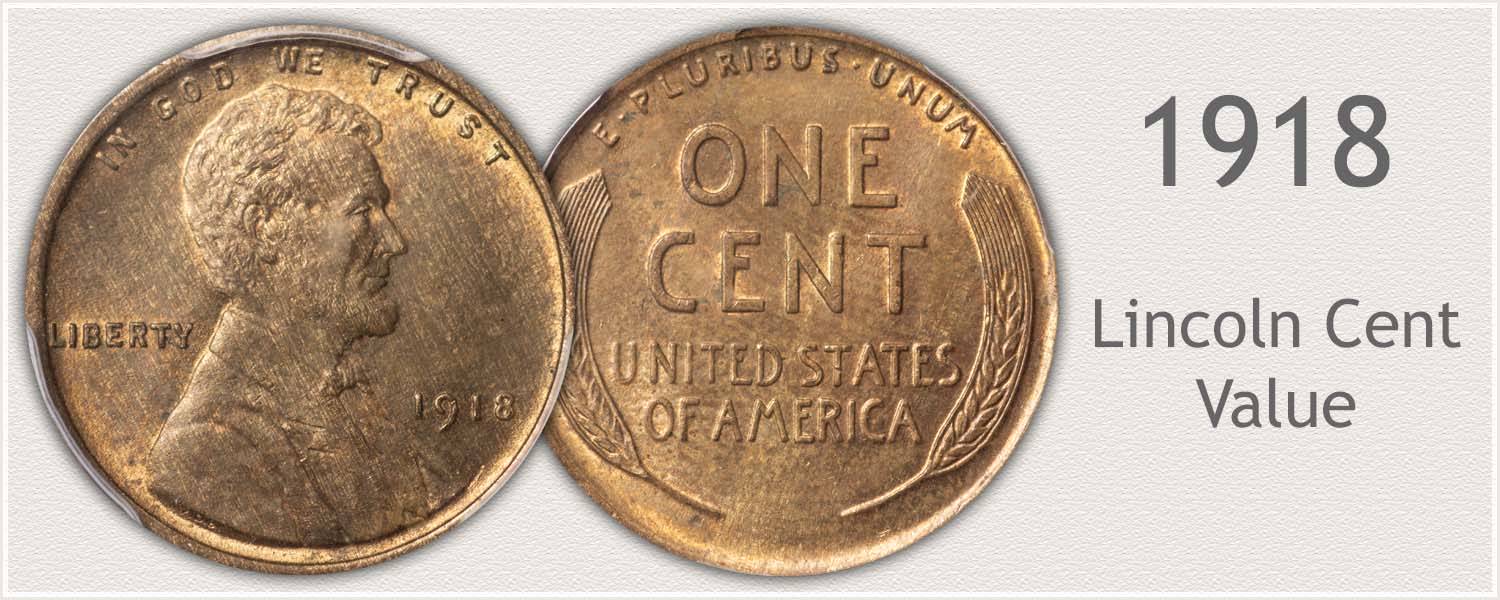
The 1918 penny is a Lincoln Cent, a series that began in 1909 and continues to this day, making it one of the longest-running coin series in U.S. history. The obverse features a portrait of Abraham Lincoln, designed by Victor David Brenner. The reverse initially featured two wheat stalks, giving rise to its popular name, the “Wheat Penny.” In 1918, the design was firmly established, and production was robust, especially from the Philadelphia Mint.
Mintage Figures and Intrinsic Rarity
As mentioned, the 1918-S penny is the rarest of the three mint marks for that year in terms of initial production numbers. However, rarity is also a function of survival. Many coins from this era, particularly common dates like the 1918 Philadelphia issue, saw heavy circulation during World War I and the subsequent years. This means that while hundreds of millions were minted, very few survive today in pristine, uncirculated condition. The difference in value between a circulated common 1918-P and an uncirculated 1918-P can be staggering, illustrating that even a high mintage coin can be rare in top grades.
Key Varieties and Errors to Look For
While the 1918 Lincoln Cent isn’t particularly noted for major, well-known error varieties, a careful inspection under magnification can sometimes reveal subtle details that add to its value. Collectors often look for:
- Doubled Dies: While not a prominent feature for 1918, minor doubling can sometimes occur on the date or lettering.
- Repunched Mint Marks (RPMs): Instances where the mint mark was stamped more than once or shifted slightly, creating an overlapping or offset appearance.
- Die Breaks/Cracks: Minor imperfections that occur as the coin dies wear out, resulting in raised lines or bumps on the coin’s surface.
These minor variations, while not as dramatic as the famous 1955 doubled die, can still differentiate a common coin from one with enhanced numismatic appeal, thus affecting its market value.
Grading Your 1918 Penny
The condition, or grade, of a coin is the single most significant factor in determining its worth. A standardized system ensures consistency in valuation.
The Sheldon Scale Explained

Coin grading primarily uses the Sheldon Scale, which ranges from 1 (Poor/Basal State) to 70 (Perfect Uncirculated). Each number corresponds to a specific level of preservation and detail retention. Key categories include:
- Good (G-4): Heavily worn, but major design features are visible. Date and lettering are legible.
- Fine (F-12): Moderate to considerable wear, but all major features are sharp and bold.
- Very Fine (VF-20): Moderate wear on the high points of the design, with all lettering and major features clear.
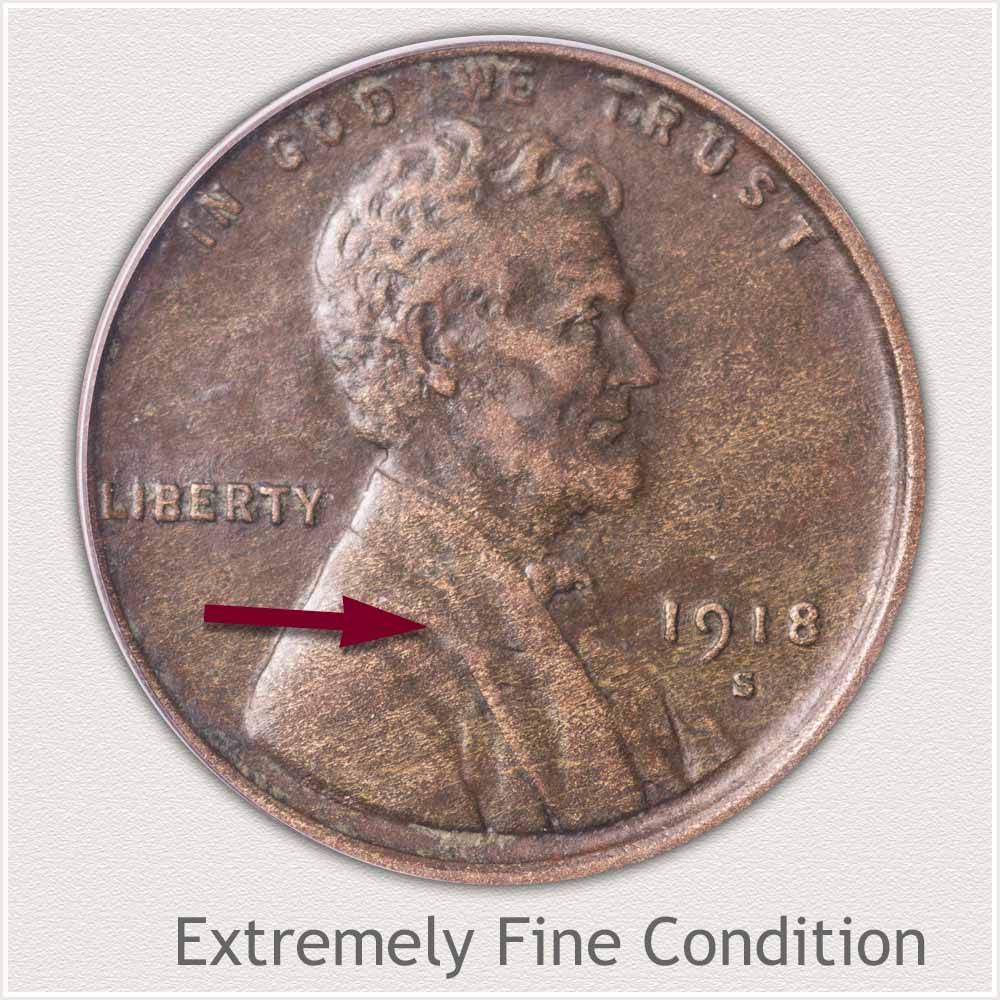
- Extremely Fine (EF-40 or XF-40): Light wear on the highest points, with all details sharp. Some luster may be present.
- About Uncirculated (AU-50 to AU-58): Traces of wear on the highest points, but nearly full mint luster.
- Uncirculated (MS-60 to MS-70): No signs of wear from circulation. MS-60 represents a coin with no wear but perhaps some bag marks, while MS-70 is a perfect, flawless coin. For copper coins like the penny, “Red” (RD), “Red-Brown” (RB), and “Brown” (BN) designations also apply to uncirculated coins, indicating the amount of original copper luster remaining. Full Red coins (RD) are the most desirable and valuable.
Visual Cues for Different Grades
When inspecting a 1918 penny, look for the following:
- Lincoln’s Hair and Beard: In higher grades, individual strands of hair and beard lines will be sharp and distinct. In lower grades, they become smooth.
- Details on the Wheat Stalks: The individual grains and awns on the reverse should be clear and separated in higher grades. Wear will smooth these details.
- Date and Mint Mark: These should be fully legible across all but the lowest grades. Sharpness and clarity indicate better preservation.
- Luster: Uncirculated coins will retain much of their original mint luster, a cartwheel effect visible when tilted under light. Even AU coins may show traces.
The Role of Professional Grading Services
For coins with significant potential value, professional grading by reputable third-party services like the Professional Coin Grading Service (PCGS) or the Numismatic Guaranty Corporation (NGC) is highly recommended. These services encapsulate the coin in a sealed holder with a certified grade, ensuring authenticity and providing an objective assessment of its condition. While there is a fee, this certification significantly enhances a coin’s marketability and ensures buyers are confident in its grade, often leading to higher realized prices. A raw, uncertified coin, regardless of its apparent condition, will almost always trade for less than its professionally graded counterpart.
Market Dynamics and Realized Values
The actual worth of a 1918 penny is ultimately determined by what a willing buyer will pay in the current market. This value fluctuates based on demand, economic conditions, and the specific sales channel.
Auction Results and Historical Trends
Reviewing past auction results for similar 1918 pennies is one of the most reliable ways to estimate value. Websites of major auction houses (e.g., Heritage Auctions, Stacks and Bowers Galleries) and numismatic pricing guides (e.g., PCGS Price Guide, NGC Price Guide, Red Book – A Guide Book of United States Coins) provide extensive data. These resources demonstrate how values generally increase exponentially with higher grades and for rarer mint marks.
- Circulated 1918 (P) Pennies: In Good (G-4) to Fine (F-12) condition, these are very common and typically worth less than $1 to a few dollars. Even in Very Fine (VF-20) to Extremely Fine (XF-40), they might fetch only $5-$15.
- Uncirculated 1918 (P) Pennies: An MS-60 Brown (BN) might sell for $30-$50, while an MS-65 Red (RD) could reach $150-$300, or even more for truly superb examples (MS-67 RD can be over $1,000).
- 1918-D Pennies: Due to lower mintage, these command slightly higher prices. A G-4 might be $2-$5, while an XF-40 could be $30-$60. An MS-65 Red (RD) could easily surpass $500, with top grades reaching into the thousands.
- 1918-S Pennies: As the lowest mintage, these are the most valuable. A G-4 might be $3-$7, and an XF-40 could range from $50-$100. An MS-65 Red (RD) is likely to be $1,000-$2,000+, with exceptional examples pushing even higher.
These figures are illustrative and can change based on market demand, economic conditions, and specific eye appeal.
Online Marketplaces vs. Local Coin Dealers
Where you choose to buy or sell a 1918 penny also impacts its realized value.
- Online Marketplaces (e.g., eBay, specialized coin forums): Offer broad exposure to a global market of collectors, potentially yielding higher prices, especially for rarer or graded coins. However, they also involve fees and require careful attention to authentication and shipping.
- Local Coin Dealers: Provide convenience and immediate transactions. Dealers need to make a profit, so their buying prices will be lower than retail, but they offer expertise and a safe environment for transactions, particularly for uncertified coins where immediate expert opinion is valuable.
- Coin Shows/Auctions: Offer a blend of direct interaction with dealers and other collectors, along with the competitive bidding of an auction environment.
The Impact of Economic Factors on Collectibles
The market for collectible coins, like other alternative investments, can be influenced by broader economic conditions. During periods of economic prosperity, discretionary income for hobbies and investments may increase, potentially driving up demand and prices for high-end collectibles. Conversely, economic downturns might see a softening of the market as collectors reduce spending or even liquidate assets. Gold and silver prices, while not directly tied to copper pennies, can also indirectly influence the overall sentiment in the precious metals and numismatic markets.
Investing in Collectible Coins
For individuals considering collecting 1918 pennies, or any rare coins, as an investment, a strategic approach is essential.
Due Diligence and Education
Treat coin collecting as you would any other investment. Thorough research into the specific coins, their history, market trends, and grading standards is paramount. Understanding what constitutes a true rarity versus a common coin in good condition will protect your investment. Engage with reputable dealers, join numismatic societies, and study current market data.
Diversification and Risk Management
While a specific rare coin can appreciate significantly, it’s wise not to put all your investment capital into one type of collectible. Diversifying across different coin types, metals, or even other asset classes can mitigate risk. The coin market, while stable for certain issues, can still be subject to shifts in popularity and demand.
Long-Term vs. Short-Term Perspectives
Coin collecting, especially for significant value appreciation, is generally a long-term endeavor. Values often increase steadily over decades, driven by increasing rarity and historical appeal. Short-term speculation is far riskier and less predictable. Patients investors who focus on acquiring high-quality, rare examples tend to see the best returns over time. The 1918 penny, particularly in higher grades and with scarcer mint marks, represents a tangible asset that has historically maintained and increased its value, serving as a testament to its enduring appeal within the numismatic community.
aViewFromTheCave is a participant in the Amazon Services LLC Associates Program, an affiliate advertising program designed to provide a means for sites to earn advertising fees by advertising and linking to Amazon.com. Amazon, the Amazon logo, AmazonSupply, and the AmazonSupply logo are trademarks of Amazon.com, Inc. or its affiliates. As an Amazon Associate we earn affiliate commissions from qualifying purchases.