
In the hyper-connected landscape of modern technology, time is more than just a measurement; it is a critical data point that governs everything from server synchronization to global team collaboration. A seemingly simple question like “What is 9 am EST in Central Time?” serves as the entry point into a complex web of digital infrastructure, software engineering, and remote work optimization.
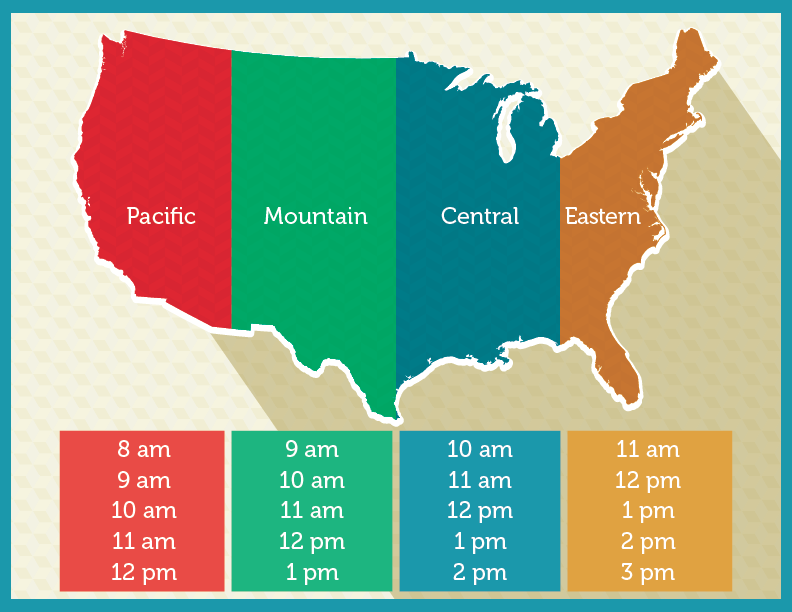
To answer the immediate query: 9:00 AM Eastern Standard Time (EST) is 8:00 AM Central Standard Time (CST).
While this one-hour difference may appear trivial on the surface, for the tech professional, it represents a fundamental logistical pillar. In an era where software deployments, live-streamed product launches, and distributed engineering sprints happen across borders, understanding the mechanics of time zones is essential for maintaining operational integrity.
The Mechanics of Time Conversion: Why 9 AM EST to Central Matters for Digital Ops
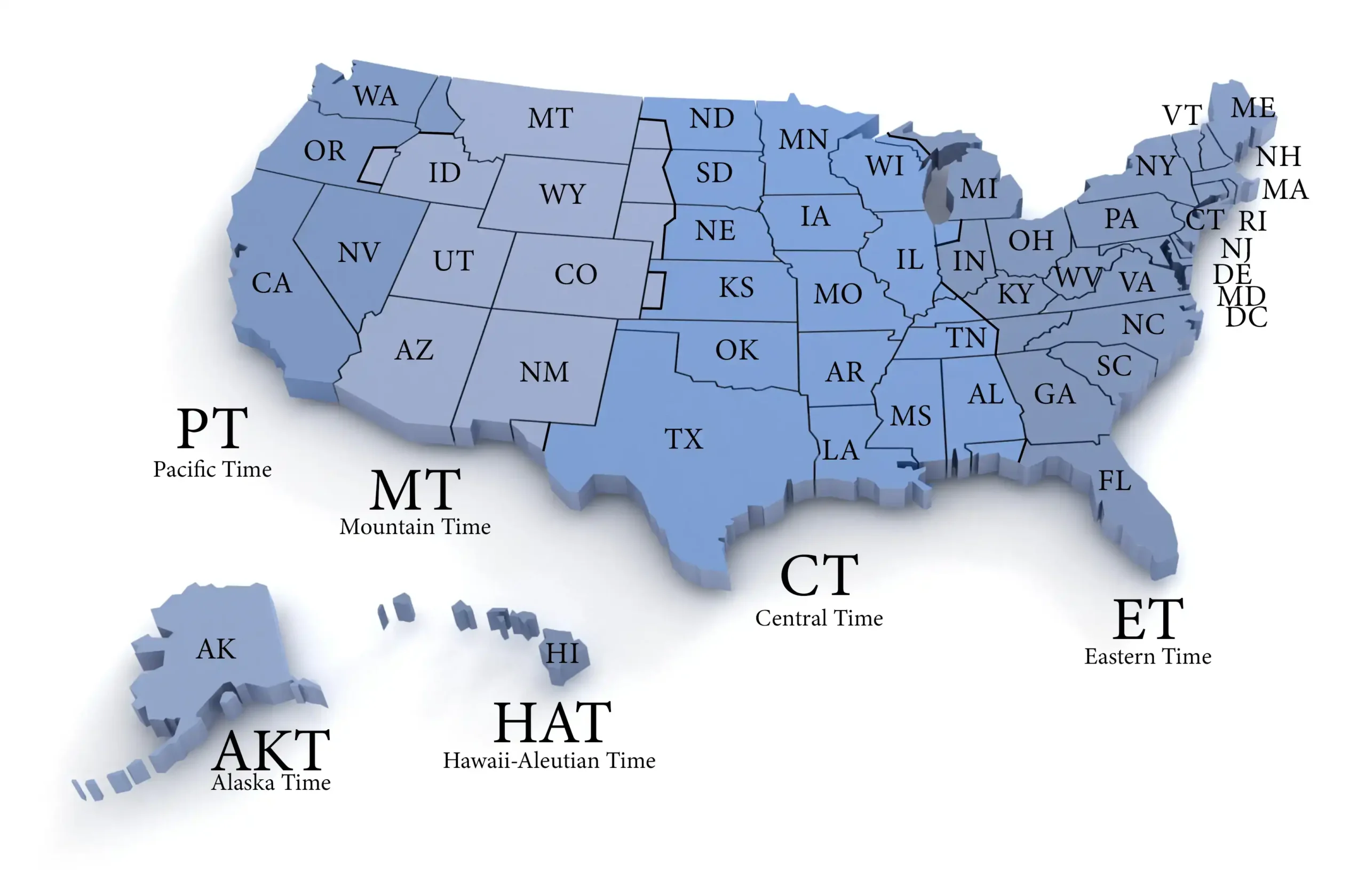
The shift from the Eastern time zone to the Central time zone is a constant factor in North American business. The Eastern zone (UTC-5/UTC-4) houses the financial and political hubs of New York and D.C., while the Central zone (UTC-6/UTC-5) encompasses tech-heavy cities like Austin and Chicago.
Decoding the EST to CST/CDT Shift
Technically, “EST” refers specifically to Standard Time (winter months). When the United States transitions to Daylight Saving Time (DST), Eastern Standard Time becomes Eastern Daylight Time (EDT), and Central Standard Time becomes Central Daylight Time (CDT).
For a developer or project manager, failing to account for this transition is a common source of “logic bugs.” If a scheduled task is hardcoded to run at 9:00 AM EST without an offset for daylight savings, the system may eventually fire at the wrong hour relative to the user’s local time. In the tech industry, precision is paramount. A one-hour discrepancy in a database backup or a high-frequency trading algorithm can result in data loss or significant financial slippage.
The Impact of Daylight Savings on Software Systems
Daylight Saving Time is notoriously difficult to program. Because not all regions observe DST—and those that do may change their start and end dates based on local legislation—relying on a simple “minus one hour” rule from EST to CST is risky for global applications.
Tech stacks must utilize comprehensive time zone databases, such as the IANA Time Zone Database (often called the “tz database” or “zoneinfo”). This allows software to understand that 9:00 AM in New York might not always have the same relationship to 9:00 AM in London or even 8:00 AM in Chicago, depending on the specific date and regional laws.
Building Time-Aware Infrastructure: Engineering for Temporal Accuracy
In backend engineering and cloud architecture, the golden rule is to never rely on the local time of the server. Whether you are managing a fleet of AWS EC2 instances or deploying a containerized microservice via Docker, time must be standardized.
The Role of UTC in Server Configuration
To avoid the confusion of converting 9:00 AM EST to Central Time at the database level, engineers use Coordinated Universal Time (UTC). UTC is the primary time standard by which the world regulates clocks and time. It does not observe daylight savings, making it the perfect “neutral” ground for data storage.
When a user in New York (EST) schedules an event for 9:00 AM, the application should convert that input into UTC before saving it to the database. When a colleague in Chicago (CST) views that same event, the application retrieves the UTC timestamp and converts it back to the user’s local time (8:00 AM). This “UTC-at-rest” strategy ensures that no matter where your team or servers are located, the data remains consistent and chronological.
Handling Edge Cases in Scheduling APIs
Scheduling software—tools like Calendly, Jira, or custom-built internal CRMs—must account for the “transition hour” during DST shifts. For instance, in the spring, the hour between 2:00 AM and 3:00 AM literally does not exist, while in the autumn, it happens twice.

Robust API design requires that timestamps include the offset (e.g., 2023-10-25T09:00:00-05:00). This ISO 8601 format tells the system exactly how many hours the time is offset from UTC, removing any ambiguity about whether “9 AM” refers to Eastern or Central time.
Collaboration Tools and the Rise of the Asynchronous Tech Stack
The transition from 9:00 AM EST to 8:00 AM CST is a daily reality for distributed teams. As the tech industry moves further toward remote-first or hybrid models, the tools we use to bridge this one-hour gap have become more sophisticated.
Maximizing Efficiency with Calendar Automation
Modern productivity suites like Google Workspace and Microsoft Outlook have built-in intelligence to handle time zone conversions automatically. When an Eastern-based lead sets a meeting for 9:00 AM, the Central-based developer sees it as 8:00 AM on their calendar without any manual intervention.
However, the “insightful” tech lead goes a step further by using tools like “World Time Buddy” or Slack’s native time zone display. In a Slack channel, hovering over a colleague’s profile reveals their local time. This prevents the “9 AM EST” meeting invite from being a “7 AM PST” wake-up call for West Coast team members. Respecting the “temporal boundaries” of a team is a key component of digital culture and employee retention in the tech sector.
Digital Security and Time-Stamping for Forensic Integrity
Time zones are also a critical element of cybersecurity. When a Security Operations Center (SOC) investigates a potential breach, they rely on log files from various sources: firewalls, servers, and endpoint devices.
If the firewall is logging events in EST and the server is logging in CST, correlating the two logs becomes a nightmare. For digital forensics and incident response (DFIR), all logs must be synchronized using the Network Time Protocol (NTP). NTP ensures that all devices on a network are synchronized to within milliseconds of each other. This allows security analysts to reconstruct a timeline of an attack with surgical precision, ensuring that a 9:00 AM event in one zone is correctly mapped to an 8:00 AM event in another.
The Future of Time in Tech: AI-Driven Scheduling and Beyond
As we look toward the future, the manual conversion of time zones may become a relic of the past. Emerging technologies are aiming to solve the “9 AM EST to 8 AM CST” friction through automation and decentralized protocols.
Machine Learning for Optimal Communication Windows
AI-integrated scheduling assistants are now moving beyond simple conversion. They are beginning to analyze “productivity windows.” Instead of just knowing that 9:00 AM EST is 8:00 AM Central, an AI tool can analyze when developers in both zones are most active on GitHub or Slack.
The AI might suggest that while 9:00 AM EST is a valid time for a meeting, it is suboptimal for the Central-based team because it conflicts with their peak “deep work” hours. This transition from “available time” to “optimal time” represents the next frontier in tech-enabled productivity.
Blockchain and Decentralized Time Protocols
In the world of Web3 and decentralized finance (DeFi), time is often handled via “block time.” Since there is no central authority to dictate what time it is, the blockchain relies on a consensus of timestamps provided by miners or validators.
Newer protocols are exploring “Proof of History,” a sequence of computation that can provide a way to cryptographically verify the passage of time between two events. While this is a far cry from a simple EST-to-CST conversion, it highlights the tech industry’s obsession with solving the problem of “when.” Whether it is a global financial transaction or a simple Zoom call, the ability to define time in a decentralized, immutable way is a massive leap forward for digital trust.
Conclusion
Understanding that 9:00 AM EST is 8:00 AM Central is more than a simple mental math exercise; it is a prerequisite for operating in the modern tech ecosystem. From the way we architect our databases with UTC to the way we lead remote teams with empathy for their local schedules, time zone awareness is a vital skill.
By mastering the technical logic behind these conversions and leveraging the tools designed to manage them, tech professionals can ensure that their systems remain synchronized, their data remains secure, and their teams remain productive. In the digital age, time is the ultimate resource—make sure you are measuring it correctly.
aViewFromTheCave is a participant in the Amazon Services LLC Associates Program, an affiliate advertising program designed to provide a means for sites to earn advertising fees by advertising and linking to Amazon.com. Amazon, the Amazon logo, AmazonSupply, and the AmazonSupply logo are trademarks of Amazon.com, Inc. or its affiliates. As an Amazon Associate we earn affiliate commissions from qualifying purchases.