
In an increasingly digital world, where data visualization and spatial understanding are paramount, the concept of a “3D viewer” has evolved from a niche tool into an indispensable technology. At its core, a 3D viewer is a software application or a web-based platform designed to display, manipulate, and interact with three-dimensional models. It acts as a window into digital spatial data, allowing users to explore objects, environments, and designs from every conceivable angle, often with rich detail and interactive controls. Far more than just a passive display, a modern 3D viewer empowers users to delve deep into the intricacies of a 3D model, facilitating better understanding, communication, and decision-making across a myriad of industries. From engineering blueprints and architectural renderings to medical scans and e-commerce product showcases, 3D viewers are bridging the gap between complex digital data and human comprehension, making the abstract tangible and the intricate accessible. This technology underpins much of our modern digital experience, silently revolutionizing how we design, learn, and interact with virtual objects.
Unpacking the Core Functionality of 3D Viewers
To truly appreciate the power of a 3D viewer, it’s essential to understand the fundamental functionalities that enable its operation and utility. These core features are what transform raw data into an interactive, visual experience.
The Basics: Rendering and Interaction
At the heart of any 3D viewer is its rendering engine. This sophisticated software component takes the geometric data, textures, and lighting information of a 3D model and translates it into a two-dimensional image that can be displayed on a screen. The quality of rendering directly impacts the realism and detail presented to the user. Beyond mere display, interaction is key. 3D viewers provide intuitive controls for users to pan (move the view horizontally/vertically), zoom (magnify or reduce the view), and rotate (tumble the object or camera around its axes) the model. Advanced viewers may offer orbit controls, walk-through modes, or even fly-through animations, simulating real-world navigation within a virtual space. This dynamic interaction is crucial for inspecting objects from all perspectives, uncovering details that might be hidden in static images.
Supported File Formats and Interoperability
One of the most critical aspects of a robust 3D viewer is its compatibility with a wide array of 3D file formats. The digital world is fragmented by various proprietary and open-source formats, each optimized for specific software or applications (e.g., .OBJ, .FBX, .STL, .STEP, .IGES, .GLTF, .USDZ, .DWG, .RVT). A good 3D viewer acts as a universal translator, capable of importing and rendering models from diverse sources. This interoperability is vital for collaboration, allowing teams using different design software to share and review models seamlessly without needing to convert files manually or purchase multiple specialized applications. The ability to handle large, complex models efficiently, regardless of their origin, is a hallmark of a high-performance 3D viewer.
Navigational Controls and Manipulations
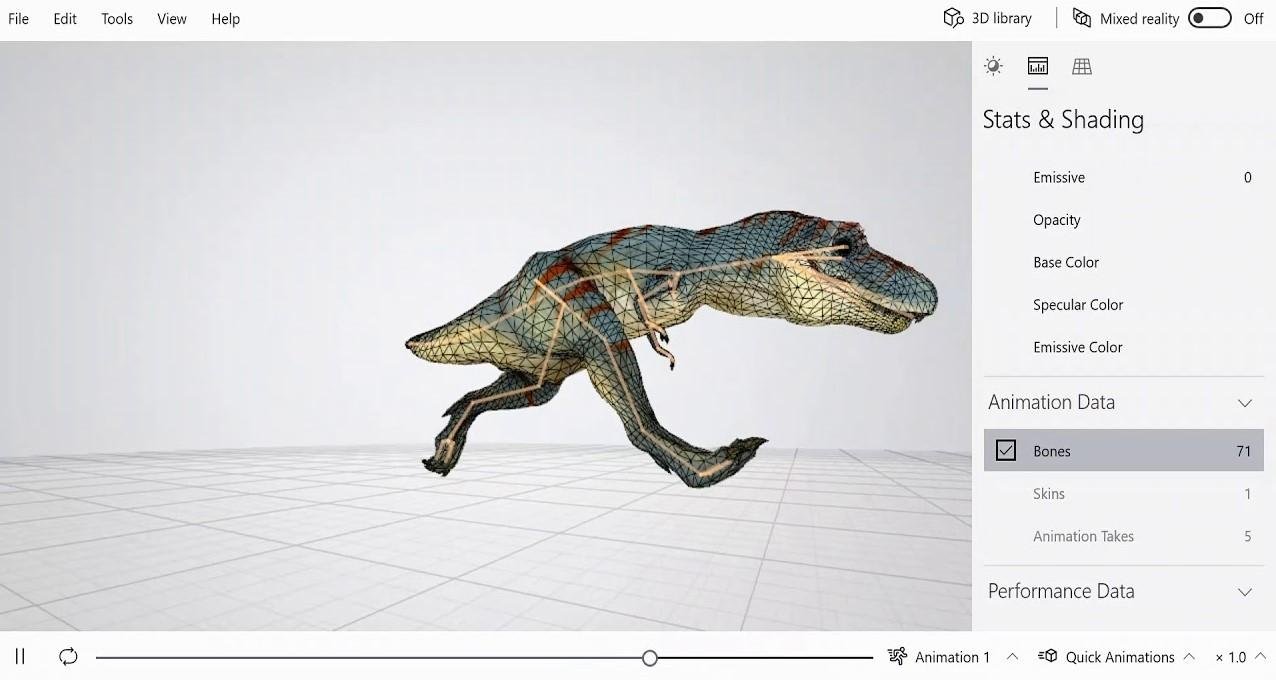
Beyond basic pan, zoom, and rotate, modern 3D viewers offer a suite of advanced navigational and manipulation tools. These can include cross-sectioning, which allows users to cut through a model to view internal structures; measurement tools, for accurate dimensioning and analysis; annotation and markup features, enabling collaborative feedback directly on the model; and part selection/isolation, which allows users to focus on specific components of an assembly. Some viewers even integrate animation playback, material property inspection, or exploded views, providing deeper insights into functionality and assembly processes. These sophisticated controls empower users to not just view, but to truly analyze and understand the digital assets before them.
The Transformative Benefits Across Industries
The widespread adoption of 3D viewers is not merely a matter of technological advancement; it’s driven by tangible benefits that transform workflows, enhance understanding, and drive efficiency across an impressive range of sectors.
Enhanced Visualization and Understanding
Perhaps the most immediate benefit of a 3D viewer is its capacity to provide superior visualization compared to traditional 2D drawings or descriptions. Complex designs, intricate machinery, anatomical structures, or architectural spaces become far more comprehensible when viewed in three dimensions. This enhanced visualization reduces ambiguity, prevents misinterpretations, and allows stakeholders to grasp the full scope and spatial relationships of a project more intuitively. For engineers, it means better error detection; for designers, clearer aesthetic evaluation; and for consumers, a more immersive product preview.
Streamlined Collaboration and Communication
In today’s interconnected professional environment, projects often involve multidisciplinary teams scattered across different locations. 3D viewers, particularly cloud-based solutions, act as a central hub for collaborative review. They enable multiple users to view, comment on, and annotate the same model simultaneously or asynchronously, regardless of their geographical location or the CAD software they originally used. This significantly streamlines communication, reduces the need for physical prototypes, and accelerates decision-making cycles, ensuring everyone is literally on the same page.
Cost and Time Efficiency
The ability to visualize and iterate on designs in a virtual 3D environment before committing to physical production yields substantial cost and time savings. Design flaws can be identified and rectified early in the development cycle, preventing expensive rework, material waste, and production delays. Virtual prototypes created and reviewed via 3D viewers eliminate the need for costly physical mock-ups in many cases, especially for large-scale projects like buildings or machinery. This efficiency directly translates to reduced operational expenses and faster time-to-market for products.
Accessibility and Engagement
3D viewers democratize access to complex 3D data. With web-based viewers, anyone with an internet connection and a standard browser can interact with sophisticated models without needing specialized software or powerful hardware. This accessibility is invaluable for client presentations, public consultations, educational content, and e-commerce platforms, making intricate designs engaging for non-technical audiences. The interactive nature of 3D viewing also significantly boosts engagement, whether it’s a student exploring a human heart or a customer customizing a product online.
Diverse Applications of 3D Viewers in the Digital Age
The utility of 3D viewers extends far beyond mere technical design, permeating various sectors and fundamentally changing how industries operate and interact with their data.
Engineering, Architecture, and Manufacturing (AEC)
The AEC industry is arguably one of the most significant beneficiaries of 3D viewer technology. Architects use them to present building designs to clients, allowing them to virtually walk through spaces before construction begins. Engineers leverage viewers to inspect complex assemblies, check for interferences, and perform virtual simulations. Manufacturers utilize them for quality control, production line planning, and assembly instructions. Building Information Modeling (BIM) workflows heavily rely on 3D viewers to share and collaborate on integrated project data, enhancing project coordination and reducing errors throughout the entire lifecycle of a construction project.
Product Design and E-commerce
In product development, 3D viewers are indispensable for industrial designers to iterate on concepts, review prototypes, and gather feedback. For e-commerce, they offer a revolutionary way for consumers to interact with products online. Instead of static images, shoppers can rotate, zoom, and often customize products in real-time, gaining a more comprehensive understanding of an item before purchase. This immersive experience significantly boosts customer confidence, reduces return rates, and enhances online shopping engagement, moving beyond traditional 2D representations.
Education and Training
3D viewers are transforming learning experiences across various disciplines. Medical students can explore detailed anatomical models, engineering students can dissect virtual machinery, and history students can virtually tour ancient sites. They provide an interactive, engaging alternative to textbooks and static diagrams, making complex subjects more digestible and memorable. In vocational training, 3D viewers can simulate dangerous or intricate procedures, allowing trainees to practice safely and repeatedly, fostering skill development without risk or expense.
Healthcare and Medical Imaging
In the medical field, 3D viewers play a crucial role in visualizing complex patient data derived from CT scans, MRI, and ultrasound. Surgeons can use them to plan intricate operations, mapping out procedures in a virtual environment before cutting. Doctors can better explain conditions and treatment plans to patients by showing them interactive 3D models of their specific anatomy or pathology. Researchers utilize them for studying disease progression, drug interactions, and developing new medical devices, leading to advancements in patient care and understanding.
Entertainment and Gaming
While often integrated directly into game engines, the underlying principles of 3D viewing are fundamental to the entertainment industry. Game developers use viewers to inspect assets, levels, and characters during development. Animators review their work frame-by-frame, and visual effects artists use them to integrate CGI seamlessly into live-action footage. Beyond creation, 3D viewers are the very technology enabling immersive gaming experiences, virtual reality environments, and interactive storytelling, providing the visual interface for digital worlds.
Key Features to Look For in a Modern 3D Viewer
Choosing the right 3D viewer can significantly impact productivity and collaboration. A truly effective viewer goes beyond basic functionality, offering a suite of advanced features tailored for professional use.
High-Performance Rendering
Regardless of whether it’s a desktop application or a web-based solution, a critical feature is the ability to render large, complex 3D models smoothly and quickly. This includes support for high-fidelity textures, realistic lighting, shadows, and sometimes even real-time global illumination. Lag-free navigation and instant model loading are paramount for a productive user experience, especially when dealing with massive datasets common in AEC or manufacturing.
Annotation and Markup Tools
For collaborative workflows, integrated annotation and markup tools are essential. These allow users to add comments, highlight specific areas, draw shapes, or dimension elements directly on the 3D model. The ability to save these markups, track changes, and share them with team members fosters clear communication and streamlined feedback loops, reducing the chances of misinterpretation that can arise from textual descriptions alone.
Cross-Platform Compatibility
In a world dominated by diverse operating systems and devices, cross-platform compatibility is no longer a luxury but a necessity. A modern 3D viewer should ideally be accessible across desktops (Windows, macOS, Linux), mobile devices (iOS, Android), and web browsers without requiring specific plugins or installations. This ensures that stakeholders can access and interact with models from anywhere, on any device, promoting flexibility and pervasive collaboration.
Security and Data Protection
When dealing with proprietary designs, sensitive medical data, or classified engineering plans, robust security features are non-negotiable. A professional 3D viewer must offer secure data transfer protocols (e.g., HTTPS), access controls, user authentication, and often data encryption to protect intellectual property and sensitive information. Cloud-based viewers, in particular, must adhere to stringent security standards and compliance regulations to safeguard user data.
Integration Capabilities
The ability to integrate with existing CAD software, Product Lifecycle Management (PLM) systems, Enterprise Resource Planning (ERP) systems, or even custom business applications significantly enhances the value of a 3D viewer. API (Application Programming Interface) support allows for custom development and seamless workflows, ensuring the 3D viewer is not an isolated tool but a fully integrated component of a broader digital ecosystem, pulling data from and pushing insights to other crucial business systems.
The Future Landscape of 3D Viewing Technology
The evolution of 3D viewing technology is far from static. Driven by advancements in computing power, graphics processing, and user experience design, the future promises even more immersive, intelligent, and integrated solutions.
Integration with AR/VR
The convergence of 3D viewers with Augmented Reality (AR) and Virtual Reality (VR) technologies is perhaps the most exciting frontier. Imagine placing a virtual 3D model of a new building directly onto its construction site via AR, or conducting a full design review within an immersive VR environment, walking around and interacting with the model as if it were physically present. This integration will revolutionize how we design, visualize, train, and collaborate, moving beyond screen-based interaction to truly spatial computing.
Cloud-Based Evolution
Cloud-based 3D viewers are already prevalent, but their capabilities will continue to expand. Future iterations will offer even faster streaming of massive models, more robust collaborative features, and greater scalability, allowing real-time interaction with complex data regardless of local hardware limitations. This shift towards cloud-native solutions will further democratize access and reduce the barrier to entry for high-end 3D visualization.
AI-Enhanced Features
Artificial intelligence (AI) is poised to infuse 3D viewers with intelligent capabilities. AI could assist in optimizing model performance, automating parts identification, suggesting design improvements, or even generating insights from complex simulations directly within the viewer. Imagine an AI-powered viewer highlighting potential design flaws or suggesting alternative materials based on performance criteria, transforming passive viewing into active analysis.
Democratization and Usability
As technology advances, 3D viewers will become even more user-friendly and accessible to non-technical audiences. Drag-and-drop interfaces, intuitive gesture controls, and simplified workflows will enable anyone to interact with 3D data effectively, broadening the reach of this powerful technology beyond specialized professionals to everyday consumers and casual users, further blurring the lines between creation and consumption of 3D content.
Conclusion
A 3D viewer is far more than just a piece of software; it is a critical enabler of innovation, collaboration, and understanding in our increasingly data-driven world. By providing an interactive window into complex three-dimensional data, it has revolutionized how industries from AEC to healthcare design, develop, and communicate. Its core functionalities – from advanced rendering to comprehensive manipulation tools – deliver transformative benefits, including enhanced visualization, streamlined collaboration, and significant cost efficiencies. As technology continues its relentless march forward, integrating with AR/VR, leveraging cloud computing, and harnessing the power of AI, 3D viewers will only become more sophisticated, intuitive, and indispensable, fundamentally reshaping our interaction with digital reality and driving us towards an even more interconnected and visually rich future.
aViewFromTheCave is a participant in the Amazon Services LLC Associates Program, an affiliate advertising program designed to provide a means for sites to earn advertising fees by advertising and linking to Amazon.com. Amazon, the Amazon logo, AmazonSupply, and the AmazonSupply logo are trademarks of Amazon.com, Inc. or its affiliates. As an Amazon Associate we earn affiliate commissions from qualifying purchases.