
In the realms of engineering, scientific research, and data analysis, precision is not merely a preference—it is a foundational requirement. Whether you are calibrating a high-sensitivity sensor, calculating the trajectory of a software-driven process, or analyzing the efficiency of a cloud-based algorithm, the way you represent your data determines the integrity of your results. Among the various conventions used to maintain this integrity, the concept of “significant figures” (or “sig figs”) stands as a universal language. Specifically, working with “3 sig figs” is often the gold standard in technical documentation and software output, striking an ideal balance between analytical rigor and practical utility.
The Mathematical Foundation of Significant Figures
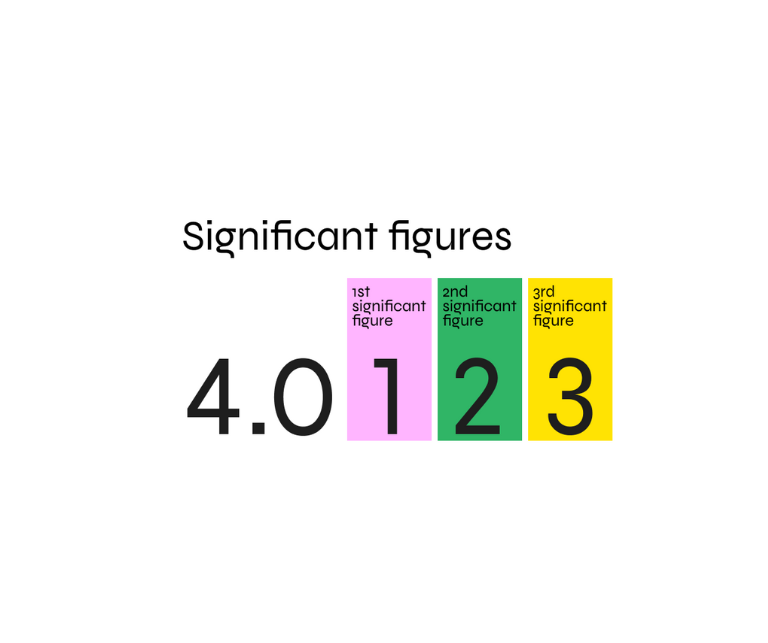
Significant figures are the digits in a number that contribute to its degree of accuracy. They represent the precision of a measurement or the reliability of a calculation. When we speak of “3 sig figs,” we are defining a boundary for how much information we convey, ensuring that our data is neither over-inflated with false precision nor obscured by excessive rounding.
Defining Significance
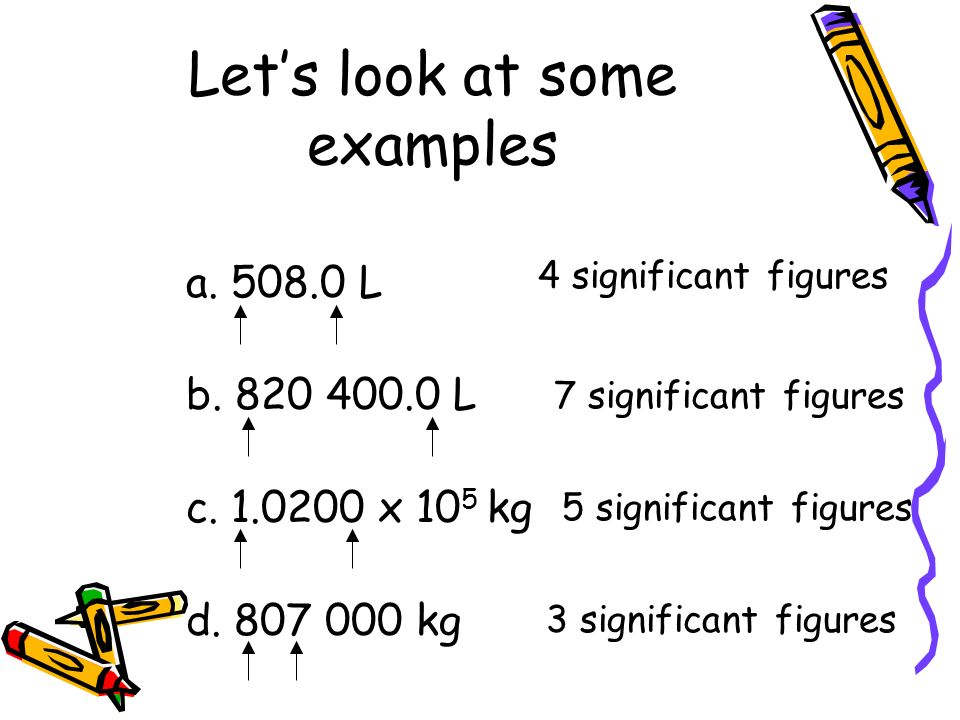
To understand 3 sig figs, one must first master the rules of inclusion. Non-zero digits are always significant. The complexity arises with zeros. Zeros between non-zero digits are always significant (e.g., 505 contains 3 sig figs). Leading zeros, which act as placeholders for decimal placement, are never significant (e.g., 0.005 has only 1 sig fig). Trailing zeros are significant only if they are to the right of a decimal point (e.g., 5.00 has 3 sig figs).
The Role of Precision vs. Accuracy
There is a common misconception that more digits automatically equate to better accuracy. In reality, precision refers to the consistency of a measurement, while accuracy refers to how close that measurement is to the true value. By limiting data to 3 sig figs, engineers and programmers acknowledge the limitations of their hardware or source data. Reporting a software output to ten decimal places when the input sensor only operates within a 1% margin of error is a mathematical fallacy known as false precision. Using 3 sig figs forces the practitioner to be honest about the limitations of their tools.
Implementing 3 Sig Figs in Software and Data Engineering
In software development and data science, the management of floating-point numbers is a critical skill. Whether you are working with Python, C++, or JavaScript, your code must handle numerical representation in a way that remains consistent across distributed systems.
Floating-Point Arithmetic and Rounding
Computers represent numbers using binary floating-point arithmetic, which can lead to notorious precision errors—such as 0.1 + 0.2 not equaling 0.3. When developers are tasked with outputting data, they must implement rounding logic to maintain 3 sig figs. Using standard library functions to round data at the presentation layer ensures that users—who may be monitoring system performance or resource usage—see data that is understandable and actionable.
Handling Data Streams and API Responses
When building APIs, the payload size and the clarity of the data matter. If an API returns telemetry data for a high-performance cloud server, returning 3 sig figs is often sufficient to convey the state of the machine (e.g., 98.4% CPU usage or 1.25 GB of RAM used). This approach reduces the payload size, decreases bandwidth consumption, and provides a cleaner interface for front-end developers who need to display this information in dashboards or alerts.
The Practical Application of 3 Sig Figs in Technical Design

Beyond pure mathematics and coding, the “3 sig figs” rule plays a vital role in design systems, hardware specifications, and technical communications. In a world saturated with information, brevity is a competitive advantage.
Standardizing User Interface (UI) Metrics
Designers often deal with complex spacing, font scaling, and color values. When documenting design systems—the “source of truth” for a software product—using 3 sig figs for numerical values (such as line-height ratios or opacity settings) provides a standardized language for developers. For example, a scale factor of 1.25 is precise, readable, and easy to maintain. When values move into the realm of 1.25555, they become noisy and difficult for human developers to scan and audit.
Engineering Specifications and Hardware Reviews
When reviewing hardware—be it a smartphone processor’s clock speed, the power draw of a new GPU, or the latency of a networking switch—technical writers almost exclusively use 3 sig figs to compare metrics.
- A benchmark result of 45.2 FPS (frames per second) is easily parsed by the reader.
- A result of 45.19832 FPS is visually overwhelming and suggests a level of testing precision that is rarely achieved in real-world environments.
By sticking to 3 sig figs, the technical professional signals that the data has been vetted, rounded appropriately, and prepared for decision-making.
Why 3 Sig Figs is the Optimal Choice
Why stop at three? Why not two or four? The choice of 3 sig figs is rarely arbitrary; it is the “Goldilocks zone” for technical communication.
The Human Perception Threshold
Cognitive studies suggest that humans process and compare numbers most effectively when they consist of three or four digits. When a value is presented with 3 sig figs, the brain can quickly process the magnitude and the relative scale. If you present a value like 12.3, the user instantly recognizes the “12” as the whole and the “.3” as the fractional component. Once you move to 5 or 6 digits, the user must engage in more effort to normalize the number, increasing the chance of cognitive fatigue or interpretation errors.
Balancing Noise and Signal
In machine learning and data analytics, the goal is to extract a signal from the noise. If your software pipeline outputs a result to many decimal places, you are essentially presenting noise as signal. By applying a 3-sig-fig threshold, you filter out the computational jitter. This allows stakeholders to focus on the trend (e.g., “The server load is increasing at a rate of 0.125 units per minute”) rather than getting lost in the minute fluctuations that may be caused by background processes or measurement artifacts.
The Cultural Standard of Technical Documentation
Finally, 3 sig figs act as a professional benchmark. In documentation, code comments, and project specifications, the consistent use of a standard precision level reflects maturity. It shows that the organization has established internal standards for quality control. When a developer encounters a codebase where all metrics are standardized to 3 sig figs, it immediately communicates that the project is governed by clear, predictable rules.
Conclusion: Mastering the Precision Mindset
Mastering the use of 3 sig figs is about more than just rounding numbers; it is about cultivating a disciplined approach to information. In the high-velocity world of technology, clarity is the ultimate form of sophistication. By adopting 3 sig figs as your default standard for reporting, design, and calculation, you minimize the risk of misinterpretation, improve the performance of your data pipelines, and provide your audience with the clarity they need to make informed decisions.
Whether you are debugging a complex software module, calibrating a hardware interface, or crafting a technical report, remember that the most effective communication is that which delivers exactly the right amount of information—no more, and no less. 3 sig figs provides the perfect framework to achieve that professional standard, ensuring that your work remains robust, readable, and resilient in an increasingly complex digital landscape.
aViewFromTheCave is a participant in the Amazon Services LLC Associates Program, an affiliate advertising program designed to provide a means for sites to earn advertising fees by advertising and linking to Amazon.com. Amazon, the Amazon logo, AmazonSupply, and the AmazonSupply logo are trademarks of Amazon.com, Inc. or its affiliates. As an Amazon Associate we earn affiliate commissions from qualifying purchases.