
At first glance, the question “what is 2/3 + 1/4 as a fraction” might seem like a simple arithmetic problem relegated to elementary school classrooms. However, beneath this seemingly basic query lies a profound truth: a solid grasp of foundational mathematical concepts, particularly fractions, is an indispensable cornerstone for navigating the complexities of personal finance, investment strategies, and business operations. In an era where financial decisions are increasingly data-driven, understanding how parts relate to a whole—the very essence of fractions—empowers individuals to make informed choices that build wealth, mitigate risk, and secure a prosperous future. This article will not only provide the solution to this specific mathematical challenge but, more importantly, will illuminate why such fundamental knowledge remains critically relevant in the sophisticated world of money.

The Core Math: Solving 2/3 + 1/4
Before delving into the financial implications, let’s solve the problem at hand to establish a common understanding of fractional addition. Adding fractions requires a methodical approach that ensures we are combining equivalent parts of the same whole.
Finding a Common Denominator
The first step in adding or subtracting fractions is to ensure they share a common denominator. This denominator represents the total number of equal parts into which the whole is divided. For 2/3 and 1/4, the denominators are 3 and 4, respectively. To find the least common multiple (LCM) of 3 and 4, we look for the smallest number that both 3 and 4 can divide into evenly.
Multiples of 3: 3, 6, 9, 12, 15…
Multiples of 4: 4, 8, 12, 16…
The LCM of 3 and 4 is 12. Therefore, our common denominator will be 12.
Next, we must convert each fraction into an equivalent fraction with a denominator of 12.
For 2/3: To change the denominator from 3 to 12, we multiply 3 by 4. To keep the fraction equivalent, we must also multiply the numerator by 4.
(2 * 4) / (3 * 4) = 8/12
For 1/4: To change the denominator from 4 to 12, we multiply 4 by 3. Similarly, we must multiply the numerator by 3.
(1 * 3) / (4 * 3) = 3/12
Performing the Addition
Now that both fractions have the same denominator, we can simply add their numerators while keeping the denominator unchanged.
8/12 + 3/12 = (8 + 3) / 12 = 11/12
Simplifying the Result
The final step is to check if the resulting fraction can be simplified. A fraction is in its simplest form when the greatest common divisor (GCD) of its numerator and denominator is 1. In this case, the numerator is 11 and the denominator is 12. The number 11 is a prime number, meaning its only divisors are 1 and 11. Since 12 is not divisible by 11 (other than 1), the GCD of 11 and 12 is 1. Therefore, the fraction 11/12 is already in its simplest form.
So, 2/3 + 1/4 as a fraction is 11/12. This foundational understanding is not merely an academic exercise; it’s a critical gateway to financial fluency.
Why Fractions Matter: Beyond the Classroom to Your Wallet
The ability to perform fractional calculations directly translates into a clearer understanding of numerous financial concepts. Whether you’re dividing assets, calculating returns, or understanding ownership stakes, fractions provide the precise language for these relationships.
Budgeting and Allocating Funds
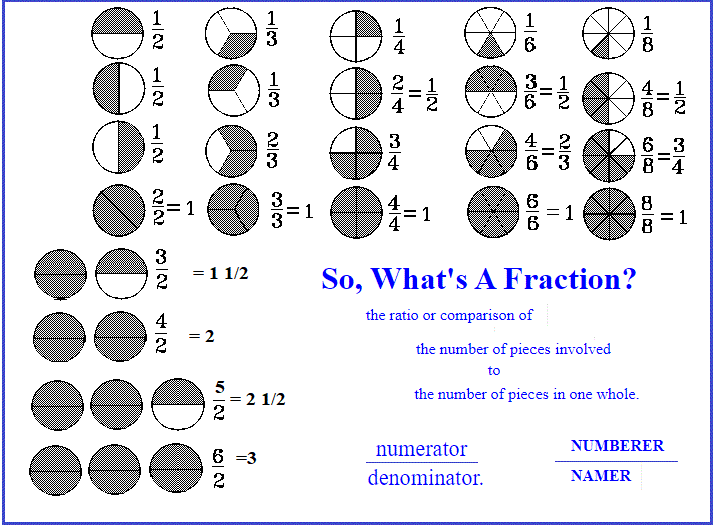
One of the most immediate applications of fractions in personal finance is budgeting. Financial experts often recommend allocating a certain fraction or percentage of your income to different categories. For instance, the popular 50/30/20 rule suggests dedicating 50% (or 1/2) of your after-tax income to needs, 30% (or 3/10) to wants, and 20% (or 1/5) to savings and debt repayment. Understanding these as fractions helps visualize the distribution of your limited resources.
Consider a scenario where you’ve decided that 2/3 of your discretionary income should go towards savings and 1/4 towards investments. If you were to add these allocations, you would perform the exact calculation we just did (2/3 + 1/4 = 11/12). This tells you that 11/12 of your discretionary income is already committed to these two crucial financial goals, leaving only 1/12 for other “wants.” Without this fractional understanding, you might overspend or misallocate funds, jeopardizing your financial stability.
Understanding Investment Portfolios
In the world of investing, fractions and their decimal/percentage equivalents are the bedrock of portfolio construction and asset allocation. Investors often diversify their holdings by allocating fractions of their total capital to different asset classes—stocks, bonds, real estate, commodities, or various sectors. For example, a balanced portfolio might be structured as 1/2 in equities, 1/4 in fixed income, and 1/4 in alternative investments.
When evaluating the performance or risk profile of a portfolio, understanding how each fractional component contributes to the whole is vital. If a particular asset class underperforms, knowing its fractional weight allows you to assess its impact on the overall portfolio. Similarly, when rebalancing, you are essentially adjusting these fractions to return to your desired allocation strategy. Without this conceptual clarity, investment decisions become arbitrary, leading to suboptimal returns or excessive risk exposure.
Deconstructing Debt and Interest Rates
Fractions are also implicitly present in understanding debt and interest rates. An annual interest rate of 5% is simply 5/100 as a fraction, or 1/20. When you make a payment on a loan, a certain fraction of that payment goes towards interest, and another fraction goes towards reducing the principal. Mortgage payments, credit card interest calculations, and loan amortization schedules are all built upon complex fractional relationships that dictate how your money is allocated.
Understanding the fractional components of interest allows you to comprehend the true cost of borrowing and the power of compound interest. If you only pay a fraction of the interest due, the remaining interest adds to the principal, leading to more interest accumulating—a concept that can be easily visualized and understood through the lens of fractions. Recognizing that a high-interest credit card charges you a significant fraction of your outstanding balance each month can be a powerful motivator to pay it off faster.
Practical Applications in Personal Finance
Beyond budgeting and investments, the ability to work with fractions permeates many other practical aspects of managing your personal finances effectively.
Calculating Shares and Ownership
In business and investing, particularly with partnerships or fractional ownership, fractions are paramount. If you own 2/3 of a small business and your partner owns 1/3, any profits or losses are distributed according to these fractions. Similarly, in stock splits, or when dealing with partial share ownership through certain investment platforms, fractions dictate your exact stake. Understanding that 2/3 + 1/4 of an asset is 11/12ths of the total allows for precise valuation and distribution when assets are bought, sold, or divided amongst multiple parties. This extends to inheritance planning, where estates are often divided into specific fractional shares among beneficiaries.
Evaluating Discounts and Sales Tax
Shopping often involves fractions, especially when dealing with discounts, sales, and taxes. A “25% off” sale means 1/4 off the original price. If an item costs $100 and has a 25% discount, you save 1/4 of $100, which is $25. The remaining 3/4 of the price is what you pay. Sales tax, too, is a fraction of the purchase price. If your sales tax is 8%, that’s 8/100 or 2/25 of the price added on. Quick mental math using fractions can help you calculate final prices, compare deals, and ensure you’re getting the best value for your money. Misunderstanding these fractional calculations can lead to overpaying or misestimating expenses.
Planning for Retirement and Savings Goals
Retirement planning fundamentally relies on setting goals as fractions of your current income or expenses and then projecting growth over time. Financial advisors might recommend saving a specific fraction of your annual income, for example, 15% (3/20), towards retirement. Building an emergency fund often involves saving 3-6 months’ worth of expenses, which can be thought of as accumulating fractions of your annual living costs. The ability to conceptualize these long-term goals in fractional terms helps in breaking down seemingly daunting figures into manageable, actionable steps. For instance, understanding that saving an additional 1/12 of your monthly income (beyond current savings) can significantly accelerate your retirement timeline provides clear, measurable progress.
Leveraging Financial Tools: When Technology Meets Basic Math
In the digital age, a plethora of financial tools, from basic calculators to sophisticated AI-powered planning software, are available to assist with complex calculations. While these tools are invaluable, they do not diminish the importance of understanding the underlying fractional principles. Instead, they amplify the need for foundational knowledge, allowing users to interpret outputs critically and avoid the “black box” syndrome.
The Role of Calculators and Spreadsheets
Calculators can instantly solve 2/3 + 1/4 as a decimal (0.666… + 0.25 = 0.9166…) or even directly provide the fractional answer. Spreadsheets, like Excel or Google Sheets, allow for even more intricate financial modeling, handling large datasets and performing complex fractional and percentage-based calculations with ease. For example, a budget spreadsheet might automatically calculate the fractional percentage of your income spent on housing, utilities, or entertainment. However, without understanding what a “percentage of total income” truly represents (i.e., a fraction scaled to 100), the numbers lose their meaning. Knowing the math helps you verify outputs, identify errors, and customize formulas for your unique financial situation.
AI and Financial Planning Software
Advanced financial planning software and AI tools take computation a step further, offering personalized investment recommendations, retirement projections, and budget optimizations. These systems operate on algorithms that are deeply rooted in mathematical principles, including fractions and probabilities. When an AI suggests allocating 1/5 of your portfolio to a high-growth sector, or advises you to increase your savings rate by 1/10 to meet a goal, a user who understands fractional concepts can better comprehend the reasoning and implications of such advice. This comprehension fosters trust and enables more effective collaboration with technology, rather than passive acceptance.
Empowering Decision-Making, Not Replacing Understanding
Ultimately, financial tools are just that—tools. They augment human capability, but they do not replace the need for human understanding. Relying solely on technology without a grasp of foundational math is akin to using a GPS without knowing how to read a map; you might reach your destination, but you won’t understand the journey, and you’ll be lost if the technology fails. A solid understanding of fractions empowers you to critically evaluate the outputs of financial tools, question assumptions, and make truly informed decisions, rather than blindly following recommendations. It turns you into a proactive financial steward, not just a passive consumer of information.
Building Financial Literacy Through Foundational Skills
The simple problem of adding 2/3 and 1/4 serves as a powerful reminder that financial literacy isn’t built on memorizing complex jargon or sophisticated investment strategies alone. It is firmly rooted in mastering basic mathematical concepts that allow us to interpret, analyze, and manipulate numerical information effectively.
The Compound Effect of Basic Knowledge
Just as compound interest allows small sums to grow into substantial wealth over time, the compound effect of basic mathematical knowledge allows individuals to build robust financial literacy. Each fraction understood, each percentage accurately calculated, adds another layer to one’s financial acumen. This cumulative understanding leads to greater confidence, better decision-making, and ultimately, enhanced financial well-being. It transforms abstract financial concepts into tangible, manageable figures.
Educating the Next Generation
The importance of teaching foundational math, including fractions, extends to educating the next generation. Instilling these skills early prepares children not just for academic success but for a lifetime of sound financial management. By demonstrating how fractions apply to allowances, savings, or even sharing resources, educators and parents can lay the groundwork for a financially responsible future, equipping them with the mental tools to tackle more complex financial scenarios later in life.

Continuous Learning for Financial Mastery
For adults, the journey to financial mastery is one of continuous learning. Revisiting and solidifying basic mathematical skills, even seemingly simple ones like adding fractions, can unlock new levels of financial understanding. It encourages a deeper dive into financial products, investment strategies, and economic principles. In a rapidly evolving financial landscape, those with a strong foundation in numbers are better positioned to adapt, learn, and thrive.
In conclusion, while the question “what is 2/3 + 1/4 as a fraction” yields a straightforward answer of 11/12, its significance in the financial realm is anything but trivial. It underscores the critical role of foundational mathematics in empowering individuals to budget wisely, invest strategically, understand debt, and leverage financial tools effectively. A well-rounded financial education starts not with complex algorithms, but with the simple yet profound understanding of how parts combine to form a whole—a lesson perfectly encapsulated in the humble fraction.
aViewFromTheCave is a participant in the Amazon Services LLC Associates Program, an affiliate advertising program designed to provide a means for sites to earn advertising fees by advertising and linking to Amazon.com. Amazon, the Amazon logo, AmazonSupply, and the AmazonSupply logo are trademarks of Amazon.com, Inc. or its affiliates. As an Amazon Associate we earn affiliate commissions from qualifying purchases.