
While “what is 1 gallon” might conjure images of milk jugs, measuring cups, and cooking recipes, its significance extends far beyond the culinary realm. In a world increasingly driven by technology, a deep understanding of standardized measurements like the gallon is foundational. This article delves into the multifaceted world of the gallon, exploring its origins, its importance in various sectors, and how this seemingly simple unit of volume intersects with the core themes of technology, branding, and finance that define our modern landscape.
The Genesis of the Gallon: A Historical Perspective
To truly understand the gallon, we must first appreciate its historical roots. The concept of a standardized unit of volume has been crucial for trade and commerce since antiquity. While various civilizations developed their own systems, the gallon’s lineage can be traced back to Roman and Anglo-Saxon systems of measurement.

The Evolution of Fluid Measures: From Ale to Imperial Gallons
The earliest iterations of a “gallon” were not as uniform as we know them today. Different regions and trades had their own definitions. For instance, in medieval England, there were several distinct gallons used for different commodities:
- The Ale Gallon: Primarily used for measuring ale, this was one of the earliest defined gallons.
- The Wine Gallon: Used for measuring wine, it had a different capacity than the ale gallon.
Over time, the need for greater consistency became apparent, especially with the rise of international trade. This led to the development of more standardized units. The Imperial Gallon, established in 1824 in the United Kingdom, became a significant benchmark. It was defined as 10 pounds of distilled water weighed at 62°F (17°C). This definition aimed for a more precise and universally applicable standard.
The US Gallon: A Divergent Path
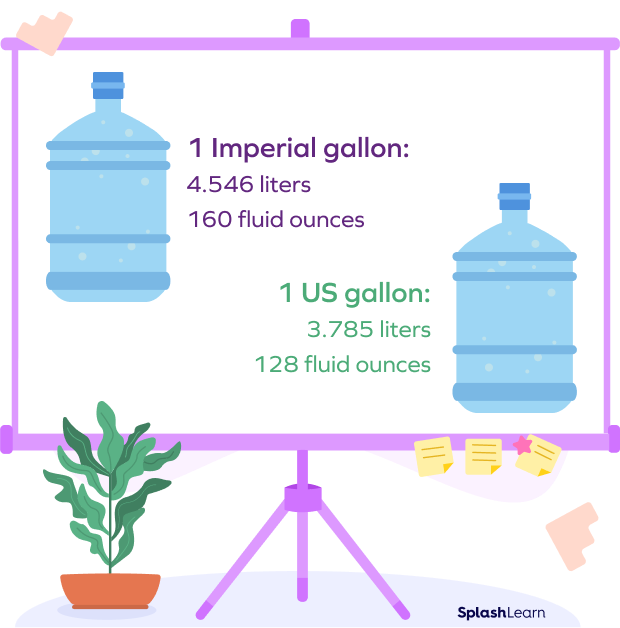
Interestingly, the United States, having gained independence from Britain, did not fully adopt the Imperial Gallon. Instead, the US retained and formalized the US Gallon, which is slightly smaller than its Imperial counterpart. The US Gallon is legally defined as 231 cubic inches, which translates to approximately 3.785 liters. This divergence is a fascinating example of how historical and political factors can shape measurement systems, and it has ongoing implications in international trade and scientific collaboration.
The distinction between the Imperial Gallon and the US Gallon is a critical point of reference, especially when dealing with international product specifications, scientific data, and global logistics. This seemingly small difference can lead to significant discrepancies if not properly understood and accounted for.
Gallons in the Digital Age: Technology’s Unseen Reliance
While the gallon might appear to be an analog measurement, its presence is deeply intertwined with the digital world. Technology, at its core, relies on precision and standardization, and this extends to the fundamental units we use to quantify the world around us.
The Ubiquity of Gallons in Manufacturing and Logistics
The production of countless goods, from the chemicals used in microchip fabrication to the fuels powering our vehicles and the raw materials for plastics, relies on precise volume measurements. Gallons, particularly the US Gallon, serve as a standard unit in many industries.
- Chemical Industry: The precise mixing of chemicals, whether for pharmaceuticals, agricultural products, or industrial solvents, often utilizes gallon measurements. This ensures consistency in product quality and safety.
- Petroleum and Fuel: Gasoline and diesel fuel are commonly sold and transported in gallons. The pumps at your local gas station are calibrated to dispense fuel by the gallon, a direct link to this unit of volume.
- Automotive Manufacturing: The capacity of vehicle fuel tanks, the volume of engine oil required, and the amounts of various fluids used in car production are often specified in gallons.
The technological advancements in metering and dispensing equipment have ensured that even these traditional measurements are carried out with remarkable accuracy, often down to fractions of a gallon, enabling efficient and reliable industrial processes.
Software and Data: The Digital Echo of Volume
In the realm of software and data management, the concept of “volume” is abstract but equally critical. While we don’t directly measure digital data in gallons, the underlying principles of capacity and storage are analogous.
- Data Storage: When we talk about terabytes or petabytes of data, we are essentially discussing digital “volume.” The infrastructure that supports these vast amounts of data – servers, hard drives, cloud storage – has a finite capacity, much like a container.
- Bandwidth and Throughput: In networking, data transfer rates are often measured in bits per second. However, the total amount of data that can be moved over a network in a given period can be thought of as a “volume” of information.
- Computational Power: While not a direct volume measurement, the processing power of computers can be thought of as their capacity to handle tasks. The efficiency of algorithms and the optimization of software can be seen as maximizing the “yield” from a given computational “volume.”
Furthermore, many software applications designed for scientific research, industrial process control, or supply chain management will incorporate and process data that originates from gallon-based measurements. This requires robust conversion capabilities and a clear understanding of the units involved to ensure accurate analysis and decision-making. The seamless integration of physical world measurements like gallons into digital platforms is a testament to modern technological capabilities.
Branding and the Gallon: More Than Just a Container

The gallon, as a unit of measurement, also plays a subtle yet significant role in branding and marketing. Its familiarity and widespread use can be leveraged to build trust, convey value, and shape consumer perception.
Packaging and Product Presentation
The size of product packaging is a crucial element of brand identity. When products are sold by the gallon, the design of the container, the labeling, and the overall presentation become vital.
- Household Products: From laundry detergent and cleaning supplies to paint and motor oil, many common household items are sold in gallon containers. The shape of the jug, the color scheme, and the typography on the label all contribute to a brand’s visual identity and its ability to stand out on the shelves.
- Food and Beverage: While less common for individual servings, larger formats of beverages or bulk food items might be offered in gallon-sized containers. Think of large juice containers or bulk bags of pet food, where the “gallon” equivalent capacity is a key selling point for value-conscious consumers.
- Storytelling Through Size: A brand might choose a gallon size to convey a sense of abundance, value for money, or a product designed for heavy usage. Conversely, a brand selling smaller, premium versions might explicitly avoid gallon sizes to reinforce an image of exclusivity or efficiency.
The choice of packaging size isn’t arbitrary; it’s a strategic branding decision that communicates key messages about the product and the company behind it.
The “Gallon Deal” and Perceived Value
In marketing, the concept of a “gallon deal” or a bulk discount often implies better value. Consumers have a general understanding of what a gallon represents in terms of quantity, and when they see a price associated with that quantity, they can readily assess its affordability.
- Price Perception: A gallon of milk priced at $4 is perceived differently than a quart of milk priced at $1. The gallon size often signals a more economical option for regular consumers.
- Bulk Purchasing Incentives: Brands often use gallon sizes to encourage bulk purchases, which can lead to increased customer loyalty and higher average transaction values.
- Competitor Benchmarking: Marketers constantly benchmark their gallon pricing against competitors. The gallon serves as a common unit of comparison, allowing consumers to make informed purchasing decisions based on price and perceived quality.
The familiarity of the gallon as a unit of measure allows brands to communicate value propositions effectively, influencing purchasing behavior and shaping brand perception in the marketplace.
Financial Implications: Gallons, Markets, and Economic Indicators
The financial implications of the gallon are profound, extending from individual budgeting to global economic trends. Its role in key industries makes it an important factor in understanding market dynamics and economic performance.
Personal Finance and Household Budgeting
For households, the cost of goods sold in gallons directly impacts personal budgets.
- Essential Goods: The price of gasoline, milk, and cleaning supplies, often measured in gallons, are recurring expenses that families must account for. Fluctuations in the price per gallon of these commodities can significantly affect household disposable income.
- Energy Costs: For those who heat their homes with oil, the price of heating oil per gallon is a major winter expense. This directly influences energy bills and household budgets.
- DIY and Home Improvement: When undertaking DIY projects, such as painting a room or performing car maintenance, purchasing paint or motor oil in gallon containers is a common practice. Budgeting for these projects requires understanding the cost per gallon.
Understanding the cost per gallon allows individuals and families to make informed spending decisions, identify areas where they can save, and better manage their household finances.
Market Dynamics and Commodity Trading
On a larger scale, the gallon is a critical unit in commodity trading and market analysis.
- Oil and Gas Markets: The global price of crude oil is often quoted per barrel, but refined products like gasoline and diesel are traded and priced in gallons. Understanding these prices is crucial for businesses and consumers alike, influencing inflation, transportation costs, and the profitability of energy companies.
- Agricultural Markets: While grain is often measured in bushels, certain agricultural products and their derivatives might be sold or priced in gallon equivalents, particularly in the context of biofuels or specialized agricultural chemicals.
- Economic Indicators: Changes in the price of gasoline per gallon are a significant component of inflation indices. This makes the gallon a small but important cog in the machinery of macroeconomic analysis and policy-making.
The economic forces that influence the price of a gallon of gasoline, for example, are complex, involving supply and demand, geopolitical factors, and speculative trading. These forces, measured and discussed in terms of gallons, have ripple effects throughout the global economy.
Conclusion: The Enduring Significance of the Gallon
From its humble origins as a simple measure of liquid to its pervasive influence across technology, branding, and finance, the gallon is far more than just a number. It is a standardized unit that underpins crucial industries, shapes consumer perception, and impacts our economic well-being.
In our increasingly digital and interconnected world, the ability to understand, measure, and leverage fundamental units like the gallon remains paramount. Whether we are analyzing technological advancements, crafting compelling brand narratives, or navigating the complexities of personal and global finance, the humble gallon continues to play an indispensable role, a silent testament to the enduring power of standardization in a world that constantly strives for clarity and efficiency. Understanding “what is 1 gallon” is, in essence, understanding a fundamental building block of our modern infrastructure.
aViewFromTheCave is a participant in the Amazon Services LLC Associates Program, an affiliate advertising program designed to provide a means for sites to earn advertising fees by advertising and linking to Amazon.com. Amazon, the Amazon logo, AmazonSupply, and the AmazonSupply logo are trademarks of Amazon.com, Inc. or its affiliates. As an Amazon Associate we earn affiliate commissions from qualifying purchases.