
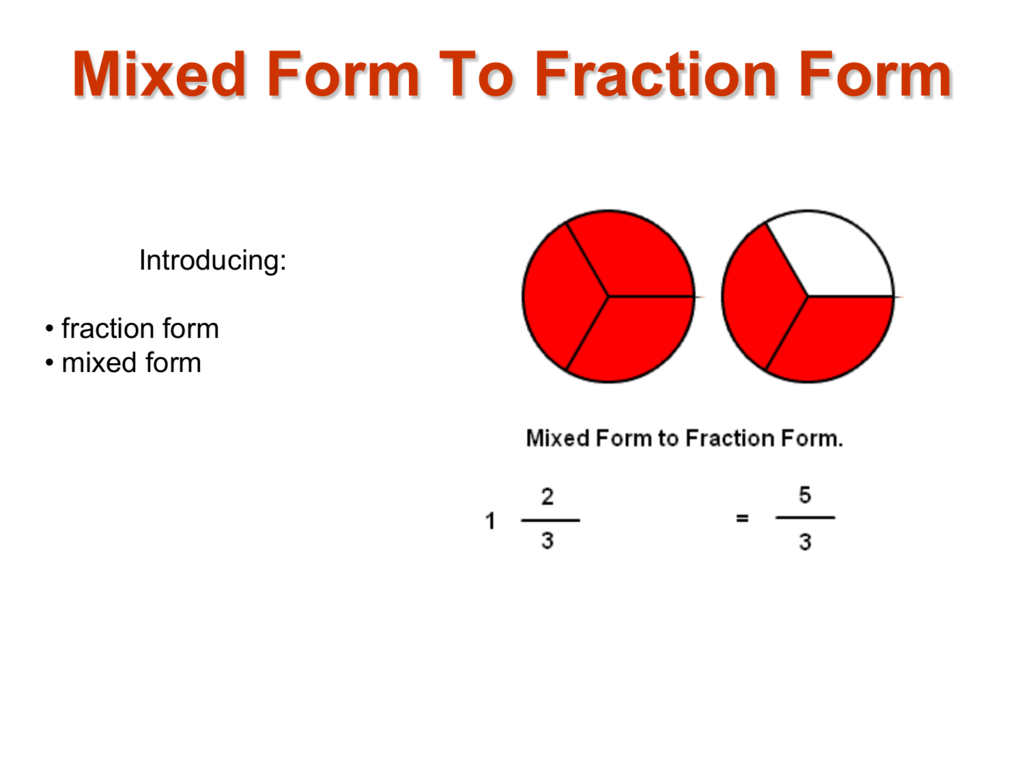
At first glance, the question “what is 1 2 3 as a fraction?” might seem deceptively simple, perhaps even elementary. Mathematically, the answer is straightforward: any whole number, such as 123, can be expressed as a fraction by placing it over 1. Thus, 123 as a fraction is simply 123/1. However, to stop there would be to miss a profound opportunity to explore the broader implications of this fundamental concept within the world of finance. While the literal answer is basic, the spirit of the question — the underlying need to understand numerical representation — is absolutely crucial for anyone navigating personal finance, investing, online income, business finance, or using financial tools.
In an increasingly data-driven and financially complex world, a solid grasp of basic numeracy is not just a desirable skill; it’s a non-negotiable foundation for making informed decisions, protecting your assets, and building wealth. From calculating interest on a loan to understanding a stock’s earnings per share, or even splitting profits in a side hustle, the ability to interpret and manipulate numbers, including fractions, decimals, and percentages, is paramount. This article delves into why understanding these basic mathematical principles, exemplified by the simple query of “what is 1 2 3 as a fraction,” forms the bedrock of financial literacy and empowers individuals to achieve their monetary goals.
Beyond the Obvious: Why Foundational Math is Your Financial Bedrock
The concept of a fraction—representing a part of a whole—is one of the earliest mathematical ideas we encounter. Yet, its practical application extends far beyond the classroom, permeating every aspect of our financial lives. While converting 123 to 123/1 is trivial, the mental framework required to understand that relationship is what truly matters. It’s about recognizing that numbers can be expressed in various forms, each offering a different lens through which to view financial realities.
The Hidden Power of Integers, Decimals, and Fractions in Finance
Financial literacy is not about being a mathematician, but about being able to comprehend the language of money, which is inherently numerical. Integers, decimals, and fractions are the primary dialects of this language.
-
Integers represent whole units, like $500 in your savings account or 3 shares of a company. They are the backbone of accounting and budgeting.
-
Decimals allow us to express precise values, such as an interest rate of 3.75% or a stock price of $150.25. They are essential for accurate calculations in investments, loans, and everyday transactions.
-
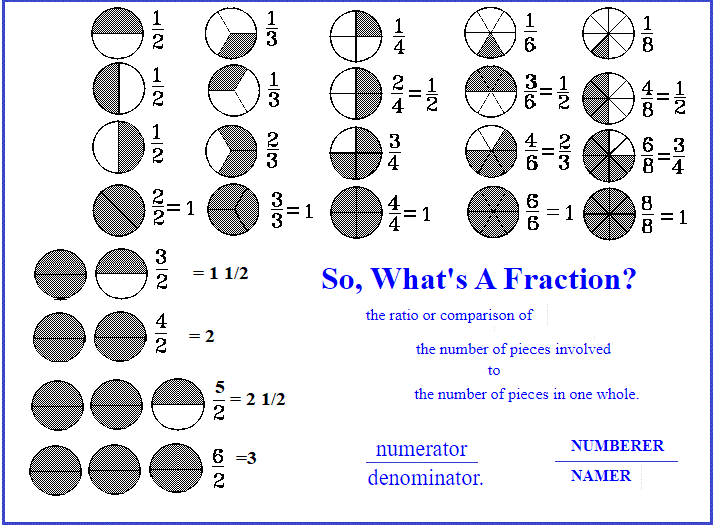
Fractions (and their close relatives, percentages) provide a powerful way to describe proportions, ratios, and distributions. When a financial advisor talks about asset allocation, they’re discussing fractions of your portfolio. When a business discusses profit margins, they’re using percentages, which are essentially fractions out of 100. Understanding that 0.25, 1/4, and 25% are interchangeable is fundamental to interpreting financial data correctly. Without this basic fluency, one can easily misinterpret financial statements, undervalue investments, or overestimate financial obligations.
Translating Financial Data: From Raw Numbers to Actionable Insights
Financial reports, investment statements, and economic news are replete with numbers. Without the ability to translate these raw figures into meaningful insights, they remain mere data points. Understanding that a “return on investment of 1/3” means you gained one dollar for every three invested, or that a “debt-to-equity ratio of 1.23” means you have 1.23 times more debt than equity, transforms passive information into actionable knowledge. This foundational understanding allows you to:
-
Identify trends: Is your spending increasing as a fraction of your income?
-
Compare options: Which loan offers a smaller fraction of your payment towards interest?
-
Assess risk: What fraction of your portfolio is exposed to a single volatile asset?
A solid grasp of basic numerical concepts provides the mental toolkit to dissect complex financial information, ask the right questions, and ultimately, make smarter financial decisions.
Fractional Finance: Navigating Personal and Business Money Matters
The practical applications of basic numerical understanding in finance are virtually endless. From the meticulous management of personal budgets to the strategic allocation of business capital, fractions and their decimal/percentage equivalents are omnipresent.
Budgeting and Expense Management: Every Piece of the Pie Matters
Effective budgeting is fundamentally about dividing your income into various categories: needs, wants, and savings. This is inherently a fractional exercise. The popular 50/30/20 rule, for instance, dictates that 50% of your income goes to needs, 30% to wants, and 20% to savings. Each of these percentages is a fraction (1/2, 3/10, 1/5, respectively). Understanding how to calculate these portions and track your spending against them is vital for maintaining financial control. When you see that 1/4 of your monthly income is going towards housing, or that 1/8 is being spent on dining out, it provides a clear, actionable picture of your financial habits, enabling you to identify areas for adjustment and optimization. Without this fractional understanding, a budget remains a list of numbers rather than a dynamic financial tool.
Investing and Returns: Understanding Your Share of the Gain (or Loss)
In the world of investing, fractions and percentages are the lingua franca.
-
Return on Investment (ROI): This is often expressed as a percentage or a decimal, but it’s a fraction at its core (profit/initial investment). Understanding if your stock gained 1/10 of its value, or if your mutual fund returned 15% (which is 15/100 or 3/20), is crucial for evaluating performance.
-
Fractional Shares: Many modern investing platforms allow you to buy fractional shares of expensive stocks, meaning you own a part of a share rather than a whole one. This directly applies the concept of fractions, allowing investors with smaller capital to diversify.
-
Dividend Yields: These are expressed as percentages, indicating what fraction of the stock price is paid out in dividends annually.
-
Bond Yields: Similarly, bond yields are percentages representing the annual income as a fraction of the bond’s price.
A savvy investor understands that a 1/20 return is better than a 1/50 return, and can calculate how different fractional allocations within a portfolio impact overall risk and potential reward.
Debt, Loans, and Interest: Deconstructing the Cost of Borrowing
Loans and debt are perhaps where the impact of fractions and percentages hits closest to home. Interest rates, whether for a mortgage, car loan, or credit card, are expressed as annual percentages (e.g., 6.5% APR). This percentage represents the fraction of the principal amount you pay annually in interest. Understanding how this fraction compounds over time, how much of each payment goes towards interest versus principal, and how even a small fractional difference in an interest rate can save (or cost) thousands over the life of a loan, is essential for responsible borrowing. Ignorance of these fractional mechanics can lead to significant financial strain and prolonged debt cycles.
Business Finance and Profit Sharing: Dividing Success Equitably

For entrepreneurs and small business owners, fractional understanding is critical for managing finances, structuring partnerships, and distributing profits.
-
Equity Stakes: In a startup, investors or co-founders might own a certain percentage (a fraction) of the company. Understanding what 1/3 equity means in terms of ownership and voting rights is fundamental.
-
Profit Sharing: Partnerships often involve agreements to split profits based on predetermined fractions or percentages (e.g., a 60/40 split). Calculating each partner’s share accurately requires a firm grasp of these concepts.
-
Key Performance Indicators (KPIs): Many business KPIs are ratios, which are essentially fractions (e.g., customer acquisition cost to customer lifetime value). Analyzing these ratios helps businesses make data-driven decisions about resource allocation and strategic direction.
Miscalculations or misunderstandings in these areas can lead to disputes, financial imbalances, and even business failure.
Empowering Your Financial Decisions: The Practical Application of Numerical Fluency
Beyond theoretical understanding, the true power of numerical fluency lies in its practical application in everyday financial decisions, empowering individuals to save more, invest smarter, and spend wisely.
Savvy Shopping: Discount Calculations and Value Comparisons
Every time you encounter a sale, you’re dealing with fractions or percentages. “30% off,” “buy one get one half off,” or “save $100 on a $500 item” all require you to calculate fractions to understand the true discount. Is 1/3 off a better deal than 25% off? Is it cheaper to buy a larger item at a lower unit price, even if the absolute price is higher? Being able to quickly perform these mental calculations or at least understand the underlying math allows you to be a more discerning consumer, ensuring you’re genuinely getting the best value for your money.
Strategic Planning: Retirement Contributions and Savings Growth
Planning for long-term goals like retirement often involves setting aside a certain fraction or percentage of your income regularly. Financial advisors might recommend saving 15% of your gross income for retirement. Understanding compound interest – how your money grows exponentially as interest earns interest – is also a fractional concept at its heart, as interest rates are percentages of your principal. Visualizing how a consistent fractional contribution over decades can grow into a substantial sum is a powerful motivator for disciplined saving and long-term financial planning.
Risk Assessment: Diversification and Portfolio Allocation
Diversification is the cornerstone of risk management in investing, and it’s fundamentally about fractions. An investor might decide to allocate 60% of their portfolio to stocks and 40% to bonds. Within stocks, they might further divide it, with a certain fraction in large-cap, mid-cap, and small-cap companies, or across different geographical regions. This careful partitioning (fractioning) of assets helps to mitigate risk. Understanding the fractions involved allows an investor to consciously manage their exposure to different market segments and economic factors, rather than haphazardly throwing money at various investments.
Cultivating Numerical Confidence: Tools and Mindset for Financial Mastery
For those who find numbers daunting, the journey to financial literacy through numerical understanding might seem challenging. However, with the right tools and mindset, anyone can cultivate the confidence needed to master their money.
Leveraging Technology: Financial Apps, Spreadsheets, and Calculators
In the digital age, we are fortunate to have an abundance of tools that can simplify complex calculations. Financial apps can automatically track spending and categorize expenses, providing a percentage breakdown of where your money goes. Spreadsheets can be used to build intricate budgets, project investment growth, and analyze cash flows. Online calculators can instantly determine loan payments, compound interest, or retirement savings projections. While these tools are invaluable for efficiency and accuracy, they are most effective when the user understands the underlying principles. Knowing why a calculation is being performed and what the results mean (in fractional or proportional terms) empowers you to use these tools intelligently, rather than blindly trusting their output. They are accelerators for understanding, not substitutes for it.
Continuous Learning: Sharpening Your Financial Acumen
Financial landscapes are constantly evolving, with new investment vehicles, tax laws, and economic trends emerging regularly. Cultivating numerical confidence is an ongoing process that requires a commitment to continuous learning. Reading reputable financial publications, taking online courses in personal finance, attending workshops, or even engaging in discussions with financially literate peers can all contribute to sharpening your acumen. Just as you wouldn’t expect to master a language by only learning a few basic phrases, financial mastery requires consistent effort to expand your understanding of how numbers (and especially fractions, decimals, and percentages) interact within the economic ecosystem.
When to Seek Expert Advice: Navigating Complex Financial Scenarios
While a strong foundation in basic numeracy will empower you to handle many financial situations independently, there will undoubtedly be times when the complexity warrants professional guidance. Financial advisors, tax consultants, and estate planners specialize in navigating the intricate web of financial regulations, investment strategies, and tax implications. When dealing with large investments, complex tax situations, or multi-generational wealth planning, the numerical models and fractional distributions can become incredibly sophisticated. Recognizing your limits and knowing when to consult an expert is not a sign of weakness, but a hallmark of true financial intelligence. These professionals can help ensure that even the most complex fractional breakdowns of your assets and liabilities are managed optimally.
In conclusion, the humble question “what is 1 2 3 as a fraction?” serves as a powerful reminder of the indispensable role basic numeracy plays in achieving financial well-being. From managing a personal budget to making informed investment decisions, understanding how numbers can be represented and manipulated — whether as whole numbers, decimals, or fractions — is the cornerstone of financial literacy. By embracing this fundamental knowledge, individuals can transform passive financial data into actionable insights, empowering them to navigate the complexities of money with confidence, foresight, and ultimately, greater success.
aViewFromTheCave is a participant in the Amazon Services LLC Associates Program, an affiliate advertising program designed to provide a means for sites to earn advertising fees by advertising and linking to Amazon.com. Amazon, the Amazon logo, AmazonSupply, and the AmazonSupply logo are trademarks of Amazon.com, Inc. or its affiliates. As an Amazon Associate we earn affiliate commissions from qualifying purchases.