
The concept of compound interest has often been called the “eighth wonder of the world.” Attributed to Albert Einstein, the phrase underscores a fundamental truth in the world of finance: those who understand compounding earn it, and those who don’t, pay it. While the term “interest” is often associated strictly with bank accounts, in the broader context of investing, compounding refers to the process where an asset’s earnings, from either capital gains or interest, are reinvested to generate additional earnings over time.
For any investor looking to secure their financial future, identifying which vehicles facilitate this exponential growth is the first step toward building a robust portfolio. This article explores the various investment categories that harness the power of compounding, how they function, and how you can optimize them for maximum returns.
Understanding the Mechanics of Compound Growth
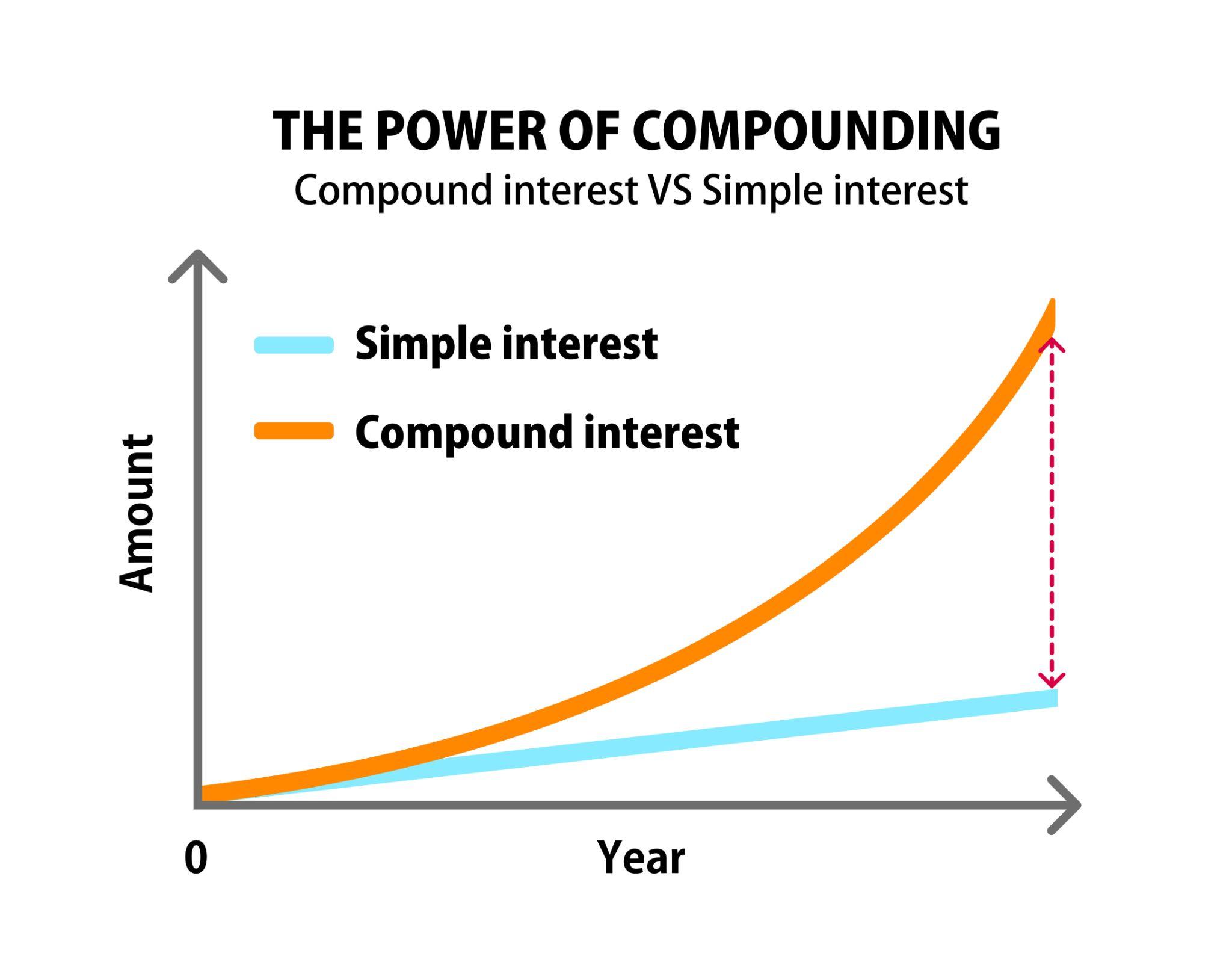
Before diving into specific investment vehicles, it is essential to distinguish between simple interest and compound interest. Simple interest is calculated only on the principal amount of an investment. In contrast, compound interest is calculated on the principal amount plus the accumulated interest from previous periods.
How Compounding Works in Practice
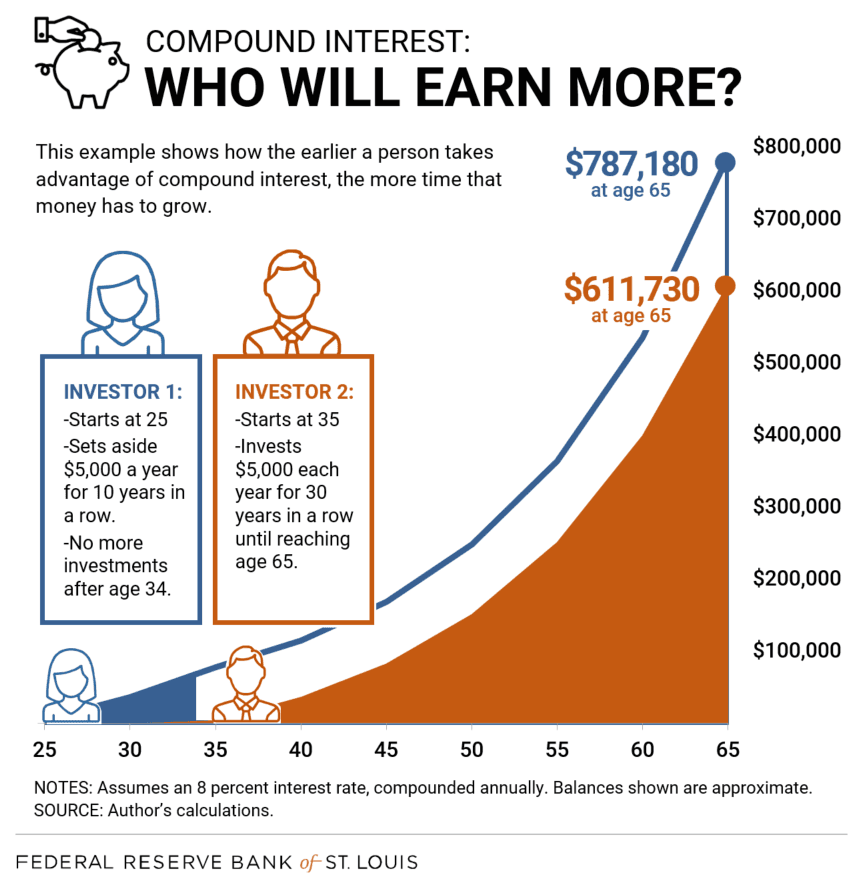
Compounding transforms a linear growth pattern into a geometric one. For example, if you invest $10,000 at a 5% annual return, you earn $500 in the first year. In the second year, you aren’t just earning 5% on your original $10,000; you are earning 5% on $10,500, resulting in $525. While the difference seems negligible in the early stages, over twenty or thirty years, the “interest on interest” begins to dwarf the original principal contribution.
The Critical Role of Time and Frequency
The two most significant variables in the compounding equation are time and the frequency of compounding. The longer the money remains invested, the steeper the growth curve becomes. Similarly, the more frequently interest is calculated and added back to the balance (daily vs. annually), the faster the wealth accumulates. This is why financial advisors consistently advocate for starting as early as possible—time is the most valuable asset an investor possesses.
Equities and Dividend-Generating Assets
While stocks do not pay “interest” in the traditional sense, they are one of the most powerful engines for compounding through capital appreciation and dividend reinvestment. When an investor owns shares in a company, they participate in the growth of that company’s value and, often, its profits.
Dividend Reinvestment Plans (DRIPs)
Many established corporations pay out a portion of their profits to shareholders in the form of dividends. To harness compound interest in the stock market, investors utilize a Dividend Reinvestment Plan (DRIP). Instead of taking the dividend as cash, the investor automatically uses those funds to purchase more shares of the stock. This increases the total number of shares owned, which in turn leads to higher dividend payments in the next cycle, creating a compounding loop that can significantly outperform the market over decades.
Mutual Funds and Exchange-Traded Funds (ETFs)
For those seeking diversification, mutual funds and ETFs offer a streamlined way to benefit from compounding. These funds hold a basket of stocks or bonds. When the underlying assets pay dividends or interest, the fund manager typically provides an option to reinvest those earnings back into the fund. Because these funds often track indices like the S&P 500, they allow investors to compound their wealth across the entire economy rather than relying on a single company’s performance.
Real Estate Investment Trusts (REITs)
REITs are companies that own, operate, or finance income-producing real estate. By law, REITs must distribute at least 90% of their taxable income to shareholders as dividends. By reinvesting these high-yield dividends, investors can experience compounding growth similar to that of traditional equities but with the added stability and inflation-hedging properties of the real estate market.
Fixed-Income and Cash-Equivalent Vehicles
For investors with a lower risk tolerance or those seeking a “safe haven” for their capital, fixed-income investments provide a more traditional path to compound interest. These vehicles are characterized by a contractual agreement to pay interest over a set period.
High-Yield Savings Accounts (HYSA) and Money Market Accounts
In the current economic climate, High-Yield Savings Accounts have regained popularity. Unlike standard savings accounts that offer nominal interest, HYSAs provide rates that are often ten to twenty times higher. Most of these accounts compound interest daily and credit it monthly. While the returns may not match the volatility-driven gains of the stock market, they offer a liquid and secure way to ensure your cash is working for you.
Certificates of Deposit (CDs)
A Certificate of Deposit is a time deposit offered by banks. In exchange for leaving your money in the account for a fixed term (ranging from six months to five years), the bank pays a higher interest rate than a standard savings account. Many CDs allow for the interest to be compounded and added to the principal, ensuring that at the end of the term, the payout is significantly higher than the initial deposit.
Treasury Securities and Corporate Bonds
Bonds represent a loan made by an investor to a borrower (typically a corporation or the government). While bonds pay “coupons” (periodic interest payments), the compounding effect is achieved when the investor takes those coupon payments and purchases additional bonds. U.S. Treasury Inflation-Protected Securities (TIPS) are particularly noteworthy, as the principal value increases with inflation, and the interest is calculated on the adjusted principal, providing a dual layer of compounding.
Retirement Accounts: The Ultimate Compounding Environment
The effectiveness of compound interest is heavily influenced by taxes. In a standard brokerage account, you may owe taxes on dividends or realized capital gains every year, which “leaks” capital out of the compounding machine. Retirement accounts are designed to solve this problem.
401(k) and 403(b) Plans
Employer-sponsored retirement plans are perhaps the most common way individuals interact with compound interest. These accounts allow for “tax-deferred” growth. Because you do not pay taxes on the interest, dividends, or capital gains earned within the account until you withdraw the money in retirement, the full power of the investment is allowed to compound uninterrupted. Furthermore, many employers offer a “match,” which effectively doubles your initial principal before compounding even begins.
Individual Retirement Accounts (IRA and Roth IRA)
IRAs offer similar benefits to 401(k)s but with more flexibility in investment choices. The Roth IRA is particularly powerful for long-term compounding. In a Roth IRA, you contribute after-tax dollars, but the growth and subsequent withdrawals are entirely tax-free. When you consider the massive growth that compounding can generate over 30 or 40 years, the ability to keep 100% of those gains without a “tax haircut” is an extraordinary advantage.
Strategies to Optimize Compound Returns
Simply choosing the right investment is not enough; one must also manage the environment in which that investment grows. To truly maximize compound interest, investors should adhere to a few strategic principles.
The Rule of 72
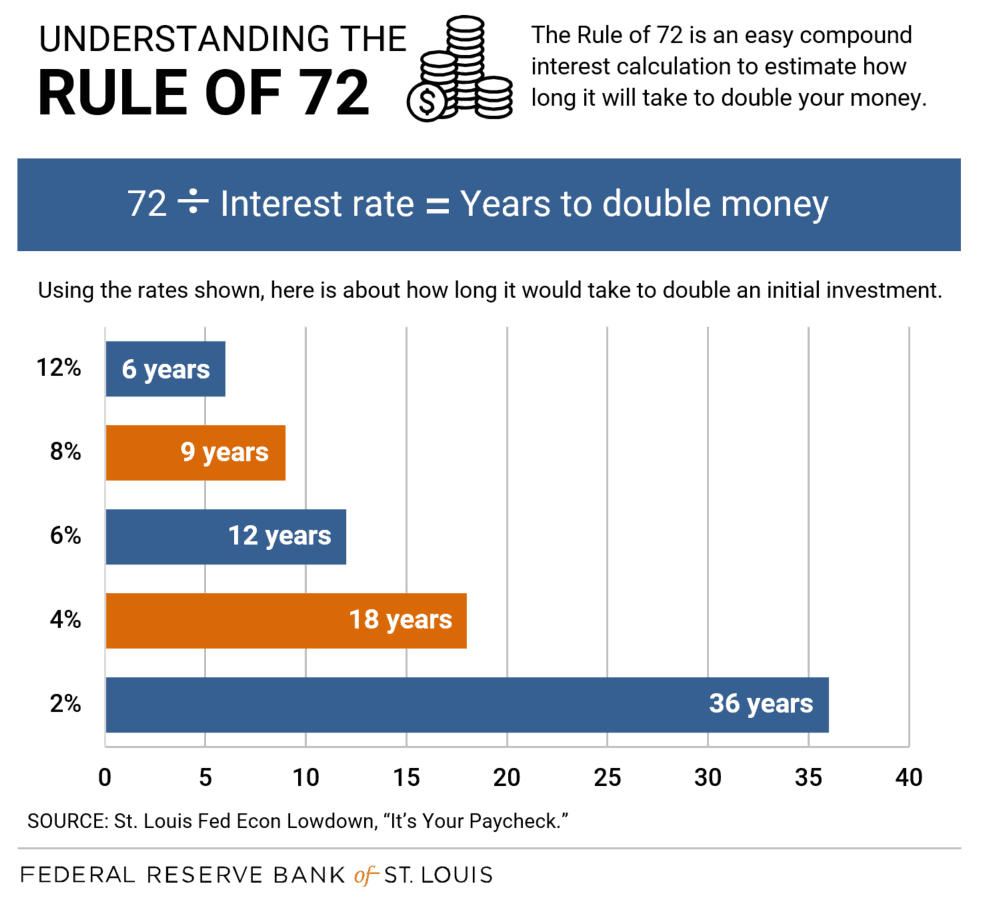
A quick way to estimate the power of your compounding investment is the “Rule of 72.” By dividing 72 by your expected annual rate of return, you can determine roughly how many years it will take for your initial investment to double. For instance, an investment with a 7% return will double approximately every 10 years. Understanding this math helps investors set realistic goals and stay disciplined during market fluctuations.
Minimizing Investment Fees
Fees are the “anti-compound interest.” A seemingly small 1% management fee can strip away hundreds of thousands of dollars from a portfolio over a lifetime because that 1% is no longer there to compound. Investors should look for low-cost index funds and be wary of high-turnover portfolios that incur unnecessary transaction costs and taxes.
Consistent Contributions and Automation
The most successful investors do not rely on a one-time “windfall” to build wealth. Instead, they use a strategy called Dollar-Cost Averaging (DCA). By consistently contributing a set amount of money regardless of market conditions, you ensure that the principal being compounded is always growing. Automating these contributions removes the emotional hurdle of investing during market downturns, allowing the mathematical certainty of compounding to take over.
Conclusion
Compound interest is not a specific financial product, but rather a mathematical phenomenon that can be applied across various asset classes. Whether you choose the aggressive growth potential of dividend-reinvested equities, the stability of high-yield fixed-income accounts, or the tax-advantaged environment of a retirement plan, the underlying principle remains the same: consistency and time are your greatest allies.
By understanding which investments offer compounding and how to shield those gains from taxes and fees, you move from the role of a passive saver to an active wealth builder. The journey to financial independence is rarely a sprint; it is a long-term engagement with the power of compounding. The best time to start was yesterday; the second best time is today.
aViewFromTheCave is a participant in the Amazon Services LLC Associates Program, an affiliate advertising program designed to provide a means for sites to earn advertising fees by advertising and linking to Amazon.com. Amazon, the Amazon logo, AmazonSupply, and the AmazonSupply logo are trademarks of Amazon.com, Inc. or its affiliates. As an Amazon Associate we earn affiliate commissions from qualifying purchases.