
In the pockets of billions of people worldwide sits a tiny, unassuming piece of plastic and silicon known as the Subscriber Identity Module, or SIM card. While modern smartphones boast terabytes of cloud storage, lightning-fast processors, and sophisticated neural engines, they remain largely useless for communication without this fingernail-sized chip. Despite its diminutive stature, the SIM card is a marvel of telecommunications engineering, acting as a secure gateway between a user’s hardware and the global mobile network.
Understanding what information a SIM card holds is not merely a matter of technical curiosity; it is a fundamental aspect of digital literacy in an age where mobile identity is synonymous with personal identity. From unique serial numbers that identify your hardware to encrypted keys that facilitate secure calls, the SIM card is the silent custodian of your mobile life. This article explores the intricate layers of data stored on these chips, the evolution of their storage capabilities, and the critical role they play in modern digital security.
The Core Identity: Unique Identifiers and Authentication
At its heart, a SIM card is a specialized smart card. Its primary purpose is to identify and authenticate a subscriber on a cellular network. To do this, it holds several specific strings of data that act as your digital fingerprint in the eyes of telecommunications providers.
ICCID: The Physical Card’s Serial Number
The Integrated Circuit Card Identifier (ICCID) is the primary identification number of the SIM card itself. It is a 19- or 20-digit number usually printed on the back of the card. Unlike other data on the SIM, the ICCID is permanent and unique to that specific piece of hardware. It includes an industry identifier (usually 89 for telecommunications), a country code, an issuer identifier (the mobile network operator), and a unique account identification number. When you call your service provider to activate a new line, the ICCID is the primary reference point they use to link the physical card to your account.
IMSI: Your Network Identity
While the ICCID identifies the card, the International Mobile Subscriber Identity (IMSI) identifies the user within the cellular network. The IMSI is a unique 15-digit string that the phone sends to the network to request access. It consists of the Mobile Country Code (MCC), the Mobile Network Code (MNC), and the Mobile Subscription Identification Number (MSIN). This is the data that allows a network in France to recognize a traveler from New York and facilitate roaming services. The IMSI is rarely seen by the user but is the backbone of global mobile connectivity.
The Authentication Key (Ki) and Security Algorithms
Perhaps the most sensitive piece of information on a SIM card is the Authentication Key, known as the Ki. This is a 128-bit value used to authenticate the SIM card on the mobile network. When a phone attempts to connect, the network sends a “random challenge” to the SIM. The SIM uses its internal Ki and an onboard encryption algorithm (like A3 or A8) to sign this challenge and send a response back. If the network’s calculation matches the SIM’s calculation, access is granted. Crucially, the Ki is designed never to leave the SIM card; it is stored in a protected area of the chip that cannot be read by the phone’s operating system, providing a robust layer of hardware-based security.
Personal Data and Legacy Communication Storage
In the early days of mobile telephony, the SIM card served as the primary storage device for user data. While modern smartphones now use internal flash memory and cloud synchronization for these tasks, the SIM card still retains the capability to store personal information.
Contacts and Phonebooks
Before the era of iPhones and Android devices, switching phones meant physically moving your SIM card to transfer your contacts. Most SIM cards can store between 150 and 250 contacts. This data is stored in a very basic format: usually just a name and a single phone number. While this is rarely used today—given that Google and iCloud accounts can store thousands of contacts with photos, emails, and addresses—the SIM phonebook remains a functional legacy feature that ensures a basic level of data portability between even the simplest of “dumb phones.”
SMS Message Storage
SIM cards also possess a small amount of dedicated memory for SMS messages. In the late 1990s and early 2000s, it was common for a SIM card to hit its capacity after storing only 20 to 50 text messages, forcing users to delete old “texts” to make room for new ones. Modern SIM cards still have this partitioned space, though modern operating systems typically bypass it in favor of the device’s much larger internal storage. However, for certain high-security applications or emergency notifications, the SMS storage on a SIM can still be utilized by the network.
Service Dialing Numbers (SDN) and LND
SIM cards often come pre-loaded with Service Dialing Numbers (SDN). These are fixed numbers provided by the carrier for services like voicemail, customer support, or balance inquiries. Additionally, the SIM stores “Last Numbers Dialed” (LND), a small log of the most recent outgoing calls. While these features are largely eclipsed by the sophisticated call logs in modern mobile OSs, they remain embedded in the SIM standard for compatibility across all grades of hardware.
Network State and Location Information
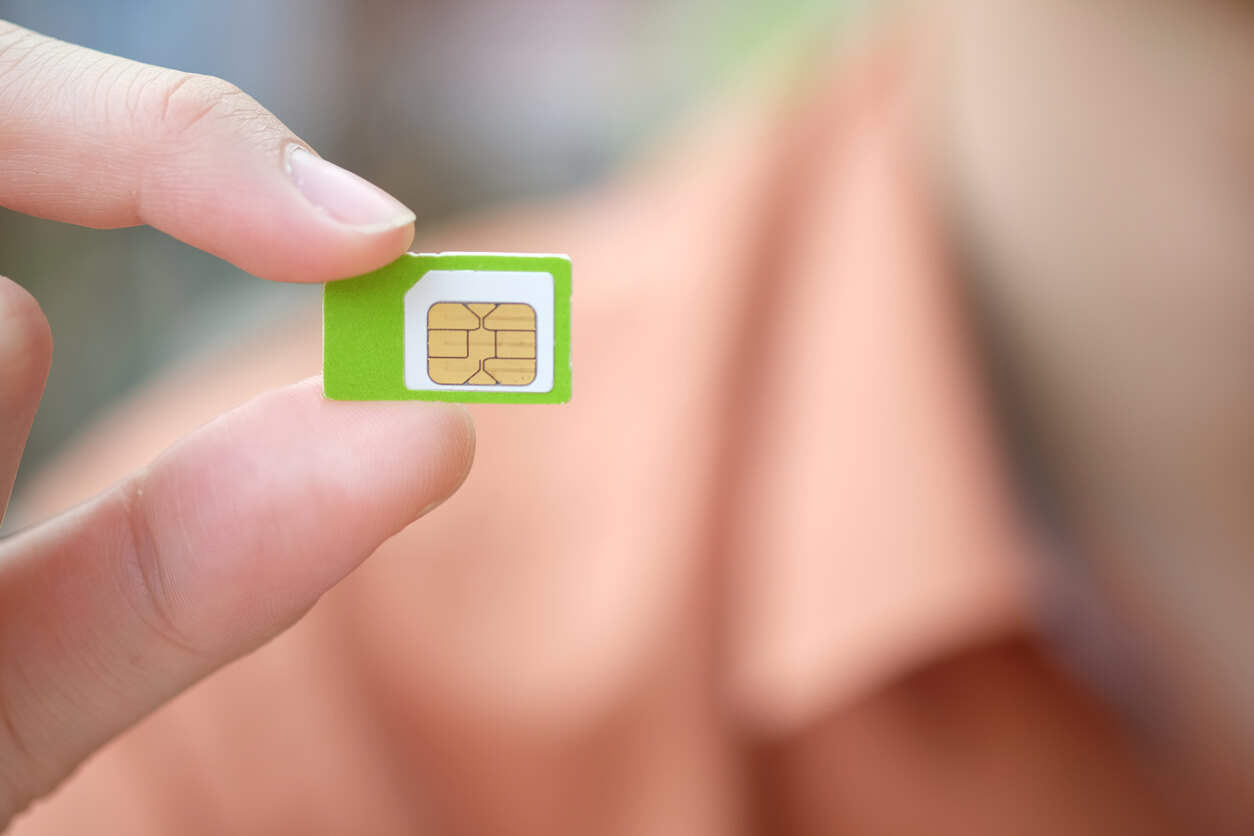
A SIM card does more than just identify you; it also tracks the “state” of your connection to the mobile world. To optimize performance and ensure you don’t lose service, the SIM stores temporary data regarding your current environment.
LAI: The Location Area Identity
To efficiently route calls and data, the cellular network needs to know where you are. The SIM card stores the Location Area Identity (LAI). When a mobile device moves from one cell tower coverage area to another, it updates the LAI on the SIM card. This allows the network to find the device quickly without having to “page” every tower in the entire country. If you turn your phone off and back on, the phone reads the LAI from the SIM to reconnect to the last known local network instantly.
TMSI: The Temporary Mobile Subscriber Identity
For privacy reasons, networks avoid broadcasting the permanent IMSI over the air whenever possible. Instead, the network assigns a Temporary Mobile Subscriber Identity (TMSI) to the device after the initial authentication. This TMSI is stored on the SIM card and used for subsequent communications. By frequently changing the TMSI, the network makes it much harder for malicious actors to track a specific user’s movements or intercept their communications using “IMSI catchers.”
Preferred Networks and Roaming Lists
When you travel, your phone needs to know which local carriers your home provider has a partnership with. This information is stored on the SIM in the form of a Public Land Mobile Network (PLMN) priority list. This list tells the phone which networks to attempt to join first and which ones to avoid (Forbidden PLMNs). This data is why your phone might automatically switch from “Home Carrier” to “Partner Carrier” the moment you cross an international border.
The Evolution of SIM Technology: From Physical Chips to eSIM
The technology governing what a SIM card holds has evolved significantly since its inception in 1991. What began as a credit-card-sized piece of plastic has shrunk into the nano-SIM and, eventually, the digital-only eSIM.
The Shift to eSIM (Embedded SIM)
The most significant technological shift in recent years is the move toward eSIM. An eSIM is a small chip soldered directly onto the device’s motherboard. Rather than holding a single, static set of carrier data, the eSIM is “reprogrammable.” It holds the same types of information—ICCID, IMSI, and Ki—but this data is downloaded via software profiles. This allows users to switch carriers or add secondary lines without needing a physical card. From a data perspective, an eSIM is more sophisticated, as it can store multiple “profiles,” effectively holding the information of several physical SIM cards simultaneously.
Increased Security and Tamper Resistance
Modern SIM cards and eSIMs are designed as “Secure Elements.” They are mini-computers with their own processor, ROM, and EEPROM (Electrically Erasable Programmable Read-Only Memory). The data they hold is protected by hardware-level encryption. If a malicious actor tries to physically probe the chip to extract the Ki (Authentication Key), the chip is designed to “brick” itself or scramble the data. This hardware-based security is why SIM cards remain the gold standard for mobile authentication, even as other technologies move toward pure software solutions.
Privacy and Security: Protecting the Data on Your SIM
Because the SIM card holds the keys to your mobile identity, protecting the information on it is paramount. If someone gains unauthorized access to your SIM data, they can effectively “become” you on the network.
SIM PINs and PUK Codes
To prevent unauthorized use of a physical SIM card, users can enable a SIM PIN (Personal Identification Number). When a PIN is active, the phone cannot access any data on the SIM—including the IMSI or the contact list—until the code is entered. If the PIN is entered incorrectly multiple times (usually three), the SIM “locks” itself for security. To unlock it, a user needs the PUK (Personal Unblocking Key), a unique 8-digit code provided by the carrier. This ensures that even if your phone is stolen, your mobile identity remains protected.
Common Threats: SIM Swapping and Cloning
While the data inside the SIM is very secure, the process of managing that data is a target for cybercriminals. “SIM Swapping” is a social engineering attack where a criminal convinces a carrier to transfer a victim’s phone number to a new SIM card in the criminal’s possession. Once they have control of the “identity” held on the SIM, they can bypass two-factor authentication (2FA) for bank accounts and emails. “SIM Cloning,” an older technique, involves physically reading the Ki and IMSI from a card to create a duplicate. While modern encryption has made cloning nearly impossible for 4G and 5G cards, the threat of SIM swapping remains a significant digital security concern.
Conclusion
The SIM card is far more than a simple connector; it is a sophisticated vault containing the essential data required for global communication. From the permanent ICCID that identifies the hardware to the transient TMSI that protects your privacy, the information held on a SIM card is the foundation of the modern mobile experience. As we transition from physical plastic cards to integrated eSIM technology, the SIM’s role as a secure, hardware-based identity module becomes even more critical. By understanding the data these chips hold and how to secure it, users can better navigate the complexities of the digital age, ensuring their mobile identity remains both functional and private.
aViewFromTheCave is a participant in the Amazon Services LLC Associates Program, an affiliate advertising program designed to provide a means for sites to earn advertising fees by advertising and linking to Amazon.com. Amazon, the Amazon logo, AmazonSupply, and the AmazonSupply logo are trademarks of Amazon.com, Inc. or its affiliates. As an Amazon Associate we earn affiliate commissions from qualifying purchases.