
Defining the “middle class” in the United States has become increasingly complex as inflation, housing costs, and shifting economic landscapes redefine what it means to be financially secure. While the term historically conjured images of the American Dream—a single-family home, a reliable vehicle, and the ability to save for retirement—today’s middle class is a fluid demographic bracket defined more by purchasing power and regional cost of living than by a static dollar amount. Understanding where you fit within this spectrum requires looking beyond raw salary figures and examining the interplay between household size, geographic location, and net wealth.
The Quantitative Landscape: Defining the Bracket
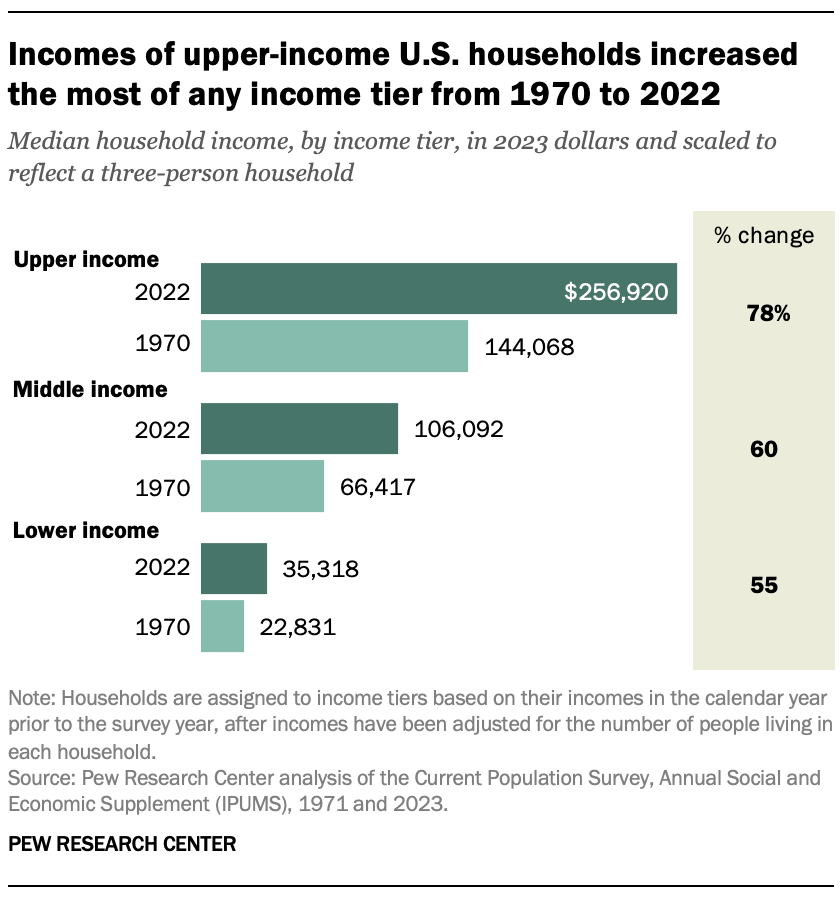
Economists and government agencies often rely on the Pew Research Center’s framework to define the middle class. According to Pew, middle-income households are those with an annual income that is two-thirds to double the national median household income. Because the median income fluctuates year-over-year, the income range for the middle class shifts accordingly.
National Averages vs. Real-World Purchasing Power
Using recent Census Bureau data, the national median household income hovers around $75,000. Applying the “two-thirds to double” rule, the middle-class range typically falls between $50,000 and $150,000 per year for a household of three. However, this national snapshot is often misleading. An income of $75,000 in rural Mississippi provides a vastly different quality of life than the same income in San Francisco or New York City. Consequently, many financial planners argue that middle-class status is better defined by “discretionary bandwidth”—the ability to cover essential bills, contribute to a retirement fund, and handle a $2,000 emergency expense without sliding into debt.
The Impact of Household Size
Income thresholds must be adjusted based on the number of people living under one roof. A single individual earning $60,000 annually might feel firmly middle class, enjoying disposable income for travel and hobbies. Conversely, a family of five earning $90,000 may struggle to stay ahead of the rising costs of childcare, healthcare, and education. When analyzing your own status, it is critical to look at “equivalized income,” which scales earnings based on household size to provide a more accurate representation of the standard of living.
The Geography of Middle-Class Wealth
The single greatest variable in the middle-class equation is geography. The cost of living varies so dramatically across the United States that a universal income bracket is practically obsolete. What constitutes “middle class” in one zip code might be considered “working class” in another, or “upper-middle class” in a third.
High-Cost vs. Low-Cost Environments
In metropolitan hubs like the Bay Area, Seattle, or Washington D.C., salaries are significantly higher to account for the exorbitant cost of housing. In these regions, a household income of $150,000 might be the bare minimum to sustain a middle-class lifestyle, whereas in the Midwest or the South, that same income would place a family comfortably in the upper-middle class, allowing for significant investments and asset accumulation.
The Hidden Costs of Location
Beyond the obvious housing expense, geography dictates the costs of secondary essentials: property taxes, insurance premiums, utility rates, and transportation. Middle-class stability is often eroded in regions where infrastructure requires extensive commuting, adding “hidden taxes” in the form of fuel, maintenance, and time lost. When assessing your financial bracket, it is essential to calculate your “regional adjusted income” by dividing your salary by the regional price parity index, which standardizes income against local costs.
Shifting Metrics: From Income to Net Worth
As income inequality grows, many financial experts suggest that income is an outdated metric for gauging middle-class status. High income does not always correlate with financial security, especially when burdened by high-interest debt or a lack of savings. Increasingly, “middle class” is being redefined by balance sheets rather than paychecks.
The Role of Asset Accumulation
The traditional middle-class identity was built on homeownership, which served as a forced savings vehicle. Today, as housing prices reach record highs relative to wages, the barrier to entry has shifted. A family earning $120,000 but holding $200,000 in student loan debt and consumer credit card balances may have less financial freedom than a family earning $80,000 with no debt and a healthy investment portfolio.
Financial Security as a Benchmark
True middle-class standing is defined by the “Three Pillars of Stability”:
- The Emergency Buffer: Holding 3–6 months of living expenses in a liquid savings account.
- Retirement Readiness: Consistent contributions to 401(k)s, IRAs, or other long-term investment vehicles.
- Debt-to-Income Ratio: A manageable debt load that does not exceed 30% of gross monthly income, excluding the mortgage.
When an individual meets these three criteria, they have successfully navigated the transition from “surviving” to “securing,” regardless of whether their gross income sits at the lower or upper end of the national spectrum.
Challenges to Maintaining Middle-Class Status
The middle class is currently experiencing a “squeeze.” The rising cost of three primary categories—healthcare, education, and housing—has far outpaced the growth of median wages over the past three decades. This structural shift makes it difficult for families to maintain their status without dual-income streams or significant lifestyle modifications.
The Education and Childcare Trap
For many young families, the cost of childcare now rivals or exceeds the cost of a mortgage. This represents a significant drain on potential savings, often forcing one parent to exit the workforce, which resets their long-term career earnings potential. Simultaneously, the skyrocketing cost of higher education creates a debt cycle that keeps many young professionals from ever achieving the classic benchmarks of the middle class, such as buying a first home before age 40.
The Inflationary Erosion
Inflation acts as a silent tax on the middle class. While the wealthy can hedge against inflation through asset ownership and the lower income bracket may receive subsidized support, the middle class often bears the brunt of rising prices for consumer goods, fuel, and services. Maintaining middle-class status today requires a proactive approach to personal finance that focuses on income diversification rather than relying solely on a primary salary.
The Future: Strategies for Financial Resilience
If the definition of the middle class is moving, the strategy for staying within or climbing into that bracket must also evolve. Relying on a traditional salary is no longer sufficient for long-term security.
Diversifying Revenue Streams
In the modern economy, middle-class stability is increasingly tied to “side hustles” or supplemental income streams. Whether through freelancing, investment dividends, or the monetization of a skill, diversifying income protects households against corporate downsizing and economic volatility.

Focusing on Wealth-Building Assets
The most resilient households are those that shift focus from consumption to production. Instead of prioritizing the newest vehicle or the latest gadget, building a middle-class foundation involves prioritizing investments that produce cash flow. By focusing on index funds, real estate, or small-scale business ventures, individuals can create a “net worth” buffer that provides the stability that raw income cannot offer.
Ultimately, being middle class is less about a specific number on your W-2 and more about the degree of control you exercise over your financial future. It is defined by the ability to weather economic storms, plan for the long term, and maintain a standard of living that allows for both present-day comfort and future peace of mind. By ignoring arbitrary national averages and focusing on your specific regional costs, debt management, and asset accumulation, you can define your own path to middle-class security.
aViewFromTheCave is a participant in the Amazon Services LLC Associates Program, an affiliate advertising program designed to provide a means for sites to earn advertising fees by advertising and linking to Amazon.com. Amazon, the Amazon logo, AmazonSupply, and the AmazonSupply logo are trademarks of Amazon.com, Inc. or its affiliates. As an Amazon Associate we earn affiliate commissions from qualifying purchases.