
A car’s wheel bearing is a small yet critical component, often hidden from view, silently ensuring your wheels spin freely and smoothly. But like any mechanical part, it’s subject to wear and tear. When a wheel bearing starts to fail, it’s not a subtle degradation; it’s a progressive deterioration that can manifest in a variety of unsettling ways. Ignoring these signs can lead to significant safety hazards, costly repairs, and an unpleasant driving experience. Understanding what happens when a wheel bearing goes bad is crucial for any car owner, empowering you to recognize the symptoms, address the issue promptly, and maintain your vehicle’s integrity.

The concept of a “bad” wheel bearing can feel somewhat abstract, especially to those who aren’t mechanically inclined. It’s not an immediate catastrophic failure but rather a process. Think of it as a series of escalating problems, each one a warning sign that the bearing’s lifespan is nearing its end. This journey from functioning component to problematic failure involves a chain reaction of mechanical stress, lubrication breakdown, and eventual physical damage.
The Silent Workhorses: Understanding the Role of Wheel Bearings
Before delving into the symptoms of a failing bearing, it’s essential to grasp its fundamental purpose. Wheel bearings are essentially rings of ball bearings or roller bearings enclosed within a metal race. Their primary function is to reduce friction and support the weight of the vehicle, allowing the wheels to rotate with minimal resistance. They are mounted on the axle or spindle and are integral to the suspension system.
Supporting the Load and Enabling Rotation
Every time you drive, your wheel bearings are working tirelessly. They bear the significant load of your vehicle, including its weight, passengers, and cargo. This load is not static; it changes dynamically with every turn, bump, and acceleration. The bearings must be robust enough to handle these varying forces while simultaneously permitting the wheel to spin at high speeds. Without them, your wheels would seize up, making driving impossible.
The Importance of Lubrication and Sealing
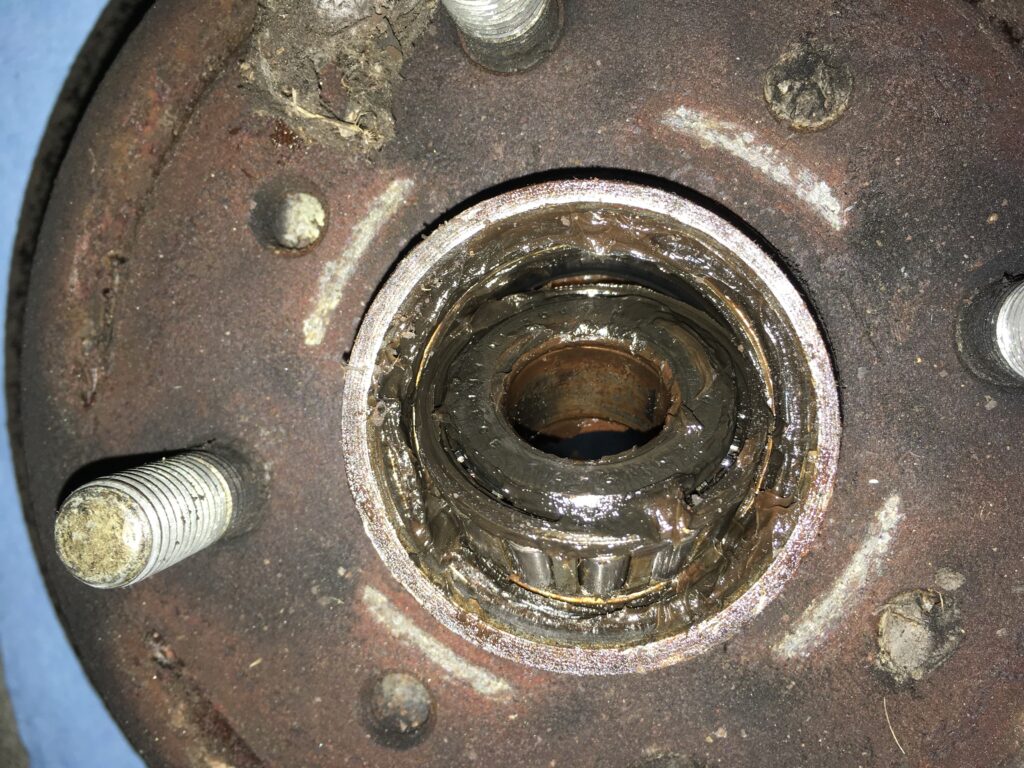
Crucially, wheel bearings are packed with grease to lubricate the rolling elements and prevent friction. They are also sealed to keep out dirt, water, and debris, which can quickly contaminate the grease and accelerate wear. The integrity of these seals is paramount. Once compromised, the bearing is exposed to the harsh elements of the road, leading to premature failure. This interplay of lubrication and sealing is the delicate balance that keeps wheel bearings functioning optimally.
The Unraveling: Symptoms of a Failing Wheel Bearing
The onset of wheel bearing failure is rarely a sudden event. Instead, it typically begins with subtle noises and sensations that gradually intensify. Recognizing these early indicators is key to preventing more severe damage. The symptoms are a direct consequence of the bearing’s internal components degrading, leading to increased friction, play, and ultimately, structural compromise.
The Audible Warning: Grinding, Humming, and Clicking Noises
One of the most common and noticeable signs of a failing wheel bearing is the emergence of unusual noises. These sounds are typically a direct result of metal-on-metal contact as the bearing’s internal components wear down.
-
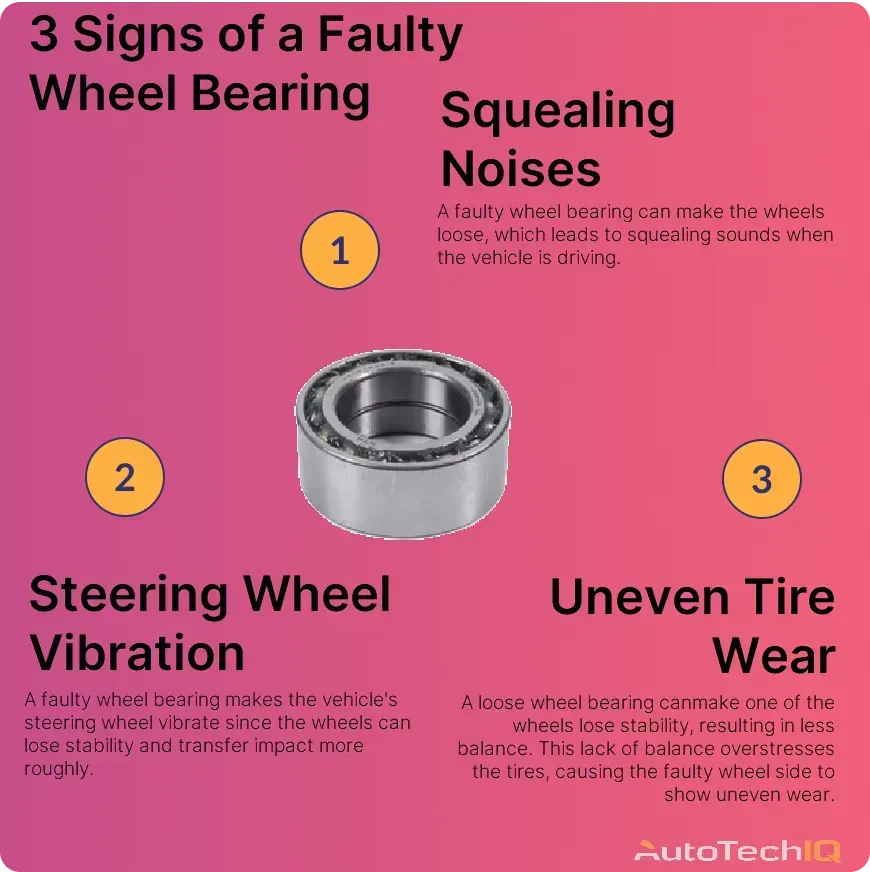
Grinding: This is often the first distinct sound you’ll notice. It’s a harsh, metallic scraping noise that tends to worsen with speed. As the balls or rollers within the bearing become worn or damaged, they can grind against the races, creating this unpleasant sound. It can be particularly pronounced when turning.
-
Humming or Roaring: Another prevalent symptom is a low-frequency hum or roar that emanates from the affected wheel. This sound often starts subtly and can be mistaken for tire noise. However, as the bearing deteriorates, the hum will become more distinct and often changes in pitch or volume with speed and cornering. It’s a sign of increased friction and the bearing “singing” its way towards failure.
-
Clicking or Popping: In some cases, especially if a bearing has experienced a shock or impact, you might hear clicking or popping sounds. This can indicate that a ball bearing has been dislodged or a part of the race has chipped, causing an irregular rotation. These sounds are often more sporadic and may be more apparent during low-speed maneuvers or when initiating movement.
The Correlation with Speed and Steering: Diagnosing the Source
The relationship between these noises and your vehicle’s speed and steering is a critical diagnostic tool. Most wheel bearing noises will intensify as your speed increases. Furthermore, they often become more pronounced when you turn the steering wheel.
-
Turning Right: If the noise increases when you turn right, it usually indicates that the left wheel bearing is the culprit. This is because turning right puts more outward pressure on the left side of the vehicle, exacerbating the wear in the left wheel bearing.
-
Turning Left: Conversely, if the noise intensifies when you turn left, the right wheel bearing is likely failing. The increased pressure on the right side during a left turn will highlight the issue.
The Tactile Feedback: Vibrations and Looseness
Beyond the auditory cues, a failing wheel bearing can also be felt through the steering wheel and the chassis of your vehicle. These tactile sensations are direct manifestations of the mechanical instability introduced by the damaged bearing.
-
Steering Wheel Vibrations: As a wheel bearing begins to loosen or develop significant play, it can cause vibrations that are transmitted through the steering column to your hands. These vibrations might be subtle at first but will become more pronounced as the bearing continues to degrade. You might feel a slight shimmy or a more significant tremor, particularly at higher speeds.
-
Vehicle Pulling to One Side: A significantly worn wheel bearing can create uneven resistance or drag on the wheel it’s attached to. This can cause the vehicle to pull subtly or even noticeably towards the side of the failing bearing. This is a dangerous symptom as it compromises your ability to steer effectively.
-
Feeling of Looseness or Play: In advanced stages of failure, you might physically feel a sense of looseness or play in the steering. This is a clear indication that the wheel is not securely attached to the axle due to the compromised bearing.
The Escalation: Consequences of Neglecting a Bad Wheel Bearing
Ignoring the warning signs of a bad wheel bearing is not an option for the safety-conscious driver. The progressive nature of bearing failure means that what starts as an annoyance can quickly escalate into a serious safety hazard and a costly repair. The consequences stem from the fundamental role of the bearing and the interconnectedness of a vehicle’s mechanical systems.
Safety Hazards: The Risk of Catastrophic Failure
The most critical consequence of a neglected wheel bearing is the risk of catastrophic failure. A wheel bearing’s primary job is to keep the wheel securely attached to the vehicle while allowing it to spin. When a bearing completely disintegrates, this connection is severed.
-
Wheel Separation: In the most extreme scenarios, a severely failed wheel bearing can lead to the wheel detaching from the vehicle while in motion. This is an incredibly dangerous situation that can cause a complete loss of control, potentially resulting in severe accidents. The forces involved are immense, and a runaway wheel poses a significant threat to other road users.
-
Loss of Control: Even before complete separation, a failing wheel bearing can compromise steering and braking. The instability created by a loose wheel can make it difficult to maintain a straight line, particularly at higher speeds, and can significantly impair your ability to brake effectively, increasing stopping distances.
Increased Repair Costs and Further Damage
Delaying the repair of a wheel bearing not only compromises safety but also inevitably leads to increased repair costs. The damage doesn’t just stay within the bearing itself; it can spread to other nearby components.
-
Damage to Related Components: A worn wheel bearing can put excessive stress on other parts of the wheel hub assembly, including the axle, brake components (rotors, calipers), and even the suspension. The prolonged grinding and excessive play can wear down these parts, necessitating their replacement in addition to the bearing.
-
Increased Labor Costs: While the bearing itself might be a relatively inexpensive part, the labor involved in replacing it can vary. However, if the damage is allowed to progress to the point where surrounding components are affected, the repair time and complexity will increase, leading to higher labor bills. It’s always more cost-effective to address a bearing issue early.
-
Tire Wear: A misaligned or wobbly wheel due to a bad bearing can also lead to uneven and accelerated tire wear. This adds another layer of expense, as you’ll need to replace tires sooner than expected.
Proactive Maintenance: Protecting Your Wheel Bearings and Your Wallet
Given the critical role of wheel bearings and the potential consequences of their failure, a proactive approach to maintenance is the most sensible strategy. By incorporating regular checks and being aware of potential issues, you can extend the life of your bearings and avoid costly surprises.
Regular Inspections and Professional Diagnosis
The best defense against a bad wheel bearing is regular, professional inspection. Your mechanic can identify potential problems before they become critical.
-
Routine Service Checks: During your vehicle’s routine maintenance schedule, specifically ask your mechanic to check the wheel bearings. They will typically lift the vehicle and check for any play or looseness in the wheels. They can also listen for any abnormal noises that might indicate an early stage of failure.
-
Trust Your Senses: Don’t dismiss unusual sounds or vibrations coming from your car. If you suspect a wheel bearing issue, get it checked out by a qualified technician as soon as possible. It’s better to have a mechanic confirm that everything is fine than to wait for a problem to worsen.
Understanding the Lifespan and Potential Causes of Failure
While wheel bearings are designed to last for many miles, their lifespan can be influenced by several factors. Understanding these can help you be more vigilant.
-
Environmental Factors: Driving on rough roads, encountering potholes, or frequently driving through water or mud can all accelerate wear on wheel bearings.
-
Driving Habits: Aggressive driving, such as frequent hard cornering or braking, can place extra stress on the bearings.
-
Manufacturing Defects: Although rare, manufacturing defects can sometimes lead to premature bearing failure.
By understanding these potential contributing factors, you can be more mindful of how your driving habits and the conditions you encounter might affect your vehicle’s wheel bearings.
Conclusion: The Importance of a Smooth Spin
The journey of a wheel bearing from a silent, efficient component to a problematic failure is a stark reminder of how interconnected and sensitive a vehicle’s mechanics can be. What begins as a subtle hum or a slight vibration can, if left unaddressed, escalate into a significant safety hazard and a substantial financial burden. The core of the issue lies in the bearing’s fundamental role: to facilitate smooth rotation while bearing immense loads. When this delicate balance is disrupted, the consequences are inevitable and often severe.
The symptoms – the grinding, the humming, the vibrations – are not mere annoyances; they are critical alerts from your vehicle. They are direct indicators of mechanical distress, signaling that the components responsible for your wheels’ free spin are under duress. Recognizing these signs and responding promptly is not just about comfort or avoiding an inconvenience; it’s about prioritizing safety for yourself, your passengers, and other road users.
The cascading effect of a failing wheel bearing underscores the importance of proactive maintenance. The initial cost of replacing a single bearing is a fraction of the expense incurred when its failure leads to damage of surrounding components like brakes, axles, or suspension parts. Furthermore, the potential for a catastrophic failure, resulting in the detachment of a wheel, is a risk that no responsible driver should ever contemplate.
Therefore, the next time you hear an unusual noise from your wheels, feel a subtle vibration, or notice your car pulling slightly, don’t dismiss it. Consider it an opportunity to engage with the mechanics of your vehicle, to heed its warnings, and to invest in its continued safe operation. A small, often unseen, part like a wheel bearing plays an outsized role in the overall integrity and safety of your automobile. By understanding what happens when a wheel bearing goes bad, you equip yourself with the knowledge to act decisively, ensuring that every spin of your wheels is a smooth, safe, and confident journey.
aViewFromTheCave is a participant in the Amazon Services LLC Associates Program, an affiliate advertising program designed to provide a means for sites to earn advertising fees by advertising and linking to Amazon.com. Amazon, the Amazon logo, AmazonSupply, and the AmazonSupply logo are trademarks of Amazon.com, Inc. or its affiliates. As an Amazon Associate we earn affiliate commissions from qualifying purchases.