
The whisper of cool air from an air conditioner, the preservation of food in a refrigerator, or the efficient warmth from a heat pump all hinge on a seemingly simple yet profoundly complex physical phenomenon: the evaporation of a refrigerant. This process is not merely a change of state but the linchpin of modern thermal management technologies, representing a sophisticated orchestration of thermodynamics to transfer heat from one place to another. Understanding what happens when a refrigerant evaporates is fundamental to appreciating the ingenuity behind our climate-controlled environments and preserved goods.
The Fundamental Role of Refrigerant Evaporation in Cooling Technology
At its core, the evaporation of a refrigerant is a heat absorption mechanism. In the grand scheme of a refrigeration or air conditioning cycle, the evaporator component is where the magic of cooling truly begins. Here, a low-pressure, low-temperature liquid refrigerant absorbs heat from its surroundings, undergoing a phase change from a liquid to a gas (vapor). This transformation is not arbitrary; it’s a precisely engineered event that leverages the refrigerant’s unique thermodynamic properties.
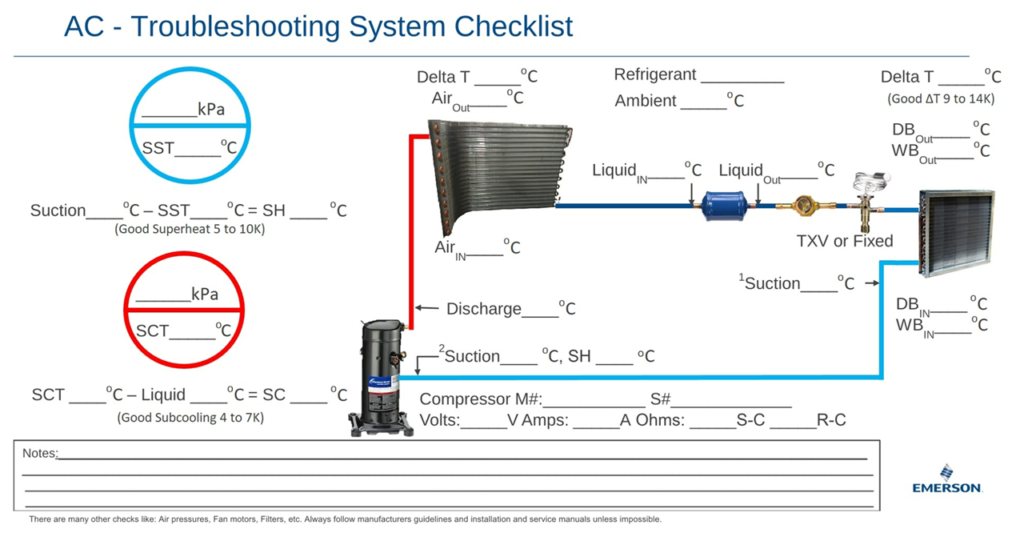
This process is integral to the vapor-compression refrigeration cycle, which underpins nearly all modern cooling and heating systems. In this cycle, the refrigerant acts as a thermal courier, picking up heat from an undesired location (e.g., inside a refrigerator, a room in a house) and transporting it to another location where it can be dissipated (e.g., outside the house). The evaporator, where the refrigerant evaporates, is specifically designed to maximize this heat absorption. Without this crucial phase change, the continuous and efficient removal of heat would be impossible, rendering our most common cooling technologies non-functional.
Delving into the Evaporation Process: A Microscopic View
To truly grasp the significance of refrigerant evaporation, one must look beyond the macroscopic change and consider the atomic and molecular interactions at play. This process is governed by fundamental principles of physics, primarily involving pressure, temperature, and the specific energy dynamics of phase transitions.
Pressure, Temperature, and Phase Change
The ability of a refrigerant to evaporate at a low temperature, enabling it to absorb heat from cooler environments, is a direct consequence of controlling its pressure. Within the evaporator coil, the refrigerant is maintained at a significantly lower pressure compared to the rest of the system. This low-pressure environment drastically lowers the refrigerant’s boiling point. For instance, water boils at 100°C (212°F) at atmospheric pressure, but at the vacuum of high altitudes, it boils at much lower temperatures. Similarly, modern refrigerants are formulated to boil at temperatures well below freezing at the operating pressures found in an evaporator.
As the liquid refrigerant enters the evaporator through a metering device (like an expansion valve), its pressure drops sharply. This sudden pressure reduction causes a portion of the liquid to flash into vapor, dropping the overall temperature of the mixture significantly. The remaining liquid refrigerant is now in a state where its saturation temperature (the temperature at which it boils for a given pressure) is lower than the surrounding air or medium that needs to be cooled. Consequently, heat naturally flows from the warmer ambient environment to the cooler refrigerant, providing the energy required for the remaining liquid refrigerant to evaporate. This continuous interplay between pressure and temperature ensures that heat transfer is unidirectional and highly efficient.
Latent Heat of Vaporization
The concept of “latent heat” is central to understanding why refrigerant evaporation is such an effective cooling mechanism. When a substance changes phase from liquid to gas, it absorbs a significant amount of energy from its surroundings without an accompanying increase in its own temperature. This absorbed energy is known as the latent heat of vaporization. Unlike sensible heat, which causes a temperature change in a substance, latent heat is used solely to overcome the intermolecular forces holding the liquid molecules together, allowing them to break free and transition into a gaseous state.
Refrigerants are specifically chosen for their high latent heat of vaporization. This means that even a small mass of refrigerant can absorb a substantial quantity of heat as it evaporates. For example, R-134a, a common refrigerant, absorbs around 217 kilojoules per kilogram (kJ/kg) when it evaporates at 0°C (32°F). This tremendous capacity for heat absorption makes refrigerants exceptionally efficient at drawing thermal energy out of the air in a room, the compartments of a refrigerator, or any other space requiring cooling. The brilliance of the refrigeration cycle lies in its ability to harness this latent heat for continuous and repeatable heat transfer.
Components Involved: The Evaporator Coil and Expansion Valve
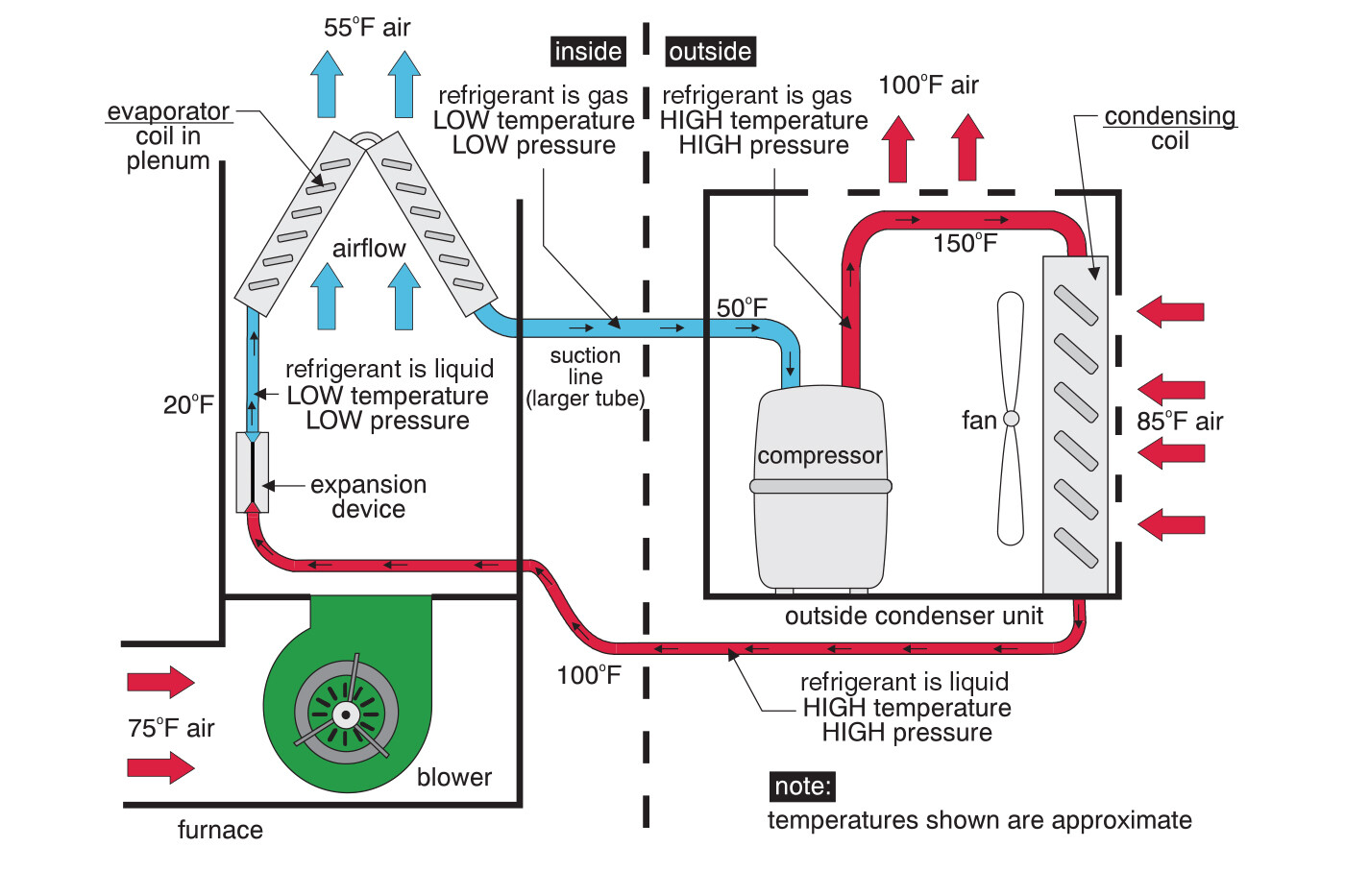
The controlled evaporation of refrigerant is facilitated by two key components working in tandem: the expansion valve (or metering device) and the evaporator coil itself. Each plays a critical role in optimizing the phase change process for maximum heat transfer.
The expansion valve is positioned immediately before the evaporator. Its primary function is twofold: to reduce the pressure of the liquid refrigerant from the high-pressure side of the system to the low-pressure side of the evaporator, and to meter the correct amount of refrigerant flow into the evaporator. This pressure drop is what lowers the refrigerant’s boiling point, preparing it to absorb heat. By controlling the flow, the expansion valve ensures that the evaporator receives just enough liquid refrigerant to completely evaporate as it absorbs heat, preventing liquid refrigerant from returning to the compressor (which can cause damage) and ensuring optimal system efficiency.
The evaporator coil is essentially a heat exchanger. It consists of a series of coiled tubes, often enhanced with fins, designed to maximize the surface area exposed to the air or liquid being cooled. As the low-pressure, low-temperature liquid-vapor mixture of refrigerant enters these tubes, it begins to absorb heat. The fins significantly increase the contact area between the coil and the surrounding medium, facilitating efficient conductive heat transfer from the air/liquid to the metal tubes, and then convective heat transfer from the inner surface of the tubes to the refrigerant. As the refrigerant progresses through the coil, it continuously absorbs heat, gradually transforming from a predominantly liquid state into a superheated vapor by the time it exits the coil. “Superheat” refers to the additional heat absorbed by the refrigerant vapor beyond its saturation point, ensuring that all liquid has evaporated before the vapor enters the compressor, thus protecting the compressor from liquid slugging.
Impact on System Performance and Efficiency
The efficiency and performance of any refrigeration or air conditioning system are inextricably linked to the proper functioning of the evaporation process. Any deviation from optimal evaporation can significantly diminish cooling capacity, increase energy consumption, and potentially lead to system failure.
Factors influencing efficient evaporation include:
- Refrigerant Charge: An undercharged system may not have enough refrigerant to fully absorb the required heat, leading to inadequate cooling and potential superheating issues. An overcharged system can lead to excessively high suction pressures, reduced capacity, and even liquid refrigerant returning to the compressor.
- Airflow Over the Coil: Restricted airflow (due to dirty filters, blocked fins, or malfunctioning fans) reduces the rate at which heat can be transferred from the environment to the refrigerant. This results in poor heat absorption and can even cause the evaporator coil to freeze over, further impeding airflow and completely halting cooling.
- Coil Cleanliness: Dust, dirt, and biological growth on the evaporator coil’s surface act as insulators, hindering heat transfer. Regular cleaning is crucial for maintaining optimal evaporative efficiency.
- Ambient Conditions: While the refrigerant’s boiling point is lowered, extremely high ambient temperatures can still reduce the efficiency of heat transfer to the refrigerant, as the temperature difference becomes less pronounced.
Technological advancements continuously aim to optimize refrigerant evaporation. Variable-speed compressors, for example, can modulate their output to precisely match cooling loads, thereby maintaining more stable and efficient evaporator temperatures and pressures. Microchannel coils offer a more compact design with improved heat transfer capabilities, while smart controls and sensors allow for real-time monitoring and adjustment of refrigerant flow and fan speeds to maximize evaporative efficiency across varying conditions. Furthermore, the industry’s shift towards refrigerants with lower Global Warming Potential (GWP) also considers their thermodynamic properties to ensure they can evaporate efficiently, balancing environmental impact with performance.
Beyond Standard Cooling: Advanced Applications and Future Trends
While the principles of refrigerant evaporation are consistently applied across standard air conditioning and refrigeration, the technology finds diverse and increasingly sophisticated applications, pushing the boundaries of thermal management.
Heat Pumps: Reversible Evaporation
Heat pumps ingeniously leverage the same vapor-compression cycle, but with the added ability to reverse the flow of refrigerant. This means that the component acting as the evaporator in cooling mode can become the condenser in heating mode, and vice versa. In heating mode, the outdoor coil functions as the evaporator, absorbing low-grade heat from the colder outside air (even below freezing temperatures) and transferring it to the refrigerant. The refrigerant then evaporates, absorbs this heat, and is compressed, raising its temperature significantly before releasing the heat indoors via the indoor coil (now acting as a condenser). This reversible evaporation allows a single system to provide both efficient cooling and heating, representing a significant technological leap in energy efficiency for residential and commercial spaces.

Cryogenics and Specialized Systems
The fundamental principle of utilizing evaporation for cooling extends into extreme environments, such as those found in cryogenics. While the refrigerants and specific cycle designs differ vastly (often involving multiple stages or cascade systems), the core idea remains: a fluid is evaporated at very low pressures to absorb heat and achieve ultra-low temperatures, sometimes approaching absolute zero. These specialized systems are vital for scientific research, medical applications (e.g., MRI machines), and industrial processes requiring extreme cold.
Looking ahead, advancements continue to explore alternative cooling technologies, such as magnetic refrigeration or thermoacoustic refrigeration, which may not rely on traditional refrigerant evaporation. However, for the foreseeable future, the sophisticated management of refrigerant evaporation will remain a cornerstone of our technological infrastructure, continually refined to be more energy-efficient, environmentally friendly, and adaptable to emerging needs. The humble act of a liquid turning into a gas is, indeed, a powerhouse of modern innovation.
aViewFromTheCave is a participant in the Amazon Services LLC Associates Program, an affiliate advertising program designed to provide a means for sites to earn advertising fees by advertising and linking to Amazon.com. Amazon, the Amazon logo, AmazonSupply, and the AmazonSupply logo are trademarks of Amazon.com, Inc. or its affiliates. As an Amazon Associate we earn affiliate commissions from qualifying purchases.