
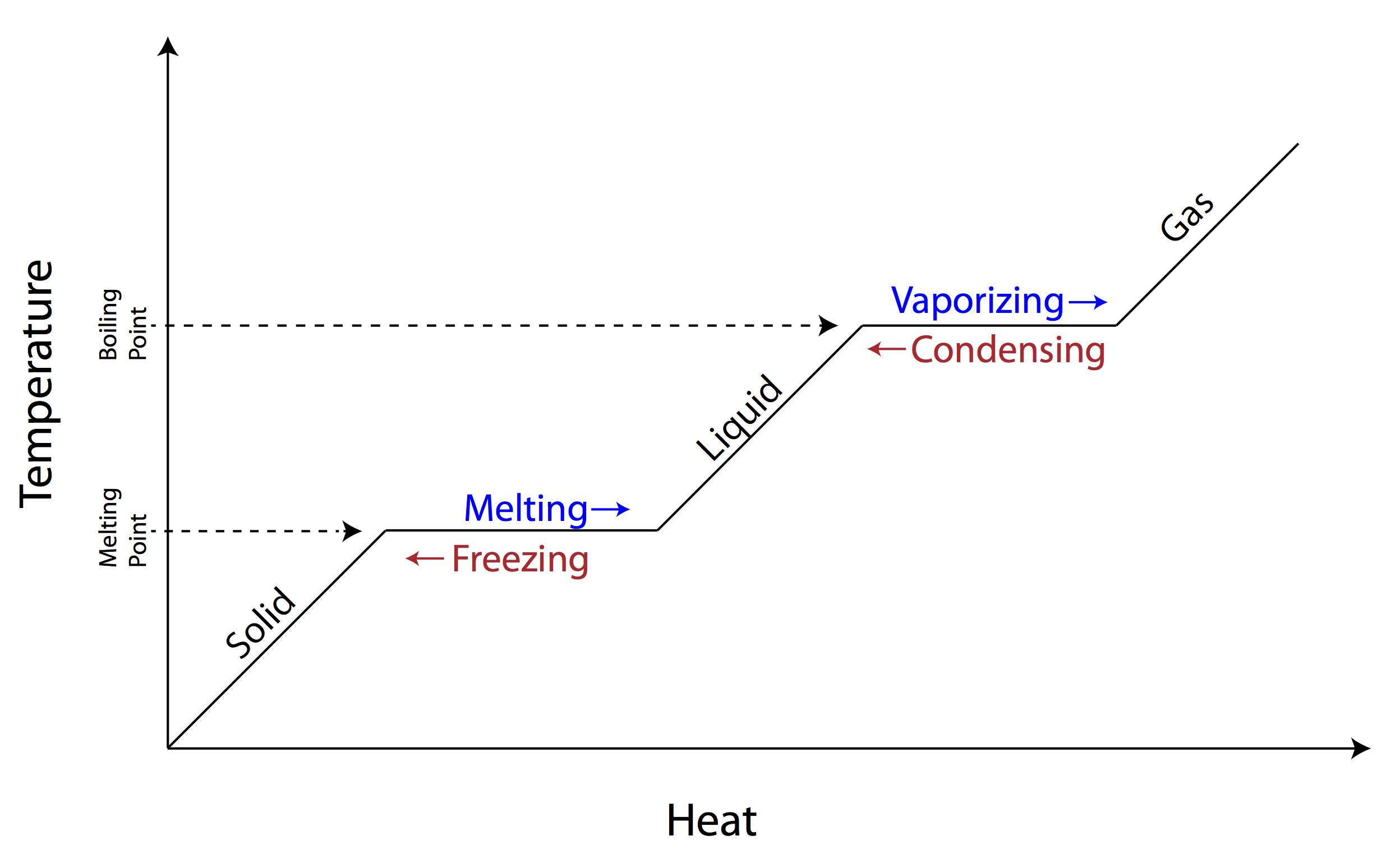
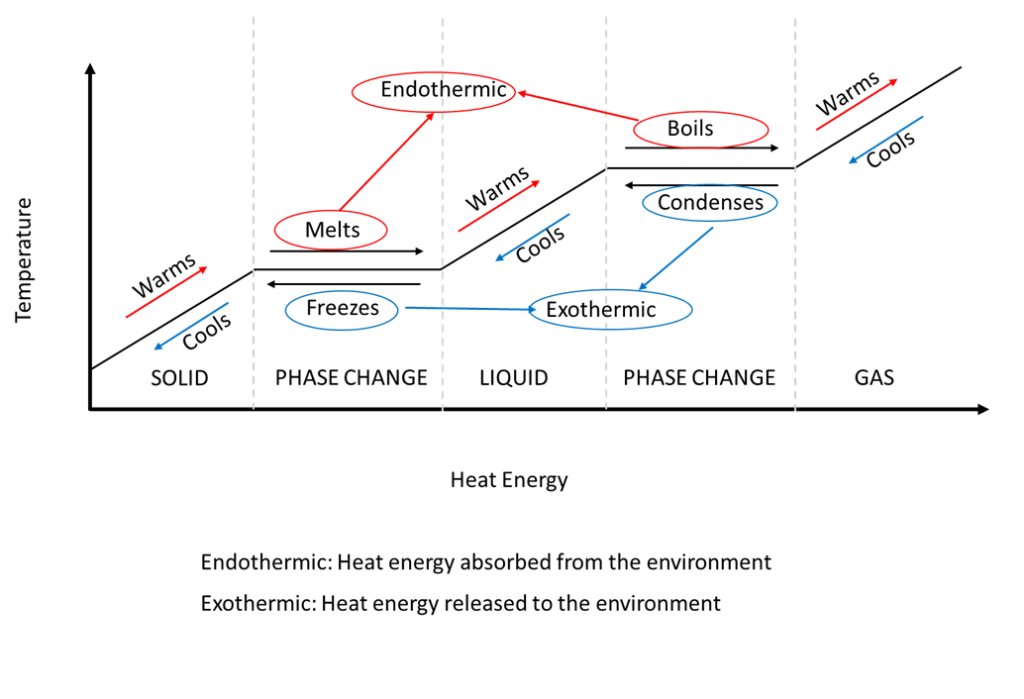
In the realm of thermodynamics, a phase change is a fascinating phenomenon where a substance transitions from one state of matter to another—solid to liquid, or liquid to gas—without a change in temperature. During this transition, all energy added to the system is consumed as “latent heat,” breaking molecular bonds rather than increasing kinetic energy. In the world of technology, this scientific principle is more than a classroom experiment; it is the cornerstone of modern hardware engineering, high-performance computing, and the next generation of data storage.
As our processors become faster and our data centers more dense, the “temperature” of our technological progress is reaching a critical threshold. Understanding what happens during these transitions—both physically in our hardware and metaphorically in our industry—is essential for understanding the future of the digital age.
The Science of Stasis: Thermal Management in High-Performance Computing
In a high-end gaming PC or an enterprise-grade server, the “phase change” is a constant, invisible cycle designed to protect delicate silicon. When we ask what happens to the temperature during a phase change in a technological context, we are often looking at the efficiency of heat pipes and vapor chambers.
The Equilibrium Point: Why Temperature Plateaus
In traditional air cooling, heat is moved via conduction through metal fins. However, as chips become more powerful, air cooling reaches a point of diminishing returns. This is where phase change technology enters the fray. In a vapor chamber, a liquid (usually water or a specialized refrigerant) absorbs the heat from the CPU and evaporates.
Crucially, during this evaporation, the temperature of the liquid remains constant. This plateau is vital for tech stability. By utilizing latent heat, the cooling system can absorb massive “spikes” in energy consumption without the processor’s temperature skyrocketing instantly. This provides a thermal buffer that allows for higher clock speeds and sustained performance under heavy workloads, such as 4K video rendering or complex AI model training.
Thermal Interface Materials (TIM) and Phase Change Polymers
Beyond the cooling units themselves, the tech industry has pivoted toward Phase Change Materials (PCMs) for thermal paste replacements. Traditional grease can “pump out” or dry over time. Modern PCMs are solid at room temperature but turn into a high-viscosity liquid as the processor heats up. During this melting phase, the temperature remains steady as the material fills every microscopic void between the chip and the cooler. This transition ensures maximum thermal conductivity, proving that managing the “stasis” of temperature during a phase change is the secret to hardware longevity.
Phase-Change Memory (PCM): The Future of Non-Volatile Data Storage
Perhaps the most revolutionary application of phase change physics in the tech niche is in the development of Phase-Change Memory (PCM), also known as PRAM. While traditional NAND flash memory (found in most SSDs) relies on trapping electrons, PCM utilizes the physical state of the material itself to store data.
Chalcogenide Glass and the Bit-State Transition
At the heart of PCM is a specialized material called chalcogenide glass. To store a “0” or a “1,” the tech applies a localized burst of heat to the material. A high-temperature spike followed by rapid cooling leaves the glass in an “amorphous” state (high resistance). A slightly lower, sustained heat allows the material to cool into a “crystalline” state (low resistance).
During these transitions, the temperature must be precisely controlled. The “phase change” here is the data itself. Because the temperature stays within specific bounds during the transition, the material does not degrade as quickly as the oxide layers in flash memory. This allows for significantly higher endurance—often millions of write cycles compared to the thousands offered by standard consumer SSDs.
Speed and Longevity: The Advantages Over NAND Flash
The reason the tech world is obsessed with what happens during this phase change is speed. Because PCM does not require an “erase” cycle before a “write” cycle—unlike flash memory—it can operate at speeds approaching DRAM while maintaining the non-volatile nature of a hard drive. Companies like Intel and Micron (through initiatives like Optane/3D XPoint) have leveraged these phase-change properties to bridge the gap between volatile memory and permanent storage, fundamentally changing how operating systems manage data throughput.
Cooling the Giants: Liquid Cooling and Phase Change in Data Centers
As artificial intelligence and cloud computing demand more power, the infrastructure required to support them has undergone a phase change of its own. We are moving away from air-conditioned server rooms toward two-phase immersion cooling.
Two-Phase Immersion Cooling: Efficiency at Scale
In two-phase immersion cooling, entire server racks are submerged in a non-conductive, dielectric fluid with a low boiling point. As the chips generate heat, the fluid boils, turning into vapor. Just like the physics of a boiling pot of water, the temperature of the fluid stays at its boiling point regardless of how much heat the server pumps into it.
This “thermal plateau” is a game-changer for data center efficiency. It eliminates the need for energy-hungry fans and massive air conditioning units. The vapor rises to a cooling coil, releases its latent heat, condenses back into a liquid, and falls back into the tank. This closed-loop system allows data centers to operate with a Power Usage Effectiveness (PUE) near 1.0, the “holy grail” of green tech.
Environmental Impact and Sustainability in Green Tech
The ability to manage temperature during a phase change has direct implications for the carbon footprint of the tech industry. Traditional cooling accounts for nearly 40% of a data center’s energy consumption. By leveraging phase change dynamics, companies can pack servers more densely, reducing the physical footprint of data centers and lowering water consumption. As global regulations on tech emissions tighten, the mastery of latent heat and phase transitions becomes a critical competitive advantage for cloud providers like AWS, Google, and Microsoft.
The Metaphorical Phase Change: AI Integration and the Heat of Innovation
While the physical laws of phase changes govern our hardware, the tech industry itself is currently undergoing a metaphorical phase change. We are transitioning from the “Liquid State” of traditional software and SaaS into the “Gaseous State” of Generative AI—where intelligence is ubiquitous, expansive, and less structured.
Transitioning from Traditional Logic to Generative Intelligence
In physics, a phase change requires a significant input of energy to move from one state to another. In tech, that energy is the billions of dollars being poured into Large Language Models (LLMs) and GPU clusters. Much like the temperature of water stays at 100°C while it boils, the perceived “utility” of AI might feel like it is plateauing in certain sectors. However, this is merely the “latent heat” stage. The industry is absorbing energy, restructuring its internal bonds, and preparing for a state where AI is no longer a tool we use, but an environment we inhabit.
Managing the “Thermal Load” of Corporate Digital Transformation
For businesses, navigating this phase change requires a steady hand. When a company undergoes digital transformation, the “internal temperature”—the stress on culture, workflow, and legacy systems—can reach a boiling point. The goal for modern CTOs is to manage this transition so that the organization “changes phase” without overheating. This involves implementing AI tools in a way that absorbs the friction of change (the latent heat) without disrupting the core stability of the business.

Conclusion: The Constant of Change
What happens to the temperature during a phase change? In physics, it remains constant. In technology, that constancy represents the stability we strive for amidst radical transformation. Whether we are discussing the microscopic state of a PCM memory bit, the boiling dielectric fluid in a hyper-scale data center, or the steady evolution of a brand-new AI economy, the principle remains the same.
True progress does not always look like a rising line on a thermometer. Sometimes, the most important work happens when the temperature stays the same, but the underlying structure is being fundamentally rebuilt. As we look toward a future of quantum computing and sustainable energy, our ability to harness and understand the “latent heat” of our innovations will determine the next state of our digital world.
aViewFromTheCave is a participant in the Amazon Services LLC Associates Program, an affiliate advertising program designed to provide a means for sites to earn advertising fees by advertising and linking to Amazon.com. Amazon, the Amazon logo, AmazonSupply, and the AmazonSupply logo are trademarks of Amazon.com, Inc. or its affiliates. As an Amazon Associate we earn affiliate commissions from qualifying purchases.