
The allure of the exotic pet market often begins with a “cute” initial investment. In the world of unconventional assets, few items carry the emotional and social currency of a baby monkey. However, beneath the viral videos and the perceived status of primate ownership lies a complex web of escalating operational costs, significant liability risks, and a plummeting return on investment. As these “assets” transition from infancy to biological maturity, the financial narrative shifts from one of novelty to one of severe capital depletion.
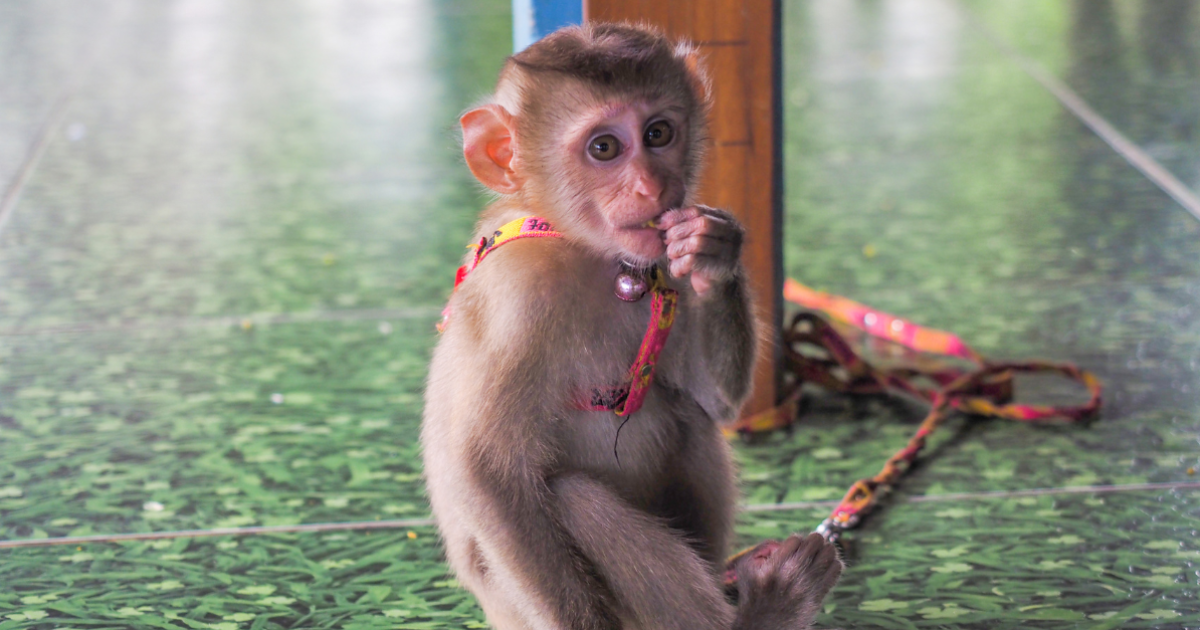
For the disciplined investor or the financially conscious individual, understanding the lifecycle of such an acquisition is a masterclass in the “Sunk Cost Fallacy.” This article examines the financial trajectory of primate ownership, analyzing what happens when the “baby” phase ends and the high-maintenance reality of a maturing liability begins.
The Initial Capital Outlay vs. Long-Term Operating Expenses
Acquiring a primate is rarely a simple transaction. It represents a significant commitment of liquid capital that frequently masks the true total cost of ownership (TCO). While the sticker price of a baby capuchin or macaque may range from $7,000 to $15,000, this is merely the “entry fee” into a high-overhead ecosystem.
The Cost of Specialized Infrastructure
A maturing monkey cannot reside in a standard domestic environment without significant capital expenditures (CapEx). As the animal grows, its physical requirements necessitate the construction of reinforced, climate-controlled enclosures. These are not standard retail items; they often require custom engineering to prevent escape and ensure safety. Depending on local zoning laws and safety standards, an owner may spend upwards of $20,000 on a secure habitat. These structures rarely add to the resale value of a residential property and often require costly removal should the “asset” be liquidated, representing a double-loss in real estate valuation.
Healthcare and Insurance Premia for Non-Standard Assets
Standard pet insurance does not cover primates. Owners must often self-insure or seek out specialized exotic animal policies with exorbitant monthly premiums. Furthermore, specialized veterinary care is a niche market with high barriers to entry. A routine check-up for a maturing primate often requires sedation, specialized blood work, and travel to a primate-specific practitioner, which can cost five times as much as standard domestic animal care. From a personal finance perspective, these recurring operating expenses (OpEx) can drain an emergency fund or divert capital from more traditional, high-yield investment vehicles.
The Depreciation of Utility and the Rise of Liability
In economic terms, a “pet” provides utility in the form of companionship or social status. For a baby monkey, this utility is at its peak. However, as the primate reaches sexual maturity (usually between ages 4 and 8), the asset undergoes a radical transformation. What was once a “social asset” becomes a “behavioral liability.”
Legal and Regulatory Financial Risks
As monkeys grow, their strength and unpredictability increase exponentially. This introduces a massive liability risk. If a mature primate causes injury to a third party, the owner faces potential litigation that can result in six-figure settlements. Furthermore, many homeowners’ insurance policies contain “vicious animal” or “exotic pet” exclusions. A single incident can lead to the immediate cancellation of a policy, forcing the homeowner into the high-risk insurance market, where premiums are significantly higher, or leaving their primary real estate asset completely unprotected.

The Sunk Cost Fallacy in Primate Ownership
Many owners, having invested tens of thousands of dollars into the “baby” phase, feel psychologically compelled to continue funding the asset’s upkeep even when the utility has vanished. This is a classic example of the sunk cost fallacy. The mature monkey may become aggressive, requiring the owner to pay for professional cleaning services, property repairs (as primates are notoriously destructive to home interiors), and even specialized behavioral consultants. At this stage, the owner is essentially throwing “good money after bad,” maintaining a liability that offers zero dividends and high psychological and financial stress.
Market Liquidity and the Problem of “Exit Strategies”
In any sound financial plan, an exit strategy is paramount. However, the secondary market for mature primates is virtually non-existent. Unlike a vintage car or a piece of fine art, a primate is a “living liability” that depreciates toward a zero—or even negative—valuation as it ages.
The High Cost of Relinquishment
When a “pet” monkey becomes too dangerous or expensive to maintain, the owner cannot simply “sell” the asset to recoup their initial investment. In most jurisdictions, the sale of adult primates is highly regulated or outright illegal. Consequently, the owner is faced with the “relinquishment fee.” Sanctuaries, which are often at capacity, frequently require a significant “endowment” or “surrender fee” to take in a mature monkey. These fees are designed to cover the primate’s care for the remainder of its life—which, for some species, can be 40 years. This final payment can range from $10,000 to $50,000, representing a massive final blow to the owner’s net worth.
Re-homing Fees and Sanctuary Contributions
Even if a sanctuary does not require a flat surrender fee, many ask for ongoing monthly contributions. For the former owner, this transforms a one-time bad investment into a perpetual monthly expense that provides no personal benefit. From a cash-flow management perspective, this is the worst-case scenario: a permanent line item in the budget that offers no tax advantages and no return, long after the “asset” has left the premises.
Comparative Opportunity Costs: Exotic Assets vs. Traditional Portfolios
To truly understand what happens financially when a pet baby monkey grows up, one must analyze the opportunity cost. If an individual takes the $15,000 acquisition cost, the $5,000 annual maintenance, and the $20,000 infrastructure investment and places it into a diversified index fund, the results are staggering.
Compound Interest vs. Compound Expenses
A $15,000 initial investment with a $500 monthly contribution (the average cost of primate upkeep) into a fund with a 7% annual return would grow to over $135,000 over 15 years. Conversely, the primate owner has spent that same $105,000 on an asset that has zero resale value and carries immense liability. The “delta” between the two paths is nearly a quarter of a million dollars in lost wealth.
The Impact on Professional Productivity
Finally, the “hidden” cost of a maturing primate is its impact on the owner’s earning potential. Mature primates require constant supervision and specialized care. This often limits the owner’s ability to travel for business, relocate for better career opportunities, or dedicate time to side hustles and wealth-building activities. In the world of business finance, time is the ultimate currency, and a mature primate is a massive “time-sink” that directly competes with an individual’s professional growth.
In conclusion, the journey from a baby monkey to a mature primate is a downward spiral of financial health. What begins as a novel purchase evolves into a high-risk, high-cost liability that can derail even a robust personal financial plan. The smart “money” move is to recognize that some assets are best enjoyed from a distance, where the costs of maintenance and the risks of maturity are someone else’s bottom-line concern.
aViewFromTheCave is a participant in the Amazon Services LLC Associates Program, an affiliate advertising program designed to provide a means for sites to earn advertising fees by advertising and linking to Amazon.com. Amazon, the Amazon logo, AmazonSupply, and the AmazonSupply logo are trademarks of Amazon.com, Inc. or its affiliates. As an Amazon Associate we earn affiliate commissions from qualifying purchases.