
For decades, the public perception of a landfill has been that of a “dump”—a simple, stagnant hole in the ground where refuse is discarded and forgotten. However, the modern reality of waste management has undergone a profound technological revolution. As global waste production continues to rise, the industry has pivoted toward high-tech solutions to manage environmental risks, optimize space, and even extract value from what was once considered useless. Today’s landfills are complex engineering feats, integrated with sophisticated software, IoT sensors, and advanced chemical engineering.
In this exploration, we examine the technological infrastructure that defines what happens to landfill waste, moving from the point of entry to the innovative systems that convert decomposition into a digital and energetic resource.

Smart Sorting and Autonomous Material Recovery
The journey of landfill waste begins long before it is compacted into the earth. The most significant technological leap in recent years has occurred at Material Recovery Facilities (MRFs), which serve as the “brain” of the waste management ecosystem. Before waste is relegated to a permanent cell, advanced technology attempts to rescue any value that remains.
AI and Machine Learning in Material Recovery Facilities
Artificial Intelligence (AI) has become the cornerstone of modern waste processing. Traditional sorting relied on human labor or rudimentary mechanical sieves, both of which are prone to error and inefficiency. Today, deep-learning algorithms are trained to identify thousands of different types of materials—ranging from specific grades of plastic (PET vs. HDPE) to various alloys of metal.
These AI systems utilize high-speed cameras and hyperspectral imaging to “see” the chemical composition of items moving on a conveyor belt. When the software identifies a recyclable object that has been misplaced in the waste stream, it triggers a response. This level of precision ensures that the volume of waste actually reaching the landfill is minimized, while the purity of recovered materials is maximized for the circular economy.
Robotics and Optical Sorting Technology
Once the AI identifies a material, the physical extraction is handled by high-speed robotics. Delta robots, equipped with vacuum or mechanical grippers, can perform up to 80 “picks” per minute—far surpassing human capability. Furthermore, optical sorters use near-infrared (NIR) sensors to detect the molecular signature of plastics. When a specific resin is detected, a precise blast of compressed air “kicks” the item into a separate bin. This integration of software and pneumatic hardware represents a significant technological barrier against the unnecessary landfilling of recoverable resources.
Engineering the “Living” Landfill: Methane Capture and Waste-to-Energy
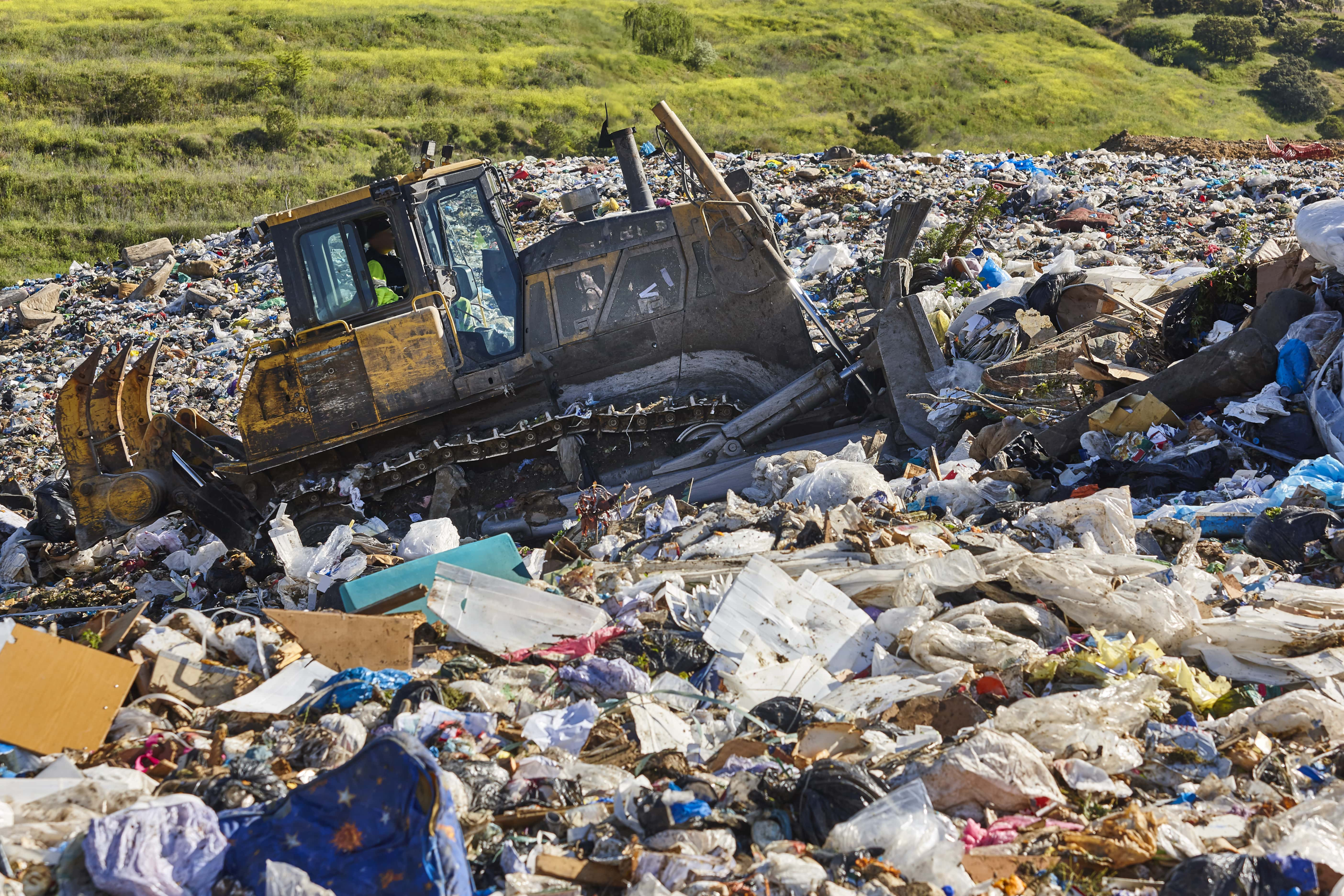
Once waste is deposited into a landfill, it is not simply left to rot. Modern landfills are designed as “bioreactors.” In this tech-driven environment, the goal is to control the biological and chemical processes of decomposition to prevent environmental contamination and generate renewable energy.
Bio-Reactor Landfills and Enhanced Decomposition
A bioreactor landfill utilizes liquid and air injection to accelerate the decomposition of organic waste. This process is monitored by complex software systems that track temperature, moisture content, and acidity. By maintaining the “health” of the landfill cell, engineers can speed up the stabilization of the waste from decades to years.
This is not just about saving space; it is about controlling the output. The primary byproduct of anaerobic decomposition is Landfill Gas (LFG), which is roughly 50% methane. Methane is a potent greenhouse gas, but in a tech-integrated landfill, it is a valuable fuel source. Through a network of perforated pipes embedded within the waste, vacuum systems extract the gas before it can escape into the atmosphere.
Landfill Gas-to-Energy (LFGTE) Systems
The technology required to process landfill gas is extensive. Once extracted, the gas must be “scrubbed” using specialized filtration systems to remove moisture, siloxanes, and sulfur compounds that could damage engines. The refined methane is then routed to on-site power plants.
These plants use internal combustion engines or gas turbines to generate electricity, which is then fed back into the local power grid. In more advanced setups, the gas is refined further into Renewable Natural Gas (RNG), which can be used as vehicle fuel. This transition from “waste” to “wattage” is managed by Supervisory Control and Data Acquisition (SCADA) systems, allowing operators to monitor gas flow and energy output in real-time from remote locations.
Digital Monitoring and Environmental Security
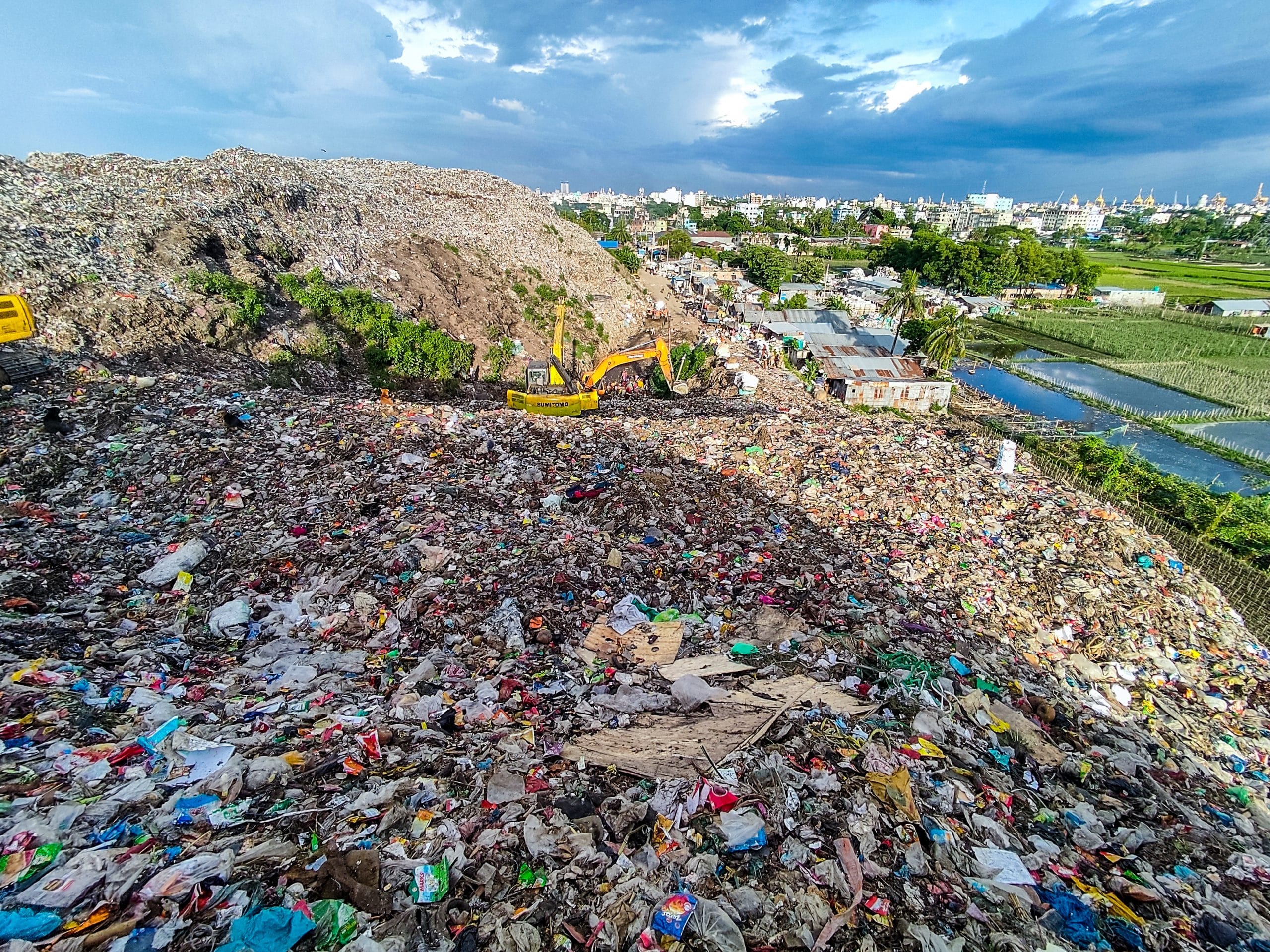
One of the greatest technological challenges in landfill management is the prevention of leachate—a toxic “trash juice” formed when rainwater filters through waste. Protecting the surrounding ecosystem requires a multi-layered approach involving advanced materials science and digital surveillance.
IoT Sensor Networks and Leachate Management
Modern landfills are lined with high-density polyethylene (HDPE) membranes and geosynthetic clay liners. However, the tech doesn’t stop at the physical barrier. Engineers now embed Internet of Things (IoT) sensors throughout the liner system to detect leaks or pressure changes.
These sensors provide a constant stream of data to environmental management software. If a leak is detected, the system can pinpoint the location with surgical precision, allowing for immediate remediation. Furthermore, leachate collection systems use automated pumps and sensors to transport the liquid to on-site treatment facilities. Here, the technology mirrors that of an advanced wastewater treatment plant, utilizing reverse osmosis and biological filtration to turn toxic runoff into water clean enough for industrial reuse or safe discharge.
Drone Surveys and Geospatial Mapping
Topography is a critical data point for landfill operators. In the past, surveying a landfill was a slow, manual process. Today, waste management companies deploy drones equipped with LiDAR (Light Detection and Ranging) and photogrammetry tech.
These drones fly autonomous patterns over the landfill to create 3D digital twins of the site. This geospatial data allows engineers to calculate exactly how much “airspace” remains and how the waste is settling. By analyzing these 3D models over time, software can predict future capacity needs and identify potential structural instabilities in the waste piles, ensuring the site remains safe and efficient.
The Future of Waste: Plasma Gasification and Circular Tech
As we look toward the future, the technology surrounding landfill waste is moving toward “zero-landfill” objectives. Emerging technologies are challenging the very idea that waste needs to be buried at all.
Plasma Arc Technology
Perhaps the most “sci-fi” advancement in waste tech is plasma gasification. This process uses a plasma torch to create temperatures exceeding 5,000 degrees Celsius. At these temperatures, waste does not burn; instead, its molecular bonds break down.
Organic matter is converted into syngas (a clean-burning fuel), while inorganic matter (like glass and metal) is melted into a glass-like slag that is non-toxic and can be used in construction. While the energy requirements for plasma gasification are currently high, advancements in power efficiency and modular reactor design are making this a viable alternative to traditional landfilling for hazardous or non-recyclable materials.
Integrating Landfill Data into the Circular Economy
The ultimate technological goal is the integration of waste data into the broader manufacturing supply chain. By using blockchain and RFID tracking, companies are beginning to track the “life” of a product from manufacture to disposal.
If a landfill operator knows exactly what materials are entering their facility based on digital manifests, they can optimize their sorting algorithms and gas extraction strategies accordingly. This data-driven approach turns the landfill from a “final destination” into a temporary storage and processing node within a larger, tech-enabled circular economy.
Conclusion
The question of “what happens to landfill waste” is no longer answered by simple burial. It is answered by a sophisticated array of AI-driven sorting, bioreactor engineering, IoT monitoring, and energy conversion. As technology continues to evolve, the line between “waste” and “resource” becomes increasingly blurred. Through the lens of modern tech, the landfill has transformed into a data-rich, energy-producing industrial facility that plays a vital role in our digital and environmental future. While we strive for a world with less waste, the technology currently managing our refuse ensures that what we do discard is handled with the highest degree of precision, safety, and utility.
aViewFromTheCave is a participant in the Amazon Services LLC Associates Program, an affiliate advertising program designed to provide a means for sites to earn advertising fees by advertising and linking to Amazon.com. Amazon, the Amazon logo, AmazonSupply, and the AmazonSupply logo are trademarks of Amazon.com, Inc. or its affiliates. As an Amazon Associate we earn affiliate commissions from qualifying purchases.