
In the landscape of modern narrative theory, few figures provide as compelling a study in brand architecture and personal identity as Griffith, the central antagonist—and former protagonist—of Kentaro Miura’s Berserk. While casual observers might see a story of swords and sorcery, a strategic brand analysis reveals a masterclass in the lifecycle of an entity: from the high-growth startup phase of the Band of the Hawk to the catastrophic brand collapse of his imprisonment, and finally, his emergence as a monopolistic global entity.
To understand what happens to Griffith is to understand the mechanics of power, the necessity of a curated image, and the terrifying efficiency of a brand that refuses to fail, regardless of the ethical cost.
The Band of the Hawk: Building a High-Growth Startup Brand
Griffith’s initial rise is a textbook example of “Blue Ocean Strategy.” In a market saturated by gritty, unrefined mercenary groups, Griffith introduced a brand that was synonymous with elegance, tactical brilliance, and an aspirational “Golden Age.” He did not just lead a militia; he cultivated an elite organization with a distinct corporate identity.
Identifying a Market Gap: The Mercenary Economy
Before Griffith, mercenary groups were viewed as a commodity—interchangeable, dirty, and lacking in longevity. Griffith identified a gap for a “premium” mercenary service. By focusing on aesthetic discipline and high-level strategic consulting for the Kingdom of Midland, Griffith moved the Band of the Hawk from a “low-cost provider” to a “high-value partner.” His brand was built on the promise of the impossible: that a group of commoners could achieve the status of nobility through sheer meritocratic excellence.
Charismatic Leadership as Brand Equity
The primary asset of the Band of the Hawk was not its martial prowess, but Griffith’s personal brand equity. He functioned as the “Visionary Founder,” much like a Steve Jobs or an Elon Musk. His subordinates—and even his enemies—were sold on his dream. This “cult of personality” ensured total stakeholder alignment. However, this also created a single point of failure: the brand was so inextricably linked to Griffith’s physical and mental state that any tarnish on his image would lead to a systemic collapse.
The Brand Collapse: Crisis Management and the “Eclipse” Pivot
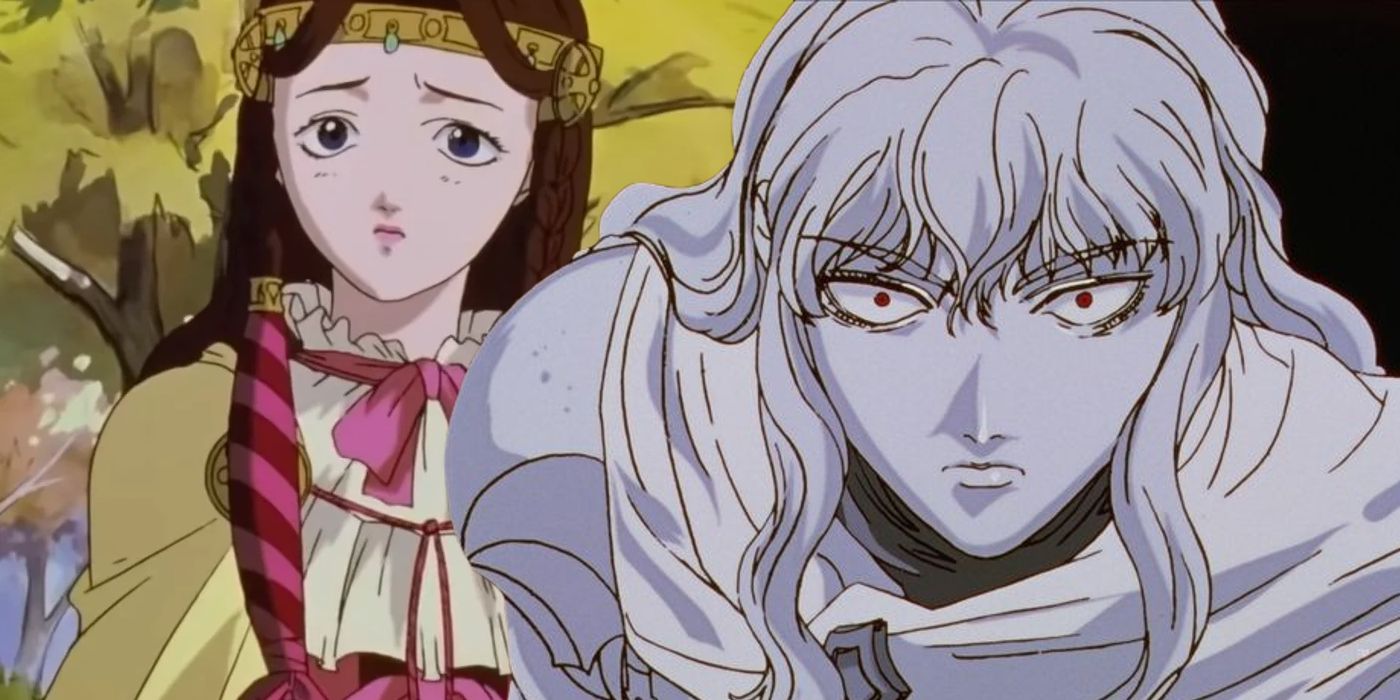
Every major brand eventually faces a crisis. For Griffith, this occurred when his personal life and professional ambitions collided, leading to his impulsive decision with Princess Charlotte and his subsequent imprisonment. What followed was a total dissolution of brand value.
When Personal Reputation Fails
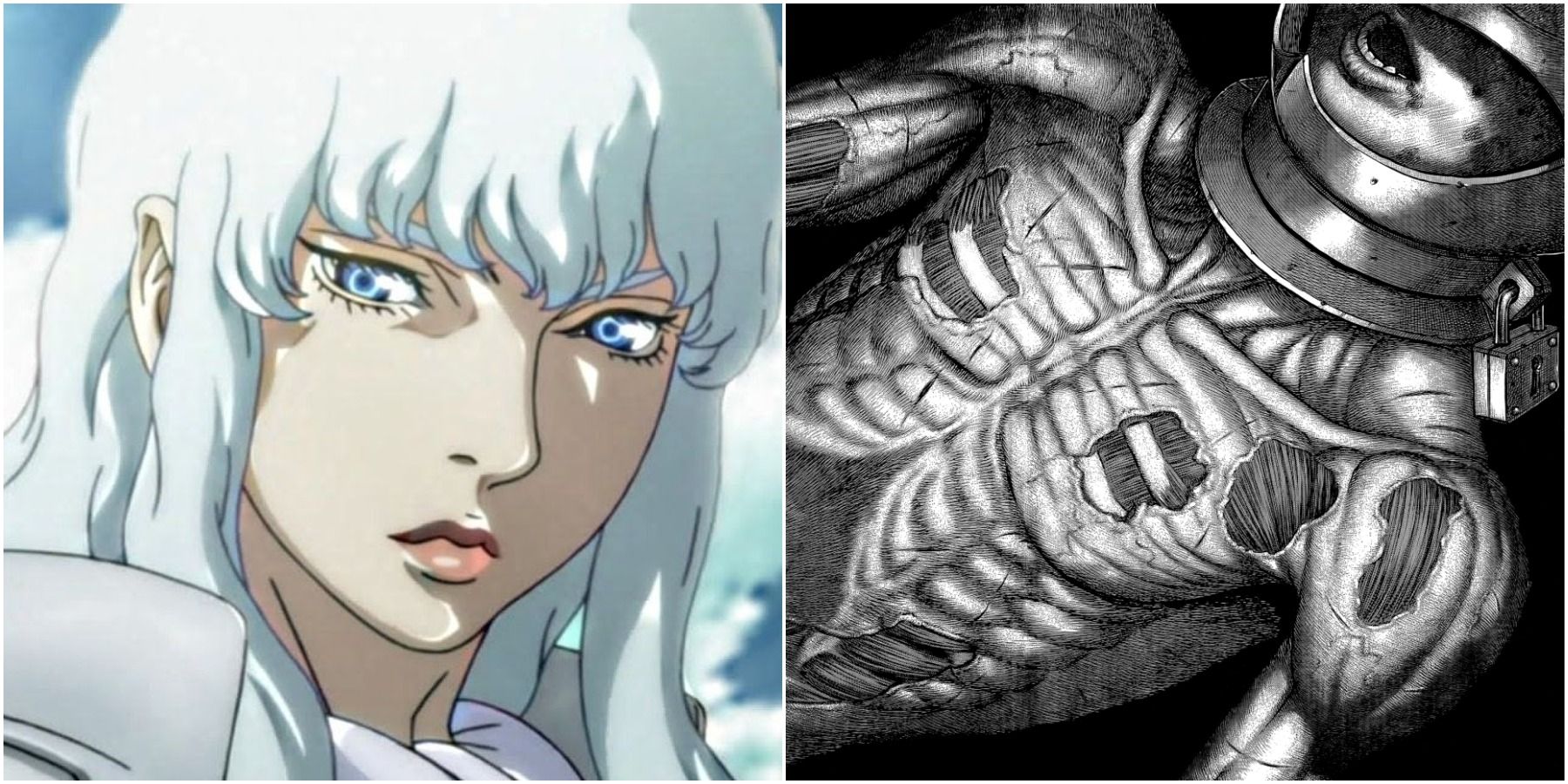
During his year of torture, the Griffith brand ceased to exist. He was stripped of his voice, his beauty, and his ability to lead—the three pillars of his identity. This represents the ultimate “Reputational Risk.” Without the founder’s guiding hand, the Band of the Hawk became a fragmented organization, surviving on legacy but lacking a future roadmap. This period illustrates a vital lesson in brand strategy: when an organization is built entirely on the charisma of a leader rather than institutional systems, it cannot survive the leader’s fall.
The Cost of a Radical Rebrand
What happens to Griffith during the “Eclipse” is the most violent “pivot” in the history of storytelling. Realizing that his original brand (the noble savior) was unsalvageable, Griffith opted for a total rebranding. In marketing terms, this was a “scorched earth” strategy. He liquidated his existing assets (his loyal soldiers) to acquire the capital (divine power) necessary to launch his new venture: Femto. This highlights the “Sunk Cost Fallacy.” Griffith refused to let his past investments hinder his ultimate goal, choosing instead to destroy his previous identity to facilitate the birth of a more powerful, albeit darker, entity.

Femto and Falconia: The Birth of a Global Monopolistic Identity
Following his transformation, Griffith’s trajectory moves from personal branding to the creation of a global conglomerate. No longer a mere mercenary or even a nobleman, he positions himself as a literal and figurative “God-Brand.”
Aesthetic Overhaul: From Golden Hawk to Winged Savior
The transition from Griffith to Femto and eventually back to a “Reborn Griffith” shows a sophisticated understanding of visual identity. By returning in a form that mirrored his original, untarnished image—but enhanced with supernatural “perfection”—he practiced “Brand Restoration.” He utilized the collective nostalgia of the people of Midland to erase the memory of his failure. His new aesthetic was designed to trigger awe and submission, moving the brand from “mercenary” to “messianic.”
Creating Utopian Brand Loyalty
The establishment of Falconia represents the ultimate goal of any corporate identity: the creation of an all-encompassing ecosystem. Much like tech giants that create “walled gardens” (Apple, Google, etc.), Griffith created a city that offered the only protection in a world overrun by monsters. This is “Market Capture” at its peak. By providing a solution to a problem he arguably helped create (the merging of the physical and astral realms), he ensured that his brand became a necessity for survival. In Falconia, brand loyalty is not optional; it is the only path to safety.
Lessons for Modern Marketers: The Ethics of Ambition
The story of Griffith serves as a cautionary tale for those in the fields of brand strategy and corporate identity. It asks a fundamental question: what is the limit of brand growth?
The Fragility of a Cult of Personality
Griffith’s greatest strength was also his greatest weakness. Because he was the brand, his personal heartbreak and eventual betrayal caused the death of everyone who believed in him. For modern brands, this underscores the importance of “Distributed Leadership.” A brand must be able to outlive its founder. If the mission statement is solely “follow the leader,” the organization is one scandal away from total annihilation.
Balancing Growth with Brand Integrity
In his quest for a “kingdom,” Griffith sacrificed every ethical boundary. While his “market share” (the world) is now absolute, the foundation of his brand is built on a lie and a blood sacrifice. In the long term, brands built on deception face inevitable “Brand Erosion.” While Griffith currently enjoys a monopoly, the undercurrents of dissent—represented by Guts and the remnants of those he wronged—serve as a reminder that no brand is too big to fail if its core values are hollow.
Conclusion: The Ultimate Monopoly
Ultimately, what happens to Griffith is a transition from human ambition to systemic dominance. He successfully navigated the most difficult transitions any entity can face: startup growth, catastrophic failure, a radical pivot, and eventual global dominance. He is the “Perfect Brand”—beautiful, efficient, and undisputed.
However, Griffith’s success comes with a caveat that every brand strategist must consider. By becoming everything to everyone, he has lost his humanity. He has become a corporate monolith—a “Falcon of Light” that provides safety but demands total conformity. In the world of Berserk, Griffith has achieved the ultimate ROI, but at the cost of the very soul that once made his dream worth following. For the modern brand strategist, the lesson is clear: identity is not just about the image you project or the power you amass; it is about the integrity of the promise you keep to your audience. Griffith kept his promise to get his kingdom, but in doing so, he destroyed the world that was supposed to inhabit it.
aViewFromTheCave is a participant in the Amazon Services LLC Associates Program, an affiliate advertising program designed to provide a means for sites to earn advertising fees by advertising and linking to Amazon.com. Amazon, the Amazon logo, AmazonSupply, and the AmazonSupply logo are trademarks of Amazon.com, Inc. or its affiliates. As an Amazon Associate we earn affiliate commissions from qualifying purchases.