
At the very heart of everything we see, touch, and experience lies a constant, often invisible, ballet of transformation: chemical reactions. From the simplest act of lighting a match to the complex biological processes that sustain life, chemical reactions are ceaselessly at play, reshaping the world atom by atom. But what precisely transifies at this fundamental level? What kind of intricate dance do atoms perform when chemicals interact, and how do these microscopic events ripple outwards to impact technology, brands, and even our global economy?
To understand chemical reactions is to peer into the atomic realm, where established bonds are meticulously broken, and new, often entirely different, connections are forged. It’s a universe governed by precise rules of energy, stability, and rearrangement, where atoms are never truly lost or gained, but merely reorganized. This exploration will delve into the core mechanics of atomic transformation, examine how cutting-edge technology allows us to observe and predict these events, and ultimately connect these atomic insights to the broader spheres of innovation, market branding, and financial investment.
The Fundamental Dance of Atoms: Breaking and Making Bonds
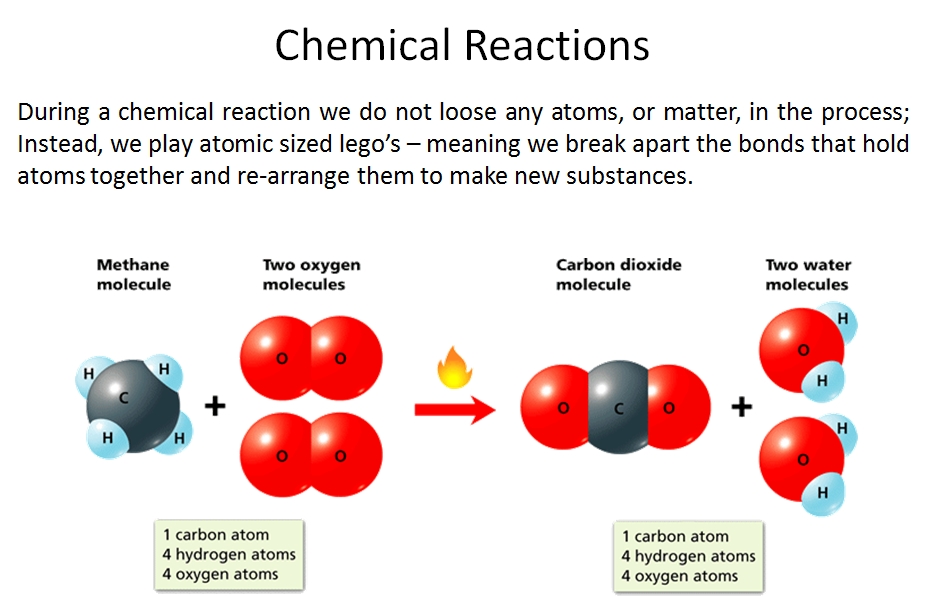
A chemical reaction, at its most fundamental, is not about the creation or destruction of atoms, but rather their meticulous rearrangement. Imagine atoms as Lego bricks. You don’t destroy the bricks when you dismantle one structure and build another; you simply reconfigure them. In the atomic world, these “bricks” are held together by chemical bonds—forces of attraction that dictate how atoms share or exchange electrons to achieve a more stable state. When a chemical reaction occurs, these existing bonds are broken, and new bonds are formed, leading to the creation of entirely new substances with different properties.
Consider a simple reaction: hydrogen gas (H₂) reacting with oxygen gas (O₂) to form water (H₂O). Before the reaction, two hydrogen atoms are bonded together, and two oxygen atoms are bonded together. During the reaction, energy must be supplied to break these existing H-H and O=O bonds. Once broken, the individual hydrogen and oxygen atoms are momentarily free to rearrange. They then seek new, more stable configurations, forming new H-O bonds to create water molecules. This process exemplifies the core principle: reactants transform into products through the breaking and forming of chemical bonds.
This atomic re-shuffle is far from random. It’s driven by the quest for lower energy states. Atoms, like all matter, tend towards maximum stability, which often means forming bonds that release energy or require less energy to maintain. The specific ways atoms interact—their electron configurations, electronegativity, and spatial arrangement—determine which bonds can form and how stable the resulting molecules will be. Understanding this intricate dance of breaking and making bonds is the bedrock upon which all chemical understanding is built, enabling us to predict reaction outcomes and design novel materials.
The Energy Landscape: Activation and Transformation
Every chemical reaction unfolds across an energy landscape, a conceptual terrain that dictates the feasibility and speed of atomic transformations. For existing chemical bonds to break, energy must typically be supplied. This initial energy input is known as the activation energy, and it represents a barrier that reactants must overcome before they can rearrange into products. Think of it like pushing a ball over a hill; it requires an initial push (activation energy) before it can roll down the other side (forming products).
The source of this activation energy can vary widely, from heat and light to electrical energy or even mechanical force. Once this barrier is surmounted, the atoms enter a high-energy, unstable transition state, where old bonds are partially broken and new ones are partially formed. This fleeting moment is crucial, as it’s the point of no return where the atoms commit to their new configuration.
After passing the transition state, the atoms rearrange into the more stable product molecules, often releasing energy in the process. Reactions that release energy are called exothermic reactions (e.g., combustion), and they result in products that are more stable and have lower total energy than the reactants. Conversely, reactions that absorb energy from their surroundings are endothermic reactions (e.g., photosynthesis), resulting in products with higher energy than the reactants. The difference in energy between reactants and products determines whether a reaction is exothermic or endothermic, and this energy change dictates the overall stability of the system, driving the continuous atomic transformations that define our physical world.
Conservation of Mass: The Unbreakable Rule
One of the most fundamental and inviolable principles governing chemical reactions is the Law of Conservation of Mass. This law, first articulated by Antoine Lavoisier, states that mass in an isolated system is neither created nor destroyed by chemical reactions or physical transformations. In simpler terms, during any chemical reaction, the total mass of the reactants must exactly equal the total mass of the products.
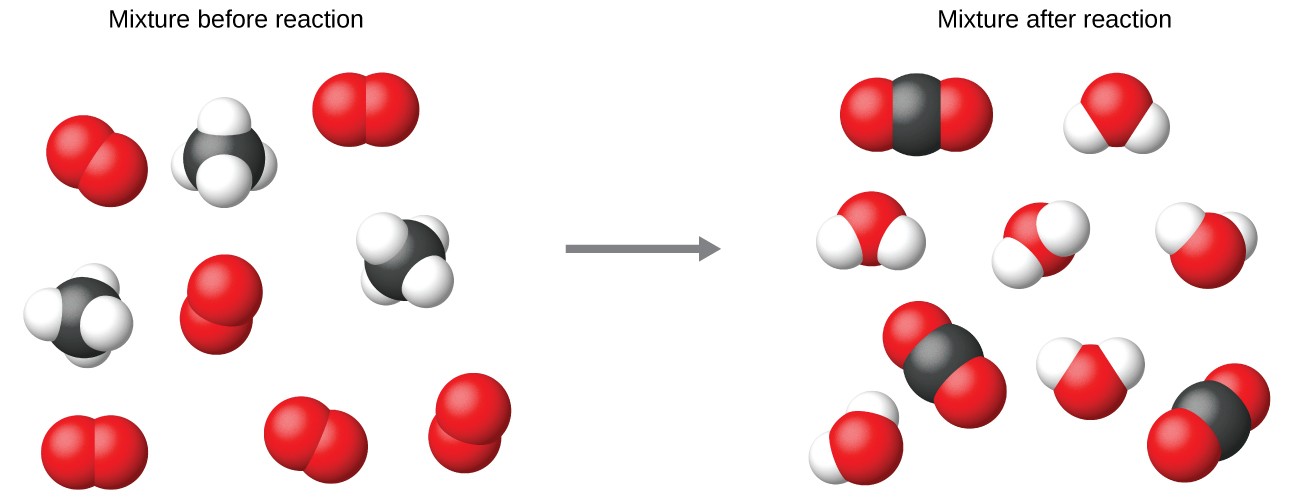
What this means at the atomic level is profound: atoms themselves are neither created nor destroyed during a chemical reaction. Instead, they are merely rearranged. If you start a reaction with ten carbon atoms, twenty hydrogen atoms, and five oxygen atoms, you will end the reaction with exactly the same number of carbon, hydrogen, and oxygen atoms, albeit now bonded together in different molecular structures. This principle is why chemical equations must always be balanced; the number of atoms of each element on the reactant side must precisely match the number of atoms of that same element on the product side.
The conservation of mass is not just a theoretical concept; it has immense practical implications. It forms the basis for stoichiometry, allowing chemists to accurately predict the amounts of reactants needed and products formed in any given reaction. This predictability is critical in industrial processes, pharmaceutical manufacturing, and environmental chemistry, ensuring efficiency, minimizing waste, and designing safe and effective processes. Without this unbreakable rule, our understanding of chemical reactions would be chaotic, and the precise engineering of chemical processes—which underpins countless modern technologies—would be impossible.
Catalysts and Conditions: Orchestrating Atomic Transformations
While atoms have an inherent drive towards stability, the path they take and the speed at which they transform can be dramatically influenced by external factors. Chemical reactions don’t just happen spontaneously at any rate; they are often orchestrated by specific conditions and molecular facilitators. Understanding how to manipulate these factors is key to controlling chemical processes, whether it’s speeding up industrial production, synthesizing new drugs, or harnessing energy.
Beyond the inherent properties of the atoms themselves, external conditions like temperature, pressure, and concentration play crucial roles in dictating the frequency and effectiveness of atomic collisions, thereby influencing reaction rates. However, one of the most elegant and powerful tools in a chemist’s arsenal is the catalyst. Catalysts are substances that can accelerate a reaction without being consumed in the process, offering alternative pathways for atomic rearrangement that require less activation energy. The ability to precisely control these variables allows scientists and engineers to fine-tune chemical reactions, optimizing outcomes for a vast array of applications, from environmentally friendly industrial processes to the very enzymes that govern our biology.
Speeding Up the Show: The Role of Catalysts
Imagine a mountain pass with two routes to cross. One is long, steep, and arduous, requiring immense energy. The other is a well-maintained tunnel, much shorter and easier to traverse. In the world of chemical reactions, a catalyst is like that tunnel. It provides an alternative reaction pathway with a significantly lower activation energy, allowing the atoms to rearrange into products much more rapidly, without itself being permanently altered or consumed in the overall reaction.
Catalysts do not change the fundamental thermodynamics of a reaction—they don’t change whether a reaction is exothermic or endothermic, nor do they alter the final products. What they do is enable the reaction to proceed faster, often by stabilizing the transition state or bringing reactant molecules into closer proximity and optimal orientation. For example, enzymes in our bodies are biological catalysts that allow complex biochemical reactions to occur rapidly at body temperature, which would otherwise take an impractically long time. Industrially, catalysts are indispensable in processes like ammonia synthesis (Haber-Bosch process), petroleum refining, and polymer production, vastly increasing efficiency and reducing energy costs.
The precise mechanism of catalytic action varies. Heterogeneous catalysts, often solid surfaces, provide sites where gaseous or liquid reactants can adsorb, react, and then desorb. Homogeneous catalysts operate in the same phase as the reactants, forming temporary intermediates. The design and discovery of efficient catalysts are at the forefront of chemical research, driven by the desire for sustainable processes, energy efficiency, and the synthesis of complex molecules with high selectivity. This pursuit highlights how a deep understanding of atomic interactions can lead to profound economic and environmental benefits.
Environmental Factors: Temperature, Pressure, and Concentration
Beyond catalysts, several environmental factors profoundly influence the rate and direction of atomic transformations during a chemical reaction. These factors fundamentally alter how often and how effectively reactant atoms or molecules collide, which is a prerequisite for bond breaking and formation.
Temperature is perhaps the most intuitive factor. Increasing the temperature of a system increases the kinetic energy of the atoms and molecules within it. This means they move faster and collide more frequently and, crucially, with greater energy. More energetic collisions are more likely to overcome the activation energy barrier, leading to a faster reaction rate. Conversely, lowering the temperature slows down reactions, which is why refrigeration preserves food by slowing down spoilage reactions.
Pressure primarily affects reactions involving gases. Increasing the pressure of a gaseous system means that the gas molecules are forced into a smaller volume. This increases their concentration and, consequently, the frequency of collisions between them. More frequent collisions translate to a higher likelihood of successful reactions, thereby increasing the reaction rate. For instance, in industrial processes involving gaseous reactants, high pressure is often used to accelerate production.
Concentration refers to the amount of a substance dissolved in a given volume or the number of molecules in a particular space. For reactions in solutions or gases, increasing the concentration of reactants means there are more reactant molecules available to collide with each other. This directly leads to a higher frequency of collisions and, therefore, a faster reaction rate. Imagine a crowded room versus an empty one: you’re more likely to bump into someone in the crowded room. In chemistry, a higher concentration of reactants similarly increases the chances of effective atomic interactions.
Mastering the manipulation of these environmental factors is crucial for process optimization in virtually every chemical industry. By precisely controlling temperature, pressure, and concentration, chemists and engineers can fine-tune reaction rates, improve yields, and ensure the safety and economic viability of chemical transformations on both laboratory and industrial scales.
Observing the Unseen: Technology’s Lens on Atomic Action
For centuries, the atomic world was a realm of theoretical deduction, inferred through macroscopic observations. While brilliant minds formulated foundational laws, directly witnessing atoms rearrange during a chemical reaction remained an elusive dream. Today, thanks to breathtaking advances in technology, we possess an unprecedented ability to probe, visualize, and even predict atomic behavior, transforming chemistry from an empirical science into one increasingly guided by direct observation and computational foresight. This technological revolution has not only deepened our scientific understanding but has also unleashed immense potential across various industries, pushing the boundaries of what is possible in materials science, medicine, and energy.
From powerful electron microscopes that can image individual atoms to sophisticated software that simulates molecular dynamics in real-time, technology now provides the ‘eyes’ and ‘brains’ for understanding the unseen dance of chemical reactions. These tools are indispensable for modern chemical research, enabling the design of novel catalysts, the development of new drug compounds, and the optimization of industrial processes, thereby driving innovation that permeates both the technology and branding sectors.
From Microscopes to Molecular Simulations: Visualizing the Atomic Realm
The journey from inferring atomic behavior to directly observing it has been a monumental leap, powered by innovative technological advancements. Early chemists could only observe the macroscopic results of reactions, but modern tools allow us to zoom in on the atomic scale, providing invaluable insights into the mechanisms of chemical transformations.
Electron microscopy, particularly Scanning Tunneling Microscopy (STM) and Transmission Electron Microscopy (TEM), has revolutionized our ability to “see” atoms. STM, for instance, can resolve individual atoms on a surface, allowing scientists to literally image the atomic arrangement before, during, and after certain surface reactions. This direct visualization provides empirical evidence for theoretical models of bond breaking and formation, offering unprecedented detail into catalytic processes or the growth of nanomaterials.
Complementing direct observation, molecular simulations and computational chemistry have emerged as powerful predictive and analytical tools. Software platforms can model the behavior of hundreds or thousands of atoms interacting over time, calculating bond lengths, energy changes, and reaction pathways based on quantum mechanics and classical physics. These simulations allow researchers to “run” experiments virtually, exploring countless variables and scenarios that would be impossible or prohibitively expensive in a physical lab. They can predict how specific atoms will rearrange under different conditions, identify potential transition states, and even design new molecules with desired properties. For example, in drug discovery, molecular docking simulations can predict how a potential drug molecule will bind to a target protein, dramatically accelerating the lead optimization process. This fusion of visualization and simulation transforms our understanding, making the invisible world of atomic reactions tangible and predictable.
AI and Machine Learning: Predicting the Future of Reactions
The vast datasets generated by experimental chemistry and molecular simulations present a perfect landscape for the application of Artificial Intelligence (AI) and Machine Learning (ML). These cutting-edge computational techniques are rapidly transforming the field, moving beyond traditional predictive models to truly anticipate the outcomes and optimize the pathways of chemical reactions, marking a significant convergence of technology and chemistry.
AI algorithms, particularly deep learning models, can be trained on enormous databases of known chemical reactions, molecular structures, and experimental conditions. By analyzing these data points, AI can identify subtle patterns and correlations that are imperceptible to human researchers. This allows AI to perform tasks such as:
- Predicting Reaction Outcomes: Given a set of reactants and conditions, AI can predict the most likely products and their yields with remarkable accuracy, significantly reducing the need for trial-and-error experimentation.
- Optimizing Reaction Conditions: AI can suggest optimal temperatures, pressures, solvent systems, and catalyst choices to maximize product yield, minimize byproducts, or improve energy efficiency.
- Designing Novel Molecules: Beyond prediction, generative AI models can design entirely new molecules with specific desired properties—whether it’s a stronger material, a more potent drug, or a more efficient catalyst. This capability is revolutionizing drug discovery and materials science.
- Accelerating Catalyst Discovery: ML models can screen thousands of potential catalyst candidates virtually, identifying the most promising ones for experimental validation, thereby drastically shortening development cycles.
- Automated Synthesis: Integrating AI with robotic platforms is leading to the development of “self-driving labs” where AI designs experiments, robots execute them, and AI then analyzes the results to refine subsequent experiments, creating an autonomous research cycle.
The integration of AI and ML into chemistry research is not merely an incremental improvement; it represents a paradigm shift. It empowers chemists to explore chemical space with unprecedented speed and precision, unlocking possibilities for innovation that were previously unimaginable. This technological leap directly impacts the speed of product development, the efficiency of industrial processes, and the strategic direction of companies built on chemical innovation, underscoring its profound influence on the tech and brand landscapes.
Beyond the Beaker: Chemical Reactions in Innovation and Industry
The understanding of what happens to atoms during a chemical reaction extends far beyond the confines of a laboratory beaker; it is the fundamental force driving innovation across virtually every industry. From the development of advanced materials and life-saving pharmaceuticals to the energy solutions powering our world, the purposeful manipulation of atomic transformations forms the bedrock of progress. This profound connection between atomic-level phenomena and global-scale impact underscores the immense value inherent in chemical knowledge, influencing everything from the strategic branding of products to the financial decisions of investors.
In an economy increasingly driven by technological advancement, a deep comprehension of chemistry allows companies to differentiate themselves, build strong reputations, and generate substantial wealth. The ability to create new molecules, optimize synthesis processes, or develop more sustainable chemical solutions translates directly into market advantage and investor confidence. Thus, the invisible dance of atoms during a reaction is not just a scientific curiosity, but a powerful engine of economic growth and brand development.
The Brand of Innovation: From Molecules to Market Value
In today’s competitive landscape, a brand’s success often hinges on its ability to innovate and deliver superior products. At the core of many groundbreaking innovations are chemical reactions, meticulously understood and controlled. From the advanced polymers that make smartphones lighter and more durable, to the active pharmaceutical ingredients that save lives, the journey from understanding atomic transformations to creating market value is direct and powerful.
Consider the pharmaceutical industry. A new drug’s brand identity is built on its efficacy, safety, and unique mechanism of action—all derived from precise chemical reactions designed to interact with biological systems at the molecular level. A company’s ability to consistently develop novel compounds through sophisticated chemical synthesis reinforces its reputation as an innovator, attracting both talent and investment. The “science-backed” claim in health and beauty products, for example, directly leverages consumer trust in chemistry to enhance brand perception. Companies like BASF (“The Chemical Company”) or 3M (known for its innovative materials) have built their entire corporate identity and global reputation on their mastery of chemical processes and the subsequent development of diverse, high-value products.
Furthermore, the environmental impact of chemical processes is becoming an increasingly critical aspect of brand strategy. Brands that can demonstrate sustainable chemical synthesis, the use of green chemistry principles, or the development of recyclable materials derived from innovative reactions gain significant favor with environmentally conscious consumers and regulators. This focus on sustainability, driven by chemical ingenuity, enhances corporate social responsibility and bolsters brand equity. In essence, a deep understanding of what happens to atoms during a reaction provides the literal building blocks for products that define markets, shape consumer loyalty, and ultimately create lasting brand value.
The Economic Engine: Investing in Molecular Marvels
The chemical industry is a colossal economic engine, directly contributing trillions to global GDP and underpinning virtually every other sector, from agriculture and manufacturing to healthcare and technology. The continuous research and development into chemical reactions and atomic transformations represent a massive investment opportunity, as breakthroughs at the molecular level translate directly into profitable ventures and long-term economic growth.
For investors, understanding the future of chemical reactions means understanding the future of industries. Investing in companies at the forefront of chemical innovation—be it in advanced materials, specialized chemicals, biotechnology, or sustainable energy solutions—can yield significant returns. For example, companies developing new battery chemistries (lithium-ion, solid-state) are leveraging insights into atomic reactions to create more efficient energy storage, a critical component for electric vehicles and renewable energy grids. These companies attract vast sums of capital, driving stock market performance and creating wealth.
Moreover, the financial implications extend to operational efficiency and competitive advantage. Companies that can optimize their chemical processes through better understanding of atomic interactions—reducing waste, lowering energy consumption, or finding cheaper raw materials—gain a substantial cost advantage. This directly impacts their profitability and market share. The economic landscape is also shaped by intellectual property: patents on novel chemical compounds, reaction pathways, or catalysts protect billions of dollars in R&D investment and secure market exclusivity, making them highly valuable assets.
From personal finance perspectives, understanding the fundamental chemical shifts can inform investment decisions in sectors poised for growth due to chemical innovation. For businesses, mastering chemical engineering is not just about science; it’s about financial sustainability, market leadership, and building a resilient economic future. The seemingly small, invisible rearrangements of atoms during a chemical reaction are, in fact, the engines that power vast economic landscapes and shape the prosperity of nations and individuals alike.

Conclusion
The question “What happens to atoms during a chemical reaction?” unlocks a universe of intricate processes that underpin every aspect of our existence. From the delicate dance of breaking and forming bonds, governed by the relentless pursuit of stability and the immutable law of conservation of mass, to the orchestrated precision achieved through catalysts and environmental controls, the atomic realm is a theater of constant, vital transformation.
As we’ve explored, our ability to observe, predict, and manipulate these atomic events has been exponentially amplified by cutting-edge technology. Electron microscopy brings the unseen into focus, while molecular simulations provide virtual playgrounds for atomic exploration. Most significantly, the advent of AI and machine learning is not just assisting but actively guiding the discovery and optimization of chemical reactions, promising a future where new materials, medicines, and energy solutions can be engineered with unprecedented speed and accuracy.
Beyond the laboratory, the profound implications of understanding chemical reactions resonate across the technology, brand, and money landscapes. Chemical innovation fuels technological advancement, shapes the identities of leading brands built on scientific prowess, and drives trillions in economic value, offering fertile ground for investment and entrepreneurship. The precise rearrangement of atoms is not just a scientific curiosity; it is the fundamental force behind human progress, an unending source of creativity, and the invisible engine of our modern world. As our mastery of this atomic dance deepens, so too will our capacity to innovate, solve complex challenges, and build a more prosperous and sustainable future.
aViewFromTheCave is a participant in the Amazon Services LLC Associates Program, an affiliate advertising program designed to provide a means for sites to earn advertising fees by advertising and linking to Amazon.com. Amazon, the Amazon logo, AmazonSupply, and the AmazonSupply logo are trademarks of Amazon.com, Inc. or its affiliates. As an Amazon Associate we earn affiliate commissions from qualifying purchases.