
The prospect of death is rarely a comfortable one to contemplate, and for many, the financial implications for loved ones can add an extra layer of concern. Among the most significant assets that require careful planning are retirement accounts, particularly the 401(k). This employer-sponsored savings plan, designed to secure your financial future, has specific protocols in place for what happens to its accumulated funds when the account holder passes away. Understanding these provisions is crucial for ensuring your legacy is handled according to your wishes and with minimal burden on your beneficiaries. This article will delve into the intricacies of 401(k) distributions after death, exploring the roles of beneficiaries, the tax implications, and the various options available to those who inherit these valuable assets.
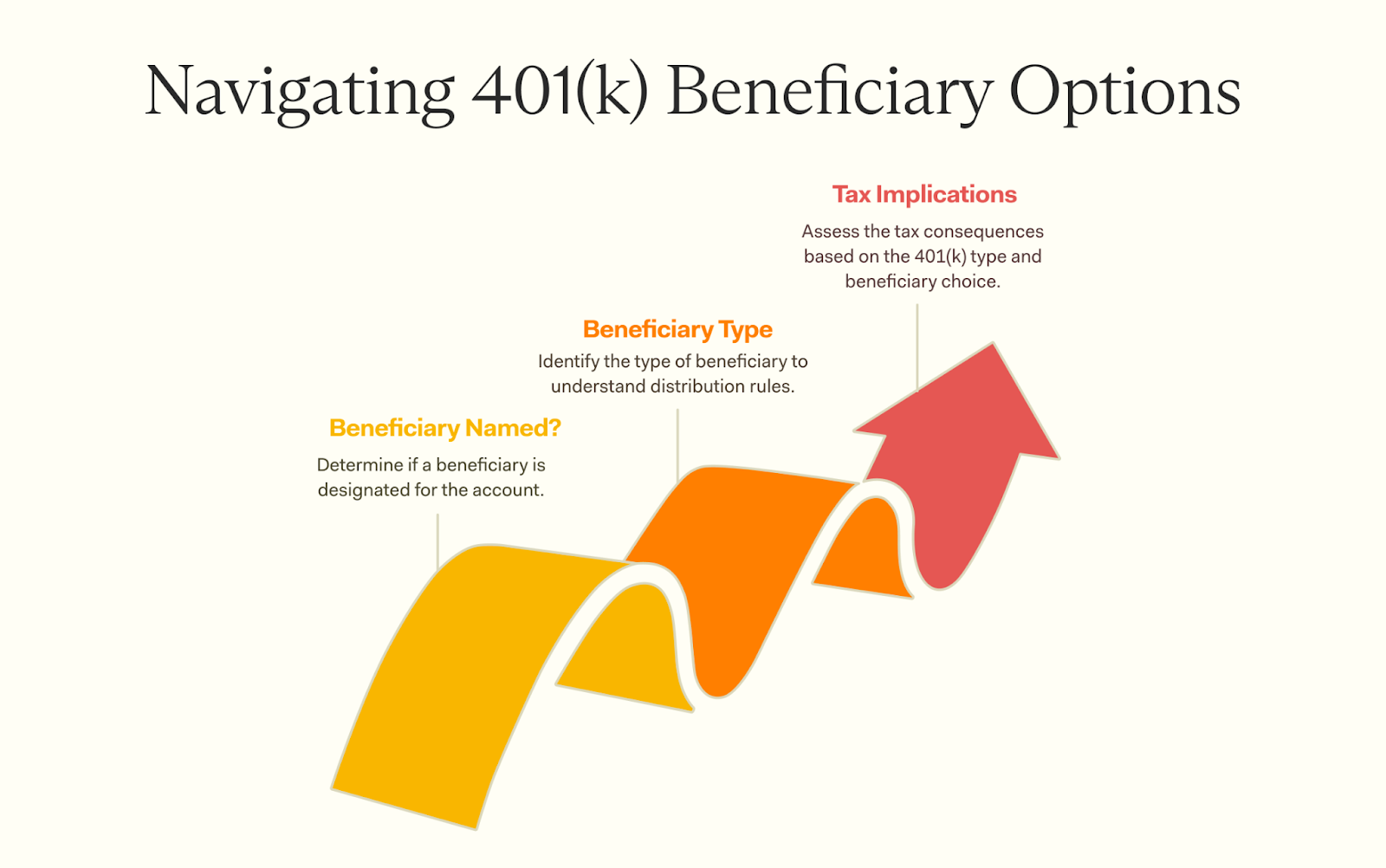
Beneficiary Designations: The Cornerstone of 401(k) Inheritance
The most critical element in determining the fate of your 401(k) upon your death is the beneficiary designation you have on file with your plan administrator. This designation acts as a legal directive, overriding any instructions you might leave in a general will. Therefore, ensuring your beneficiary information is accurate, up-to-date, and clearly defined is paramount.
Primary and Contingent Beneficiaries
When you open a 401(k) account, you are typically prompted to name beneficiaries. It is advisable to name both primary beneficiaries and contingent beneficiaries. The primary beneficiaries are the individuals or entities first in line to receive the assets. If all primary beneficiaries predecease you or are unable to inherit, the contingent beneficiaries will then receive the funds. Without clear contingent beneficiaries, your 401(k) assets could become entangled in probate, a process that can be lengthy, costly, and public.
Spousal vs. Non-Spousal Beneficiaries
The rules governing 401(k) inheritance differ significantly depending on whether the primary beneficiary is your surviving spouse or not.
Surviving Spouse Rights:
For married individuals, federal law (specifically ERISA, the Employee Retirement Income Security Act) generally grants surviving spouses significant rights. Unless your spouse has formally waived their right to your 401(k) assets through a notarized consent form, they are typically entitled to a portion or all of the account balance. In many cases, a spouse will be designated as the primary beneficiary by default if no other designation is made. If you wish to name someone other than your spouse as the primary beneficiary, your spouse must provide written consent, acknowledging they understand and agree to waive their rights to those funds. This is a critical legal safeguard designed to protect spouses.
Non-Spousal Beneficiaries:
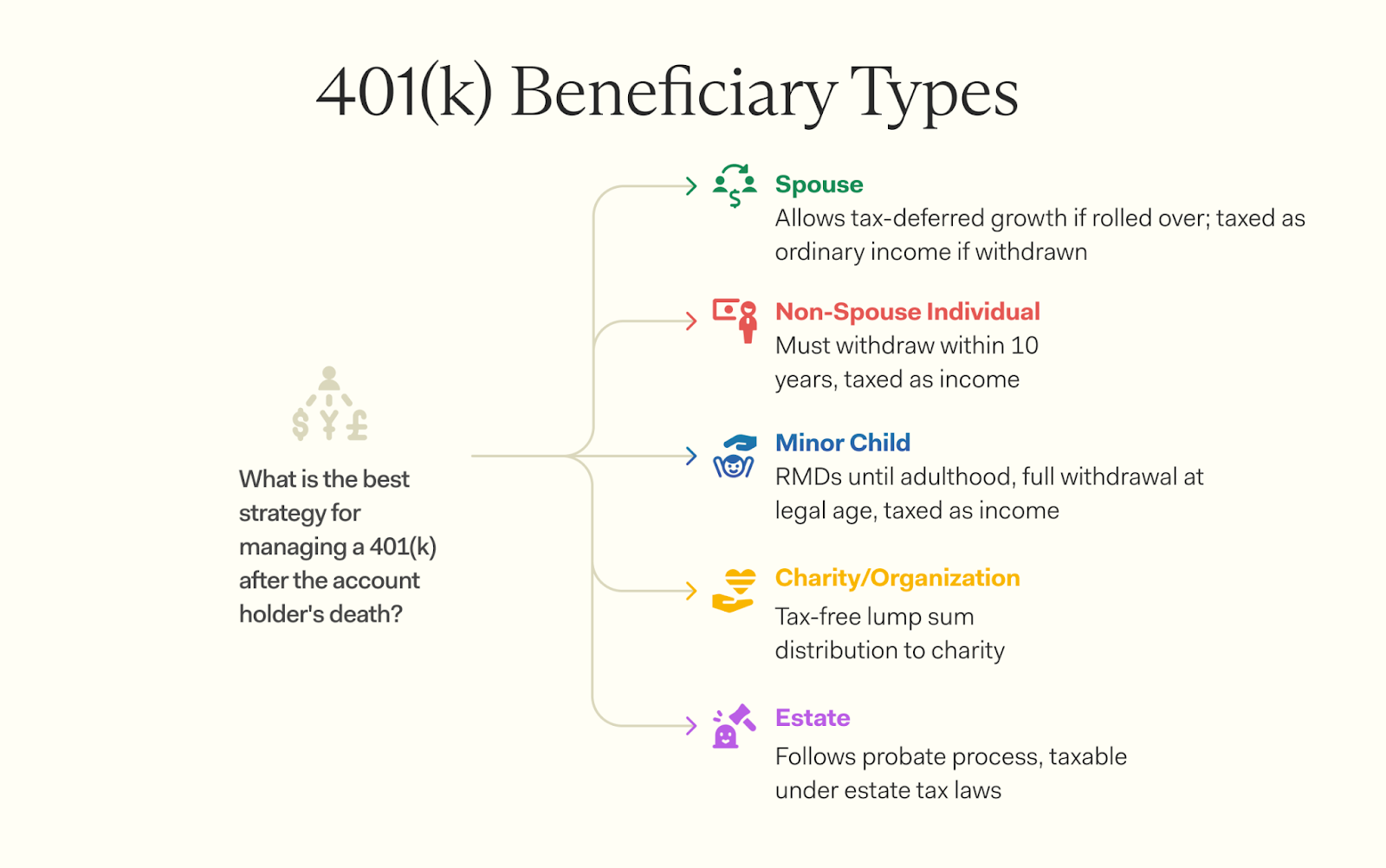
When a non-spousal beneficiary is named, the process is generally more straightforward, but the tax implications can be different. These beneficiaries include children, other relatives, friends, or even charitable organizations. They will inherit the full value of the 401(k) account as designated, provided they are legally able to do so.
Updating Beneficiary Information
Life circumstances change. Marriages, divorces, births, and deaths can all necessitate an update to your beneficiary designations. It is a common oversight, but failing to update this information can lead to unintended consequences. For instance, if you are divorced and have not updated your beneficiaries, your ex-spouse may still be listed as the beneficiary, meaning they would inherit your 401(k) despite your current marital status. It is recommended to review your beneficiary designations at least once a year or after any major life event. You can typically update this information directly through your 401(k) plan administrator’s website or by submitting a physical form.
Options for Inheriting a 401(k)
Once a 401(k) account holder passes away, the designated beneficiaries have several options for how to receive the inherited funds. The choice made can have significant tax implications, so understanding each option is crucial.
Inheriting as a Lump Sum Distribution
One of the most straightforward options is for the beneficiary to withdraw the entire account balance as a lump sum. This means receiving all the money in one go. However, this option often comes with a substantial immediate tax bill. For a traditional 401(k) (pre-tax contributions), the entire lump sum withdrawal is typically considered taxable ordinary income in the year it is received. This can push the beneficiary into a higher tax bracket, significantly reducing the net amount received. Roth 401(k)s, on the other hand, have qualified withdrawals that are tax-free, making a lump sum distribution from a Roth 401(k) more attractive from a tax perspective, assuming the account has been open for at least five years.
Rolling Over to an Inherited IRA
A popular and often tax-advantageous strategy for beneficiaries is to roll the inherited 401(k) funds into an inherited IRA. This allows the beneficiary to maintain the tax-deferred growth of the retirement savings while gaining more control over investment choices and distribution flexibility. There are two types of inherited IRAs:
Traditional Inherited IRA:
If the original 401(k) was a traditional (pre-tax) account, the inherited IRA will also be a traditional IRA. This means that any withdrawals taken from this IRA will be taxed as ordinary income. However, the beneficiary can defer taking required minimum distributions (RMDs) until a later date, depending on their life expectancy.

Roth Inherited IRA:
If the original 401(k) was a Roth (after-tax) account, the inherited IRA will be a Roth IRA. Qualified distributions from a Roth IRA are tax-free. This is often the most beneficial scenario for the beneficiary, as they receive the inheritance without any immediate or future tax liability, provided the five-year rule for Roth accounts is met.
The Required Minimum Distribution (RMD) Rules for Inherited Accounts
A critical aspect of inheriting a 401(k) or an inherited IRA is understanding the Required Minimum Distribution (RMD) rules. These rules dictate that beneficiaries must start taking a minimum amount of money out of the inherited account each year, beginning after a certain period following the account holder’s death. The purpose of RMDs is to ensure that tax-deferred retirement funds are eventually taxed.
The Five-Year Rule:
In some cases, particularly if the deceased did not start taking RMDs from their 401(k), the IRS may impose a “five-year rule.” Under this rule, the entire inherited 401(k) must be distributed within five years of the account holder’s death. This rule is less common for 401(k)s than for IRAs, but it’s essential to confirm with the plan administrator.
The Single Life Expectancy Rule:
For most beneficiaries inheriting a 401(k) or rolling it into an inherited IRA, the Single Life Expectancy Rule applies. This rule allows the beneficiary to spread withdrawals over their own life expectancy, effectively deferring taxes for many years. The IRS provides life expectancy tables to calculate the minimum annual withdrawal amount. The RMD calculation typically involves dividing the account balance as of December 31st of the previous year by the beneficiary’s life expectancy factor.
The “At Least As Rapidly” Rule (for spouses):
A surviving spouse has additional flexibility. They can choose to treat the inherited 401(k) as their own if they are the sole beneficiary. This allows them to delay distributions until they reach the age of 73 (as per current RMD rules) and manage the account as if it were their original retirement savings. Alternatively, they can treat it as an inherited account and take distributions based on their own life expectancy.
Navigating Tax Implications and Planning
The tax treatment of inherited 401(k)s is a complex area that can significantly impact the net value received by beneficiaries. Understanding these nuances is crucial for effective financial planning.
Taxes on Traditional 401(k) Inheritances
As mentioned, traditional 401(k)s consist of pre-tax contributions and earnings, meaning they have never been taxed. When these funds are withdrawn by a beneficiary, they are considered taxable ordinary income. This applies whether the beneficiary takes a lump sum distribution or takes distributions from a traditional inherited IRA. The tax rate applied will be the beneficiary’s marginal income tax rate in the year the withdrawal is made. This can be a substantial financial burden if a large sum is withdrawn at once.
Taxes on Roth 401(k) Inheritances
Roth 401(k)s are funded with after-tax dollars, meaning the contributions have already been taxed. Qualified distributions from a Roth 401(k) or a Roth inherited IRA are generally tax-free. For a distribution to be considered “qualified,” the account must have been open for at least five years from January 1st of the year the first Roth contribution was made, and the account holder must have met certain age or disability criteria. If these conditions are met, the beneficiary receives the entire inheritance free of income tax. If the five-year rule has not been met, earnings on the account may be subject to income tax, but the original contributions will always remain tax-free.
The “Stretch” IRA and Its Limitations
The ability to “stretch” distributions from an inherited IRA over a beneficiary’s lifetime (the Single Life Expectancy Rule) was a powerful tool for tax deferral. However, the SECURE Act of 2019 significantly changed this for most non-spouse beneficiaries. Under the SECURE Act, most beneficiaries are now required to distribute the entire inherited IRA or 401(k) within 10 years of the account holder’s death, regardless of their life expectancy. There are some exceptions for eligible designated beneficiaries, such as minor children of the deceased, individuals with disabilities, and chronically ill individuals, who may still be able to use the life expectancy method. It is essential to consult with the plan administrator and a financial advisor to understand the current RMD rules applicable to your specific situation.
Seeking Professional Advice
Given the complexities of beneficiary designations, distribution options, and tax implications, it is highly recommended that beneficiaries seek professional financial and tax advice. A qualified financial advisor or tax professional can help beneficiaries:
- Understand their specific inheritance situation: They can clarify the type of 401(k) inherited, the applicable rules, and the best course of action.
- Choose the most tax-efficient distribution strategy: They can help model the tax consequences of different options.
- Navigate RMD requirements: They can ensure compliance with IRS regulations and avoid penalties.
- Develop a long-term financial plan: They can help integrate the inherited funds into the beneficiary’s overall financial goals.
By proactively addressing these financial considerations, beneficiaries can ensure that their inheritance from a 401(k) serves its intended purpose of providing financial security and honoring the legacy of the deceased.
aViewFromTheCave is a participant in the Amazon Services LLC Associates Program, an affiliate advertising program designed to provide a means for sites to earn advertising fees by advertising and linking to Amazon.com. Amazon, the Amazon logo, AmazonSupply, and the AmazonSupply logo are trademarks of Amazon.com, Inc. or its affiliates. As an Amazon Associate we earn affiliate commissions from qualifying purchases.