
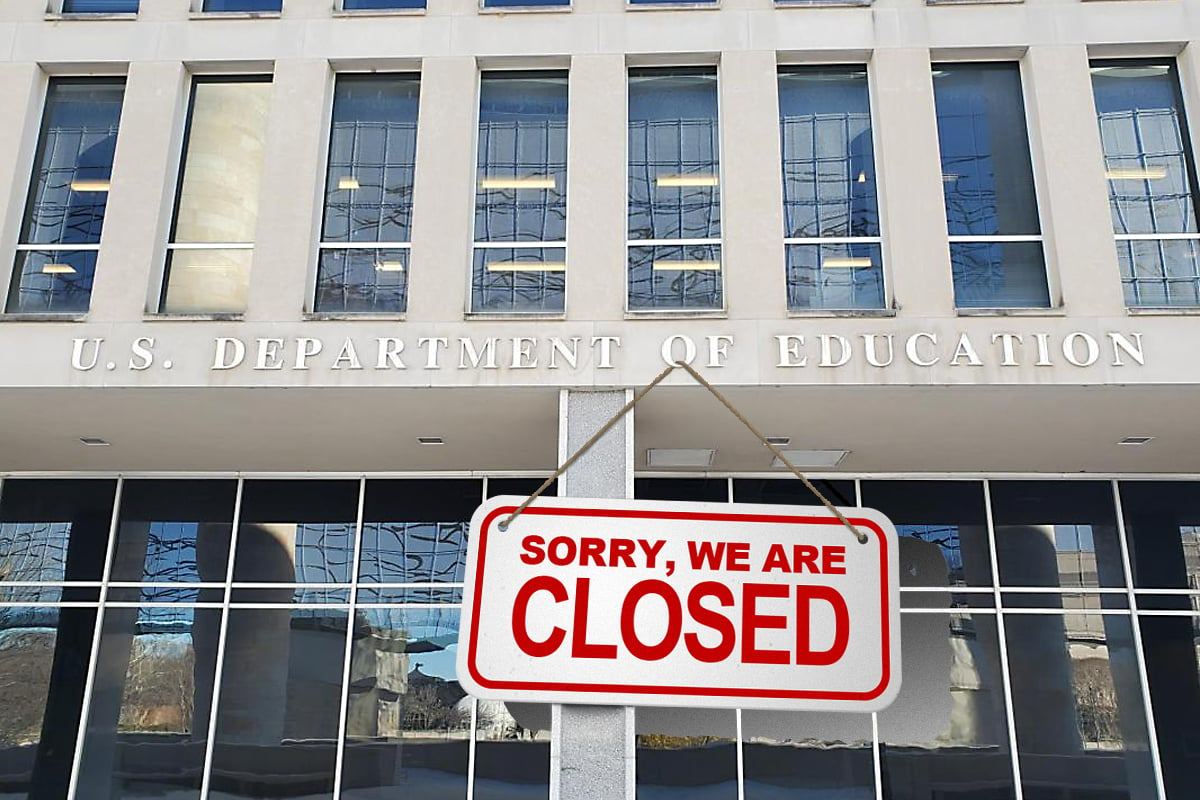
The potential closure of the U.S. Department of Education (ED) is a complex hypothetical scenario that, if it were to materialize, would send significant ripples through the American financial landscape. While the ED itself does not directly disburse Pell Grants or manage student loan repayment plans on a day-to-day operational level, its existence is intrinsically linked to the funding, regulation, and oversight of federal student aid programs. These programs are the bedrock of higher education affordability for millions of Americans, impacting their ability to invest in their future and, by extension, the broader economic health of the nation. Therefore, understanding the financial implications of such a closure requires a deep dive into the intricate web of federal funding, loan servicing, and the very concept of investing in human capital.

The Immediate Financial Fallout: Access to Capital and Loan Servicing
The most palpable and immediate financial consequence of the Department of Education closing would be the disruption and potential cessation of federal student financial aid programs. This isn’t just about student loans; it encompasses a spectrum of financial support mechanisms critical for educational attainment.
The Unraveling of Federal Student Aid Programs
Federal student aid is a colossal financial engine. Programs like the Pell Grant, which provides need-based grants to low-income undergraduate students, are funded through congressional appropriations managed and disbursed through the ED. A closure would mean an immediate halt to new Pell Grant disbursements. This would instantly place an insurmountable financial burden on millions of students and their families who rely on this aid to cover tuition, fees, books, and living expenses. The impact would be particularly devastating for first-generation students and those from disadvantaged backgrounds, for whom Pell Grants are often the primary or sole source of funding for higher education.
Beyond grants, the Direct Loan Program, another cornerstone of federal student aid, would also face immense uncertainty. While the loans themselves are already disbursed and backed by the federal government, the administrative infrastructure for originating new loans, processing deferments, forbearances, and income-driven repayment plans would cease to function. This would create a crisis for students currently enrolled and those planning to enroll in future academic years. The ability to borrow for education is a fundamental financial decision that hinges on the perceived stability and continued operation of these programs.
The Complex World of Federal Loan Servicing
The ED contracts with various private companies to service federal student loans. These loan servicers are responsible for billing borrowers, collecting payments, managing repayment plans, and providing customer service. If the ED were to close, the authority and contractual basis for these servicers to operate would vanish. This would create a chaotic situation for the over 40 million Americans with federal student loan debt.
Borrowers would face an unprecedented lack of clarity regarding who to pay, how to pay, and what their repayment obligations are. Existing repayment plans, such as income-driven repayment (IDR) plans, which are crucial for making student loan debt manageable for many, would likely be thrown into disarray. The administrative challenges of transferring these responsibilities to an alternative entity, if one even existed, would be immense and likely fraught with errors and delays. This could lead to widespread defaults, damaged credit scores, and severe financial hardship for a significant portion of the population. The economic impact of a sudden inability to service or manage this debt could be substantial, affecting consumer spending, housing markets, and overall economic stability.
The Broader Investment in Human Capital
Education, at its core, is an investment. It is an investment individuals make in their future earning potential and an investment society makes in its skilled workforce and informed citizenry. Federal student aid programs are the primary financial mechanism that facilitates this investment for a vast segment of the population.
If the ED closes, the message sent to prospective students and their families would be clear: the federal government is no longer committed to supporting higher education as a widespread financial endeavor. This could lead to a significant decrease in college enrollment, particularly among those who rely heavily on financial aid. The long-term consequence would be a less educated workforce, reduced innovation, lower overall productivity, and diminished economic growth. The nation’s ability to compete globally in an increasingly knowledge-based economy would be severely undermined.
The Long-Term Financial Repercussions: Economic Growth and Individual Wealth Accumulation
The closure of the Department of Education would not just create immediate financial chaos; it would sow the seeds for significant long-term economic repercussions, impacting everything from national economic growth to individual wealth accumulation. The financial implications extend far beyond the immediate disbursement of funds, touching upon the very mechanisms by which individuals and the nation as a whole build wealth.
The Impact on Economic Growth and Productivity
A well-educated populace is a cornerstone of a thriving economy. Higher education equips individuals with specialized skills, critical thinking abilities, and the capacity for innovation, all of which drive economic growth. When access to higher education is diminished due to financial barriers, the pipeline of skilled workers shrinks. This can lead to labor shortages in critical sectors, reduced productivity, and a slowdown in technological advancement.
Furthermore, educational attainment is directly correlated with higher earning potential. Individuals with college degrees typically earn significantly more over their lifetimes than those with only a high school diploma. A decline in college enrollment due to the closure of the ED would translate into a reduction in the nation’s overall earning capacity. This would mean less consumer spending, lower tax revenues, and a more sluggish economy. The ripple effect would be felt across all industries, as businesses struggle to find qualified employees and demand for goods and services potentially decreases. The long-term economic cost of a less educated citizenry is a formidable one, impacting national competitiveness and individual prosperity.
The Erosion of Individual Wealth Accumulation
For many, higher education is the primary vehicle for upward economic mobility and wealth accumulation. The ability to secure a well-paying job, often contingent on a degree, allows individuals to save, invest, and build assets over time. The financial aid programs administered or overseen by the ED are critical in making this pathway accessible.
Without these programs, the cost of higher education would become prohibitive for a much larger segment of the population. This would create a wider chasm between those who can afford to pursue higher education and those who cannot, exacerbating wealth inequality. Individuals unable to obtain higher education would likely find themselves in lower-paying jobs, with limited opportunities for career advancement and wealth building. This would not only impact their personal financial security but also reduce the overall pool of capital available for investment in the economy. The long-term implications for retirement security, homeownership, and intergenerational wealth transfer would be profound and largely negative.
The Shifting Landscape of Educational Investment and Funding
The closure of the ED would necessitate a drastic recalibration of how education is funded in the United States. The federal government’s role has been to provide a baseline of support and a standardized system for financial aid. Without this framework, the responsibility would likely fall more heavily on other entities, each with its own set of financial implications.
State-Level Funding and Access: States would face immense pressure to fill the void left by federal funding. This would require significant increases in state budgets allocated to higher education, potentially leading to higher state taxes or a reallocation of funds from other essential public services. The uneven financial capacity of different states would also create disparities in educational access, with wealthier states potentially offering more robust support than less affluent ones.
Private Institutions and Philanthropy: Private universities and colleges would likely become even more exclusive, relying more heavily on tuition, endowments, and private philanthropy. While some institutions might thrive, many would struggle to maintain their current operational capacity and affordability. Philanthropic efforts, while valuable, are unlikely to fully compensate for the scale of federal funding.
The Rise of Alternative Financial Models: We might see an acceleration in the development of alternative financial models for education. This could include more robust income-share agreements (ISAs) where students repay a percentage of their future income, or an increased reliance on employer-sponsored education programs. However, the regulatory oversight and consumer protection aspects of these emerging models would be a significant concern, potentially leading to predatory practices if not carefully managed.
Rethinking the Financial Ecosystem of Education: What the Future Might Hold
The hypothetical closure of the Department of Education forces a critical re-evaluation of the financial ecosystem that underpins higher education in the United States. If such an event were to occur, it wouldn’t simply be the absence of an agency; it would be a seismic shift demanding new financial paradigms, innovative funding mechanisms, and a fundamental reconsideration of the societal value placed on education. The financial implications are not merely about budget lines; they are about the accessibility, affordability, and ultimately, the very future of individual opportunity and national prosperity.
The Imperative for New Financial Mechanisms and Public-Private Partnerships
In the absence of the Department of Education, the responsibility for funding higher education would likely be distributed across a more complex and fragmented landscape. This would necessitate the development of entirely new financial mechanisms and a significant expansion of public-private partnerships.
Revitalized State-Based Grant and Loan Programs: States would be compelled to significantly enhance their own grant and loan programs. This could involve establishing state-level Pell Grant equivalents, offering subsidized loans, or providing tax credits for educational expenses. However, the fiscal capacity of individual states varies greatly, leading to potential inequities in access and affordability across the country. States with robust economies and strong tax bases would be better positioned to absorb this responsibility than those facing economic challenges.
The Growth of Income-Share Agreements (ISAs) and For-Profit Education Finance: The market for Income-Share Agreements (ISAs), where students agree to pay a percentage of their future income for a set period in exchange for educational funding, would likely see substantial growth. This model offers an alternative to traditional loans but carries its own set of risks, including potential for exploitation if not well-regulated. Similarly, for-profit education providers, which often operate with different financial models, might expand their reach, raising questions about educational quality and student outcomes.
Innovative Philanthropic Models and Corporate Investment: Philanthropic organizations and corporations could play a more significant role in funding education. This could take the form of endowed scholarships, direct investment in educational institutions, or the creation of workforce development programs tied to specific industry needs. However, the scale of philanthropic giving, while substantial, is unlikely to fully replace federal funding for the entire higher education system. Corporate investment might also be tied to specific skill sets, potentially narrowing the scope of educational opportunities.
The Long-Term Economic Impact of Reduced Educational Attainment
The closure of the Department of Education and the subsequent probable reduction in educational attainment would have profound and lasting negative impacts on the U.S. economy. The financial implications of a less educated workforce are far-reaching and deeply detrimental.
Diminished Innovation and Global Competitiveness: Higher education is a breeding ground for research, innovation, and the development of cutting-edge technologies. A decline in the number of college-educated individuals would stifle this pipeline, leading to a reduction in patents, scientific breakthroughs, and overall technological advancement. This would directly impact the nation’s ability to compete on the global stage in industries driven by knowledge and innovation.
Reduced Tax Revenue and Increased Social Spending: Individuals with higher levels of education tend to earn more, leading to greater tax contributions to federal, state, and local governments. A decline in educational attainment would result in a significant decrease in tax revenue, potentially leading to budget deficits and cuts in essential public services. Furthermore, lower earning potential could lead to increased reliance on social safety nets, further straining public finances.
Slower Economic Growth and Increased Inequality: The aggregate effect of reduced innovation, lower tax revenue, and a less skilled workforce would be a substantial slowdown in overall economic growth. This slowdown would disproportionately affect lower-income communities and exacerbate existing wealth and income inequality. The financial well-being of a nation is intrinsically linked to the educational attainment of its citizens, and a contraction in this area would have severe economic consequences.
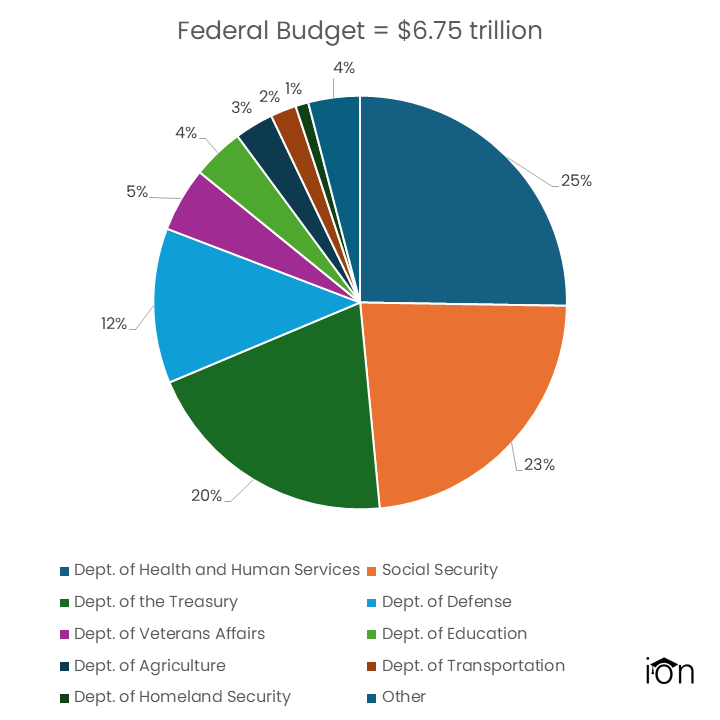
The Financial Future of Students and Families: A New Landscape of Risk and Opportunity
The closure of the Department of Education would fundamentally alter the financial calculus for students and families considering higher education. The established pathways to funding would be disrupted, forcing a reevaluation of risk, investment, and return.
Increased Reliance on Personal Savings and Family Wealth: Without federal aid programs, students from middle and lower-income families would face immense pressure to rely more heavily on personal savings and parental contributions. This would likely lead to a significant decrease in college enrollment for these demographics, perpetuating cycles of limited opportunity.
The Growing Burden of Private and Alternative Debt: Students who still pursue higher education would likely face an increased burden of private student loans, which often come with higher interest rates and fewer borrower protections than federal loans. The expansion of ISAs and other alternative financing models would also introduce new forms of financial risk, potentially leading to long-term financial instability for borrowers if these instruments are not structured equitably and transparently.
A Potential Reevaluation of the ROI of Higher Education: In a world where higher education is less accessible and more financially burdensome, individuals might begin to question the return on investment (ROI) of a traditional college degree. This could lead to a greater emphasis on vocational training, apprenticeships, and alternative credentialing pathways, shifting the financial landscape of post-secondary education and workforce development. The long-term financial decision-making process for individuals would become more complex, weighing the potential for future earnings against immediate and substantial educational costs.
aViewFromTheCave is a participant in the Amazon Services LLC Associates Program, an affiliate advertising program designed to provide a means for sites to earn advertising fees by advertising and linking to Amazon.com. Amazon, the Amazon logo, AmazonSupply, and the AmazonSupply logo are trademarks of Amazon.com, Inc. or its affiliates. As an Amazon Associate we earn affiliate commissions from qualifying purchases.