
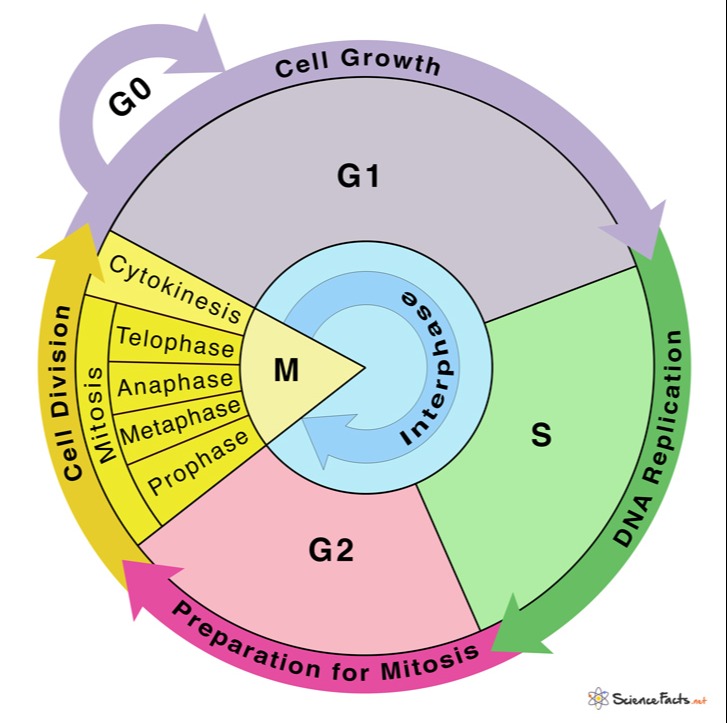
The cell cycle, a fundamental process for all living organisms, is a meticulously orchestrated series of events that leads to cell division and the creation of new, identical daughter cells. This intricate dance of growth, DNA replication, and division is broadly divided into two main phases: Interphase and the Mitotic (M) phase. Interphase, often considered the “growth phase,” is further subdivided into three distinct stages: G1, S, and G2. While G1 is characterized by cell growth and S phase by DNA replication, the G2 phase plays a crucial, yet often understated, role in preparing the cell for the dramatic events of mitosis. This article delves into the vital processes that unfold during the G2 phase, exploring its significance in ensuring the fidelity of genetic material and the successful division of the cell, with a lens through which we can draw parallels to technological advancement, brand integrity, and financial preparedness.

The Preparatory Crucible: G2 Phase as a Critical Checkpoint
Imagine the G2 phase as the final rigorous quality control check before a major product launch or a critical software update. In the realm of technology, before a new app or gadget hits the market, extensive testing, debugging, and refinement are paramount. Similarly, before a cell embarks on the arduous journey of mitosis, the G2 phase serves as a vital preparatory period, ensuring that all systems are go. This stage is not merely a passive waiting period; it is an active phase of intense molecular activity focused on ensuring that the replicated DNA is error-free and that the cell has accumulated sufficient resources for division.
Ensuring Genomic Integrity: The DNA Repair and Verification Mechanisms
The S phase, preceding G2, is when the cell meticulously replicates its entire genome. This process, while remarkably accurate, is not infallible. Errors, such as misincorporated nucleotides or breaks in the DNA strands, can occur. The G2 phase is the cell’s last opportunity to identify and repair these potential genetic “bugs.” Specialized enzymes and protein complexes are deployed to scan the newly synthesized DNA for any anomalies. If errors are detected, repair pathways are activated to rectify them. This meticulous verification process is akin to a software company conducting thorough beta testing and security audits before releasing a new version of their product. Just as a buggy app can lead to user frustration, data loss, and reputational damage for a brand, errors in DNA can have catastrophic consequences for the cell, leading to mutations, uncontrolled cell growth (cancer), or cell death.
The efficiency of these DNA repair mechanisms during G2 is directly linked to the success of cell division. The cell employs a sophisticated network of sensors that monitor the state of the replicated DNA. If significant damage is found that cannot be repaired, the cell cycle can be halted at the G2 checkpoint, preventing the initiation of mitosis until the damage is resolved or the cell is programmed for self-destruction (apoptosis). This checkpoint is absolutely critical for preventing the propagation of faulty genetic information to daughter cells.
From a Tech perspective, this parallels the importance of robust error detection and correction algorithms in data transmission and storage. Think of how file transfer protocols incorporate checksums to ensure data integrity, or how solid-state drives employ wear-leveling and error correction codes to maintain data reliability. The G2 phase’s DNA repair machinery acts as the cell’s internal checksum, guaranteeing the integrity of its most valuable data – its genetic code.
In the context of Brand, this emphasis on error correction and quality assurance mirrors the stringent brand guidelines and quality control processes that protect a company’s reputation. A brand’s image is built on trust and reliability. Just as a company wouldn’t launch a product with known critical flaws, a cell wouldn’t proceed to divide if its genetic blueprint is compromised. The G2 phase safeguards the “source code” of the cell, ensuring that the brand essence – the genetic information – is passed down accurately.
Accumulating Resources: Preparing for the Demands of Mitosis
Beyond DNA verification, the G2 phase is also a period of significant growth and resource accumulation. The cell needs to synthesize essential proteins and organelles that will be required for the physical separation of the replicated chromosomes and the division of the cytoplasm. This includes the production of tubulin, the building block of microtubules that form the spindle fibers responsible for pulling chromosomes apart. It also involves the synthesis of proteins needed for cytokinesis, the final stage of cell division where the cell physically splits into two.
This resource mobilization is akin to a business preparing for a major expansion or a product launch. A company would need to secure funding, hire additional staff, acquire necessary equipment, and build inventory – all preparatory steps before scaling operations. Similarly, the cell must “invest” in the materials and machinery required for the demanding process of mitosis.
For Money and personal finance, the G2 phase’s resource accumulation can be seen as a critical phase of preparation and investment. Just as individuals save and invest to achieve long-term financial goals, the cell “invests” its energy and resources into preparing for division. This might involve building up energy reserves or synthesizing key proteins that act as “dividends” for the future success of the daughter cells. This phase highlights the importance of foresight and diligent preparation, whether it’s a cell preparing to divide or an individual preparing for a significant financial undertaking.
The G2 Checkpoint: A Gatekeeper of Cellular Fidelity
The transition from G2 into mitosis is not automatic. It is tightly regulated by a critical checkpoint, often referred to as the G2 checkpoint. This checkpoint acts as a sophisticated security system, preventing the cell from entering the M phase if the conditions are not optimal. The primary function of the G2 checkpoint is to ensure that DNA replication is complete and that any DNA damage incurred during replication has been repaired.
Orchestrating the Transition: Cyclin-Dependent Kinases (CDKs) and Their Role
The molecular machinery that governs the cell cycle checkpoints, including the G2 checkpoint, is highly sophisticated. Key players in this regulation are a family of enzymes called cyclin-dependent kinases (CDKs). CDKs are enzymes that, as their name suggests, require the binding of another class of proteins called cyclins to become active. Different cyclin-CDK complexes are active at different stages of the cell cycle, phosphorylating specific target proteins that drive the events of each phase.
During the G2 phase, a specific cyclin-CDK complex, often involving cyclin B and CDK1 (also known as CDC2), accumulates. When DNA is undamaged and replication is complete, this complex becomes fully activated. Activated cyclin B-CDK1 then phosphorylates a variety of proteins, including those involved in condensing chromosomes and initiating the breakdown of the nuclear envelope, thereby signaling the cell to enter mitosis.
However, if DNA damage is detected during G2, inhibitory proteins are activated, which prevent the formation or activation of the cyclin B-CDK1 complex. This effectively halts the cell cycle at the G2 checkpoint, buying the cell time to repair the damage. This intricate regulatory mechanism is essential for maintaining the stability of the genome.
The concept of a “checkpoint” and the activation of specific regulatory “engines” like CDKs can be seen as analogous to Technology advancements in automated systems and artificial intelligence. Think of the sophisticated algorithms that govern autonomous vehicles or industrial robots. These systems have built-in checks and balances, ensuring that all parameters are met before proceeding with an action. The G2 checkpoint is the cell’s biological equivalent of a sophisticated control system, ensuring operational readiness.
In the realm of Brand strategy, the G2 checkpoint is like the final sign-off from a brand manager or a legal review before a major campaign is launched. It’s the moment where all the preparatory work is scrutinized, and any potential risks or inconsistencies are identified and addressed. A strong brand reputation depends on consistently delivering flawless products and experiences, which necessitates rigorous checkpoints throughout the development and launch process.
Beyond the G2 Phase: The Continuum of Cell Division
The G2 phase, while crucial, is just one part of the larger, continuous process of the cell cycle. Its successful completion directly influences the efficiency and accuracy of the subsequent mitotic phase.
Mitosis: The Grand Finale of Chromosome Segregation
Once the G2 checkpoint is cleared, the cell enters mitosis, a phase characterized by the dramatic reorganization and segregation of chromosomes. Mitosis is further divided into several subphases: prophase, prometaphase, metaphase, anaphase, and telophase. During these stages, the replicated sister chromatids (identical copies of each chromosome) are precisely aligned and then pulled apart to opposite poles of the cell. The spindle fibers, assembled with the tubulin synthesized in G2, are critical for this accurate segregation.

Cytokinesis: The Final Act of Cell Splitting
Following the nuclear division of mitosis, cytokinesis occurs. This is the physical division of the cytoplasm, resulting in the formation of two distinct daughter cells, each containing a complete and identical set of chromosomes. The proteins and structures prepared during G2 play a vital role in the formation of the contractile ring that constricts the cell and ultimately pinches it into two.
The seamless transition from G2 through mitosis and cytokinesis underscores the importance of planning and preparation in any complex undertaking. Just as a well-executed product launch requires meticulous planning from development to market release, the cell’s division is a testament to the power of staged processes.
From a Money perspective, the successful completion of mitosis and cytokinesis can be viewed as the successful distribution of “assets” to “stakeholders.” The replicated genetic material is faithfully passed on, ensuring the continuity of the “enterprise” – the organism. This emphasizes the importance of efficient resource allocation and distribution, whether it’s cellular components or financial capital.
In summary, the G2 phase of the cell cycle is far more than a passive waiting period. It is a dynamic and critical stage where the cell rigorously verifies the integrity of its replicated DNA, repairs any errors, and amasses the necessary resources for division. The G2 checkpoint acts as a vigilant guardian, ensuring that only healthy and prepared cells proceed to mitosis. By drawing parallels to technological advancements, brand integrity, and financial preparedness, we can gain a deeper appreciation for the intricate biological mechanisms that ensure the accurate and reliable propagation of life. The G2 phase, therefore, stands as a powerful testament to the elegance and precision of cellular processes, underpinning all forms of growth and development.
aViewFromTheCave is a participant in the Amazon Services LLC Associates Program, an affiliate advertising program designed to provide a means for sites to earn advertising fees by advertising and linking to Amazon.com. Amazon, the Amazon logo, AmazonSupply, and the AmazonSupply logo are trademarks of Amazon.com, Inc. or its affiliates. As an Amazon Associate we earn affiliate commissions from qualifying purchases.