
In recent months, the global financial landscape has undergone a profound transformation, leaving both seasoned investors and retail participants asking a singular, pressing question: what happened to the market? The era of predictable upward trajectories and low-volatility growth appears to have been replaced by a period of sharp corrections, sector rotations, and heightened sensitivity to macroeconomic data. Understanding this shift requires a deep dive into the convergence of monetary policy, shifting corporate fundamentals, and the evolving psychology of the modern investor.
For nearly a decade, the narrative was dominated by “cheap money” and the relentless ascent of growth stocks. However, the current environment marks a decisive break from that regime. The market is currently recalibrating to a “new normal” where capital has a significant cost, and the margin for error in corporate earnings has become razor-thin. To understand what happened, we must examine the structural pillars that have shifted beneath the feet of the global economy.
The Macroeconomic Shift: Transitioning from Cheap Capital to Structural Inflation
The most significant factor in recent market turbulence is the aggressive pivot in central bank policy. For years, the Federal Reserve and its global counterparts maintained interest rates near zero, effectively subsidizing risk-taking. This environment created a “There Is No Alternative” (TINA) mentality, pushing investors out of safe-haven assets like bonds and into the equity markets.
The End of the Zero-Interest-Rate Policy (ZIRP)
When inflation surged to multi-decade highs, central banks were forced to abandon their accommodative stance. The rapid escalation of interest rates was designed to cool the economy, but its immediate impact was felt in asset valuations. In financial modeling, higher interest rates increase the discount rate applied to future cash flows. For growth-oriented companies—particularly in tech—whose value is predicated on earnings far in the future, this shift caused an immediate and painful contraction in price-to-earnings multiples.
The Persistence of Inflationary Pressures
While many hoped that inflation would be “transitory,” structural factors have kept price levels elevated. From labor shortages and wage-price spirals to the deglobalization of supply chains, the cost of doing business has risen across the board. The market is no longer reacting to whether inflation exists, but rather to how “sticky” it is. Every Consumer Price Index (CPI) release now acts as a high-stakes catalyst, often triggering massive swings in the S&P 500 and Nasdaq as traders try to predict whether the Fed will maintain a “higher for longer” stance.
The Valuation Correction: Decoupling Growth from Reality
Beyond the macro environment, the internal mechanics of the stock market have shifted. We have witnessed a significant decoupling where the hype surrounding emerging technologies—most notably Artificial Intelligence—has collided with the reality of corporate balance sheets.
The Cooling of the AI Euphoria
In the early part of the year, a handful of mega-cap technology stocks, often referred to as the “Magnificent Seven,” carried the weight of the entire market. The promise of AI-driven productivity gains led to a massive influx of capital into semiconductors and software. However, “what happened to the market” recently is a realization that the ROI on these massive AI investments may take longer to materialize than initially expected. Investors have begun demanding proof of monetization rather than just promises of innovation. This has led to a “rotation” out of overheated tech names and into more defensive sectors like healthcare, utilities, and consumer staples.
Earnings Quality and Profitability Over Growth
During the bull run of the late 2010s, the market rewarded revenue growth at almost any cost. Today, the script has flipped. Investors are prioritizing “quality”—companies with strong free cash flow, low debt-to-equity ratios, and the ability to maintain margins in a high-cost environment. Companies that miss earnings expectations or provide cautious forward guidance are being punished severely. This focus on fundamentals is a healthy, albeit painful, return to traditional valuation metrics that were largely ignored during the era of liquidity-driven speculation.
Geopolitical Shockwaves and Global Liquidity
The market does not exist in a vacuum, and the current volatility is inextricably linked to global instability. The geopolitical landscape has become increasingly fragmented, leading to a “risk-off” sentiment that periodically flushes liquidity out of the equity markets.

Energy Markets and Supply Chain Resiliency
Fluctuations in energy prices, driven by conflicts in Eastern Europe and the Middle East, have reintroduced a layer of uncertainty that the market struggled to price in. Higher energy costs act as a hidden tax on both consumers and corporations, further threatening the “soft landing” narrative that many economists were banking on. Furthermore, the push for “near-shoring” or “friend-shoring” of supply chains, while beneficial for long-term national security, is inherently inflationary in the short term, adding upward pressure on the cost of goods sold.
The Role of Quantitative Tightening
While interest rates get the most headlines, the reduction of central bank balance sheets—known as Quantitative Tightening (QT)—is a silent driver of market behavior. By pulling liquidity out of the financial system, the Fed is making it harder for markets to sustain the “buy the dip” mentality that characterized the last decade. With less liquidity sloshing around, price discovery becomes more volatile, and small shifts in sentiment can lead to outsized moves in index prices.
The Retail Investor Psychology and the Digital Information Loop
To understand what happened to the market, one must also look at the people within it. The democratization of trading through zero-commission apps and the rise of social media financial communities have changed how information is processed and acted upon.
The Disappearance of “Easy Mode” Investing
For a new generation of investors who entered the market during the 2020 post-pandemic surge, the current environment is their first true encounter with a sustained bear-market-like volatility. The “easy mode” of buying index funds and seeing 20% annual returns has faded. This has led to a significant shift in retail sentiment, characterized by a move away from speculative “meme stocks” and toward safer assets like high-yield savings accounts and Treasury bills, which now offer competitive returns for the first time in fifteen years.
Algorithmic Trading and the Feedback Loop
A massive portion of daily trading volume is now driven by high-frequency algorithms and passive index funds. These systems are often programmed to sell when certain technical levels are breached or when specific keywords appear in news cycles. This creates a feedback loop where a minor downturn can quickly cascade into a full-blown sell-off. When people ask what happened to the market on a specific day of heavy losses, the answer is often found in the “liquidity gaps” created when these algorithms move in unison, stripping the market of buyers at key psychological price points.
Navigating the New Normal: Strategies for a Changed Market
The current state of the market is not necessarily a sign of an impending collapse, but rather a sign of an economy in transition. The strategies that worked from 2010 to 2021 are being rewritten.
The Resurgence of the 60/40 Portfolio
For years, the traditional 60% stocks and 40% bonds portfolio was declared dead because bond yields were so low. Now, with yields on government debt reaching levels not seen in over a decade, bonds are providing a genuine hedge against equity volatility again. Investors are relearning the value of a balanced approach, finding that fixed income can finally provide the “income” it was named for.
Focus on Diversification and Valuation
The era of “index-hugging”—where simply owning the S&P 500 meant you were heavily concentrated in five or six tech companies—is being challenged. Diversification across sectors, geographies, and asset classes is becoming essential once more. Understanding “what happened” involves recognizing that the market is becoming more discerning. It is no longer a “rising tide lifts all boats” scenario; it is a stock-picker’s market where the ability to identify undervalued companies with resilient business models is the key to long-term success.

Patience as a Financial Asset
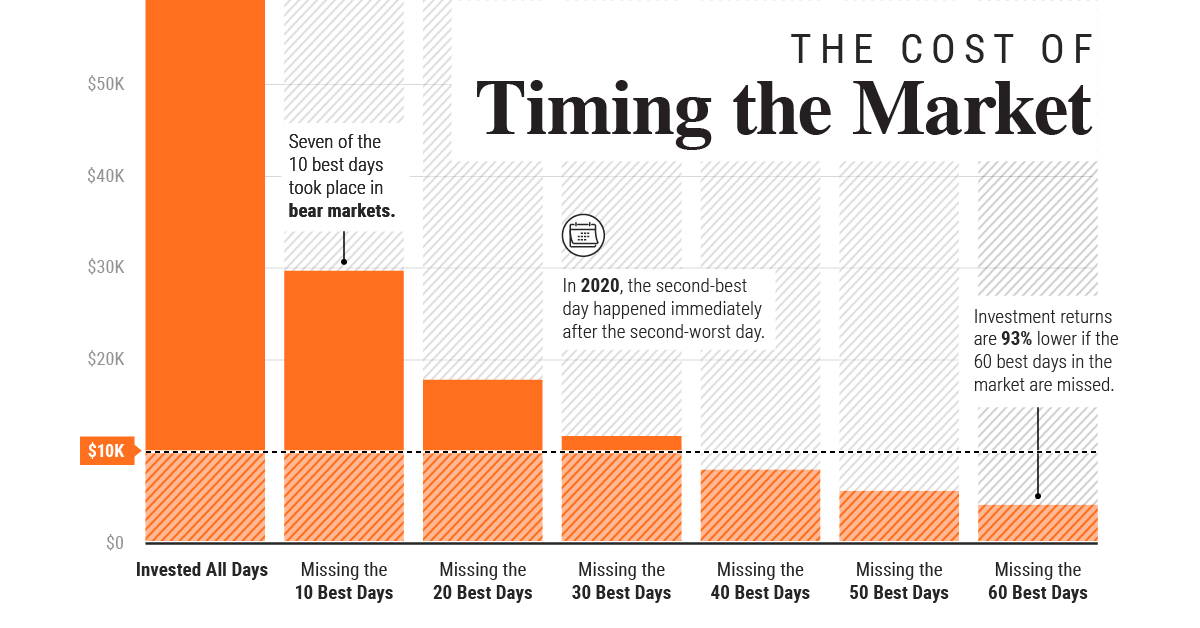
Perhaps the most important takeaway from the current market climate is the necessity of a long-term perspective. The market is currently grappling with a massive amount of “noise”—from political elections to conflicting labor data. Those who find success in this environment are often the ones who can filter out the daily volatility and remain focused on their long-term financial goals. The market hasn’t “broken”; it has simply matured, shedding the excesses of a low-rate world and forcing a return to the disciplined principles of finance and investing.
aViewFromTheCave is a participant in the Amazon Services LLC Associates Program, an affiliate advertising program designed to provide a means for sites to earn advertising fees by advertising and linking to Amazon.com. Amazon, the Amazon logo, AmazonSupply, and the AmazonSupply logo are trademarks of Amazon.com, Inc. or its affiliates. As an Amazon Associate we earn affiliate commissions from qualifying purchases.