
For anyone who grew up in the 1980s or 1990s, the D.A.R.E. (Drug Abuse Resistance Education) logo is as recognizable as the Nike swoosh or the Coca-Cola script. The bold, red lettering on a black background became the definitive visual shorthand for a generation’s approach to social responsibility. However, the story of D.A.R.E. is not merely a chronicle of a school program; it is a complex case study in brand strategy, market dominance, and the grueling process of corporate rebranding in the face of public failure.

To understand what happened to D.A.R.E., one must look at it through the lens of brand management. It is a story of how a “product” that was scientifically proven to be ineffective managed to survive through sheer brand equity, nostalgia, and a radical strategic pivot that saved it from total obsolescence.
The Rise of a Cultural Powerhouse: Building the D.A.R.E. Brand Identity
In the early 1980s, the D.A.R.E. program was launched as a partnership between the Los Angeles Police Department and the Los Angeles Unified School District. From a branding perspective, it was a masterstroke of positioning. It combined the authority of law enforcement with the nurturing environment of the classroom, creating a “product” that promised safety, community, and a better future for children.
Establishing Market Dominance
The rapid expansion of D.A.R.E. can be compared to the viral growth of a modern tech startup. By the mid-1990s, the program was implemented in 75% of school districts in the United States and in more than 40 countries. This wasn’t just due to government funding; it was due to a highly effective “franchise” model. D.A.R.E. provided a turnkey solution for local police departments to improve their public relations while offering schools a structured, federally-funded health curriculum.
The Power of the Visual Asset
The D.A.R.E. logo is a study in high-impact brand design. It was aggressive yet official, cool enough for a teenager to wear on a t-shirt but authoritative enough to appear on the side of a patrol car. The program understood the power of merchandise long before “lifestyle branding” was a buzzword. From rulers and pencils to the iconic black t-shirts and even D.A.R.E.-branded sports cars, the brand achieved a level of “top-of-mind awareness” that most corporate marketing departments would envy.
Brand Ambassadors: The Uniformed Officer
In brand strategy, your frontline employees are your most important ambassadors. D.A.R.E. utilized police officers—individuals already vested with high levels of social trust and authority—as the faces of the brand. This created an emotional connection that transcended the actual content of the curriculum. For a generation of students, the “brand” was the friendly officer who showed up once a week, creating a positive brand association that lasted for years.
The Brand Crisis: When the Product Fails to Deliver
The fundamental rule of brand longevity is that the product must eventually live up to the promise. In the late 1990s and early 2000s, D.A.R.E. faced a catastrophic brand crisis: academic and scientific studies began to prove that the program was, at best, ineffective and, at worst, counterproductive.
The Boomerang Effect and Brand Erosion
Multiple peer-reviewed studies, including those funded by the Department of Justice, found that students who went through the D.A.R.E. program were no less likely to use drugs than those who didn’t. Some studies even suggested a “boomerang effect,” where the brand’s heavy-handed scare tactics actually piqued curiosity about substances.
In the world of corporate identity, this is equivalent to a car manufacturer realizing their flagship safety feature doesn’t actually work. The brand’s core value proposition—resistance to drug use—was being publicly dismantled. The D.A.R.E. name began to shift from a symbol of safety to a symbol of “the system’s” failure.
The Rise of Ironic Branding
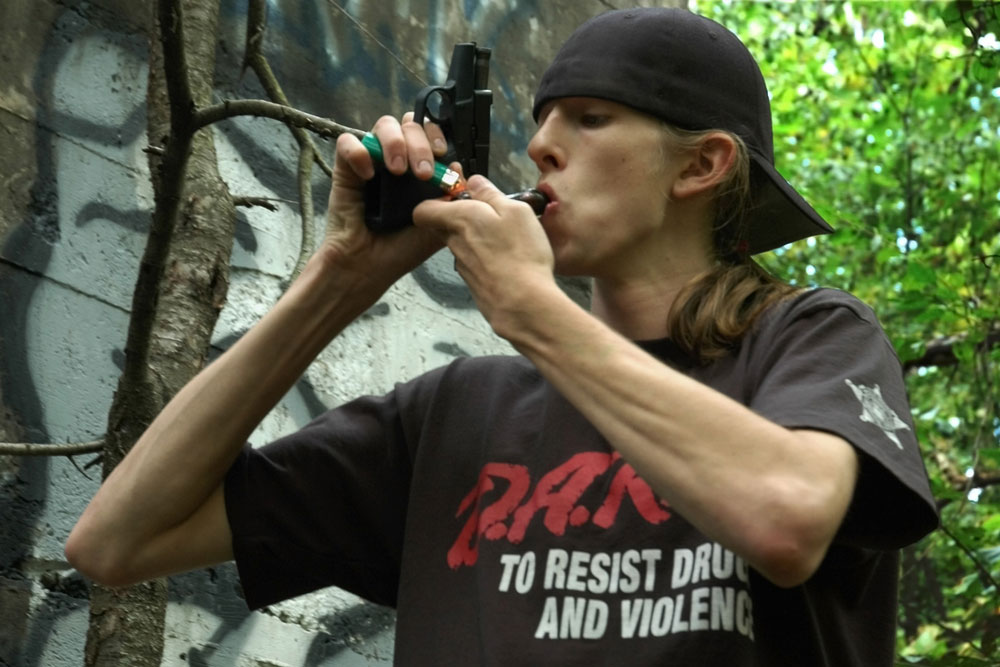
One of the most fascinating aspects of D.A.R.E.’s brand history is its transition into the “ironic” market. As the program’s effectiveness was debunked, the merchandise took on a new life. The very t-shirts intended to promote sobriety became popular in the counter-culture and rave scenes. This is a nightmare for brand managers: losing control over your brand’s meaning. When your logo is worn ironically by the very demographic you are trying to deter, your brand strategy has officially collapsed.
Loss of Institutional Trust
By the mid-2000s, the federal government began to pull funding. The Government Accountability Office (GAO) and the Surgeon General’s office both issued reports detailing the program’s lack of efficacy. For any brand, losing your primary “investors” and your “regulatory approval” simultaneously is usually a death knell. Most organizations would have folded under this level of scrutiny, but D.A.R.E. had built too much institutional momentum to disappear overnight.

Strategic Pivoting: Rebranding for the Modern Era
Instead of dissolving, the organization behind D.A.R.E. did what any resilient global brand does when its core product fails: it initiated a massive pivot. The D.A.R.E. we see today is functionally a different “product” than the one from the 1990s, even if the logo remains the same.
The “keepin’ it REAL” Overhaul
In the late 2000s, D.A.R.E. scrapped its original curriculum entirely. They partnered with researchers at Pennsylvania State University and Arizona State University to adopt a new program called “keepin’ it REAL.” This was a strategic re-platforming. They moved away from the “Just Say No” scare tactics—which were the “legacy features” of their old brand—and moved toward a “Social-Emotional Learning” (SEL) model.
The new brand promise focuses on decision-making skills, communication, and risk assessment rather than just substance avoidance. In marketing terms, they shifted from a “negative reinforcement” model to a “skill-building” model, which aligned better with contemporary educational trends.
Modernizing the Brand Voice
The tone of the D.A.R.E. brand has undergone a professional makeover. The modern curriculum is less about the police officer as a lecturer and more about the officer as a facilitator of conversation. This shift in “brand voice” was necessary to stay relevant in an era where Gen Z and Gen Alpha students are more skeptical of traditional authority figures and more responsive to peer-led or interactive learning.
Digital Transformation
Like any brand trying to survive the 21st century, D.A.R.E. had to digitize. The program now includes interactive components, online training modules for officers, and social media outreach. They have attempted to move the brand from the physical classroom to the digital space where their target audience lives, though they still rely heavily on the physical presence of officers to maintain their unique market niche.
Lessons in Brand Resilience and Corporate Identity
The survival of D.A.R.E. offers several profound lessons for brand strategists and corporate leaders. It demonstrates that a powerful brand can survive even a total failure of its primary product if it possesses enough cultural capital.
The Value of “Legacy Equity”
D.A.R.E. survived because it was “too big to fail” in the minds of the public and school administrators. There was a massive amount of “legacy equity” built up in the program. Even parents who knew the program didn’t work felt a sense of comfort in its presence because it was a familiar part of the educational landscape. For brands, sometimes being “known” is more important than being “perfect.”
The Danger of Nostalgia Marketing
In recent years, D.A.R.E. has leaned into its own nostalgia. They have collaborated with high-end fashion brands like Supreme, placing their logo on expensive streetwear. While this keeps the logo in the public eye, it creates a “dual-brand identity” that can be confusing. On one hand, they are a serious educational non-profit; on the other, they are a vintage aesthetic used to sell $100 hoodies. This tension is a classic example of the risks involved in leveraging nostalgia to maintain brand awareness.
The Necessity of Adaptability
The most significant takeaway from the D.A.R.E. story is the necessity of adaptability. If D.A.R.E. had insisted on sticking to its 1983 curriculum, it would be extinct today. By admitting—eventually—that the old product didn’t work and bringing in outside “R&D” (the university researchers), they were able to save the brand. In business, the brand is often the vessel, and if the liquid inside goes sour, you have to be willing to pour it out and refill it with something better.
Conclusion: The Future of the D.A.R.E. Brand
What happened to the D.A.R.E. program? It grew up, it failed, it faced a mid-life crisis, and it eventually rebranded. Today, the program is still active in thousands of schools, but it operates with a much humbler set of goals and a more scientifically rigorous methodology.
The red-and-black logo remains a powerhouse of visual identity, a testament to the enduring power of effective branding. Whether the new “product” (keepin’ it REAL) will ultimately be more successful than the original remains to be seen in the long term. However, as a study in brand survival, D.A.R.E. is a masterclass. It proves that with enough visibility, a strong enough logo, and the willingness to pivot your entire mission, a brand can endure almost anything—even the proof that it didn’t do what it said it would.
The D.A.R.E. program didn’t go away; it simply evolved from a rigid anti-drug campaign into a flexible social-emotional learning platform, all while keeping the same iconic “packaging” that made it a household name forty years ago. For those in the world of brand strategy and corporate identity, it remains one of the most intriguing examples of how a brand can outlive its own mistakes.
aViewFromTheCave is a participant in the Amazon Services LLC Associates Program, an affiliate advertising program designed to provide a means for sites to earn advertising fees by advertising and linking to Amazon.com. Amazon, the Amazon logo, AmazonSupply, and the AmazonSupply logo are trademarks of Amazon.com, Inc. or its affiliates. As an Amazon Associate we earn affiliate commissions from qualifying purchases.