
The post-apocalyptic world of The Walking Dead is a crucible that forges and shatters humanity in equal measure. Among its most compelling and controversial figures stands Shane Walsh, a character whose journey from loyal best friend to ruthless antagonist encapsulates the devastating psychological toll of survival. His story is not merely one of a fallen man but a profound exploration of leadership, morality, and the primal instincts that emerge when society collapses. To truly understand “what happened to Shane,” we must dissect his evolution through the lens of human adaptation, personal branding, resource management, and the terrifying “system failures” of civilization.
The Dawn of a New World: Shane’s Initial Leadership and Shifting Paradigms
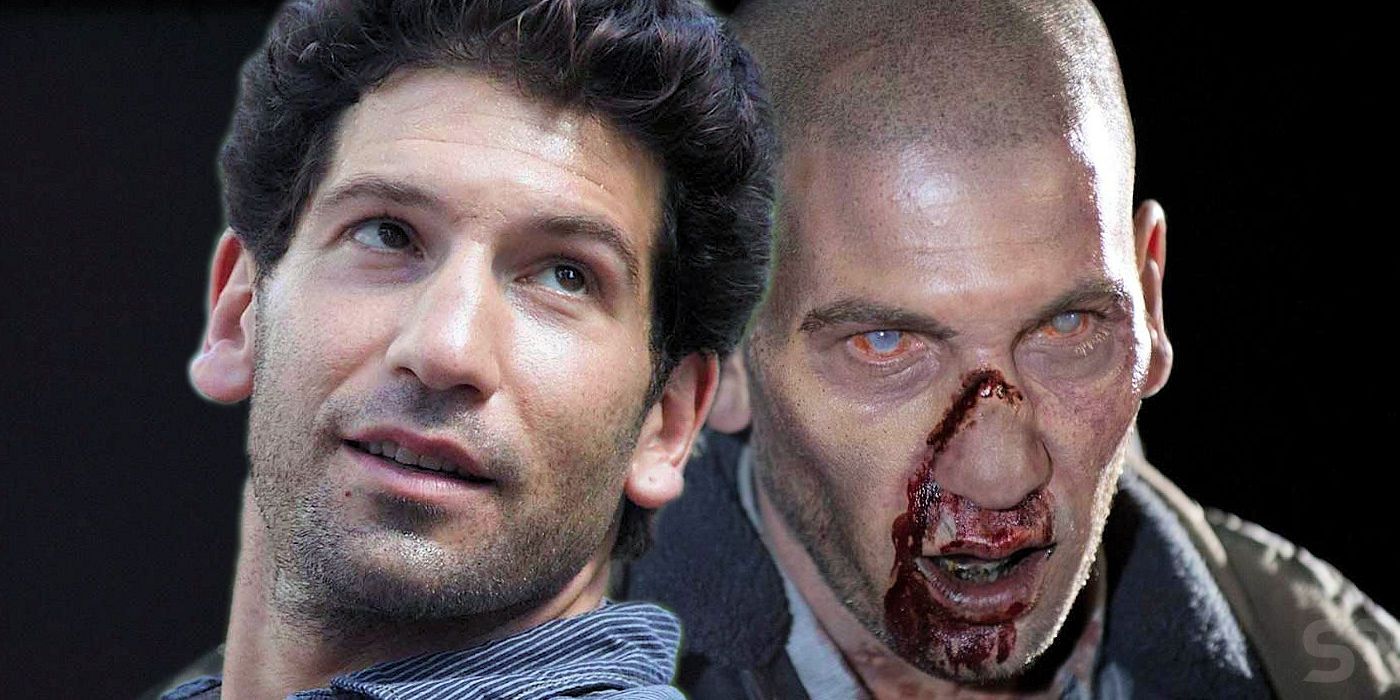
When the dead began to walk, Shane Walsh, a police officer and Rick Grimes’s best friend, found himself thrust into an unimaginable reality. In the initial chaos, with Rick comatose, Shane stepped up. He became the protector of Rick’s wife, Lori, and son, Carl, shepherding them to a supposed safe haven outside Atlanta. This period was crucial for Shane’s character development; it was here that he began to establish his “personal brand” as the strong, decisive, and capable leader necessary for survival.
In this nascent apocalypse, the world had undergone a catastrophic “technological and societal reboot.” Modern infrastructure had crumbled, communication systems failed, and the traditional “software” of law and order had been wiped clean. Survival became a matter of immediate problem-solving, relying on basic tools, tactical resourcefulness, and sheer force of will. Shane, with his law enforcement background, intuitively understood the new “operating parameters.” He wasn’t bogged down by past conventions; he quickly adapted to the brutal realities, prioritizing action over deliberation. His initial approach was akin to a rapid “system restoration,” identifying immediate threats and deploying swift, often aggressive, solutions. He took charge of resource allocation – finding shelter, scrounging for food and supplies, and organizing the small band of survivors. In a world where conventional “money” had lost all value, commodities like ammunition, food, and medical supplies became the new currency, and Shane was adept at securing them. He built a makeshift camp, fortified their position, and instilled a semblance of order, crafting a new “corporate identity” for the group based on his unwavering, albeit stern, leadership. He was the protector, the provider, and the man who made the hard choices, cementing his early “brand equity” with the desperate survivors.
His bond with Lori and Carl during this time deepened significantly. Believing Rick to be dead, Shane took on the role of husband and father, a dynamic that would become the central conflict of his arc. This period, while showcasing Shane’s strengths as a survivalist, also subtly sowed the seeds of his downfall. He grew accustomed to his position of unchallenged authority and developed a deep, possessive attachment to his newfound family.
The Return of the Ghost: Rick’s Re-Emergence and Shane’s Obsession
The fragile world Shane had painstakingly built came crashing down with the miraculous return of Rick Grimes. This event was a cataclysm for Shane, akin to a sudden “system rollback” that erased all his progress and invalidated his new reality. Rick’s reappearance wasn’t just a personal challenge; it represented a clash of ideologies and leadership styles. Rick, still clinging to pre-apocalyptic morality and a more democratic approach, directly threatened Shane’s pragmatic, authoritarian “leadership brand.”
For Shane, Rick’s return was an enormous “opportunity cost.” He had invested everything – his emotional well-being, his physical efforts, his identity – into protecting Lori and Carl and leading the group. He had built a new life, a new family, and a new sense of purpose from the ashes. Rick’s return rendered that “investment” seemingly worthless, pushing Shane back into the role of second-in-command, a position he had outgrown and deeply resented. The emotional “resources” he felt he had accumulated were suddenly being “reallocated” to Rick, without any perceived effort on Rick’s part. Shane saw Rick as a liability, someone whose traditional moral compass was a “software bug” in the harsh new reality, threatening the survival “protocols” Shane had established.
The emotional entanglement with Lori escalated the conflict. Their brief, intimate relationship, born from shared grief and desperation, became a volatile secret. Lori’s return to Rick intensified Shane’s feelings of betrayal and rejection, fueling a dangerous cocktail of resentment, jealousy, and a twisted sense of proprietorship. He believed he was the better man for the apocalypse, the true father figure for Carl, and the more capable protector for Lori. This personal conviction warped his judgment, transforming him from a protective leader into an increasingly desperate and dangerous man. He relentlessly tried to “market” his vision of leadership to Lori and the group, emphasizing pragmatism over sentimentality, but his attempts to regain his “market share” of influence largely failed as Rick’s innate decency resonated more with the other survivors.
The Descent into Darkness: Morality, Pragmatism, and System Failure

As the group moved from the CDC to Hershel’s farm, Shane’s descent accelerated. His actions became increasingly brutal and self-serving, highlighting a complete “system failure” within his moral framework. The episode involving Otis, where Shane sacrifices him to save Carl and escape a horde of walkers, is a pivotal moment. This act of cold-blooded murder, justified by Shane as a necessary evil for survival, epitomized his belief that human life, under certain circumstances, was a disposable “resource.” It was a complete departure from the pre-apocalyptic ethical “code” and underscored his conviction that only the ruthless would inherit this new Earth.
Shane’s mind became a system experiencing critical errors. His decision-making algorithm became corrupted, prioritizing short-term survival for himself and his perceived family unit at any “processing cost” to others. He was unable to “patch” his emotional vulnerabilities, particularly his obsession with Lori and Carl, which clouded his judgment and fueled his paranoia. He saw dissent or differing opinions as threats to his own survival and to the group’s “operating system,” which he believed should run solely on his aggressive “protocols.”
This period saw Shane’s “personal brand” erode dramatically. His public acts of violence and manipulation systematically destroyed his “brand equity” within the group. He alienated Dale, who became his moral counterpoint, and increasingly clashed with Rick, who, despite his own internal struggles, still tried to adhere to a code of ethics. Shane’s “marketing” of his pragmatic vision became less about convincing and more about imposing, using intimidation and fear. His increasingly erratic behavior and violent outbursts – such as his aggressive confrontation with Dale over Randall, a captured member of another group – signaled a man teetering on the edge. He argued vehemently that Randall, a perceived threat, needed to be eliminated, pushing for a “hard reset” on morality in the face of danger. This was a clear demonstration of Shane’s “survival of the fittest” ideology, where compassion was a weakness and ruthlessness was the ultimate strength. His inability to coexist with Rick’s leadership created an unstable “dual-core” system, destined for a fatal crash.
The Final Confrontation: A Fatal Glitch and Lasting Impact
The culmination of Shane’s tragic arc came in an isolated field, under the pale moonlight. Driven by a desperate need to reclaim his perceived family and leadership, and convinced that Rick was an existential threat, Shane lured his best friend into the woods under the pretense of hunting Randall. His plan was clear: eliminate Rick, blame it on Randall, and finally secure his place at the head of the group and with Lori.
This confrontation was a brutal “cost-benefit analysis” played out in real-time. Shane had calculated that Rick’s idealism and moral hesitations were too great a “liability” in the apocalypse, and his removal would be the ultimate “expenditure” to secure the group’s “financial stability” (survival). He believed he was making a necessary “investment” in a tougher future. However, Rick, pushed to his absolute limit, finally understood the depth of Shane’s corruption. In a moment of tragic clarity, Rick plunged a knife into Shane’s heart, ending his life.
Shane’s death, however, wasn’t the final chapter. Moments later, he reanimated as a walker, despite showing no signs of having been bitten. This unexpected “tech anomaly” forced a profound “re-evaluation of core protocols” for the group. It revealed a horrifying truth: the infection wasn’t spread by bites, but was dormant in everyone, triggered by death itself. This discovery, made because of Shane’s demise, became a cornerstone of the group’s future understanding of the apocalypse, dramatically reshaping their tactical “software” for survival. Carl, observing from a distance, was forced to put down the reanimated Shane, a traumatic event that further hardened the young boy and underscored the brutal realities of their world.
Shane’s reanimation was more than just a plot twist; it was a “fatal glitch” in the group’s understanding of their enemy, forcing them to adapt their “survival algorithms.” His death solidified Rick’s “leadership brand” by necessity, forcing him to embrace a darker pragmatism and make the kinds of brutal decisions Shane had always championed. The shadow of Shane lingered, a constant reminder of the fine line between humanity and savagery.
Shane’s Unseen Influence: A Primal Blueprint for Survival
Despite his violent end and morally bankrupt actions, Shane Walsh’s legacy in The Walking Dead is complex and undeniable. He was, in many ways, a prophet of the apocalypse, a man who understood the brutal “economic realities” of their new world long before Rick and others could fully grasp them. His ruthlessness, while horrifying, often stemmed from a raw, unfiltered desire for survival. He understood that in a world without rules, only those willing to shed their humanity would truly endure.
Shane’s “brand message” about survival, though delivered violently and through morally reprehensible acts, was ultimately absorbed by Rick in a refined form. Rick, initially resistant to Shane’s harsh methods, gradually incorporated elements of Shane’s pragmatism into his own leadership. The hardened Rick Grimes who emerged in later seasons – the one capable of making impossible choices, eliminating threats, and prioritizing the group’s survival above all else – bore an undeniable resemblance to the darkest aspects of Shane. Shane became the “unacknowledged consultant” whose extreme strategies, initially rejected, provided a blueprint for the group’s eventual hardened stance. He demonstrated the “cost” of clinging to old world ethics and the “return on investment” of decisive, albeit brutal, action.
His story serves as a constant reminder that in the absence of societal “technology” – law, order, and conventional morality – human nature can quickly revert to its most primal state. Shane’s struggle highlighted the critical “system dependencies” of civilization and what happens when they fail. He was a tragic figure, consumed by a world he understood perhaps too well, a world that stripped away his humanity and exposed the stark “financial truth” that in the apocalypse, the only true “wealth” is survival itself. What happened to Shane was not just a personal tragedy but a profound exploration of what it means to be human when everything else is lost, leaving an indelible mark on the narrative and the characters he left behind. His journey, fraught with moral compromises and a chilling embrace of savagery, became a cautionary tale that ironically shaped the very resilience and leadership that allowed Rick’s group to survive.
aViewFromTheCave is a participant in the Amazon Services LLC Associates Program, an affiliate advertising program designed to provide a means for sites to earn advertising fees by advertising and linking to Amazon.com. Amazon, the Amazon logo, AmazonSupply, and the AmazonSupply logo are trademarks of Amazon.com, Inc. or its affiliates. As an Amazon Associate we earn affiliate commissions from qualifying purchases.