
For decades, Rue21 stood as a titan of the American shopping mall. At its peak, the retailer operated over 1,200 stores across the United States, positioning itself as the go-to destination for affordable, trend-driven fashion for teenagers. However, the news of its total liquidation in 2024 marked the end of an era. The story of Rue21 is not just a tale of financial mismanagement; it is a profound case study in brand stagnation, a failure to adapt to shifting consumer behaviors, and the brutal reality of the modern retail landscape.

To understand what happened to Rue21, one must look beyond the balance sheets and examine the erosion of its brand identity. In an industry where “cool” is the primary currency, Rue21 lost its cultural relevance, eventually becoming a relic of a bygone retail strategy that prioritized physical footprint over digital resonance.
The Architecture of an Empire: Building the Rue21 Brand Identity
Rue21’s early success was built on a very specific brand strategy: accessibility. Unlike competitors like Abercrombie & Fitch or Hollister, which relied on exclusivity and premium pricing to build allure, Rue21 leaned into inclusivity. Its target demographic was the budget-conscious teen living in suburban and rural America, often in markets that were underserved by high-fashion outlets.
The “Small Market” Advantage
One of the core pillars of the Rue21 brand identity was its focus on “middle America.” While luxury brands fought for real estate in metropolitan flagship malls, Rue21 aggressively expanded into “C” and “D” grade malls—smaller, community-focused shopping centers in rural areas. For a long time, this was a brilliant brand move. By being the only trendy clothing store in a small town, Rue21 built a captive audience. The brand became synonymous with the “Friday night mall hang,” serving as a cultural hub for teenagers who had few other options for social engagement or fashion discovery.
Pricing as a Brand Pillar
The brand positioned itself as “fast fashion before fast fashion was a buzzword.” By offering the latest styles at a fraction of the cost of its competitors, Rue21 democratized trend-driven clothing. This pricing strategy created a high-volume, high-turnover business model. The brand’s identity was rooted in the “treasure hunt” experience—customers knew that if they didn’t buy a shirt today, it would likely be gone by the weekend, replaced by something even newer.
The Great Disconnect: Where the Strategy Unraveled
The very factors that propelled Rue21 to the top—physical expansion and a reliance on mall traffic—ultimately became its greatest liabilities. As the 2010s progressed, the retail environment underwent a seismic shift. The rise of e-commerce and the changing habits of Gen Z consumers created a gap that Rue21 was fundamentally unprepared to bridge.
The Digital Transformation Gap
The most significant blow to the Rue21 brand was its slow adoption of a robust digital strategy. While competitors like Fashion Nova, Shein, and ASOS were mastering social media algorithms and influencer marketing, Rue21 remained tethered to its brick-and-mortar roots. The brand failed to realize that for its target demographic, the “mall” was no longer a physical building; it was a smartphone screen.
By the time Rue21 began investing heavily in its e-commerce platform and mobile app, the digital landscape was already saturated. The brand struggled to translate its “treasure hunt” in-store experience to a digital format that could compete with the sophisticated UI/UX of global fast-fashion giants.
The Fast-Fashion Paradox
As Rue21 struggled to find its digital footing, it also faced a crisis of identity regarding its product offerings. The brand found itself caught in a “middle ground” that no longer existed. On one side, ultra-fast fashion players like Shein could produce and ship clothes faster and cheaper than Rue21 could ever dream. On the other side, brands like Zara and H&M offered a more elevated, sophisticated brand aesthetic for only a slightly higher price point.
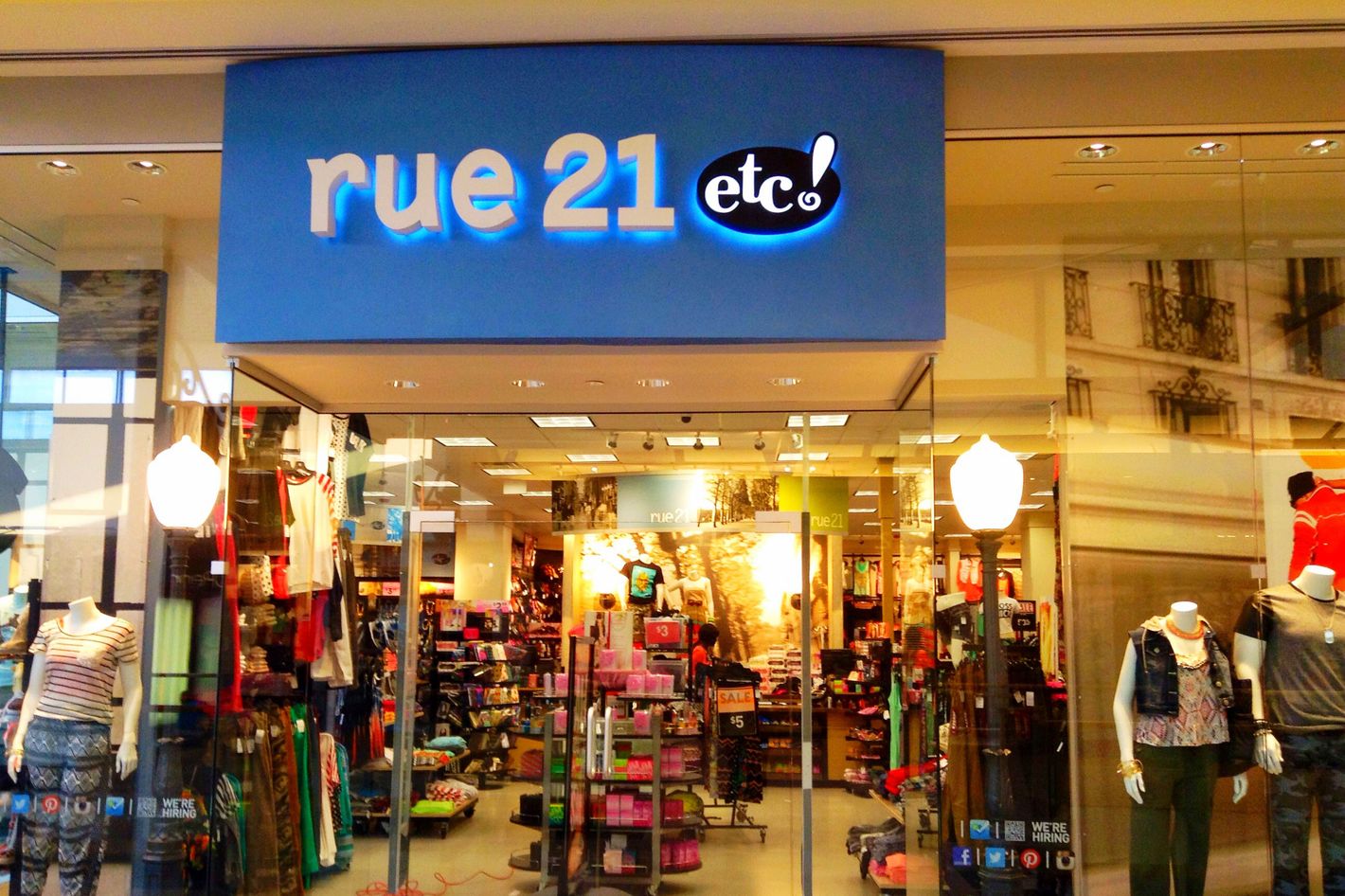
Rue21’s brand aesthetic began to feel dated. The graphic tees and distressed denim that defined the brand in the early 2010s didn’t resonate with a Gen Z audience that was increasingly interested in either “quiet luxury” or highly specific, micro-trend aesthetics like “cottagecore” or “streetwear.” Rue21’s attempt to be everything to everyone resulted in a brand that felt like it stood for nothing.
The Structural Collapse: Navigating Triple Bankruptcy
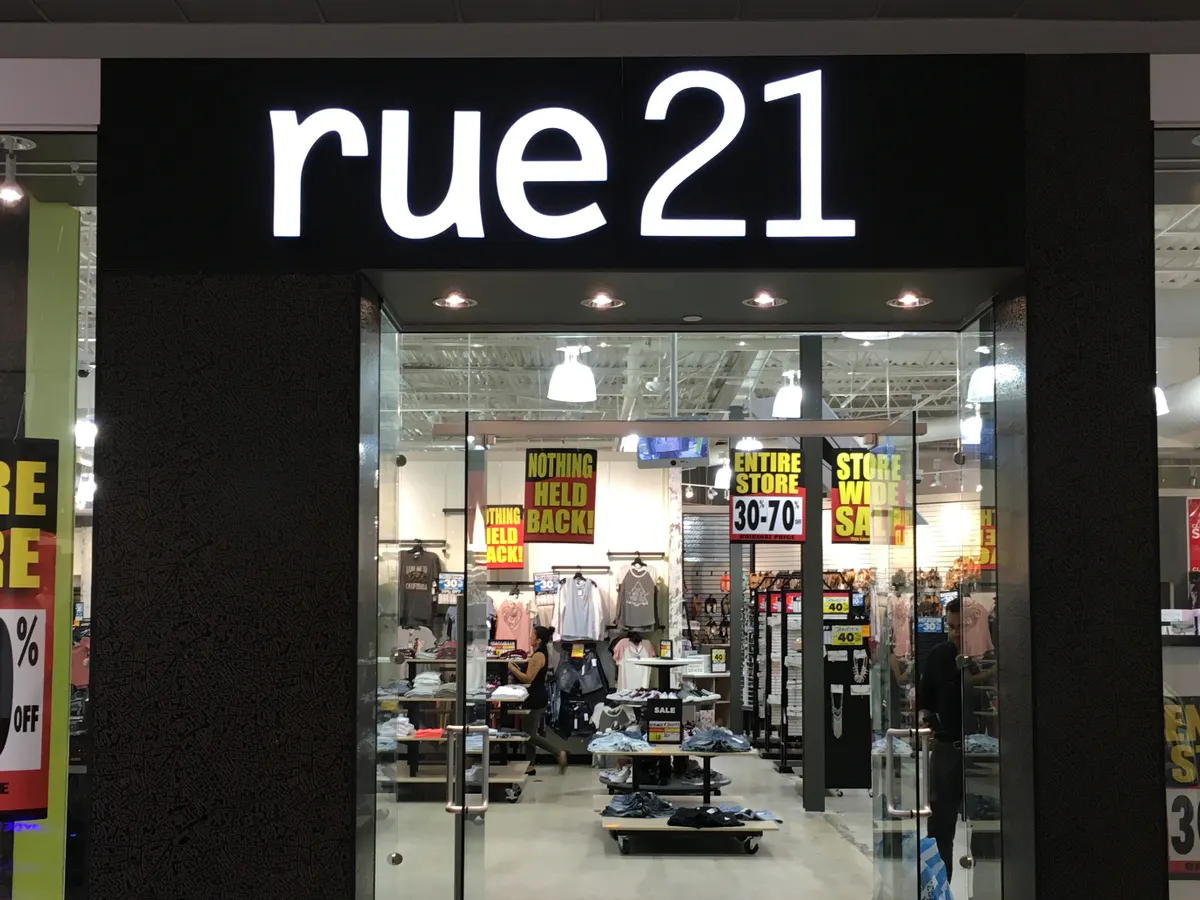
The downfall of Rue21 was a slow-motion collapse characterized by three separate bankruptcy filings. Each filing was a symptom of a deeper brand ailment that could not be cured by simple financial restructuring.
The 2017 Turning Point
Rue21 first filed for Chapter 11 bankruptcy in 2017. At the time, the move was seen as a necessary “right-sizing” of the company. The brand closed hundreds of underperforming stores and attempted to pivot toward a more digitally-focused business model. However, the restructuring focused heavily on debt reduction rather than brand reinvention. While the company emerged from bankruptcy, it did so with a diminished physical presence and a brand identity that was still stuck in the past.
The Final Liquidation of 2024
The third and final bankruptcy filing in May 2024 was the nail in the coffin. Unlike previous filings, this was not a reorganization; it was a total liquidation. The company cited a “perfect storm” of challenges: the lingering effects of the COVID-19 pandemic, shifts in consumer spending due to inflation, and an inability to secure the necessary capital to compete in a crowded market.
From a branding perspective, the 2024 collapse revealed a harsh truth: the Rue21 brand equity had evaporated. There were no buyers willing to step in and save the name, as had happened with other bankrupt retailers like Forever 21 or Aeropostale. To investors and consumers alike, the Rue21 brand no longer carried enough weight to justify a rescue.
Branding Lessons for the Modern Retail Landscape
The disappearance of Rue21 offers several critical lessons for brands operating in the modern era. It serves as a cautionary tale of what happens when a brand prioritizes historical success over future-proofing its identity.
The Perils of Over-Expansion
Rue21’s downfall was accelerated by its massive overhead. Maintaining over 1,000 physical stores in an era of declining mall traffic is a recipe for disaster. The brand’s identity was too closely tied to the “mall experience,” making it nearly impossible to pivot when that experience lost its luster. Modern brand strategy requires a “bricks-and-clicks” balance where physical stores serve as experiential touchpoints rather than just distribution centers.
Agility in Branding
A brand must be as agile as its customers. Rue21’s inability to keep pace with the aesthetic preferences of Gen Z is a testament to the importance of cultural listening. Brands today cannot afford to operate in a vacuum. They must be active participants in the digital conversations their customers are having. Rue21 remained a “retailer” when it needed to become a “lifestyle brand.”
Community and Cultural Currency
Successful brands today do more than sell products; they build communities. Brands like Lululemon or Supreme have succeeded by creating a sense of belonging and cultural currency. Rue21, by contrast, relied on transactional relationships driven by low prices. In a world where consumers are increasingly looking for brands that reflect their values and social status, a purely transactional brand is highly vulnerable to being undercut by a cheaper competitor.
The Legacy of Rue21
While Rue21 has vanished from the physical and digital retail landscape, its story remains a vital chapter in the history of American fashion branding. It represents the pinnacle and the subsequent fall of the “mall-first” era. At its best, Rue21 provided millions of young people with an affordable way to express themselves through fashion. At its worst, it became a symbol of the “retail apocalypse”—a victim of its own inability to evolve.
The lesson for existing and emerging brands is clear: brand identity is not a static asset. It is a living, breathing entity that requires constant nurturing, innovation, and a willingness to abandon yesterday’s winning formula in favor of tomorrow’s unknown possibilities. As the retail landscape continues to shift, the brands that survive will be those that prioritize digital relevance, aesthetic agility, and a deep, authentic connection with their audience. Rue21’s departure is a stark reminder that in the world of branding, standing still is the fastest way to fall behind.
aViewFromTheCave is a participant in the Amazon Services LLC Associates Program, an affiliate advertising program designed to provide a means for sites to earn advertising fees by advertising and linking to Amazon.com. Amazon, the Amazon logo, AmazonSupply, and the AmazonSupply logo are trademarks of Amazon.com, Inc. or its affiliates. As an Amazon Associate we earn affiliate commissions from qualifying purchases.