
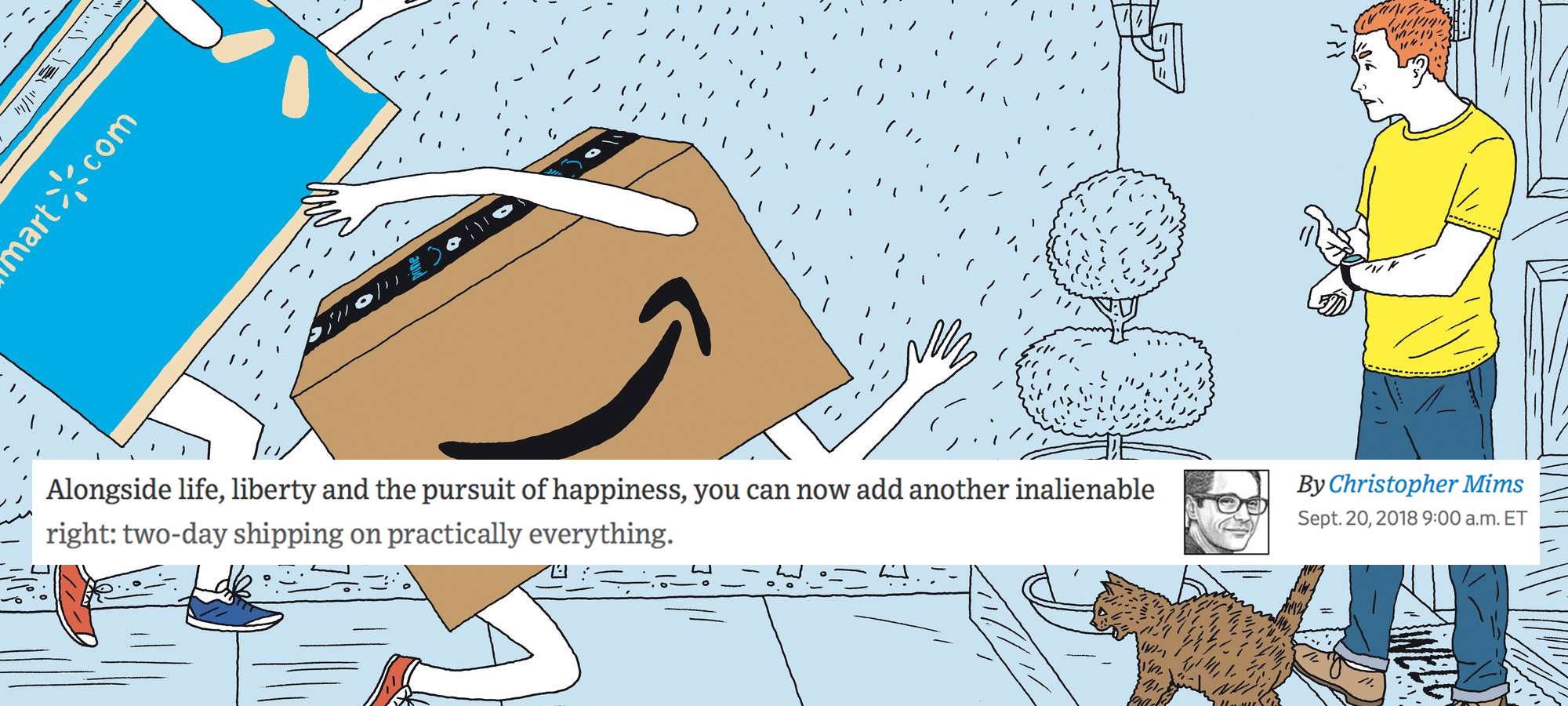
The promise was simple, yet revolutionary: order anything, and it would arrive on your doorstep within two days. For millions of Amazon Prime subscribers, this wasn’t just a perk; it was the very cornerstone of their digital shopping experience, a testament to efficiency and convenience that redefined retail. “Prime 2-Day Shipping” became synonymous with Amazon’s brand identity, a gold standard against which all other e-commerce offerings were measured. Yet, in recent years, a quiet but persistent concern has emerged among loyal customers: is the legendary two-day shipping still as reliable as it once was? Are those guaranteed delivery windows becoming more of a hopeful estimate than a firm commitment?

This perceived shift isn’t a mere figment of consumer imagination; it’s a complex confluence of technological challenges, brand management shifts, and stark economic realities that have reshaped the operational landscape for Amazon and the broader logistics industry. Far from a simple decline, what we’re witnessing is an evolution, a strategic recalibration in response to unprecedented global pressures and an ever-intensifying demand for speed and convenience. To understand “what happened,” we must delve into the intricate interplay of cutting-edge technology, the delicate balance of brand reputation, and the cold hard figures of financial sustainability that govern Amazon’s sprawling empire. This article will explore the multifaceted reasons behind the evolving Prime delivery promise, examining the technological marvels that underpin Amazon’s logistics, the impact on its powerful brand, and the economic forces driving its strategic adjustments.
The Technological Underpinnings of Amazon’s Logistics Empire
At its core, Amazon’s ability to deliver millions of packages at breakneck speed isn’t just about trucks and warehouses; it’s a colossal triumph of advanced technology. The entire operation is a finely tuned machine, orchestrated by sophisticated algorithms and a relentless pursuit of automation.
The Sophistication of Supply Chain Algorithms
Behind every “Add to Cart” and “Place Order” button lies a labyrinthine network of interconnected software systems, powered by artificial intelligence and machine learning. These aren’t just simple programs; they are highly intelligent algorithms designed to optimize every conceivable aspect of the supply chain. From predicting what products you’re likely to buy next (and thus pre-positioning them in a nearby fulfillment center) to calculating the most efficient pick-and-pack routes for robots within a warehouse, AI is the silent architect of speed.
Imagine a vast digital brain constantly analyzing billions of data points: historical sales, current inventory levels, weather patterns, traffic conditions, and even the geopolitical stability of shipping lanes. This brain decides where to store products, how many items to stock in each of Amazon’s hundreds of fulfillment centers globally, and the optimal path for a package from the warehouse shelf to your front door. Robotics play a crucial role too, with Kiva robots autonomously zipping across warehouse floors, fetching shelves of items for human packers, drastically reducing the time it takes to process an order. This technological prowess was specifically engineered to make the 2-day shipping promise not just feasible, but scalable, enabling Amazon to handle unprecedented volumes while maintaining impressive speed. It’s a testament to how digital tools, often associated with software and apps, manifest in the physical world to enhance productivity on a global scale.
The Strain of Scale and External Shocks
However, even the most sophisticated systems have breaking points, and Amazon’s technological backbone has been rigorously tested by both exponential growth and unforeseen external shocks. The sheer scale of Amazon’s operations today dwarfs what it was even five or ten years ago. More customers, more products, and more frequent orders mean that the demand placed on this logistical infrastructure has skyrocketed. This rapid expansion, while a sign of success, inevitably stretches resources.
Then came the “external shocks.” The most significant, of course, was the COVID-19 pandemic, which overnight transformed consumer behavior, shifting an immense volume of retail from brick-and-mortar stores to online platforms. Amazon, an essential service provider, saw demand surge to holiday-level peaks, sustained for months on end. This created immense pressure on every part of the supply chain: warehouses became overloaded, labor became scarce due to health concerns and social distancing protocols, and the capacity of last-mile delivery partners (UPS, FedEx, USPS, and Amazon’s own growing fleet) was pushed to its absolute limit.
Beyond the pandemic, other factors like fluctuating fuel costs, ongoing labor shortages (particularly for drivers and warehouse staff), and even localized events like severe weather have a cascading effect on delivery times. While Amazon’s AI can adapt, predicting these unpredictable variables and having backup systems for every contingency is an almost insurmountable challenge. The “last mile” – the final leg of delivery from a local distribution center to the customer’s doorstep – remains the most expensive and complex part of the process, and one where even advanced tech can struggle against real-world limitations like traffic, gate codes, and inclement weather. The technological challenge, therefore, is not just about building efficient systems, but about building resilient, adaptive systems that can withstand a world of constant change and increasing demand.
Brand Erosion and Customer Trust in a Post-Promise World
The impact of delivery consistency extends far beyond mere logistics; it directly touches the core of Amazon’s brand identity and the trust it has meticulously built with its customer base.
The Prime Promise: A Cornerstone of Amazon’s Brand Identity
When Jeff Bezos launched Amazon Prime in 2005, the concept of “free two-day shipping” was revolutionary. It wasn’t just a shipping option; it was a powerful brand differentiator, a statement of unparalleled convenience and reliability. This promise quickly became the flagship benefit of the Prime membership, overshadowing even the nascent streaming services and other perks that would later be added. For consumers, Prime meant peace of mind: urgent purchases, last-minute gifts, or simply everyday essentials would arrive swiftly, predictably, and without additional shipping charges.
This consistent reliability forged a deep sense of trust. Customers learned to depend on Amazon, integrating Prime into their daily lives and purchasing habits. The ability to fulfill this promise consistently for years cultivated an image of a company that not only understood customer needs but had the technological and operational might to meet them, repeatedly. Two-day shipping wasn’t just a service; it was a symbol of Amazon’s commitment to customer obsession, a critical component of its corporate identity that drove brand loyalty and subscription growth. When you thought of Amazon Prime, you thought of speed and dependability, and this perception was incredibly valuable.
Managing Disappointment and Reputation Damage
However, when the promise falters, even occasionally, the psychological impact on customers can be significant. The expectation of two-day delivery is so deeply ingrained that any deviation, even a delay of a single day, can lead to disproportionate disappointment. It’s not just about the package being late; it’s about a breach of trust, a feeling that a fundamental expectation of the Prime membership isn’t being met.
This shift in perception poses a considerable challenge for Amazon’s brand reputation. While Amazon remains a dominant force, the anecdotal evidence of “Prime isn’t what it used to be” can chip away at customer loyalty over time. Negative experiences are often amplified through social media and online reviews, impacting the company’s public image. Amazon’s communication strategies become crucial here. How it acknowledges these challenges, whether it offers proactive updates or compensatory measures, directly influences how customers perceive its commitment to the Prime promise.

Furthermore, competitors have taken note. Retailers like Walmart and Target, and even smaller e-commerce players, are actively investing in their own faster shipping capabilities, often leveraging localized fulfillment networks or in-store pickup options. By offering competitive (or even superior in some instances) delivery speeds, these brands are directly challenging Amazon’s long-held advantage, potentially eroding its market share and forcing Amazon to work even harder to justify the Prime subscription fee. In this competitive landscape, maintaining customer trust and managing expectations around delivery consistency is paramount to safeguarding its brand and retaining its vast subscriber base.
The Economic Reality: Costs, Competition, and Consumer Expectations
The pursuit of ultra-fast delivery comes with a staggering price tag, and understanding “what happened” requires a deep dive into the financial pressures that influence Amazon’s operational decisions.
The Escalating Costs of Ultra-Fast Delivery
Delivering packages quickly, especially across vast geographical areas, is an incredibly expensive undertaking. Amazon has consistently invested billions into its logistics network, building new warehouses, purchasing fulfillment technology, expanding its delivery fleet (including planes, trucks, and vans), and hiring hundreds of thousands of employees. Each step of this process has seen escalating costs. Fuel prices, for instance, are notoriously volatile and directly impact the operational expenses of a massive transportation network. Labor wages have also been steadily rising, partly due to increased competition for workers and partly due to inflation. Recruiting and retaining a sufficient workforce of drivers, sorters, and packers, particularly in a tight labor market, is a significant financial burden.
Moreover, the density of inventory required to guarantee 2-day (or even same-day) delivery means Amazon often needs to stock products in multiple fulfillment centers across different regions. This necessitates more warehouse space, more inventory holding costs, and more complex inventory management systems – all of which add to overhead. For many products, particularly lower-priced items, the cost of expedited shipping can eat significantly into already razor-thin retail margins. The financial burden to maintain the Prime promise across millions of SKUs and geographical locations is immense, representing a constant balancing act between customer expectation and profitability. This makes it a crucial personal finance consideration for Amazon, as it impacts their overall profitability and investment capacity.
Subscription Value and Customer Retention
The question for many Prime subscribers inevitably becomes: is the membership still worth it if 2-day shipping isn’t consistently guaranteed? The perceived erosion of this core benefit directly impacts the value proposition of the Prime subscription. Amazon has steadily increased the price of Prime over the years, from an initial $79 to $139 annually in the US. While the company has layered on additional benefits like Prime Video, Music, and exclusive deals, the shipping speed remains a primary driver for many sign-ups and renewals.
If customers feel that the premium they pay for Prime no longer delivers on its central promise of rapid delivery, they may reconsider the subscription. This can lead to increased customer churn and make it harder to attract new subscribers, directly impacting Amazon’s recurring revenue streams. From a business finance perspective, Amazon must continuously evaluate the delicate balance between the subscription price, the rising costs of delivering its benefits, and the perceived value for the consumer. The challenge is to maintain a compelling value proposition that justifies the cost, even as the delivery landscape becomes more complex and expensive. The financial tools used to analyze customer lifetime value and churn rates are vital in making these strategic decisions.
Strategic Shifts and Future Outlook
In response to these economic realities and logistical challenges, Amazon is making strategic shifts. Rather than a universal, rigid “2-day” promise, there’s a growing emphasis on more localized, flexible delivery options. Amazon is heavily investing in its own air cargo fleet (“Amazon Air”) and ground delivery network to gain more control over the entire supply chain, reducing reliance on third-party carriers where possible. The company is also expanding its network of smaller, localized fulfillment centers and “sortation centers” designed for “Same-Day” or “Next-Day” delivery in densely populated urban areas.
This strategic pivot is financially driven. While building out its own infrastructure is a massive upfront investment, it offers greater control, potentially lower per-package costs in the long run, and the ability to tailor delivery speeds based on regional demand and logistical feasibility. Instead of trying to make every product arrive in two days everywhere, Amazon is focusing on ultra-fast delivery for high-demand items in key markets, while maintaining realistic (and still quite fast) delivery estimates for other products or regions. This move reflects a sophisticated understanding of business finance, prioritizing targeted, sustainable speed over an unsustainable universal guarantee. It also hints at how online income streams for Amazon can be diversified and optimized through infrastructure investment, affecting overall profitability.
Navigating the New Normal: Tips for Consumers and Businesses
As Amazon adapts, so too must its users and the businesses that rely on its platform. Understanding these changes can help both consumers make informed choices and businesses optimize their strategies.
For Consumers
For those who continue to rely on Amazon Prime, a slight adjustment in expectations and habits can enhance the shopping experience. Firstly, always check estimated delivery dates carefully before completing a purchase. Amazon’s algorithms are constantly updated, and the displayed date is often the most accurate reflection of current logistical capabilities for that specific item and your location. Don’t assume everything will arrive in two days; verify it. Secondly, consider utilizing alternative shopping options if an item is truly time-sensitive. Local stores, other online retailers with strong local delivery, or even in-store pickup options can sometimes be more reliable for urgent needs. Finally, remember that Prime offers many benefits beyond shipping. Explore Prime Video, Prime Music, exclusive deals, and other perks to ensure you’re maximizing the value of your subscription, even if shipping speeds occasionally fluctuate. This approach allows consumers to manage their personal finance effectively by getting the most out of their subscription.
For Businesses (Selling on Amazon or Other Platforms)
For businesses, particularly third-party sellers on Amazon’s marketplace, the evolving delivery landscape necessitates strategic adaptation. Firstly, diversify sales channels. Relying solely on Amazon, especially for fulfillment, can be risky if delivery consistency impacts customer satisfaction or seller metrics. Exploring your own e-commerce site, other marketplaces, or even brick-and-mortar retail can create resilience. Secondly, manage customer expectations regarding shipping. Clear communication about delivery times, potential delays, and tracking information can significantly reduce customer frustration and protect your brand reputation. Utilize Amazon’s transparency tools or your own communication channels to keep buyers informed. Lastly, consider localized fulfillment options or leveraging third-party logistics (3PL). If your products are consistently delayed through Amazon’s FBA (Fulfillment by Amazon) or you want greater control over the delivery experience, exploring your own fulfillment network or partnering with a 3PL can offer greater flexibility and potentially faster, more reliable delivery for your customers. This directly impacts business finance, as investing in alternative logistics can be costly but might be necessary to maintain sales and customer loyalty.
Conclusion
“What happened to Prime 2-Day Shipping?” isn’t a simple story of decline but a fascinating narrative of evolution in the face of immense pressure. The ubiquitous promise that once defined Amazon’s groundbreaking Prime service has not vanished, but rather adapted, reshaped by a complex interplay of technological frontiers, brand imperatives, and unforgiving economic realities. From the sophisticated AI algorithms that orchestrate Amazon’s global supply chain to the escalating costs of fuel and labor, every facet of this logistical marvel has been stretched and re-evaluated.
Amazon continues to pour billions into its infrastructure, not to retreat from speed, but to redefine it – focusing on strategic ultra-fast delivery in key zones while recalibrating expectations elsewhere. The goal remains customer obsession, but the path to achieving it in an increasingly complex world demands flexibility and innovation. For consumers, understanding these shifts means adjusting expectations and leveraging the full spectrum of Prime benefits. For businesses, it necessitates diversifying strategies and prioritizing transparent customer communication. The era of universal, guaranteed 2-day shipping may be morphing into a more nuanced landscape of “same-day,” “next-day,” and tailored delivery windows, but the core drive for convenience and speed in e-commerce endures. Amazon’s journey reflects the continuous innovation required to navigate the future of retail, where technology, brand trust, and financial sustainability will forever remain intertwined.
aViewFromTheCave is a participant in the Amazon Services LLC Associates Program, an affiliate advertising program designed to provide a means for sites to earn advertising fees by advertising and linking to Amazon.com. Amazon, the Amazon logo, AmazonSupply, and the AmazonSupply logo are trademarks of Amazon.com, Inc. or its affiliates. As an Amazon Associate we earn affiliate commissions from qualifying purchases.