
In 2005, Amazon launched a service that would fundamentally redefine the relationship between consumers and e-commerce: Amazon Prime. At its inception, the brand’s core value proposition was simple, radical, and incredibly effective: “Two-Day Shipping.” For a flat annual fee, the friction of online shopping—specifically the long wait times and shipping costs—was eliminated. This wasn’t just a logistical feat; it was a masterful brand strategy that transformed Amazon from an online bookstore into a daily utility.
However, in recent years, a common sentiment has surfaced among the program’s 200 million global members: “What happened to my two-day shipping?” Packages that once arrived with metronomic precision now often take three, four, or even five days. From a brand management perspective, this shift represents a fascinating case study in how a corporate giant manages the “Brand Promise Gap”—the space between what a company tells its customers to expect and what it actually delivers.

The Foundation of the Prime Brand: Speed as a Moat
To understand what happened to the two-day shipping window, one must first understand what that window did for the Amazon brand. In the early 2000s, e-commerce was plagued by “cart abandonment.” Customers would find an item they liked, only to be deterred by shipping costs or a ten-day delivery estimate. By introducing Prime, Amazon didn’t just sell a subscription; they sold a psychological shortcut.
Creating the “Default” Shopping Choice
The brand strategy behind Prime was to become the consumer’s “default” starting point. When shipping is “free” and “fast,” the cognitive load of price-comparing across other sites is removed. This created a level of brand loyalty rarely seen in retail. Prime members became a distinct demographic of high-intent buyers who prioritized time over small price fluctuations. The “Prime” badge became a symbol of reliability—a brand seal of approval that guaranteed a specific outcome.
The Shift from Service to Lifestyle
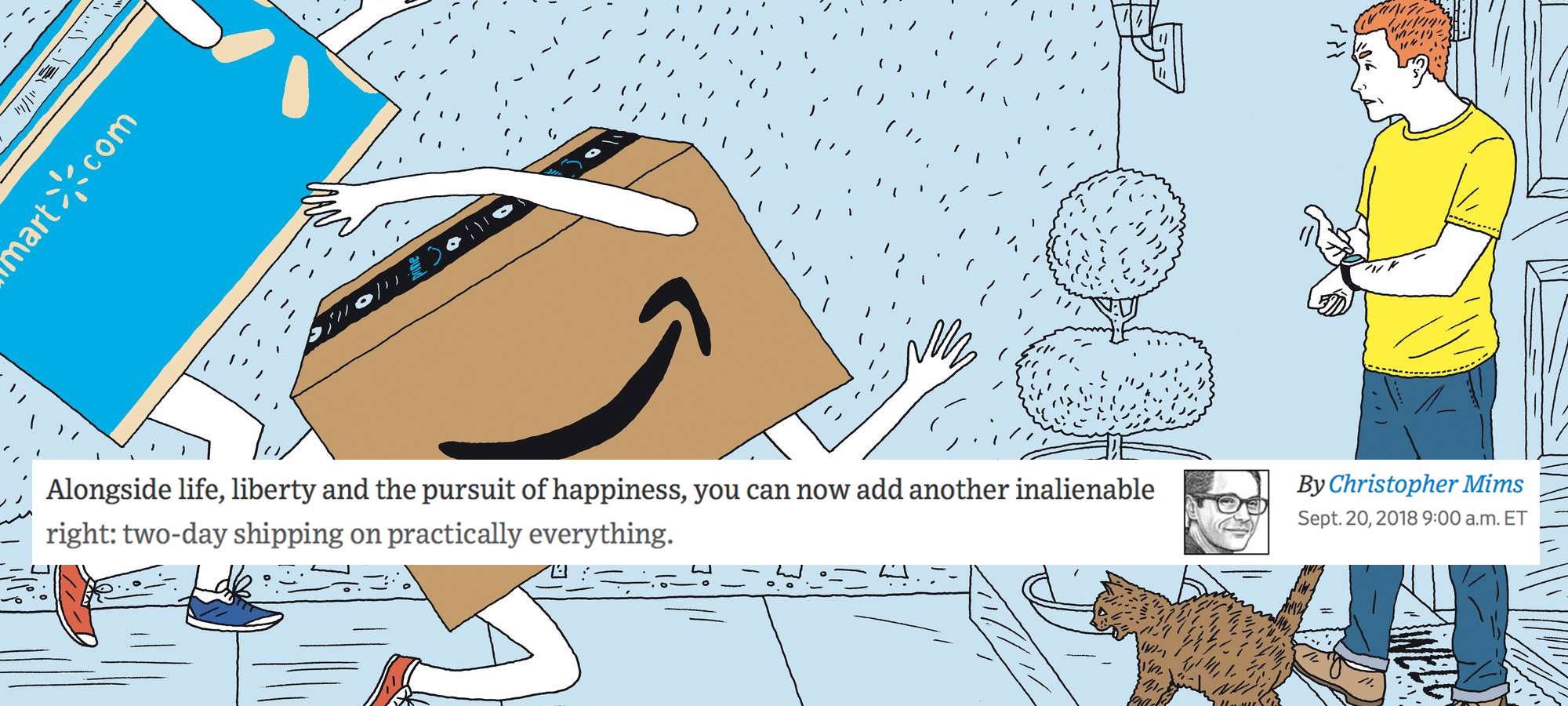
As the brand matured, Amazon recognized that shipping alone was a commodity that competitors like Walmart and Target would eventually replicate. To protect its market position, Amazon began a process of brand expansion. Prime was no longer just about a cardboard box; it was about streaming video, music, photo storage, and grocery discounts. This transition was a strategic move to ensure that even if the “two-day shipping” pillar fluctuated, the “Prime Brand” would remain indispensable to the household.
The Logistical Strain and the Rebranding of “Fast”
The erosion of the two-day shipping standard isn’t merely a result of poor planning; it is the result of a massive shift in how Amazon defines its corporate identity. As Amazon grew, the sheer volume of orders began to outpace the traditional hub-and-spoke delivery models used by partners like UPS and FedEx. To maintain its brand promise, Amazon had to stop being a retailer and start being a logistics company.
From “Shipping” to “Delivery”
There is a subtle but vital distinction in branding terminology that explains the perceived delay: the difference between “shipping” and “delivery.” Historically, the Prime brand promised two-day shipping—meaning the item would leave the warehouse and arrive at your door within 48 hours of being handed to a carrier. Today, the brand has shifted toward a “delivery” window.
This change reflects a strategic pivot in managing customer expectations. Amazon’s internal branding now emphasizes the “Expected Delivery Date” at the point of checkout rather than a blanket 48-hour guarantee. By adjusting the interface to show a specific date, Amazon is attempting to recalibrate the consumer’s internal clock, moving away from the “two-day” dogma toward a “predictability” model.
Regionalization and the End of the National Inventory
One of the most significant shifts in Amazon’s brand strategy has been the regionalization of its network. Previously, an item might ship from a warehouse across the country to fulfill a two-day promise. As the brand scales, this is no longer sustainable or environmentally viable. Amazon has moved toward a model where items are placed in regional hubs based on predictive analytics. If an item isn’t in your local hub, the brand no longer forces a two-day window; instead, it provides a realistic three- or four-day window. This is a move from “speed at all costs” to “efficiency for the sake of the brand’s bottom line.”
Managing the Brand Promise Gap

When a brand’s primary identity is built on a specific promise—like “Two-Day Shipping”—any deviation from that promise risks damaging brand equity. Amazon’s recent strategy involves several key tactics to mitigate this risk and maintain consumer trust even when delivery times lag.
The “Amazon Day” and “No-Rush” Incentives
Instead of apologizing for slower shipping, Amazon has rebranded slower delivery as a “choice” for the consumer. Through “Amazon Day” (consolidating orders into one delivery) and “No-Rush Shipping” (offering digital credits for slower delivery), the company has successfully turned a logistical necessity into a marketing feature. This shifts the narrative from “Amazon is slow” to “Amazon is flexible and eco-conscious.” From a brand strategy perspective, this is a masterstroke in turning a potential negative into a brand-aligned positive.
Transparency as a Trust Mechanism
Brand trust is built on consistency. When a package is late without warning, trust is broken. To combat this, Amazon has invested heavily in real-time tracking and proactive notifications. By providing a map showing the delivery truck’s progress, Amazon uses “operational transparency” to keep the consumer engaged. Even if a package takes three days instead of two, the psychological stress is reduced because the brand provides constant updates, maintaining a sense of control for the customer.
The Prime Ecosystem: Why the Brand Survives Shipping Delays
If shipping were the only value Prime provided, the brand might be in trouble. However, Amazon’s corporate strategy has been to weave Prime into the very fabric of digital life. This “ecosystem” approach ensures that the brand remains valuable even if the core shipping promise evolves.
The Content Moat: Prime Video and Beyond
Amazon spends billions annually on original content. From a brand perspective, The Lord of the Rings: The Rings of Power or Thursday Night Football are not just entertainment; they are retention tools. When a member considers canceling because a package was late, they are reminded that they would also lose access to their favorite shows. This diversification of the brand’s value proposition has decoupled the “Prime” identity from the “Shipping” identity.
The Grocery Integration
With the acquisition of Whole Foods and the expansion of Amazon Fresh, the brand has entered the highest-frequency retail category: groceries. By offering exclusive discounts and delivery windows for food, Amazon has increased the “Brand Surface Area”—the number of touchpoints they have with a consumer each week. In this context, a one-day delay on a pair of headphones is outweighed by the convenience of having groceries delivered to the kitchen counter.
The Future of the Prime Brand: Beyond the 48-Hour Window
As we look toward the future of the Amazon brand, it is clear that the era of “Universal Two-Day Shipping” is evolving into an era of “Segmented Delivery.” The brand is no longer a monolith; it is a tiered experience based on geography, item type, and consumer behavior.
The Rise of Same-Day and Sub-Same-Day
While some items are taking longer, Amazon is simultaneously doubling down on “Same-Day” delivery in major metropolitan areas. This is a strategic “Brand Re-anchoring.” By making some items arrive in hours, Amazon reinforces its identity as the fastest player in the market, even if the majority of items take longer. It creates a “halo effect” where the brand is perceived as fast overall, despite the reality of the broader catalog.
Sustainability and the Brand’s New Conscience
There is a growing brand movement toward sustainability. Amazon is increasingly messaging its “Climate Pledge,” which includes a move toward electric delivery vans and reduced packaging. Slower, consolidated shipping is a key component of this environmental goal. By aligning slower shipping with “green” initiatives, Amazon is evolving its brand identity from a symbol of “instant gratification” to one of “responsible consumption.”
Conclusion: The Resilient Identity of Prime
The answer to “what happened to Prime two-day shipping” is not a story of failure, but a story of brand evolution. Amazon has successfully transitioned Prime from a single-feature service into a multi-faceted lifestyle brand. While the 48-hour delivery window may no longer be the absolute rule, the brand has built enough equity through other channels—video, music, groceries, and convenience—to maintain its dominant market position.
In the world of brand strategy, the most successful companies are those that can pivot their core promise without losing their customer’s trust. Amazon has done exactly that. By rebranding “fast” as “predictable” and “speed” as “choice,” they have ensured that the Prime logo remains the most powerful symbol in modern retail, regardless of how many days it takes for that brown box to arrive on the doorstep.
aViewFromTheCave is a participant in the Amazon Services LLC Associates Program, an affiliate advertising program designed to provide a means for sites to earn advertising fees by advertising and linking to Amazon.com. Amazon, the Amazon logo, AmazonSupply, and the AmazonSupply logo are trademarks of Amazon.com, Inc. or its affiliates. As an Amazon Associate we earn affiliate commissions from qualifying purchases.