
The history of Poland during the Second World War is a profound study in the collapse of national sovereignty and the extreme volatility of international power dynamics. For historians and strategists alike, the Polish experience serves as a definitive case study in the vulnerability of states caught between expansionist geopolitical forces. By examining the fiscal erosion, the destruction of infrastructure, and the subsequent forced transition of an entire economic system, we can observe how war fundamentally reshapes a nation’s financial trajectory for decades to come.
The Fiscal Collapse and Resource Extraction
When Germany invaded Poland in September 1939, the immediate impact was the total destabilization of the Polish Złoty and the complete liquidation of the country’s industrial base. The German administration, overseen by the General Government, implemented a policy of “predatory extraction” that functioned as a massive, forced transfer of wealth.

The Mechanism of Financial Exploitation
The occupying forces utilized the Emisyjny Bank w Polsce to issue new currency, which was deliberately devalued to strip the local population of their purchasing power. Simultaneously, all significant industrial assets—including coal mines in Upper Silesia, textile mills in Łódź, and agricultural lands—were confiscated. These were either directly integrated into the German war machine or placed under the stewardship of German trustees. For the Polish economy, this meant that the capital meant for domestic reinvestment and infrastructure upkeep was diverted entirely into the Reich’s coffers, effectively creating a net-negative wealth loop that prevented any form of organic economic recovery during the occupation years.
The Cost of Human Capital Depletion
Beyond physical assets, the systematic liquidation of the Polish professional, academic, and entrepreneurial classes represented an immeasurable loss in human capital. By targeting the intelligentsia through operations like AB-Aktion, the occupying forces systematically dismantled the managerial structures necessary for a modern economy. The long-term financial consequence was a “brain drain” and a institutional vacuum that would hinder the nation’s ability to rebuild its fiscal infrastructure long after the conflict concluded.
Industrial Warfare and Infrastructure Erasure
The geography of Poland became a testing ground for total war, a strategy that prioritizes the destruction of logistical nodes as much as military targets. The result was the near-total erasure of the country’s logistical backbone—its rail networks, telecommunications hubs, and power generation facilities.
The Destruction of Urban Economic Centers
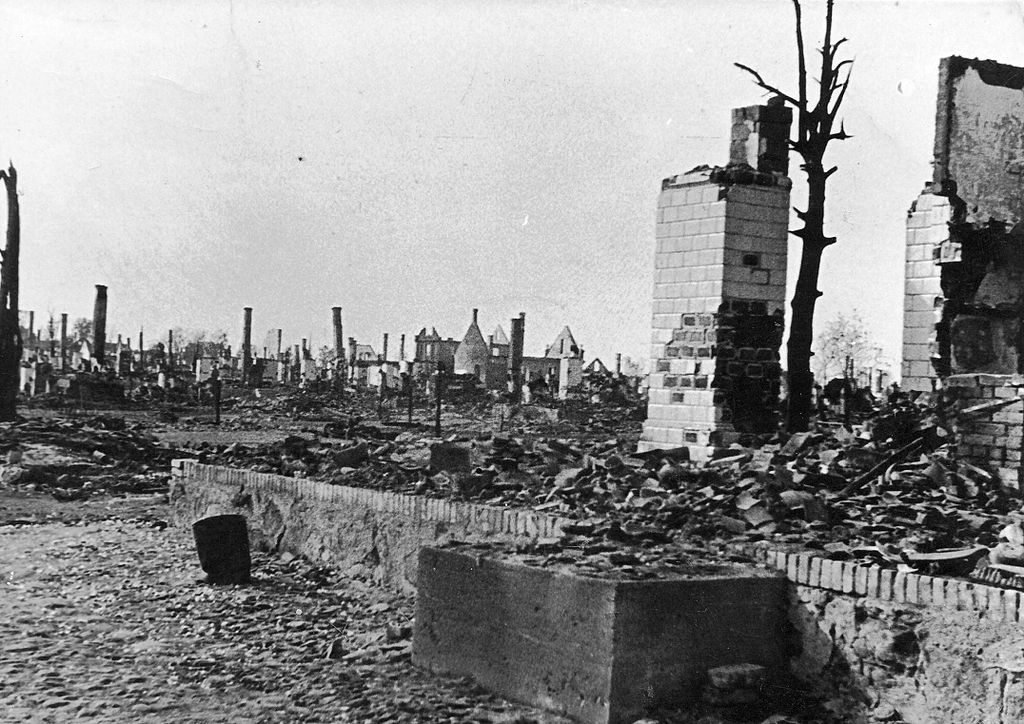
Warsaw serves as the most harrowing example of the systematic demolition of an urban economy. Following the Warsaw Uprising in 1944, the city was not merely occupied; it was methodically razed. From an economic perspective, this represented the destruction of centuries of accumulated real estate wealth, commercial inventory, and civic administrative records. When a city’s physical footprint is obliterated, the cost of reconstruction is not merely the price of bricks and mortar; it is the cost of recreating the entire commercial ecosystem, from property registries to supply chain logistics.
Logistics as a Strategic Target
Throughout the war, the primary logistical routes connecting Eastern and Western Europe were decimated. The destruction of bridge networks and rolling stock meant that even if Poland had possessed the capital to attempt domestic trade, the physical infrastructure to move goods simply did not exist. This created a localized economy of subsistence, where the lack of transport killed the possibility of market competition and forced the populace into a survival-based barter system, further isolating them from any form of global or regional financial engagement.
The Transition to a Command Economy
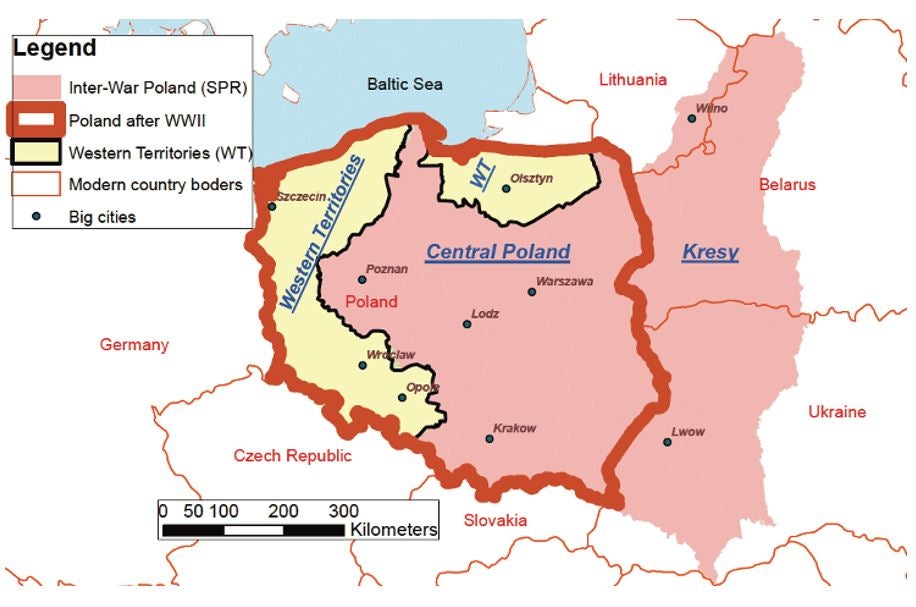
The conclusion of the war in 1945 did not lead to a return to the pre-war market-based financial system. Instead, Poland found itself under the sphere of influence of the Soviet Union, leading to a radical pivot toward a centrally planned economic model. This transition was a defining moment in Polish financial history, as it fundamentally altered the relationship between private ownership and the state.
Nationalization and the End of Private Property
The post-war government initiated a series of nationalization decrees that essentially liquidated the remaining private sector. Industries that had survived the war, along with large agricultural estates, were seized by the state without compensation. This was justified under the premise of post-war reconstruction and the need to redistribute wealth to the proletariat. For the individual, this effectively meant the end of private equity as a concept. Wealth could no longer be stored or grown through traditional investing; it was instead mediated through state-controlled labor unions and public sector employment.
Institutionalizing the Planned Economy
With the implementation of the first “Three-Year Plan” (1947–1949), the Polish government shifted its focus to heavy industrialization, mirroring the Soviet approach. While this led to rapid gains in coal production and steel manufacturing, it occurred at the expense of consumer goods and personal financial mobility. The Polish Złoty was pegged to the Soviet Ruble in practice, insulating the nation from international financial markets and tethering its prosperity entirely to the successes—and failures—of the Eastern Bloc’s industrial output.
The Legacy of the Wartime Economic Shift
Looking back at the trajectory of Poland during and after WW2, it is evident that the war acted as a catalyst for a forced shift from a burgeoning market-oriented state to a state-dominated economy. The financial ramifications of this shift were felt for nearly half a century.
The Long Shadow of Debt and Reconstruction
Post-war Poland was saddled with the colossal task of rebuilding from near-zero, all while lacking access to Western capital markets or aid, such as the Marshall Plan, which had been rejected under pressure from the Soviet Union. This meant that the country’s modernization was perpetually underfunded and reliant on heavy debt-cycling within the COMECON framework. The lack of private capital accumulation during these decades meant that when Poland finally moved toward a market economy in the late 1980s, it had to build its financial foundations from the ground up, effectively losing several generations’ worth of time in terms of wealth generation and entrepreneurial development.
Lessons in Resilience and Adaptation
Despite the catastrophic economic conditions created by the war, the period underscores the resilience of human enterprise. Even in the face of total asset seizure and the erasure of traditional markets, local populations developed intricate underground economic networks. These informal markets, while often illegal under occupation or the subsequent communist regime, maintained a connection to the basic principles of supply and demand.
The story of Poland during WW2 is a sobering reminder that economic stability is inherently fragile and inextricably linked to geopolitical security. The destruction of physical wealth is only the beginning; the true, long-term cost of such a conflict is the disruption of the systems, institutions, and human networks that allow a nation’s economy to thrive. By analyzing these historical developments, one gains a clearer understanding of why institutional stability and the protection of private property are considered the bedrock of any successful modern financial system. The resilience of the Polish people in overcoming the fiscal devastation of the mid-20th century remains one of the most significant endurance tests in economic history, illustrating that while a country’s wealth can be confiscated or destroyed, the capacity for innovation and the desire for market-based growth remains a persistent force that eventually reclaims its path.
aViewFromTheCave is a participant in the Amazon Services LLC Associates Program, an affiliate advertising program designed to provide a means for sites to earn advertising fees by advertising and linking to Amazon.com. Amazon, the Amazon logo, AmazonSupply, and the AmazonSupply logo are trademarks of Amazon.com, Inc. or its affiliates. As an Amazon Associate we earn affiliate commissions from qualifying purchases.