
The name Payless ShoeSource once resonated with generations of consumers seeking affordable footwear for the entire family. For decades, it was a ubiquitous presence in strip malls and shopping centers across America and beyond, a go-to destination for everything from school shoes to work boots, all at budget-friendly prices. Yet, in what seemed like a swift and dramatic turn, the brand all but vanished from the physical retail landscape, leaving many to wonder: what exactly happened to Payless?
The story of Payless is a compelling case study in brand evolution, or rather, the failure to evolve. It highlights the critical importance of brand relevance, strategic adaptation, and maintaining a clear, compelling value proposition in an ever-changing retail environment. Its eventual decline and subsequent re-emergence in a new form offer invaluable lessons for any brand grappling with digital disruption, shifting consumer expectations, and intense market competition. This article will delve into the factors that contributed to the unraveling of the Payless brand, examining its initial strengths, its challenges in a new era, and the strategic missteps that ultimately led to its widespread store closures, before considering its potential path forward.
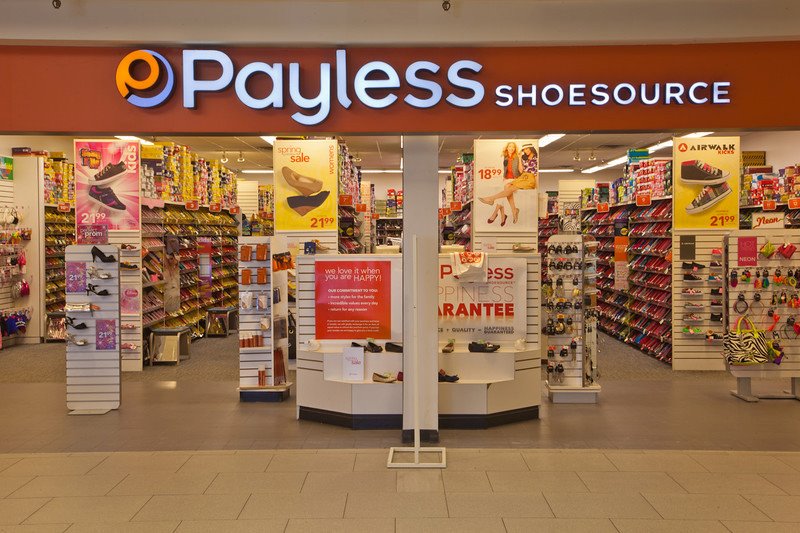
The Rise of a Footwear Giant: Payless’s Original Brand Promise
Payless ShoeSource began with a simple, yet powerful, brand promise: to make footwear accessible and affordable for everyone. This core identity allowed it to flourish for decades, establishing itself as a household name.
Democratizing Footwear: The Early Years and Core Identity
Founded in Topeka, Kansas, in 1956, Payless was revolutionary in its self-service model, allowing customers to try on shoes directly from the shelves, a departure from traditional shoe stores where sales associates retrieved sizes from the backroom. This model not only reduced overhead costs, enabling lower prices, but also empowered customers with a sense of independence and convenience.
Payless’s brand identity was firmly rooted in “value.” It wasn’t about high fashion or premium materials; it was about practicality, durability, and most importantly, affordability. Its target demographic was clear: families on a budget, parents needing to outfit growing children, and individuals seeking functional footwear without breaking the bank. The brand successfully communicated this through its no-frills store design, straightforward marketing, and consistent pricing strategy. It became synonymous with “basic shoes at basic prices,” a reliable solution for millions of Americans.
A Ubiquitous Presence: Retail Strategy and Market Dominance
The physical retail strategy of Payless was key to reinforcing its brand and achieving market dominance. By strategically placing its stores in easily accessible strip malls and suburban shopping centers, Payless became an integral part of community commerce. Its aggressive expansion strategy meant that a Payless store was often just a short drive away for many families, making it the default choice for budget shoe shopping.
The sheer volume of its brick-and-mortar footprint – at its peak, over 4,000 stores globally – solidified its brand presence and ensured top-of-mind awareness. This pervasive physical presence, combined with its consistent messaging of value and convenience, allowed Payless to effectively capture a significant share of the affordable footwear market for decades. The brand built an empire on the premise of being the most convenient and cost-effective solution for everyday shoe needs.
Erosion of Brand Relevance: Navigating a Shifting Retail Landscape
While Payless thrived for many years on its foundational brand promise, the retail landscape began to undergo seismic shifts. The brand struggled to adapt, leading to a gradual erosion of its relevance in the eyes of an evolving consumer base.
The E-commerce Tsunami: Digital Disruption and Lagging Adaptation
One of the most significant challenges Payless faced was the rise of e-commerce. The digital revolution fundamentally altered how consumers shopped, offering unparalleled convenience, vast selections, and competitive pricing often unavailable in traditional brick-and-mortar stores. Online pure-play retailers, with lower overheads, could frequently offer even better deals or a wider variety of styles delivered directly to the consumer’s door.
Payless was slow to fully embrace and integrate a robust digital strategy. While it eventually launched an e-commerce platform, it never achieved the seamless, engaging, and comprehensive online presence that younger, digitally native brands or more agile competitors did. Its brand experience remained largely anchored to its physical stores, which by then were beginning to look dated compared to the sleek interfaces and personalized experiences offered online. This lag in digital adaptation meant Payless missed crucial opportunities to connect with a new generation of shoppers who increasingly started their purchasing journey online, diminishing its brand’s reach and perceived modernity.
The “Fast Fashion” Effect and Changing Consumer Tastes
Beyond convenience, consumer tastes also evolved dramatically. The “fast fashion” phenomenon, initially prevalent in apparel, extended its influence to footwear. Shoppers, even those on a budget, began to expect more than just basic, durable shoes. They desired trendier styles, more frequent rotations of inventory, and a perception of quality or fashion-forward design, even if the price point remained low.
Payless’s brand, long associated with practical and basic designs, struggled to pivot. Its private-label focus and supply chain were optimized for volume and low cost, not rapid trend adaptation. The brand found itself in a difficult position: its core customers, while still budget-conscious, were also increasingly influenced by social media and fashion trends, and Payless’s offerings often felt out of step. The value proposition shifted from merely “affordable” to “affordable and fashionable” or “affordable and unique,” a space where Payless failed to consistently compete, leading to a perception of its brand as outdated and uninspired.
The Rise of Competitors: Diversified Threats to Market Share
The competitive landscape also intensified, attacking Payless’s market share from multiple angles. Discount department stores like Walmart and Target significantly expanded their footwear sections, often offering comparable or even trendier styles at similar price points, coupled with the convenience of one-stop shopping. Off-price retailers such as Ross Stores and TJ Maxx provided a treasure-hunt experience with branded footwear at deep discounts, appealing to budget-conscious shoppers who also desired brand names.
Furthermore, specialty shoe retailers and athletic brands adapted their strategies, offering sales and outlet options that blurred the lines with Payless’s price advantage. Each of these competitors chipped away at Payless’s unique selling proposition, leaving the brand struggling to articulate why a consumer should choose Payless over the myriad other options. Its brand differentiation, once clear and strong, became increasingly diluted in a crowded and aggressive market.
Brand Identity Crisis: Strategic Missteps and Dilution
As external pressures mounted, Payless also grappled with internal challenges, marked by strategic missteps that further diluted its brand identity and eroded customer trust.
The Perils of Private Label: Quality Perception vs. Price Point
Payless’s business model relied heavily on private-label brands and unbranded shoes, which allowed for significant cost control and margin protection. While initially a strength that enabled low prices, over time, this strategy became a vulnerability. In an era where consumers were increasingly discerning about product quality and brand authenticity, Payless’s generic offerings started to suffer from a perceived lack of quality and style compared to widely recognized brands, even at higher price points.
The brand’s identity became synonymous with “cheap” in a negative sense, rather than “value.” Shoppers began to associate Payless shoes with quick wear-and-tear or less appealing designs. This perception problem was exacerbated as other retailers started offering branded footwear at competitive prices, making Payless’s private labels less attractive. The brand failed to elevate its private labels to be desirable in their own right, instead leaving them vulnerable to direct comparisons with more established and trusted brands available elsewhere.
Failed Rebranding Attempts and Inconsistent Messaging
In attempts to regain relevance, Payless made various efforts to refresh its brand, including partnerships with designers like Christian Siriano and rebranding some stores to a more upscale, boutique-like feel. While these efforts showed an awareness of the need for change, they often felt inconsistent with the core Payless brand and its established identity.
These attempts to appear more fashionable or premium sometimes alienated its traditional value-conscious customer base without fully attracting a new, fashion-forward demographic. The messaging became muddled: was Payless a discount retailer, or was it trying to be a purveyor of affordable style? This brand identity crisis created confusion in the market, making it difficult for consumers to understand Payless’s current offering and where it fit into their shopping habits. A strong brand needs a clear, consistent story, and Payless struggled to tell one effectively during this critical period.
The Debt Burden: Financial Strain Impacting Brand Investment
While not strictly a “brand” issue, the heavy debt burden Payless accumulated through leveraged buyouts had a profound impact on its ability to invest in brand revitalization. Saddled with billions in debt, the company had limited capital to allocate towards crucial brand-building activities such as modernizing its stores, investing in digital infrastructure, enhancing its supply chain for faster trend response, or launching compelling marketing campaigns to refresh its image.
This financial constraint meant Payless couldn’t make the necessary investments to elevate its customer experience, improve product quality, or effectively communicate any new brand narrative. The brand’s physical presence continued to deteriorate, its online presence remained underdeveloped, and its marketing was minimal, all direct consequences of its financial distress. Ultimately, the lack of investment prevented the brand from adapting and competing, accelerating its decline.
The Final Chapter (and a Glimmer of Hope): Lessons in Brand Resilience and Adaptation
The confluence of these factors led to the inevitable decline of Payless’s physical retail empire, but the story isn’t entirely over. Its journey offers critical lessons for all brands.
The Bankruptcy Filings and Store Closures: The Inevitable Outcome
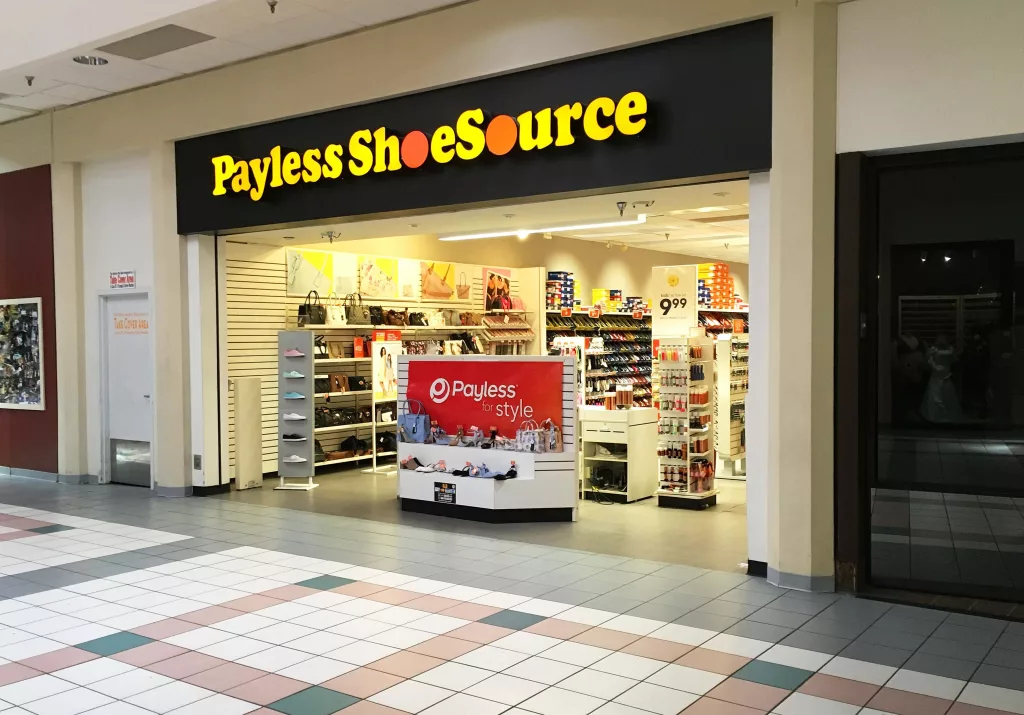
The weight of debt, coupled with diminishing sales and an outdated brand strategy, forced Payless to file for Chapter 11 bankruptcy twice. The first filing in 2017 led to the closure of hundreds of stores, but it wasn’t enough to stem the tide. The second filing in 2019 resulted in the liquidation of all remaining 2,100 U.S. and Canadian stores, marking the end of an era for the physical Payless ShoeSource brand in North America. Its iconic yellow signage became a symbol of retail disruption and brand failure to adapt. The mass closures were a stark reminder that even a brand with decades of history and a dominant market position could crumble if it failed to evolve with its customers and the broader market.
The Digital Rebirth: A New Brand Strategy for a New Era?
Remarkably, the Payless brand has since attempted a digital rebirth. Relaunched as an e-commerce-only operation in late 2020, the new Payless aims to leverage its brand recognition while shedding the baggage of its past brick-and-mortar limitations. For this new iteration to succeed, its brand strategy must be fundamentally different.
It needs to re-establish a clear and compelling value proposition that resonates with today’s online shoppers. This means focusing on improved product quality, a more curated and trend-aware selection, a seamless digital customer experience, and compelling storytelling that positions Payless not just as “cheap,” but as “smart value” or “accessible style.” The brand must build a strong digital identity, engage through social media, and utilize data to understand and serve its target audience, differentiating itself in a crowded online footwear market.

Key Takeaways for Modern Brands: Agility, Relevance, and Customer Connection
The saga of Payless ShoeSource offers profound lessons for any brand operating in today’s dynamic marketplace. Foremost is the critical importance of agility. Brands must continuously monitor market trends, consumer behavior, and technological advancements, and be prepared to pivot their strategies swiftly.
Relevance is paramount; a brand must consistently prove its value and appeal to its target audience. This requires ongoing investment in product innovation, brand modernization, and an understanding of evolving customer desires, moving beyond mere price competition. Finally, fostering a deep customer connection is vital. Brands must engage with their customers across all touchpoints, building trust and loyalty through consistent messaging, exceptional service, and a brand experience that meets or exceeds expectations. Payless’s decline serves as a powerful reminder that even the most established brands are not immune to disruption if they fail to evolve and stay connected to the heartbeat of their market. Its digital rebirth, if successful, will be a testament to the enduring power of brand recognition when combined with a truly adaptive and forward-thinking strategy.
aViewFromTheCave is a participant in the Amazon Services LLC Associates Program, an affiliate advertising program designed to provide a means for sites to earn advertising fees by advertising and linking to Amazon.com. Amazon, the Amazon logo, AmazonSupply, and the AmazonSupply logo are trademarks of Amazon.com, Inc. or its affiliates. As an Amazon Associate we earn affiliate commissions from qualifying purchases.