
In the landscape of modern Major League Baseball, where data-driven valuations and high-velocity power often dictate market prices, the saga of Luis Arraez stands as a fascinating case study in financial asset management. When fans ask “what happened to Luis Arraez,” they are often referring to his sudden 2024 trade from the Miami Marlins to the San Diego Padres—a move that sent shockwaves through the league. However, to understand what happened to Arraez, one must look beyond the batting average and into the sophisticated world of sports finance, contract arbitrage, and the shifting “currency” of professional baseball.

Arraez is a rare commodity: a back-to-back batting champion with different teams who possesses a hitting profile that defies contemporary trends. From a business perspective, he represents a unique investment vehicle. His move to San Diego wasn’t merely a roster adjustment; it was a calculated financial maneuver involving salary retention, prospect valuation, and the pursuit of a high return on investment (ROI) for a franchise operating under significant luxury tax pressures.
The Asset Value of a Pure Contact Hitter in a Power Market
In any market, value is often derived from scarcity. In the current MLB economy, the “Three True Outcomes”—home runs, walks, and strikeouts—dominate the statistical landscape. This has created a market inefficiency that teams like the San Diego Padres are now looking to exploit. Luis Arraez, with his historically low strikeout rate and elite contact skills, represents a “blue-chip” asset that provides stability to a volatile offensive portfolio.
Return on Investment in a Power-Hungry Era
From a financial standpoint, a team’s offense is an investment portfolio. If a lineup consists entirely of high-power, high-strikeout hitters, the “volatility” of that portfolio is high. You might have days of massive gains (double-digit runs) followed by periods of total stagnation. Arraez acts as a hedge against this volatility. By consistently putting the ball in play, he ensures a steady “dividend” of baserunners, increasing the efficiency of the higher-paid power hitters behind him. For the Padres, acquiring Arraez was an attempt to stabilize their offensive “cash flow.”
Arbitrage: Selling High on a Batting Title
The Miami Marlins’ decision to move Arraez was a classic example of market arbitrage. Having acquired him from Minnesota when his value was high, they saw an opportunity to “sell” before his salary skyrocketed through the arbitration process. In business finance, this is akin to a mid-cap company selling a prized division to a larger conglomerate to liquidate assets for a long-term restructuring. The Marlins realized that Arraez’s individual brilliance would not yield a championship within their current budget constraints, making him more valuable as a trade chip than as a player on their payroll.
The Financial Logistics of the Padres-Marlins Deal
The mechanics of the trade that sent Arraez to the West Coast provide a masterclass in modern corporate sports finance. It wasn’t just a player-for-player swap; it was a complex negotiation involving cash considerations, salary offsets, and the valuation of future human capital (prospects).
Salary Retention and Luxury Tax Implications
The Padres have been one of the most aggressive spenders in baseball, frequently hovering near the Competitive Balance Tax (CBT) thresholds. To make the Arraez deal work, the financial structuring was paramount. The Marlins agreed to pay nearly the entirety of Arraez’s remaining 2024 salary. In the world of business, this is essentially a “subsidized acquisition.” By taking on the salary, the Marlins increased the “purchase price” in terms of the quality of prospects they received in return. This allowed the Padres to add a batting champion to their books for the minimum player salary, a massive win for their CFO and front office.
The Prospect Pipeline as Currency
In MLB, minor league prospects are the equivalent of “growth stocks” or venture capital investments. They are high-risk, high-reward assets that cost very little in current liquid capital but have high projected future value. To acquire the “proven commodity” of Arraez, the Padres had to spend four of these assets. For the Marlins, this was a move toward long-term capital appreciation. They traded a “current yield” asset (Arraez) for four “diversified growth” assets, hoping that at least two of them would mature into high-value players by 2027.
Personal Branding as Financial Leverage
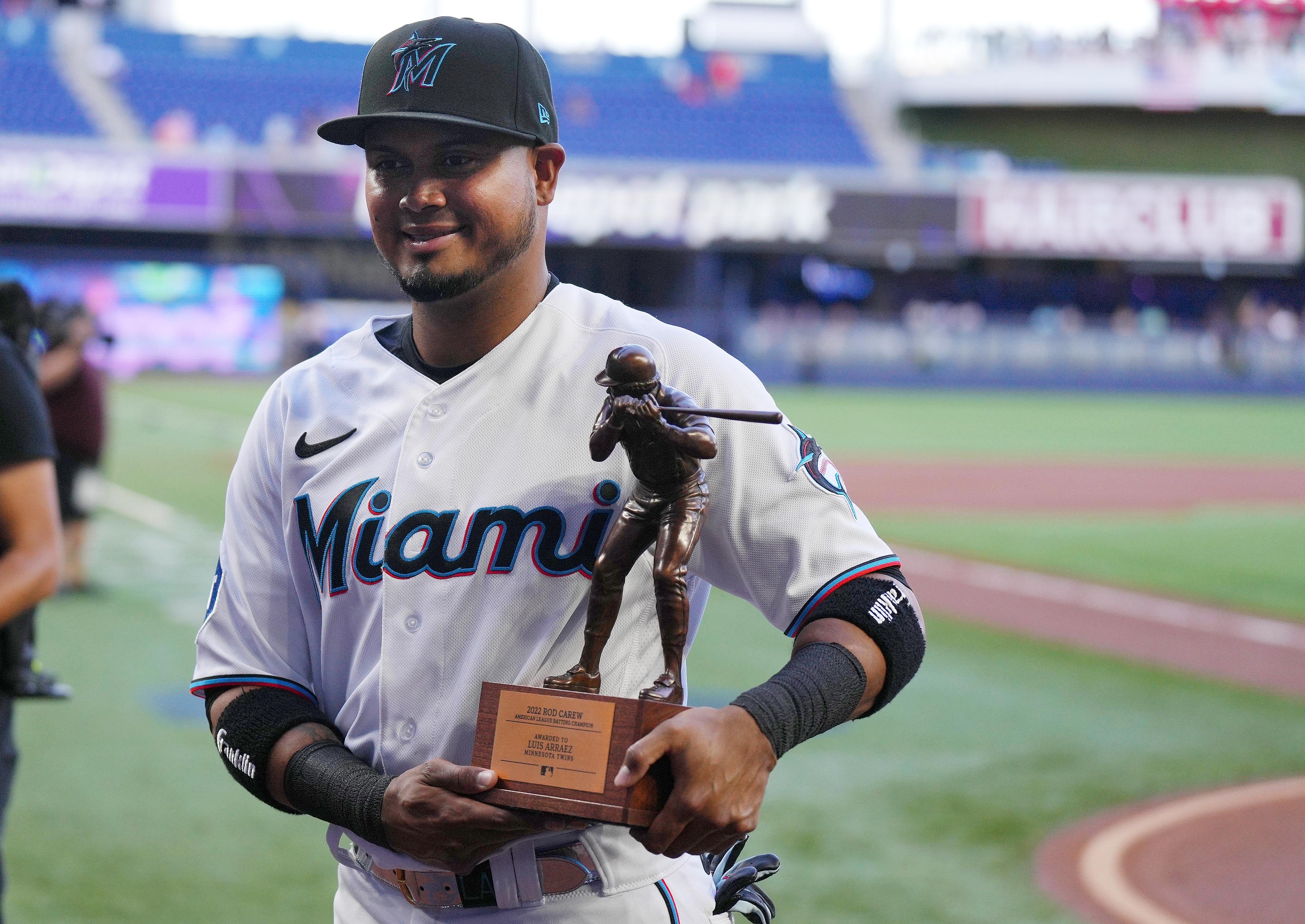
What happened to Luis Arraez also involves the evolution of his personal brand—a critical component of any professional athlete’s net worth. In an era of “Moneyball” where players are often treated as mere spreadsheets, Arraez has successfully branded himself as “The Bat King.” This personal branding serves as a form of financial leverage during contract negotiations and endorsement deals.
The “Arraez Effect” on Ticket Sales and Merchandise
From a revenue-generation perspective, Arraez brings a specific “brand utility” to a franchise. His pursuit of a .400 batting average or a third consecutive batting title with a third different team creates a narrative that drives engagement. For the Padres’ ownership, the “Money” aspect isn’t just about winning games; it’s about selling a product. Arraez is a “fan-friendly” asset—his style of play is aesthetic and easy to market, leading to increased jersey sales and “gate” revenue (ticket sales) as fans flock to see a potential historic performance.
Future Earnings and Free Agency Projections
As Arraez approaches free agency, his financial trajectory is a hot topic for analysts. Typically, “pure hitters” without high home run totals struggle to command $100 million+ contracts. However, because Arraez has branded himself as a unique, one-of-one talent, he may break the traditional valuation models. His representatives will likely argue that his “brand value” and “on-base consistency” deserve a premium usually reserved for power hitters. What happened in 2024—the trade and his continued success—has set the stage for a massive bidding war that will test the limits of how MLB teams value “contact” as a financial asset.
Lessons for Business Finance: Portfolio Diversification
The Arraez trade offers broader lessons for business finance and investment strategy. It highlights the importance of recognizing when an asset no longer fits a company’s timeline and when a “distressed” or “rebuilding” organization should liquidate high-value holdings to ensure long-term solvency.
Why San Diego Doubled-Down on High-Cost Assets
The Padres’ acquisition of Arraez is an example of an “All-In” investment strategy. When a firm has already invested billions into a project (in the Padres’ case, their star-studded roster), the marginal cost of adding one more elite piece (Arraez) is justified if it significantly increases the probability of the “ultimate exit”—a World Series championship. The Padres are not looking for steady 5% growth; they are looking for a massive “liquidity event” (a championship) that would exponentially increase the franchise’s valuation, which is currently estimated at over $1.5 billion.
Risk Management in High-Stakes Acquisitions
Every acquisition carries risk. For the Padres, the risk is that Arraez’s high-contact style is a “fragile” asset—should his hand-eye coordination dip even slightly, his value could plummet because he does not provide value through power or elite defense. This is the “obsolescence risk” of the investment. However, by acquiring him while the Marlins subsidized his salary, the Padres mitigated their “downside risk.” If the investment fails, they aren’t tied to a massive long-term contract. If it succeeds, they have secured the missing piece of their offensive engine at a bargain-basement price.

The Bottom Line: A Masterclass in Market Dynamics
To answer the question “what happened to Luis Arraez” is to describe the perfect intersection of sports and high-stakes finance. Arraez was moved because he became too valuable for a small-market team to keep and too essential for a large-market team to pass up. His journey from Miami to San Diego is a testament to how “value” is relative to an organization’s financial goals.
As we look toward the future, Arraez remains one of the most interesting financial case studies in the league. Whether he leads the Padres to a deep postseason run or continues to collect silver slugger awards, his career will be defined by the “business of hitting.” For investors, business owners, and fans alike, the lesson is clear: in any market, those who can do one thing better than anyone else in the world will always be a highly sought-after—and highly traded—financial asset.
aViewFromTheCave is a participant in the Amazon Services LLC Associates Program, an affiliate advertising program designed to provide a means for sites to earn advertising fees by advertising and linking to Amazon.com. Amazon, the Amazon logo, AmazonSupply, and the AmazonSupply logo are trademarks of Amazon.com, Inc. or its affiliates. As an Amazon Associate we earn affiliate commissions from qualifying purchases.