
The 2014 Ford Mustang stands as a celebrated example of American muscle car heritage, a year that marked the end of the fifth generation (S197) and represented a significant evolution in its powertrain offerings. For enthusiasts and potential buyers alike, understanding the engine options available for this model year is crucial. These engines are not merely components; they are the heartbeats that define the Mustang’s performance, character, and driving experience. This article will delve into the specific engine configurations that graced the 2014 Mustang lineup, exploring their technical specifications, intended applications, and the technological advancements that set them apart.
The Pillars of Power: Understanding the 2014 Mustang Engine Families
Ford offered a diverse range of engines for the 2014 Mustang, catering to different performance expectations and budget considerations. The primary engine families represented were the venerable V6 and the iconic V8. Each offered distinct advantages, from fuel efficiency to raw, unadulterated power. The technological prowess embedded within these engines ensured that they delivered not only robust performance but also a degree of refinement and efficiency that was increasingly important even in the muscle car segment.
The 3.7L Cyclone V6: Accessible Performance and Efficiency
The standard engine for many 2014 Mustang models was the 3.7-liter Cyclone V6. This engine was a testament to Ford’s engineering efforts to provide a capable and efficient powertrain that could still deliver a satisfying Mustang driving experience. It represented a significant upgrade over earlier V6 offerings, offering a potent blend of power and economy.
Technical Specifications and Performance Metrics
The 3.7L V6 engine featured an aluminum block and cylinder heads, contributing to weight reduction and improved thermal management. It employed a dual overhead camshaft (DOHC) design with four valves per cylinder, a configuration that allowed for precise control over airflow and combustion. Variable intake and exhaust camshaft timing (Ti-VCT) was a key technological feature, optimizing valve lift and timing across the entire engine speed range. This technology helped to enhance both low-end torque and high-end horsepower.
For the 2014 model year, the 3.7L Cyclone V6 typically produced around 305 horsepower at 6,500 rpm and 280 lb-ft of torque at 4,000 rpm. While these figures might seem modest compared to its V8 siblings, they were more than adequate for spirited daily driving and provided a significant leap forward for V6 Mustangs of previous generations. The engine’s relatively lightweight construction and efficient design also contributed to respectable fuel economy figures for its class, often achieving highway mileage in the mid-to-high 20s.
Applications and Driving Experience
The 3.7L V6 was the standard engine for the Mustang V6 Coupe and Convertible models. It provided a well-rounded performance package, making the Mustang accessible to a broader audience. Drivers could expect a smooth power delivery, a responsive throttle, and a satisfying exhaust note, particularly when paired with the optional performance exhaust systems. While it might not deliver the visceral thrill of a V8, the V6 offered a compelling balance of everyday usability and sporty performance, making it an excellent choice for those seeking an iconic American pony car experience without the premium fuel costs and potentially higher insurance premiums associated with V8 models.
The 5.0L Coyote V8: The Heartbeat of the GT
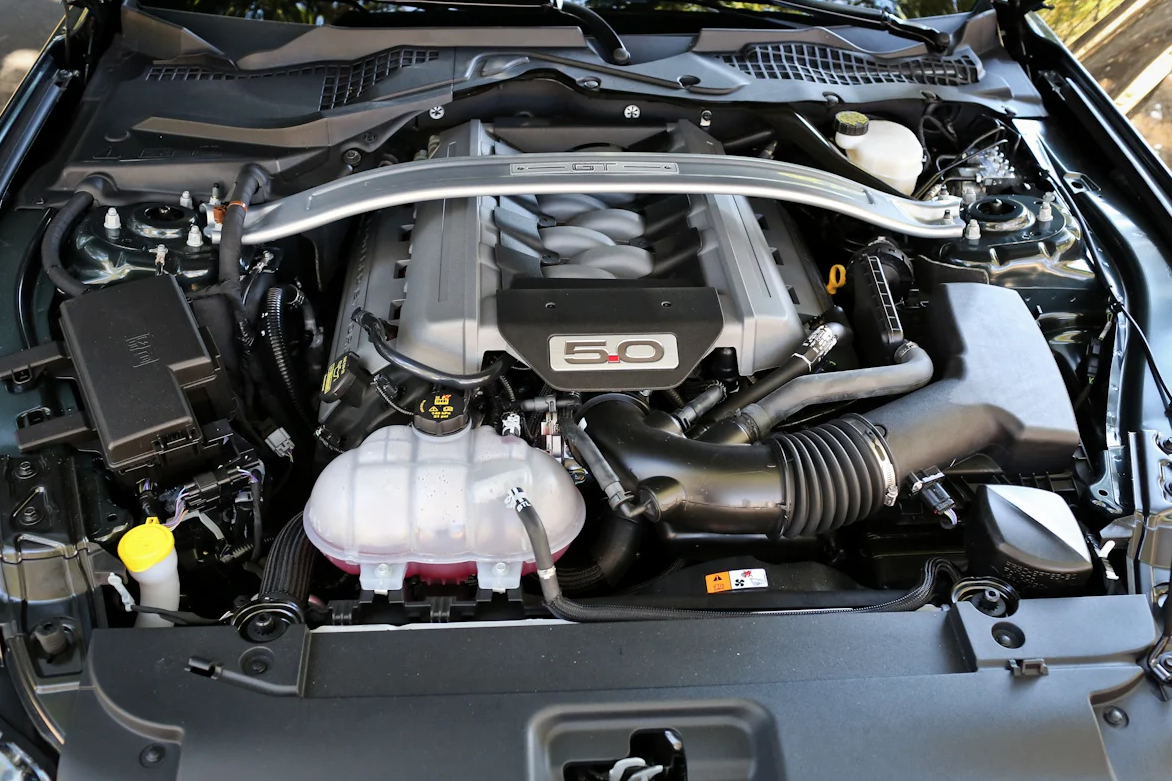
For those seeking the quintessential Mustang experience, the 5.0-liter Coyote V8 engine was the undisputed star of the 2014 lineup. This engine, a marvel of modern engineering, represented a significant advancement in V8 technology, delivering exhilarating performance that paid homage to Mustang’s legendary V8 heritage while embracing cutting-edge technology.
Technical Architecture and Power Output
The 5.0L “Coyote” engine was a naturally aspirated, gasoline-powered V8 with a displacement of 4,951 cubic centimeters. It featured an aluminum block and cylinder heads, contributing to its relatively lighter weight for a V8 of its size, which aids in handling dynamics. Like its V6 counterpart, the Coyote utilized a DOHC valvetrain with four valves per cylinder. Ti-VCT technology was also a critical component, allowing for dynamic adjustment of intake and exhaust camshaft timing to optimize performance and efficiency across the rev range.
In its 2014 iteration, the 5.0L Coyote V8 produced an impressive 420 horsepower at 6,500 rpm and 390 lb-ft of torque at 4,250 rpm. These figures translated into potent acceleration and a thrilling soundtrack that is synonymous with American V8 power. The engine’s design emphasized high-revving capability, allowing drivers to exploit its power band effectively.
The Boss 302 Variant: Track-Focused Engineering
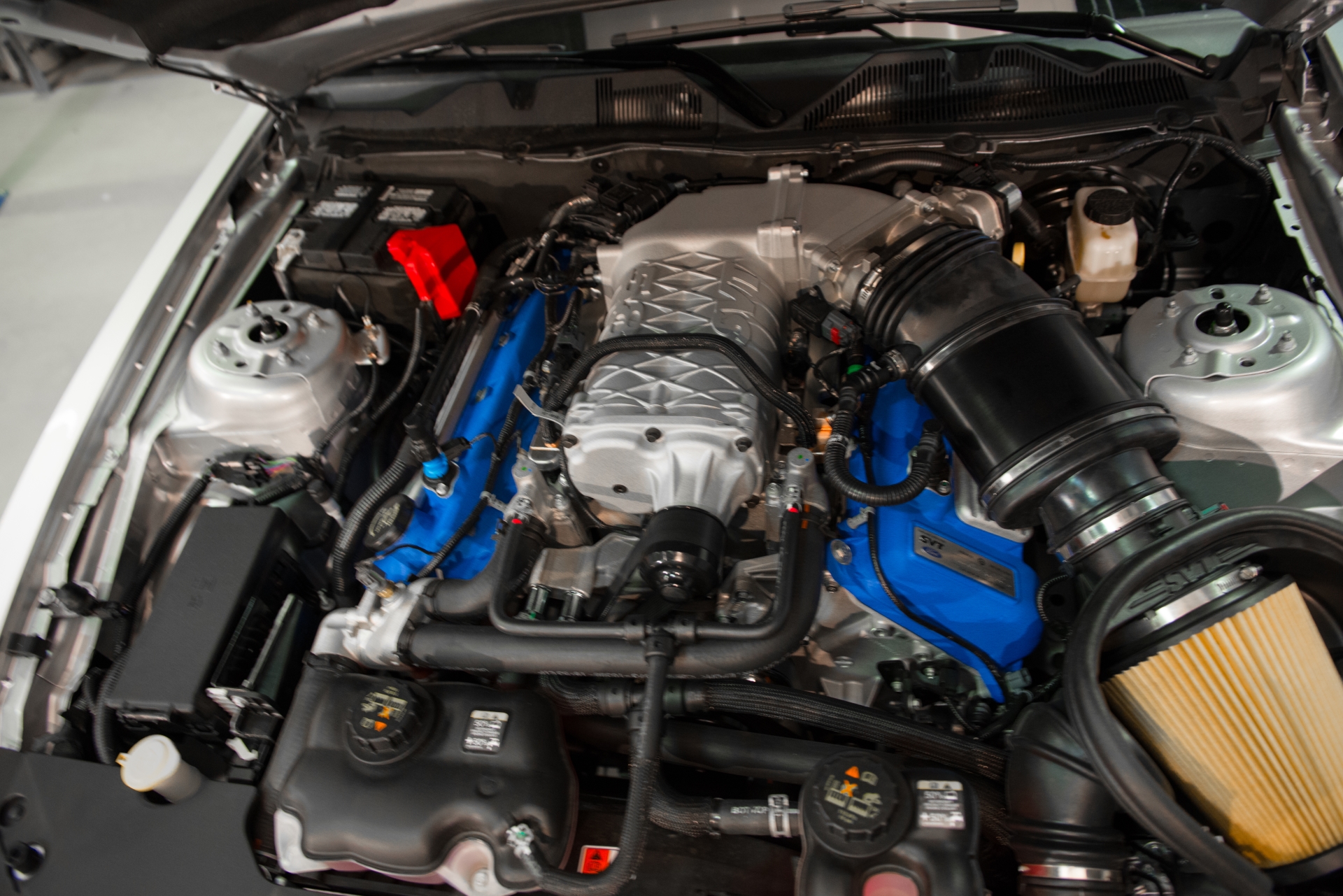
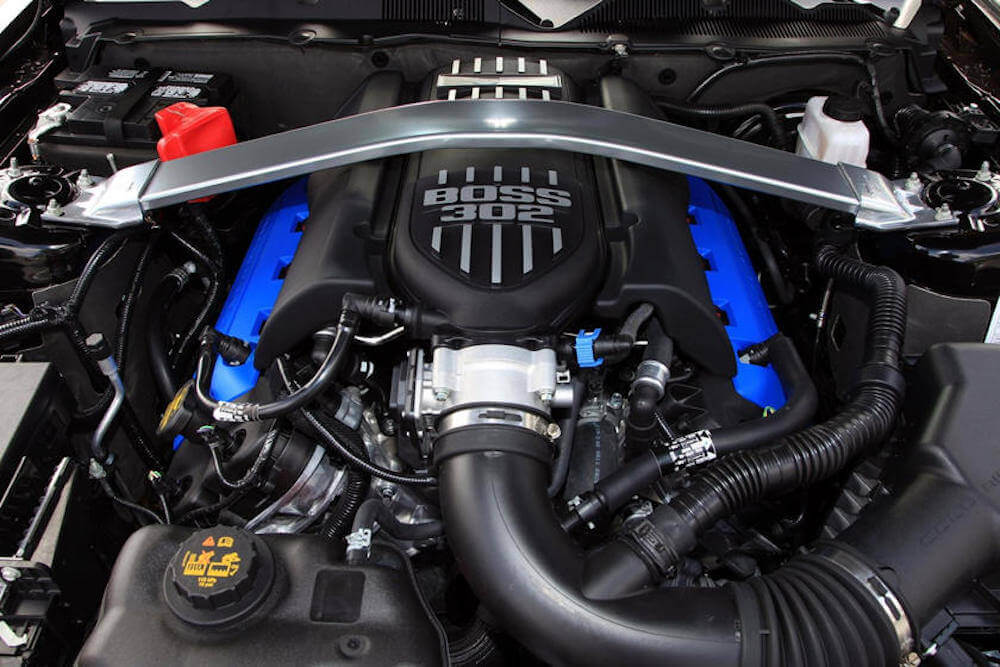
A notable variant of the 5.0L V8 was found in the limited-production 2013-2014 Mustang Boss 302. This engine was a more highly-tuned version of the Coyote, developed with track performance as its primary objective. It featured a unique intake manifold, revised camshafts, and a more aggressive engine tune, resulting in an increased output of approximately 444 horsepower. The Boss 302 engine was specifically engineered to deliver superior track capability, with enhanced cooling and lubrication systems, and a more direct connection between the engine and the road.
Powertrain Integration: Transmissions and Drivetrain Technology
Beyond the engines themselves, the way power was delivered to the wheels was equally important in defining the 2014 Mustang’s driving dynamics. Ford offered both manual and automatic transmission options, each engineered to complement the character of the available engines. The integration of these powertrains represented a significant technological undertaking, ensuring that power was utilized effectively and efficiently.
Manual Transmissions: Driver Engagement and Control
For the purist, a manual transmission was the preferred choice. The 2014 Mustang offered a Getrag MT82 six-speed manual gearbox. This transmission was known for its relatively short throws and precise engagement, providing a direct and engaging connection between the driver and the machine. Its gear ratios were carefully selected to optimize acceleration and cruising comfort, allowing drivers to fully exploit the power of both the V6 and V8 engines. The technology embedded in its design focused on durability and smooth shifting, crucial for both spirited driving and everyday commuting.
Automatic Transmissions: Convenience and Refinement
For those prioritizing convenience, an automatic transmission was available. The 2014 Mustang was equipped with a Ford 6R60 six-speed automatic transmission. This transmission was designed to offer smooth gear changes and efficient operation. In the GT models, it was calibrated to hold gears longer during aggressive acceleration, providing a more engaging experience than a typical everyday automatic. Paddle shifters were also often an option on automatic-equipped Mustangs, allowing drivers to manually select gears for a more controlled driving experience, further bridging the gap between automatic convenience and manual engagement.
Technological Advancements and Their Impact on Performance
The engines and transmissions found in the 2014 Mustang were not just about raw power; they were also products of significant technological innovation. Ford consistently invested in research and development to improve engine efficiency, reduce emissions, and enhance performance.
Fuel Injection and Engine Management Systems
Both the 3.7L V6 and the 5.0L V8 engines employed advanced fuel injection systems. The port fuel injection system delivered fuel directly into the intake port, ensuring precise fuel metering for optimal combustion. This technology, coupled with sophisticated engine control units (ECUs), allowed for real-time adjustments to ignition timing, fuel delivery, and valve timing based on a myriad of sensor inputs. These ECUs were essentially complex computers, constantly analyzing data from sensors measuring engine speed, manifold pressure, throttle position, oxygen levels, and more, to ensure the engine operated at its peak efficiency and performance.
Emissions Control and Environmental Considerations
While performance was a key characteristic of the Mustang, Ford also recognized the increasing importance of emissions control and fuel efficiency. The 2014 Mustang engines were equipped with advanced catalytic converters and other emission control technologies designed to meet stringent governmental regulations. The Ti-VCT system, while primarily for performance enhancement, also played a role in reducing emissions by optimizing combustion. The efficient design of both engines, particularly the lighter V6, contributed to a more favorable fuel economy profile for the Mustang in its segment.
The 2014 Ford Mustang represented a compelling package of technological advancements, offering a range of engines and transmissions that catered to a diverse audience. From the accessible performance and efficiency of the 3.7L V6 to the raw power and iconic roar of the 5.0L Coyote V8 (and its Boss 302 variant), these powertrains were engineered to deliver a thrilling and engaging driving experience. The integration of sophisticated transmission technology further solidified the Mustang’s reputation as a capable and desirable performance vehicle, a testament to Ford’s enduring commitment to innovation in the automotive realm. Understanding these engine options provides valuable insight into the engineering prowess and design philosophy that defined this celebrated model year.
aViewFromTheCave is a participant in the Amazon Services LLC Associates Program, an affiliate advertising program designed to provide a means for sites to earn advertising fees by advertising and linking to Amazon.com. Amazon, the Amazon logo, AmazonSupply, and the AmazonSupply logo are trademarks of Amazon.com, Inc. or its affiliates. As an Amazon Associate we earn affiliate commissions from qualifying purchases.