
Remember the pre-pandemic days, or perhaps more vividly, the initial months of global lockdown? Amidst the uncertainty, a particular app emerged as a digital lifeline for millions craving connection: Houseparty. With its distinctive “drop-in” social video format and integrated games, it quickly became a sensation, redefining casual group video chat. But just as quickly as it rose to prominence, it vanished, leaving many to wonder: what exactly happened to Houseparty? Its story is a fascinating case study for anyone tracking technology trends, brand strategy, or the financial realities of the app economy.
Houseparty’s trajectory, from meteoric rise to quiet demise, encapsulates the volatile nature of the digital landscape. It’s a narrative woven from threads of innovative software design, shrewd marketing, the overwhelming force of unexpected global events, and the strategic decisions of corporate giants. As we delve into its journey, we’ll explore the technical challenges that plagued its growth, the branding decisions that shaped its identity and eventual absorption, and the financial underpinnings that dictate survival in the cutthroat world of apps.
The Rise and Unique Appeal of Houseparty
Houseparty wasn’t the first video chat application, nor was it the most feature-rich when it first launched in 2016 under the company Life on Air. However, it offered a refreshingly different take on social interaction that resonated deeply with a younger, digitally native audience. Its success wasn’t just about facilitating video calls; it was about reimagining the very nature of digital hangouts.
A Fresh Take on Social Connection
In an era dominated by formal video conferencing tools like Skype (and later, Zoom) or text-based messaging apps, Houseparty carved out a niche by prioritizing spontaneity and informality. Its core innovation was the “drop-in” feature. Unlike scheduled calls, Houseparty allowed users to see when their friends were “in the house” – meaning online and available – and simply drop into their existing video chats. This replicated the feeling of walking into a friend’s living room and joining the conversation, eliminating the friction of invitations and scheduling.
This unique software design was a masterstroke in user experience. It fostered a sense of community and constant connection, making it feel less like a utility and more like a virtual extension of a real-life social circle. The app’s user interface was bright, simple, and intuitive, further lowering the barrier to entry. Critically, Houseparty integrated a suite of casual games – like “Heads Up!” and “Quick Draw!” – directly into the video calls. This gamification wasn’t just a gimmick; it provided shared activities that facilitated interaction and kept conversations flowing, a clever piece of productivity design for social engagement. It transformed passive viewing into active participation, a critical component for building stickiness and user loyalty, particularly among Gen Z and millennials.
From a branding perspective, Houseparty successfully cultivated an image of fun, casual, and accessible connection. Its marketing leaned into this, portraying a vibrant social life that was always just a tap away. This authentic brand strategy helped it stand out in a crowded market, building a strong reputation for being the “cool” place to hang out online.
The Pandemic Boom and Its Double-Edged Sword
While Houseparty had a respectable following prior to 2020, the COVID-19 pandemic acted as an unprecedented accelerant for its growth. As lockdowns swept across the globe, forcing billions into isolation, the human need for connection skyrocketed. Suddenly, Houseparty’s casual, spontaneous video chat model became an essential tool. It offered a lifeline for friends, families, and even colleagues to maintain social ties, host virtual gatherings, and alleviate the crushing weight of loneliness.
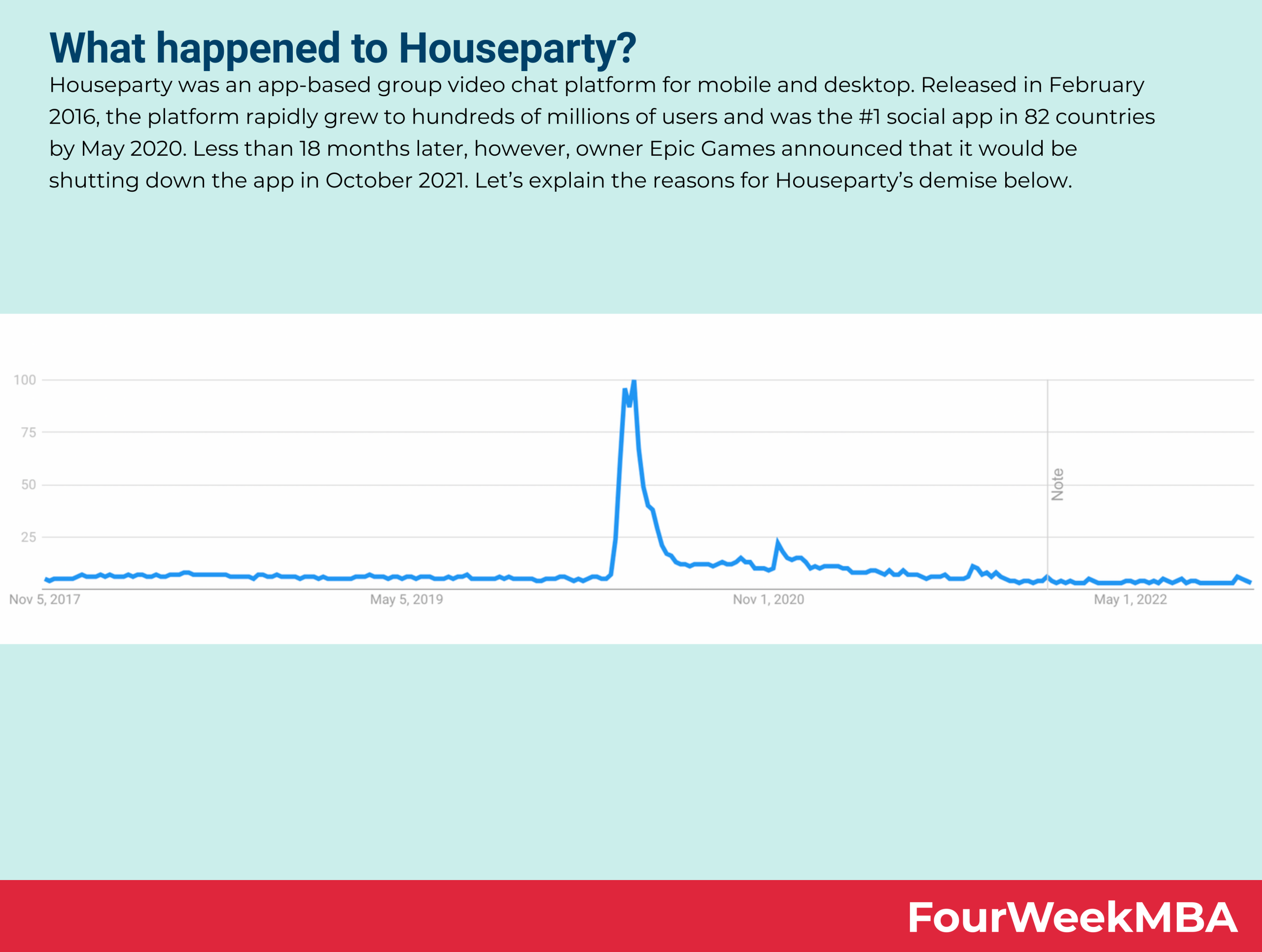
Usage statistics soared to dizzying heights. In just a few weeks in March and April 2020, Houseparty recorded tens of millions of new downloads, topping app store charts worldwide. It became a household name overnight, synonymous with pandemic-era socialising. This explosion in popularity, while seemingly a dream come true for any tech company, also presented a significant double-edged sword, particularly for its underlying technology.
The sheer volume of new users and concurrent sessions placed immense stress on Houseparty’s server infrastructure. This led to widespread reports of connectivity problems, dropped calls, lagging video, and general instability. While many users were forgiving given the extraordinary circumstances, these technical challenges chipped away at the user experience. Moreover, its sudden ubiquity attracted increased scrutiny, particularly regarding digital security and privacy. Rumours of the app being “hacked” surfaced, leading to a scramble by the company to reassure users and debunk the claims. While these specific “hacking” claims were largely disproven as a coordinated smear campaign, the perception of vulnerability nonetheless hurt its brand reputation at a critical juncture. The pandemic forced Houseparty into the spotlight, but also exposed its vulnerabilities on a grand scale.
Technical Hurdles and Shifting Digital Landscapes
Houseparty’s meteoric rise during the pandemic underscored the power of its core concept, but it also mercilessly exposed the underlying technical limitations that would ultimately contribute to its downfall. The intense pressure of millions of concurrent users testing the limits of its software proved to be a formidable challenge.
Under the Hood: The Tech That Challenged Houseparty
Maintaining a smooth, high-quality video conferencing experience for multiple participants simultaneously is a complex technological feat. For a free app experiencing exponential growth, the challenge was magnified. Houseparty struggled with scalability issues; its infrastructure, while robust for its pre-pandemic user base, buckled under the weight of unprecedented demand. Users frequently reported connectivity problems, with video feeds freezing, audio cutting out, and calls dropping entirely. These glitches, though perhaps understandable given the circumstances, directly impacted the core value proposition of a seamless social connection.
The nature of its multi-person video rooms inherently demanded significant bandwidth and sophisticated server management to route and render multiple video streams in real-time. Compared to dedicated enterprise solutions like Zoom, which had years of investment in scalable infrastructure and a clearer business finance model to support it, Houseparty felt less polished. While Zoom was designed for stability and professional use, Houseparty was built for casual fun, and its backend wasn’t quite ready for primetime global scale.
Furthermore, the “hacked” claims, despite being attributed to a smear campaign, highlighted the ever-present concern around digital security in the app world. Even if the claims were false, the very discussion around potential vulnerabilities could erode user trust, especially when personal data and intimate social interactions are involved. In an era where data breaches are common, any shadow of doubt regarding an app’s security protocols can be devastating to its user base and brand. Houseparty’s ability to ensure user safety and privacy was put to the test, and the perception, at least for some, was that it fell short.
The Evolution of Social Tech and User Expectations
Even as Houseparty grappled with its tech woes, the broader social technology landscape was rapidly evolving. The “Zoom fatigue” phenomenon, born from endless remote work meetings, began to spill over into social video calls. Users, once desperate for any form of connection, started to become more discerning and perhaps, ironically, sought less structured digital interaction.

Newer apps and features emerged, catering to specific niches or offering alternative forms of communication. Discord, for example, gained massive traction among gamers and communities for its specialized audio channels and robust text chat. TikTok redefined short-form video content, shifting user preferences towards asynchronous, highly curated, and often entertaining interactions rather than spontaneous, unscripted live video.
User expectations for apps also became increasingly sophisticated. They demanded not just functionality but also seamless performance, intuitive design, and continuous innovation. Houseparty, while initially innovative, didn’t introduce significant new features or drastically improve its core experience post-pandemic boom. The novelty of its “drop-in” feature began to wear off as other platforms integrated similar functionalities or offered more tailored experiences. The challenge of maintaining relevance and novelty in a market flooded with social apps, each vying for screen time and attention, proved immense for Houseparty, which seemed to stagnate in its development.
Branding, Acquisition, and Strategic Missteps
The story of Houseparty is incomplete without examining its corporate journey, particularly its acquisition by Epic Games, the powerhouse behind the global phenomenon Fortnite. This acquisition, intended to elevate Houseparty, ultimately became another layer in its complex narrative of rise and fall.
Epic Games’ Acquisition: A Strategic Play?
In June 2019, well before the pandemic, Epic Games announced its acquisition of Life on Air, the parent company of Houseparty. The terms of the deal were not publicly disclosed, but it was clear that Epic saw strategic value in integrating Houseparty’s unique social mechanics into its vast ecosystem, particularly around Fortnite. The vision was compelling: imagine frictionless video chat and social gaming, allowing Fortnite players to connect with friends more deeply, sharing experiences beyond just the game itself.
From a brand strategy perspective, the acquisition aimed to leverage Houseparty’s brand recognition for casual social interaction and integrate it with Epic’s massive gaming community. This was a move to expand Epic’s overall digital footprint, moving beyond just gaming into broader social platforms, potentially creating new avenues for user engagement and even online income generation through integrated features or virtual events. For Houseparty, the acquisition offered significant financial backing and access to Epic’s formidable technical resources and engineering talent, which could theoretically solve its scalability issues and enhance its digital security.
The integration was evident in features like the “Fortnite Mode” within Houseparty, allowing users to stream their gameplay to friends or connect with specific Fortnite friends lists. This seemed like a promising synergy, combining the best of social connection with the world of interactive entertainment. The idea was sound, but the execution and subsequent strategic direction proved more challenging than anticipated.
Brand Dilution and Loss of Focus
Post-acquisition, Houseparty faced a significant branding dilemma. While the integration with Fortnite offered a new audience, it also risked diluting Houseparty’s original, broader appeal. Was it now a gaming companion app, or still a general social hangout? This ambiguity potentially alienated its core non-gaming users while not fully capturing the dedicated gamer market, many of whom preferred platforms like Discord for their gaming communication.
The perceived lack of significant innovation or clear strategic direction after the acquisition further compounded this issue. While the pandemic brought a surge of users, the momentum wasn’t sustained with new features or a renewed brand identity that could withstand the post-pandemic shift in user behavior. Instead of Houseparty evolving into a broader social hub powered by Epic, it seemed to be absorbed, its unique brand distinctiveness gradually fading into the larger corporate identity of its parent company.
Reputation management also remained a challenge. The “hacked” controversy, though mitigated by Epic’s robust response, highlighted the vulnerability of a social platform to malicious actors or false information. Maintaining a pristine brand reputation requires constant vigilance and proactive communication, especially when dealing with personal social interactions. Ultimately, Houseparty struggled to find a sustainable identity and clear purpose within Epic’s vast portfolio, becoming an appendage rather than a thriving independent entity.
The Financial Reality and Lessons Learned
Beyond the tech and brand narratives, the financial realities of running and sustaining a free social app with global ambitions played a critical role in Houseparty’s eventual demise. The business model, or lack thereof, proved to be an Achilles’ heel.
The Business Model Challenge
Houseparty, like many social apps, was primarily free to use. This consumer-friendly approach was instrumental in its rapid user acquisition. However, the costs associated with running such an application are substantial: server infrastructure, engineering talent, marketing, and customer support all require significant capital. How was Houseparty making money? While Epic Games provided financial backing post-acquisition, before that, Houseparty likely relied on a combination of venture capital funding and potentially some data monetization or targeted advertising. However, these methods often struggle to generate enough revenue to offset the astronomical operational costs of a rapidly scaling global app, especially one that doesn’t push in-app purchases or subscriptions.
Compared to other successful platforms, Houseparty never developed a robust, transparent monetization strategy. Instagram and Facebook leverage advertising at scale; gaming platforms like Fortnite rely on cosmetic purchases; and professional tools like Zoom offer tiered subscriptions. Houseparty, built on spontaneous, casual interaction, found it difficult to integrate monetization without fundamentally altering its user experience or alienating its core audience. This created a persistent challenge for financial viability, making it a drain on resources rather than a self-sustaining entity, even under Epic’s umbrella. Its inability to transition into a clear profit-generating engine made it a less attractive long-term investment.

Beyond the Party: Lasting Impact and Takeaways
On September 9, 2021, Houseparty officially shut down. Epic Games announced that it was “turning off the lights” to focus resources on other social features across its portfolio, explicitly mentioning the importance of connecting players in Fortnite and the metaverse. The decision underscored the harsh financial truth: if an app isn’t performing strategically or financially, even a popular one can be retired.
The story of Houseparty offers several crucial lessons for startups, brand strategists, and investors alike:
- Scalability and Robustness are Paramount (Tech): Viral success can be a company’s greatest asset and its greatest liability. Without a robust and scalable technical infrastructure, even the most innovative software can crumble under its own weight. Prioritizing digital security from day one is non-negotiable.
- Brand Agility and Continuous Innovation (Brand): The app market is incredibly dynamic. Brands must be agile, constantly innovating, and adapting their identity to changing user preferences and technology trends. Stagnation, even after achieving success, is a recipe for irrelevance.
- Clear Monetization Strategy (Money): While user growth is often prioritized, a sustainable business model is essential for long-term survival. Apps need a clear path to generate revenue, whether through subscriptions, advertising, in-app purchases, or innovative online income streams. For example, could Houseparty have evolved into a platform for virtual side hustles, hosting paid workshops or exclusive social events? This path was never fully explored.
- Strategic Integration vs. Absorption (Brand & Money): For acquired companies, the challenge is to integrate without losing the unique brand essence that made them attractive in the first place. An acquisition should ideally empower, not diminish, the acquired brand.
Houseparty served a vital purpose during a unique global moment. It reminded us of the fundamental human need for connection and demonstrated how innovative software could facilitate it. Ultimately, however, it fell victim to a confluence of factors: technological limitations exposed by its own success, a shifting digital landscape, and a struggle to define its purpose and secure its financial future within a larger corporate structure. Its quiet departure marks the end of an era for many, but its story remains a compelling case study in the rapid, unforgiving world of social technology.
aViewFromTheCave is a participant in the Amazon Services LLC Associates Program, an affiliate advertising program designed to provide a means for sites to earn advertising fees by advertising and linking to Amazon.com. Amazon, the Amazon logo, AmazonSupply, and the AmazonSupply logo are trademarks of Amazon.com, Inc. or its affiliates. As an Amazon Associate we earn affiliate commissions from qualifying purchases.