
Darth Vader, the imposing figure of the Galactic Empire, wielded a crimson lightsaber that became synonymous with his terrifying presence. This iconic weapon, a symbol of his power and mastery of the dark side, has fascinated fans for decades. But what truly happened to Darth Vader’s lightsaber? While the Skywalker saga offers a rich narrative, a deeper exploration of this question, viewed through the lens of technology, brand, and even a touch of financial acumen, can offer a unique perspective on the artifact’s fate and its enduring legacy.
The Engineering Marvel of a Sith Lord’s Weapon
The lightsaber is far more than a simple sword; it’s a testament to advanced technological prowess within the Star Wars universe. To understand what happened to Vader’s lightsaber, we must first appreciate its construction and function, particularly when contrasted with the technological advancements we see in our own world.

The Anatomy of a Sith Lightsaber: More Than Just a Blade
Vader’s lightsaber, like all lightsabers, is a sophisticated piece of technology powered by a kyber crystal, meticulously crafted by its wielder. The core components include:
- Kyber Crystal: The heart of the lightsaber, a naturally occurring crystal that resonates with the Force. Sith, however, would often “bleed” their kyber crystals through intense negative emotions, turning them red. This process is a fascinating parallel to our understanding of material science and how external forces can alter a substance’s properties, albeit with a Force-infused twist. Imagine the intense energy required to force such a transformation – a hypothetical technological process that would be incredibly complex to replicate.
- Power Cell: Provides the energy to sustain the plasma blade. In our world, this would be analogous to advanced battery technology, perhaps drawing parallels to the development of high-density energy storage solutions that power our own portable devices and electric vehicles.
- Emitter Matrix: Directs the energy from the kyber crystal and power cell into a focused beam of plasma, forming the blade. This involves complex optics and energy containment systems, akin to cutting-edge laser technology or plasma containment research.
- Activation Plate and Controls: Allow the user to ignite and deactivate the blade, and in some cases, adjust its length and intensity. These are the user interface (UI) elements of the weapon, and their intuitive design for a Force-sensitive user speaks volumes about their ergonomic considerations.
The creation of a lightsaber is a deeply personal and technological endeavor. For Vader, his lightsaber was a direct extension of himself, forged through his pain and mastery. This raises questions about the durability and resilience of such a device. Could it withstand the immense forces it encountered? What were the fail-safes, if any?
Durability and Degradation: A Technological Perspective
The durability of Vader’s lightsaber is frequently showcased in the films. It’s used to deflect blaster fire, parry other lightsabers with immense force, and even cut through thick metal. From a technological standpoint, this implies an incredibly robust energy containment field and a blade material that can withstand extreme heat and kinetic impacts.
However, even the most advanced technology is subject to wear and tear. Lightsabers are known to malfunction or break under specific circumstances, especially when damaged by other lightsabers or powerful Force abilities. Vader himself loses his lightsaber on multiple occasions:
- Against Obi-Wan Kenobi on the Death Star: In A New Hope, Obi-Wan disarms Vader, and the lightsaber falls into the reactor shaft. This is a dramatic moment where the weapon is definitively lost, seemingly destroyed by the immense heat and energy of the Death Star’s core. This could be compared to a catastrophic failure of a high-energy containment system in a real-world technological scenario, where containment breaches lead to rapid disintegration.
- Against Luke Skywalker on Cloud City: In The Empire Strikes Back, Luke’s lightsaber is severed by Vader, but Vader’s own lightsaber remains functional, and he retrieves Luke’s. However, later in the saga, specifically in Return of the Jedi, Vader’s original lightsaber is seen again.
The question then becomes: how did Vader acquire a replacement, or was it recovered? This leads us to the intricate world of manufacturing and supply chains within the Galactic Empire, a fascinating blend of technology and corporate strategy.
The Brand of Darth Vader: A Crimson Legacy
Darth Vader’s lightsaber wasn’t just a tool; it was an integral part of his personal brand. Its crimson glow was a stark contrast to the noble blue and green of the Jedi, immediately signaling his allegiance to the dark side and his terrifying power. Examining this through the lens of branding provides unique insights into its enduring impact.
The Color of Power: Marketing a Menace

The choice of a red lightsaber for Sith Lords is not arbitrary. It’s a deliberate branding decision that communicates:
- Aggression and Danger: Red is universally associated with danger, warning, and aggression. In marketing, red is often used to grab attention and evoke strong emotions, and for Vader, it perfectly encapsulated his predatory nature.
- The Corruption of the Force: The red hue signifies the “bleeding” of the kyber crystal, a metaphorical and literal corruption of its natural state. This visual cue reinforces the narrative of fallen heroes and the seductive nature of the dark side.
- Distinctive Identity: In a galaxy filled with Jedi wielding lightsabers, the red blade made Sith Lords instantly recognizable and visually distinct. This is a prime example of effective corporate identity, creating a memorable and intimidating visual signature.
Vader’s lightsaber, in essence, was a powerful brand asset. Its consistent use and visual impact helped solidify his image as the galaxy’s ultimate enforcer. This is akin to how major corporations develop and maintain iconic logos and product designs to build brand recognition and consumer loyalty – or in Vader’s case, fear and subservience.
The Legacy of the Crimson Blade: Replicating a Brand Icon
The impact of Vader’s lightsaber extends beyond his personal brand. It has inspired countless replicas, merchandise, and even fan-made weapons. This phenomenon speaks to the power of effective brand storytelling and product design.
- Merchandise and Fan Culture: The crimson lightsaber is one of the most sought-after items in Star Wars merchandise. Its visual appeal and association with one of cinema’s most iconic villains make it a perennial favorite. This demonstrates how a strong brand element can drive significant revenue and foster a dedicated fan base.
- Technological Inspiration (Hypothetical): While real-world lightsabers remain firmly in the realm of science fiction, the idea of such a weapon has undoubtedly spurred imaginations in fields like plasma physics and advanced optics. Companies developing high-powered lasers or plasma cutting tools might even draw inspiration, consciously or unconsciously, from the aesthetic and conceptual power of the lightsaber.
The branding power of Vader’s lightsaber is so potent that even in his absence, the symbol of a red lightsaber continues to evoke the fear and power associated with the Sith.
The Value of a Legend: Financial Implications of a Lost Artifact
While the Star Wars universe doesn’t operate on our traditional capitalist principles, we can still analyze the “value” of Darth Vader’s lightsaber through a financial lens, considering its scarcity, craftsmanship, and historical significance.
The Rarity of Sith Artifacts: A Collector’s Dream
In the Galactic Republic and later the Empire, lightsaber construction was a highly specialized skill. For Sith, obtaining and maintaining these weapons involved unique processes and resources.
- Kyber Crystal Acquisition: The sourcing of kyber crystals, particularly those capable of being “bled,” would likely have been a controlled and potentially expensive commodity. Imagine a black market for these Force-sensitive crystals, or a specialized Imperial department tasked with their acquisition. This mirrors the real-world market for rare minerals or specialized components that drive up the cost of advanced technology.
- Imperial Manufacturing and Repair: If Vader’s lightsaber was lost and replaced, the Imperial military would have had a process for manufacturing and repairing such sophisticated weaponry. This suggests a significant investment in research and development, skilled labor, and manufacturing infrastructure. The cost of producing such a weapon would have been astronomical, making it a valuable asset.
The loss of a weapon like Vader’s lightsaber, especially one with such unique properties, would represent a significant loss of resources and investment for the Empire.
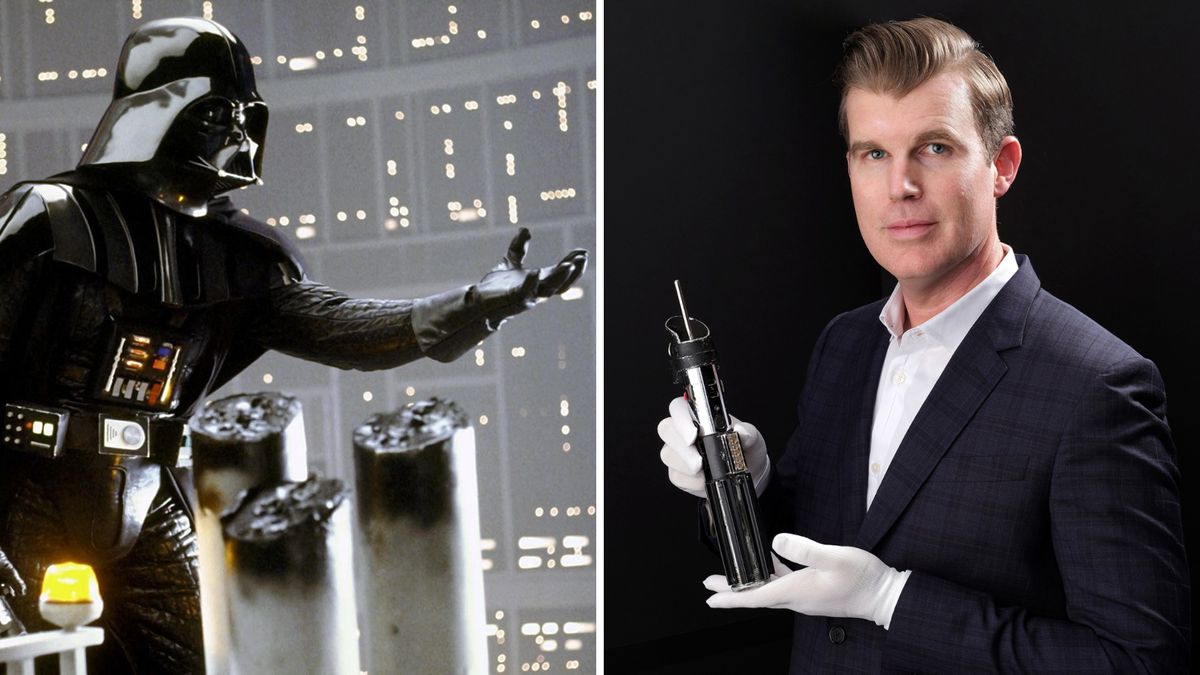
The “Market” for Iconic Artifacts: A Hypothetical Scarcity Economy
If we were to apply real-world economic principles to the Star Wars universe, Darth Vader’s lightsaber, particularly the original one lost in A New Hope, would be an artifact of immense value.
- Historical Significance: As a weapon wielded by the Emperor’s most feared enforcer during a pivotal era, its historical significance alone would make it priceless. It’s a tangible piece of galactic history.
- Technological Uniqueness: The advanced technology incorporated into its design would make it highly desirable to collectors, historians, or even rival factions seeking to reverse-engineer its capabilities.
- “Collector’s Items” in the Galaxy: While not explicitly stated, it’s not a stretch to imagine that powerful individuals or institutions in the Star Wars galaxy would covet such an artifact. Perhaps certain crime lords or wealthy collectors would pay exorbitant sums for a genuine piece of Darth Vader’s arsenal. This mirrors the high-stakes world of collecting rare artifacts and historical memorabilia on Earth.
The story of what happened to Darth Vader’s lightsaber is, in many ways, the story of technological marvels, iconic branding, and the inherent value of legendary objects. Whether lost to the fiery depths of a reactor core or carefully preserved, its legacy continues to shine as brightly as its crimson blade. The question of its ultimate fate, even if answered within the narrative, continues to fuel our fascination with the dark lord and the universe he commanded.
aViewFromTheCave is a participant in the Amazon Services LLC Associates Program, an affiliate advertising program designed to provide a means for sites to earn advertising fees by advertising and linking to Amazon.com. Amazon, the Amazon logo, AmazonSupply, and the AmazonSupply logo are trademarks of Amazon.com, Inc. or its affiliates. As an Amazon Associate we earn affiliate commissions from qualifying purchases.